8 finished slides

Product launch presentation

An eight slide internal launch plan for a consumer hardware product. It puts the competitor comparison in the deck rather than hoping nobody makes it, and ends with a checklist that has dates on it.

Make one like thisEditable, then export to PowerPoint or PDF

The full deck

Every slide as it was built, in order. All the content was written for this example, so the structure can be judged on real numbers rather than placeholder text.
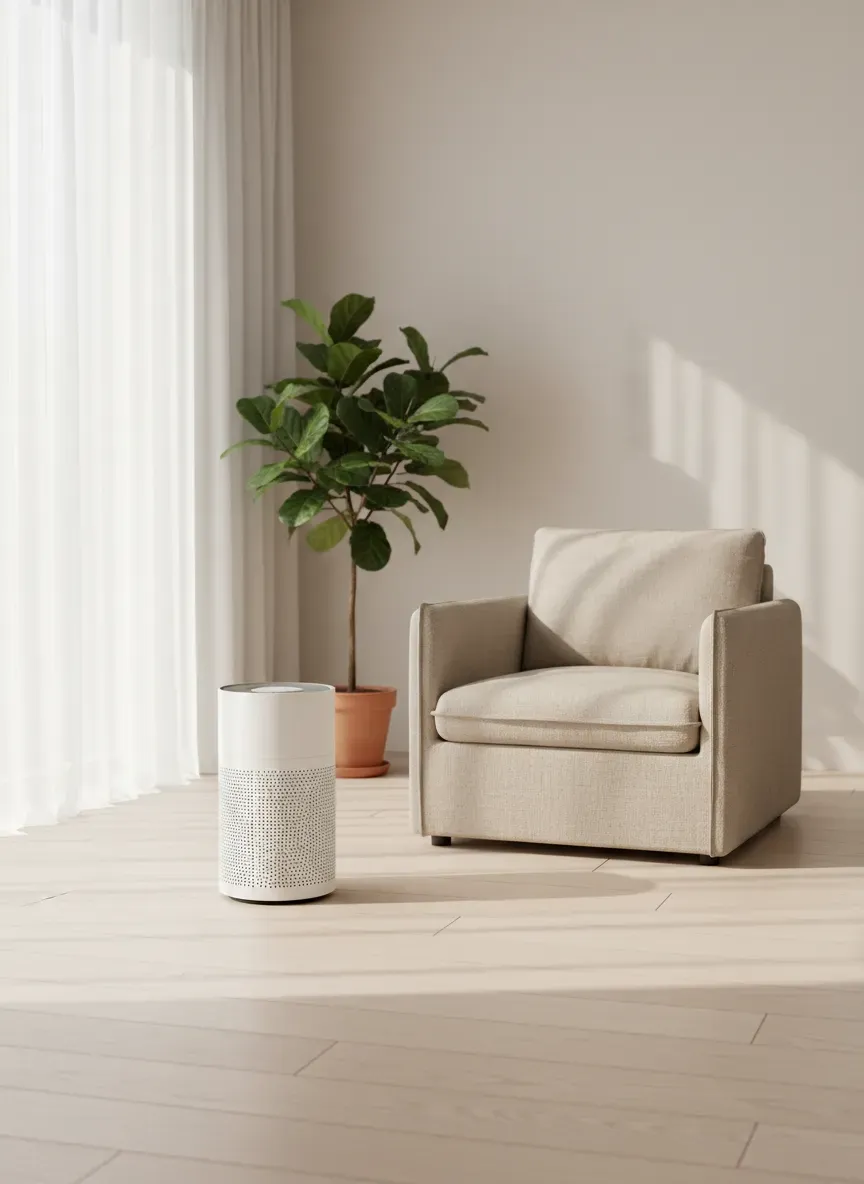
Product photograph of a matte white cylindrical air purifier on a pale timber floor beside a linen armchair, soft window light, minimal interior, no text, no logos
A

Halo 3

Launch plan, ships 14 October 2026

Slide 1 of 8

What we are fixing

The two complaints that account for most Halo 2 returns and bad reviews.

Halo 2, today

Loud on high, expensive to run

At the setting that actually clears a room, the fan hits 54 decibels, which is too loud for a bedroom. The replacement filter costs $89 and lasts six months, so three years of ownership costs more than the machine.

Halo 3, October

Quieter and cheaper to keep

A larger, slower fan clears the same room at 41 decibels. The filter is a washable pre-filter plus a $39 cartridge that lasts twelve months, cutting three year running cost by 62 percent.

02

Slide 2 of 8

1

Parents of young children

Buy for nurseries and bedrooms. Noise is the deciding factor, and they read the decibel number before anything else.

2

Allergy and asthma households

Run the machine year round, so filter cost matters more than purchase price. They replace on schedule, not when it looks dirty.

3

Small offices and studios

Want one unit for a shared room and a clear answer on coverage. They ask about warranty and bulk pricing on day one.

03

Slide 3 of 8

Halo 3 against the shelf

The comparison retail buyers will make, so it is better to make it ourselves first.

Header
Halo 3
Halo 2
Competitor A
Competitor B
Price
$449
$399
$529
$379
Room size
62 sqm
48 sqm
65 sqm
40 sqm
Noise on high
41 dB
54 dB
48 dB
52 dB
Filter cost per year
$39
$178
$120
$96
Filter life
12 months
6 months
9 months
6 months
Washable pre-filter
Yes
No
No
Yes
App required
No
No
Yes
No
Warranty
5 years
2 years
2 years
3 years
Competitor pricing checked 8 August 2026 at three national retailers.

04

Slide 4 of 8

The plan

Three acts

Eight weeks from the first reviewer unit to the retail shelf, with the whole story landing in one week rather than trickling out.

01

Seed, weeks 1 to 3

Sixty units to reviewers and allergy clinics, with the noise claim measured independently so nobody has to take our word for it.

02

Announce, week 4

One announcement day: reviews go live, our site switches over, and email goes to 94,000 existing owners with a filter trade-in offer.

03

Shelf, weeks 5 to 8

Retail stock lands, in-store demo units with a decibel meter beside them, and paid search focused on the running cost comparison.

05

Slide 5 of 8

What launch has to hit

Measured at eight weeks. Anything not on this list does not get reported at the launch review.

9,000

Units sold

Direct and retail combined, against 5,400 for the Halo 2 launch.

30%

From existing owners

Trade-in offer take up among the 94,000 owner list.

4.4

Average review score

Across our site and the three largest retail sites.

<4%

Return rate

Halo 2 ran at 7.1 percent, mostly noise complaints.

55%

Retail sell through

Of first shipment, so the reorder lands before Christmas.

18%

Filter attach rate

Buyers adding a spare cartridge at checkout.

06

Slide 6 of 8

Before launch day

Retail stock confirmed at all three chains by 26 September.

Independent noise test published on the product page, not just quoted.

Support briefed on the filter trade-in, with a script for Halo 2 owners.

Product page, comparison table and FAQ live behind a flag by 10 October.

Owner email scheduled, segmented by whether they bought a filter this year.

07

Slide 7 of 8

Launch day is 14 October

Weekly launch standup every Tuesday at 9am until then. Escalations go to Priyanka, not to the group chat.

08

Slide 8 of 8

What makes this deck work

The comparison is ours to make

Putting price, running cost and warranty next to competitors in the deck means the team answers the buyer question the same way.

Three phases, one announce day

Seed, announce, shelf. Naming a single announcement day stops the launch dribbling out over a month.

Targets have thresholds

Six numbers with the previous launch alongside, so success at eight weeks is defined before it starts.

Questions people ask

What goes in a product launch presentation?

What the product changes, who it is for, how it compares, the launch plan, the targets and the checklist that has to be done before launch day.

Should competitors be named in the deck?

For an internal launch deck, yes. The team needs one agreed answer to the comparison buyers will make anyway.

How long should a launch deck be?

Eight to twelve slides. Long enough to align marketing, sales and support, short enough to run in a single meeting.

Can I reuse this for a software launch?

Yes. Describe your product and phases in the generator; the structure works for software, hardware and services.

Make yours in about a minute

The button opens the presentation generator with this deck already described. Change the wording to your own business, pick a theme, and edit any slide afterwards.

Make my product launch presentation

Other presentation examples

New to the builder? Start withmake a pitch presentation with AI, thenchange the theme, fonts and colours.