9 finished slides

Training and onboarding presentation

A day one session for cafe floor staff. It is written the way good training actually works: clear objectives, one repeatable process, and short rules people can hold in their head on a busy shift.

Make one like thisEditable, then export to PowerPoint or PDF

The full deck

Every slide as it was built, in order. All the content was written for this example, so the structure can be judged on real numbers rather than placeholder text.
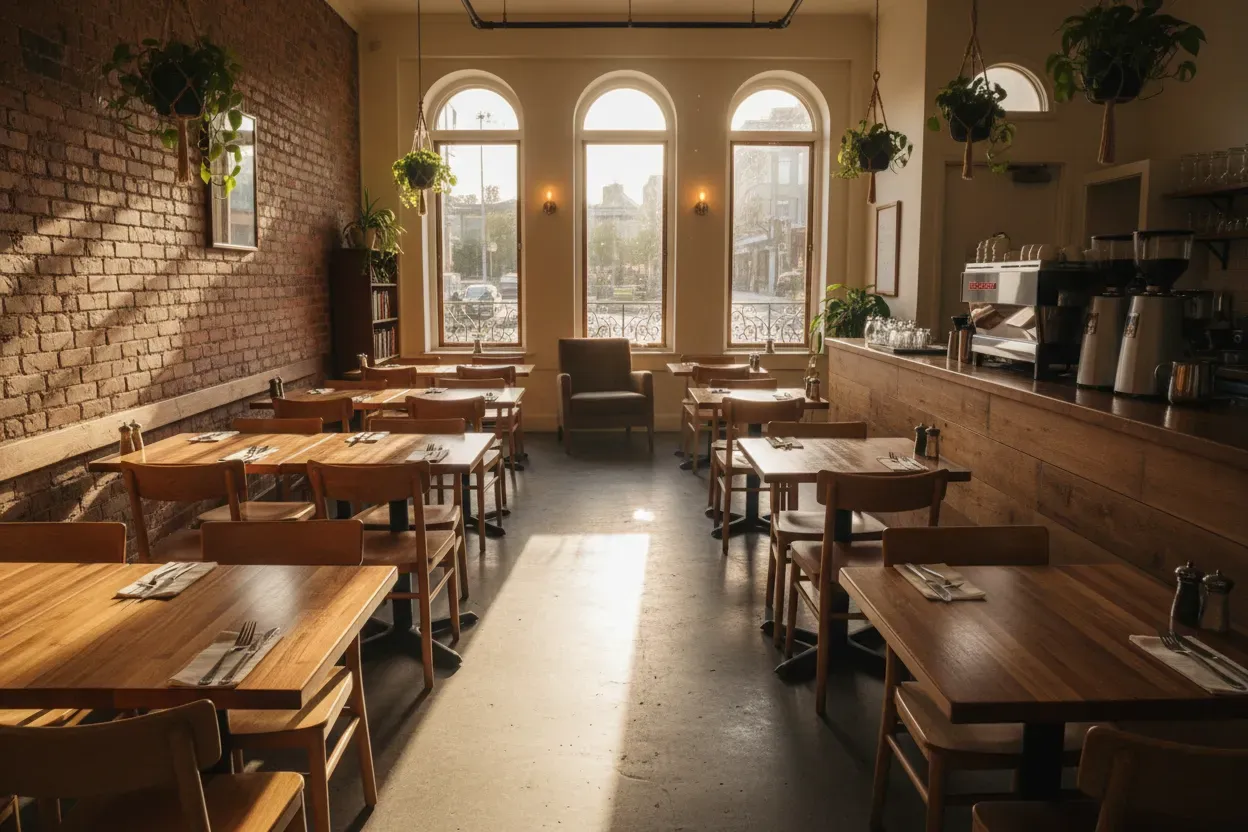
Photograph of a warm empty cafe interior before opening, timber tables set with cutlery, morning light through the front window, wide calm composition, no text, no logos

Day one training

Your first shift

Everything you need to run a section at Merle

Slide 1 of 9

What today covers

Two hours before your first paid shift. You are not expected to remember everything today. You are expected to know where to look and who to ask.

Walk the floor

Sections, the pass, the till and where everything lives behind the counter.

Run a table

Greeting to payment, the same five steps every table follows at Merle.

Practise the hard parts

Allergies, split bills and a guest who has waited too long for food.

02

Slide 2 of 9

By the end of today

Six things you will be able to do

Each one gets practised in the second hour, on the floor, before service.

Greet, seat and open a table on the till without checking the guide.

Take an order for a table of four, including two coffees and a dietary swap.

Carry and clear three plates safely, and reset a table in under ninety seconds.

Name every dish that contains gluten, dairy, nuts or egg, from memory.

Split a bill three ways and process a refund with a supervisor code.

Handle a complaint about a wait time without escalating it.

03

Slide 3 of 9

How a table runs

Every table follows the same five steps, every time.

1

Greet within 30 seconds

Make eye contact from anywhere in the room. Seat them, hand menus, say the specials.

2

Take the order

Drinks first, then food. Repeat it back. Enter it on the till before you walk away.

3

Check at two minutes

Return two minutes after the food lands. This is where most complaints get prevented.

4

Clear and reset

Clear when everyone has finished, not before. Reset the table before you take the plates back.

5

Close the table

Bring the bill when asked, not before. Thank them by name if you have it.

04

Slide 4 of 9

The floor, in short

These twelve lines cover most of what a first week gets wrong.

Do this

Not this

Say "I will check" when you do not know an ingredient.

Carry plates out with you every single time you leave the floor.

Tell the kitchen the moment a table mentions an allergy.

Ask a supervisor before comping anything, even a coffee.

Move to the section that is busy, not the one that is yours.

Drink water and eat before your shift. Six hours is long.

Guess whether a dish has nuts in it. Ever.

Stack plates at the table in front of guests.

Tell a table the kitchen is slow. Give a time instead.

Leave a till open with an order half entered.

Stand behind the pass on your phone during service.

Walk past a table that is trying to catch your eye.

05

Slide 5 of 9

What sits underneath

Service is mostly the part nobody sees

What the guest sees

A calm table

Food arrives together, water is topped up, nobody has to wave to get attention.

What makes it happen

1
Timing between sections

You call the kitchen when a table is ready, not when the food is ready. That gap is the whole job.

2
Reading the room

Knowing which table is ten minutes from wanting the bill, and which one wants another hour.

3
Covering each other

Nobody runs their own section alone. The floor is shared, and so is every table on it.

06

Slide 6 of 9

1

If you make a mistake

Tell a supervisor straight away. Every mistake is fixable while the guest is still in the room, and almost none are after they leave.

2

If a guest is unhappy

Listen, do not explain. Say what you will do, then get a supervisor. Never argue about whether they are right.

3

If you are not coping

Say so out loud. On a busy Saturday everyone hits a wall at some point, and the fix is thirty seconds of help, not silence.

07

Slide 7 of 9

Remember six things

If today blurs, these six carry you through week one

1

Greet in 30 seconds

2

Never guess allergens

3

Check at two minutes

4

Never walk empty

5

Ask, do not comp

6

Say when you are stuck

08

Slide 8 of 9

Welcome to the floor

Your first three shifts are paired with a trainer. Nobody expects you to run a section alone before then.

Your trainer

Ash Marinos

Roster line

0417 220 118

Handbook

merle.example/staff

09

Slide 9 of 9

What makes this deck work

Objectives are actions

Every objective starts with something the trainee will be able to do, so the session can be checked rather than felt.

One process, five steps

The same five steps run every table, which gives a nervous new starter something to fall back on.

Do and do not, side by side

Twelve short lines cover most first week mistakes, and they read faster than a policy paragraph.

Questions people ask

What should an onboarding presentation include?

What the session covers, the standard process, the rules that matter most, what to do when something goes wrong and where to get help.

How long should day one training be?

Keep the slides to under ten and leave half the session for practice. People learn the floor by doing it, not by watching slides.

Should training slides be text heavy?

No. Short lines that can be read from across a room work better, with the detail kept in the handbook.

Can I adapt this for another industry?

Yes. Describe your role and process in the generator, then edit the steps and rules for your own workplace.

Make yours in about a minute

The button opens the presentation generator with this deck already described. Change the wording to your own business, pick a theme, and edit any slide afterwards.

Make my training and onboarding presentation

Other presentation examples

New to the builder? Start withmake a pitch presentation with AI, thenchange the theme, fonts and colours.