Contract clause
Publicity clause
A publicity clause decides whether one party may name the other, use its logo, describe the work or issue an announcement about the relationship. It usually runs in the supplier's favour, because a client name is a credential, and in the client's favour when confidentiality matters more.
Almost every agency, studio and consultancy sells on who it has worked for, and almost every standard confidentiality clause quietly forbids that. The publicity clause is where the two are reconciled, before anybody has published anything.
Nuwan Madhusanka · Co-founder
4 min read · Published
Sample clause
a marketing services agreement between Fernhill Consulting and Saltbush Brewing, a fictional craft brewery in Ballarat
1. Permitted Use. The Agency may include the Client's name and logo in its credentials presentations, on its website client list, and in responses to tenders, using the logo files and guidelines the Client supplies. 2. Case Studies. The Agency may publish a written case study describing the work, provided it: 2.1 does not disclose the Fees, the Client's sales figures or any Confidential Information; 2.2 is sent to the Client at least 10 business days before publication; and 2.3 is amended to remove anything the Client objects to in that period. 3. Announcements. Neither party may issue a media release or a social media announcement naming the other without that party's prior written consent, which must not be unreasonably withheld. 4. Awards. The Agency may enter the work in industry awards after the campaign has launched publicly, and must tell the Client before it does. 5. Withdrawal. If the Client asks in writing, the Agency must remove the Client's name and logo from its website within 20 business days.
Sample wording, not legal advice.
Variants
Prior consent for everything
Regulated clients, government buyers and any engagement the client does not want known about at all.
Neither party may use the other party's name, logo or trade marks, or refer to the existence or subject matter of this agreement, in any advertising, marketing material, media release, social media post, tender response or client list, without the other party's prior written consent. Consent may be given or withheld at that party's absolute discretion and may be given subject to conditions, including approval of the exact wording. This clause continues to apply after this agreement ends.
Listed uses allowed, everything else on consent
The common commercial middle, where credentials use is agreed up front and anything louder needs approval.
The Supplier may include the Customer's name and logo in its client list, its credentials presentations and its tender responses, using the logo files the Customer supplies and following the Customer's brand guidelines. Any other use, including a media release, a published case study, a conference presentation or a social media post naming the Customer, requires the Customer's prior written consent, which must not be unreasonably withheld or delayed. The Customer may require the Supplier to stop any permitted use on 20 business days written notice.
Mutual publicity with an agreed announcement
Partnerships and sponsorships where both sides want the relationship known and want to control how it is described.
The parties will jointly agree the wording of an announcement about this agreement, to be issued within 10 business days of the Commencement Date. After that announcement, each party may refer to the relationship in terms consistent with it, and may use the other party's name and logo for that purpose only. Neither party may describe the commercial terms, and neither may imply an endorsement of a product or service that is not the subject of this agreement.
What to negotiate
Credentials use against a full case study
A client list entry and a written case study are different asks. Naming and logo use is low risk and most clients agree to it once brand guidelines are followed. A case study describes results, which can touch pricing, sales data and strategy. Splitting the clause so credentials use is permitted and case studies need review handles both without a blanket consent requirement.
How long consent takes
A consent right with no deadline can stall an award entry or a tender response. Suppliers ask for a review period, commonly 10 business days, after which the material may be published if no objection has been raised. Clients usually prefer an express approval rather than a deemed one, and often accept the deadline while keeping the final say.
Timing against a public launch
Unannounced products and campaigns are the main reason clients refuse publicity, and the objection usually disappears once the work is live. Tying permitted use to public launch solves most disputes in one sentence. Suppliers should also ask what happens if a campaign is cancelled, since work that never launched is often the work they most want to show.
Withdrawal and what happens afterwards
Clients want the ability to be removed from a supplier's website if the relationship sours. Suppliers accept this for live channels but ask that printed credentials and material already published be excluded, because they cannot be recalled. Twenty business days to remove a logo from a website is a common and workable deadline.
The risk of leaving it out
With no publicity clause the supplier is usually caught by the confidentiality clause, which typically covers the existence and terms of the agreement, so naming the client at all is a breach. That comes as a surprise to businesses that have been listing client logos for years, and it is discovered during a review rather than before publication.
Confidentiality usually bans it by default
Standard confidentiality clauses cover the terms of the agreement and often its existence as well. That wording, read literally, stops a supplier saying it works for the client, which is not what either side intended when they signed. The publicity clause is the carve out that makes the credentials list lawful. Where the contract has no publicity clause, the answer is not that publicity is permitted by silence, it is that the confidentiality clause governs and the supplier is exposed. Adding a short permitted use provision at drafting is far easier than seeking consent from a client contact who has since left the business.
Logos, trade marks and implied endorsement
Using a client's logo means using its trade mark, so the clause should require the supplier to use the files the client supplies and to follow its brand guidelines. The second issue is endorsement. A client list is a statement of fact about who a supplier has worked for. A quote, a testimonial or a layout suggesting the client recommends the supplier goes further, and a representation of that kind must be accurate, since misleading or deceptive conduct in trade is prohibited under the Australian Consumer Law in Schedule 2 of the Competition and Consumer Act 2010. Keeping endorsement separate from factual credentials use avoids most of that risk.
Where it sits in a generated document
The document generator writes an agreement as numbered content, so a publicity clause usually appears near the confidentiality clause, with permitted uses and consent requirements as separate sub clauses. The generated text is written from the description it is given and it never prints citations, so any review period or notice figure in a draft has to be checked before the document is used. Describing what is allowed without consent and what needs it produces two provisions rather than one ambiguous sentence.
Documents that carry this clause
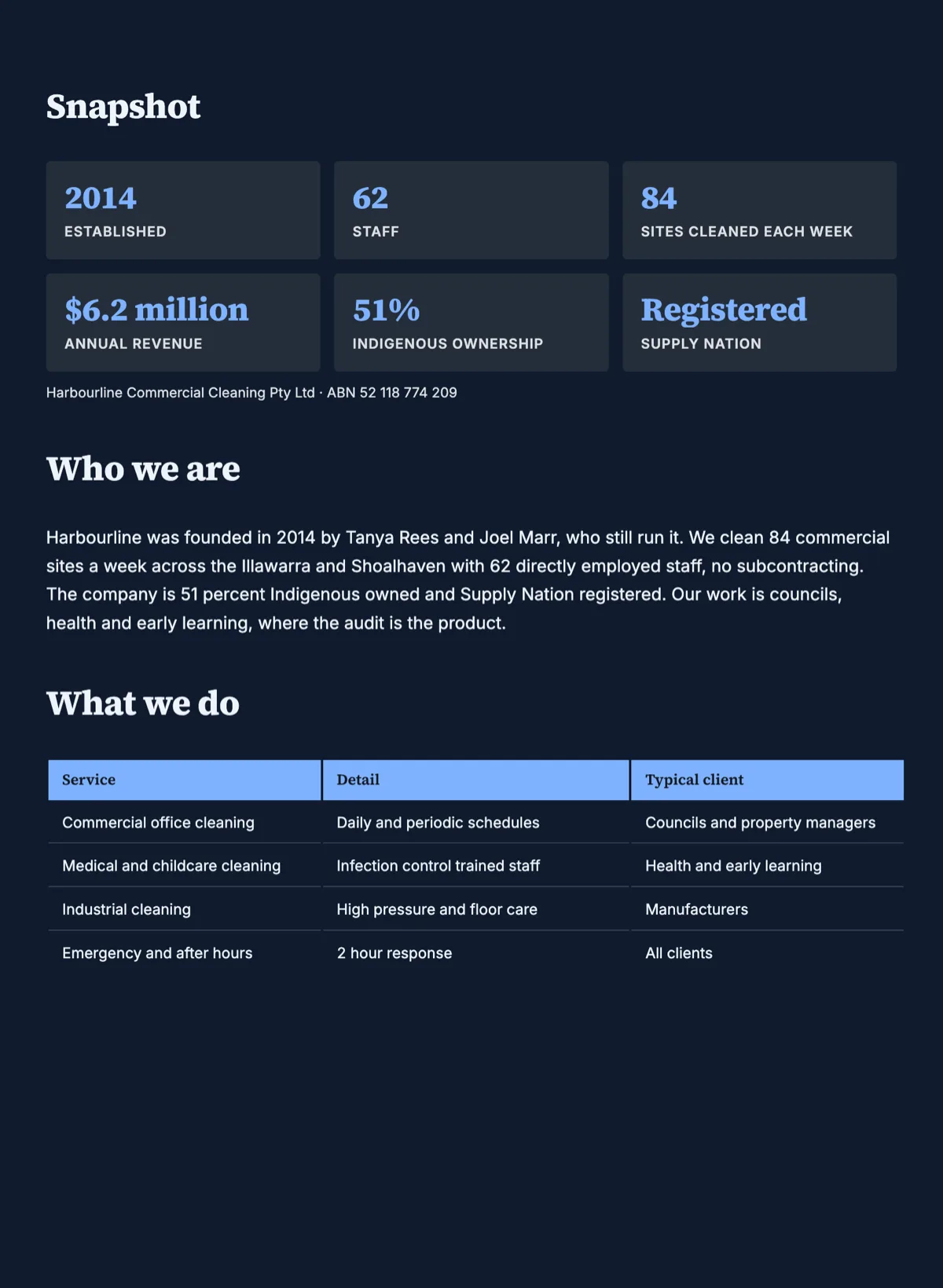 Capability statement template with past performance in numbersA capability statement is read by a procurement officer with forty of them, in about ninety seconds, looking for the numbers that let them shortlist. This one is four pages for a cleaning company chasing council work: the six number snapshot up front, three past contracts with values and outcomes, and the certifications and insurances in a table they can check.
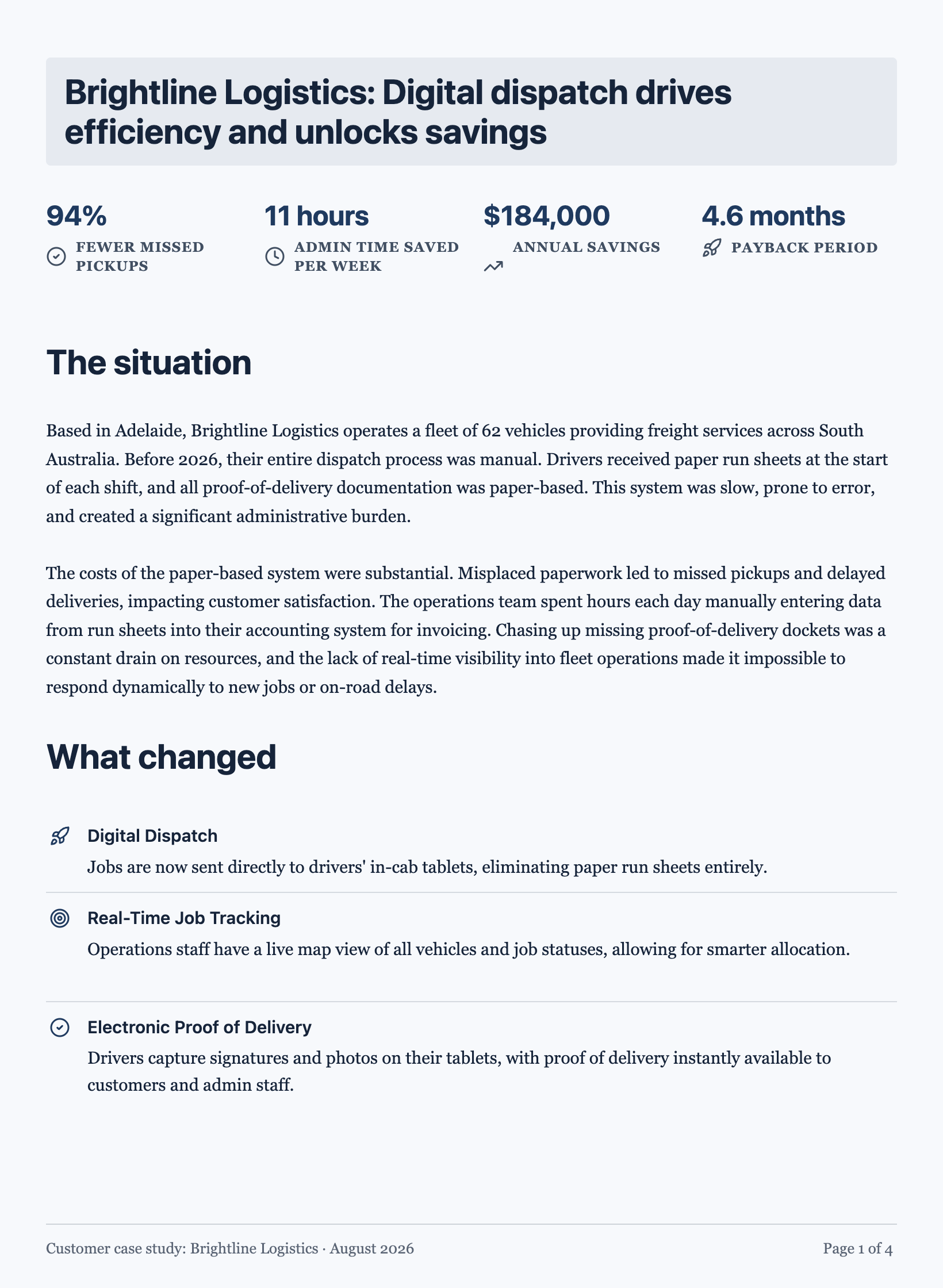 Customer case study template with a before and after tableBrightline Logistics runs 62 trucks out of Adelaide and used to dispatch them with paper run sheets. This case study tells the switch to digital dispatch in figures: 94 per cent fewer missed pickups, 11 admin hours saved a week, $184,000 saved a year and a 4.6 month payback. The rest of the four pages exists to make those four numbers believable.
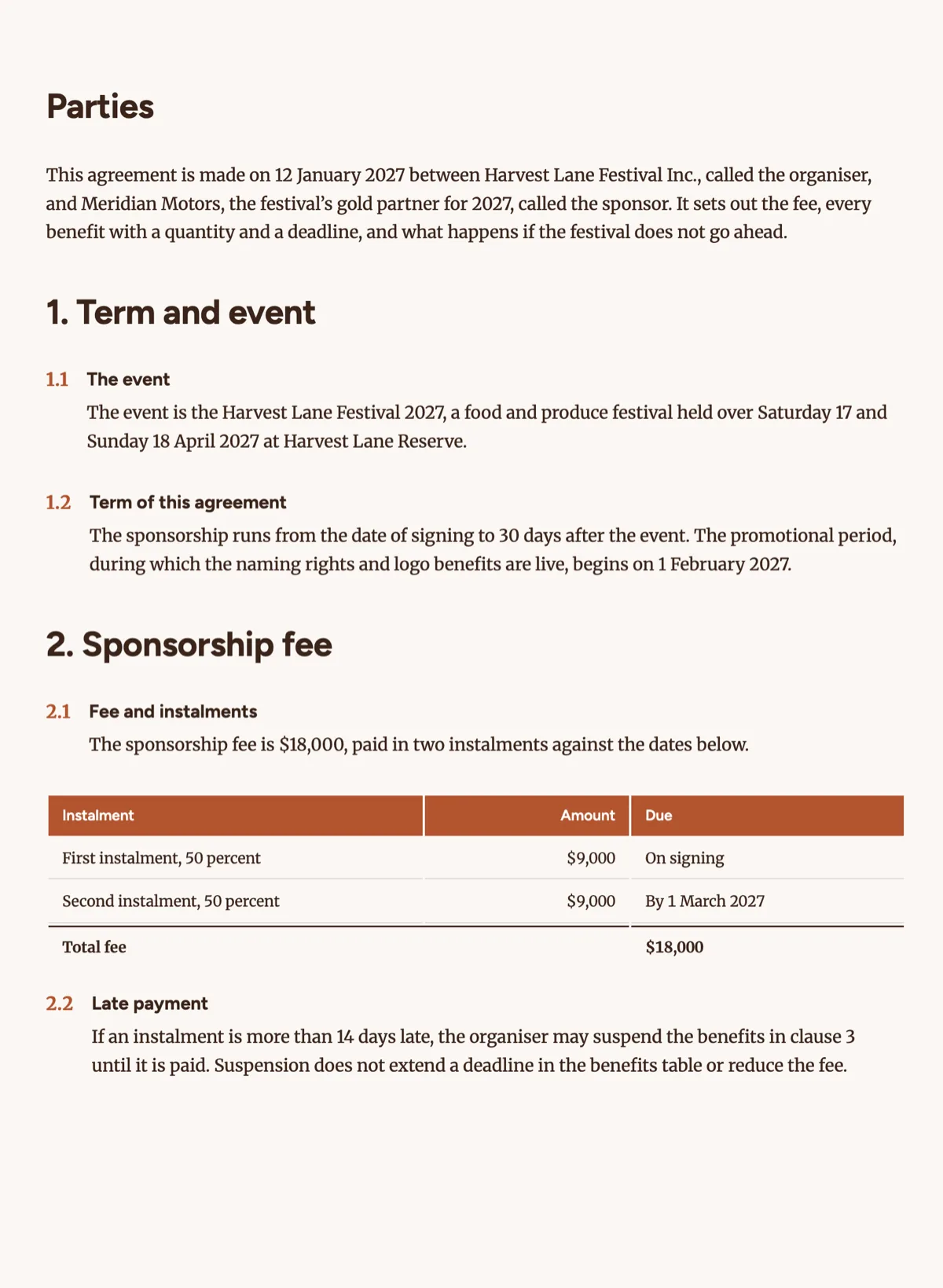 Sponsorship agreement template that lists every benefit with a numberSponsorship falls apart in the delivery, when nobody can find the email that said how many banners and which stage. This agreement is the benefits list as a table with quantities and dates, the $18,000 fee in instalments tied to those dates, and the two clauses sponsors care about most: exclusivity, and what happens if the event does not go ahead.
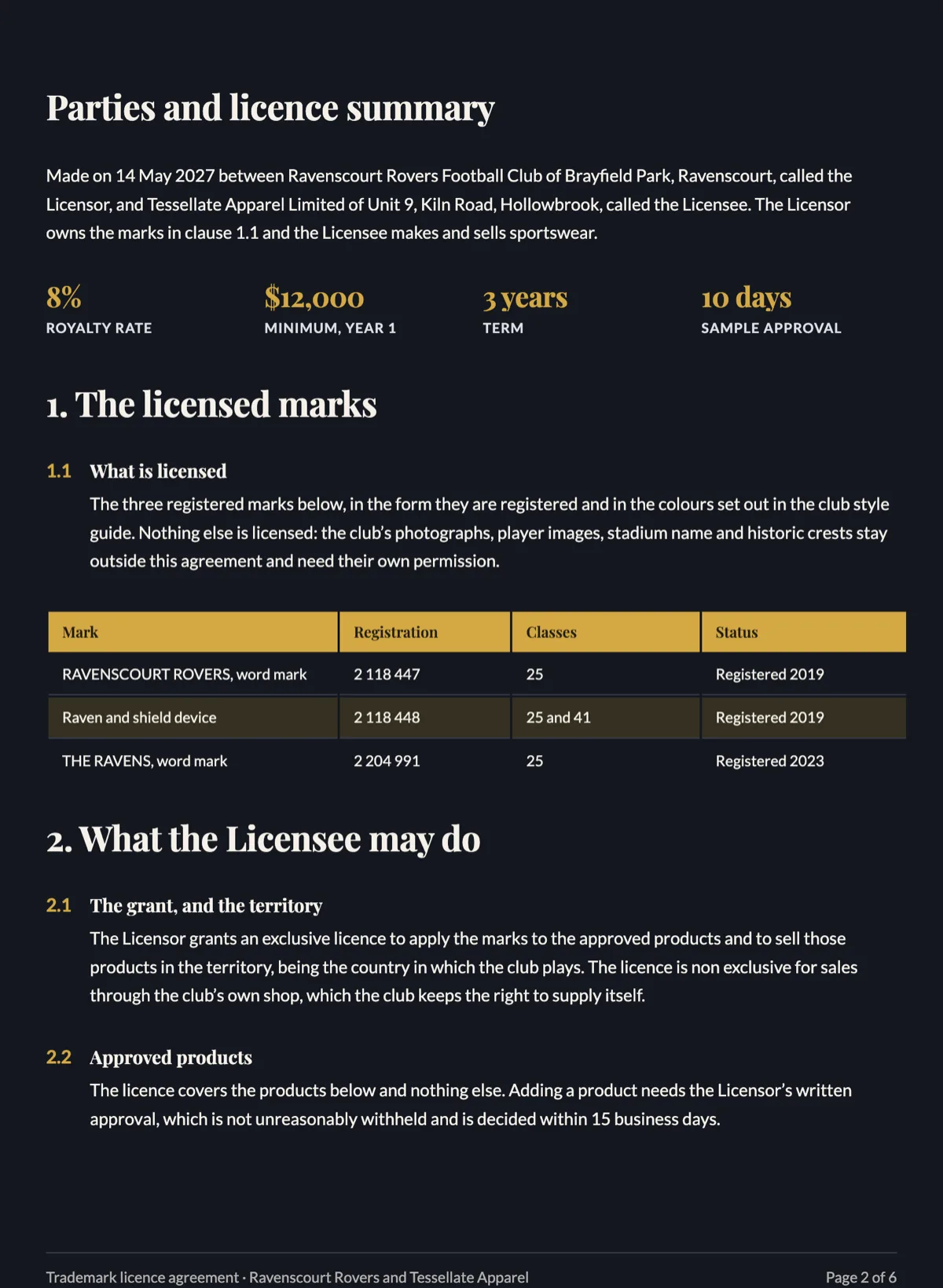 Trademark licence agreement with quality control and royaltiesA trademark licence lets someone else put your mark on their goods, and the clause that keeps it worth doing is quality control. This one licenses three registered marks from a football club to an apparel maker for three years, at 8 per cent of net wholesale sales with a rising minimum, and approval of every pre production sample in ten business days.
Questions people ask
Can a supplier name a client without permission?
Often not. Standard confidentiality clauses usually cover the terms of the agreement and frequently its existence too, which read literally stops the supplier saying it works for the client. A publicity clause is the carve out that makes credentials use lawful, and without one the safe assumption is that naming the client is a breach.
Can a client logo be used on a website?
Only if the contract allows it, because a logo is a trade mark. Where use is permitted, the clause should require the supplier to use the files the client supplies and to follow its brand guidelines, and should give the client a right to ask for removal on notice. Twenty business days is a common removal deadline.
What is the difference between a client list and a testimonial?
A client list states a fact about who the supplier has worked for. A testimonial or a quote implies the client recommends the supplier, which is a stronger claim and must be accurate. Representations made in trade are subject to the prohibition on misleading or deceptive conduct, so endorsement should be handled separately from factual credentials use.
Should a case study need approval?
Usually yes, because case studies describe results and can touch pricing, sales data and strategy. A workable process gives the client a set review period, commonly 10 business days, and requires the supplier to remove anything the client objects to. That is faster than a general consent right with no deadline attached.
When can work be shown publicly?
Most disputes disappear if permitted use is tied to public launch. Before launch, the client has real reasons to keep the work quiet. After launch, the work is already visible and the objection usually falls away. Suppliers should also agree what happens to work that is cancelled before launch, since that is often what they most want to show.
Can a client require its name to be removed later?
Many clauses allow it, and suppliers generally accept the right for live channels such as a website or a client list. What suppliers ask to exclude is material already printed or already published elsewhere, since those cannot be recalled. Setting a removal deadline in the clause avoids arguing about what is reasonable afterwards.
Put the clause in a finished document
The button opens the document generator with a starting description already filled in. Change it to match your own agreement before you run it.
Create a document with OneCraftRelated clauses
- Non disparagement clauseA non disparagement clause stops a party making negative statements about the other. Sample settlement wording, mutual versions and review site carve outs.
- Confidentiality clauseA confidentiality clause inside a wider contract, not a standalone NDA. Sample consulting wording, mutual and one way variants, the tail period and exceptions.
- Licence grant clauseA licence grant clause gives permission to use intellectual property without owning it. Sample photo licence wording and the six terms every grant settles.
For everything the document generator can do, see the document maker.
Step by step in the builder: Create a document with AI, then Document builder components.
Written and checked by the OneCraft team. Last checked .