Kelvin Ridge Response to CVCA/2026/114

RFP response presentation

Twelve slides for the presentation stage of a public tender, from Kelvin Ridge Environmental, an invented contractor, to an invented combined authority buying a flood warning network. The agenda is the evaluation criteria in order, compliance is shown as the threshold beside the offer rather than as prose, and social value gets a slide of its own because in UK public procurement it carries its own weighting. The price is on the last slide and matches the sealed schedule.

Create a presentation with OneCraft12 slides, read in order

Every slide, in order

The whole deck as it renders, one slide after another. Read it the way the audience would.
TENDER CVCA/2026/114

PRESENTATION STAGE · 6 OCTOBER 2026

Measure.

Warn.

Maintain.

THE BID IN THREE SENTENCES

You asked for 214 river and surface water monitoring points, a warning platform the duty officer can trust at 3am, and four years of maintenance at a fixed price. We have built and now maintain 611 of these sites for three other authorities. Our price is £6,248,000 and it does not move.

Kelvin Ridge Environmental, flood warning telemetry framework

Aisha Mardell

Bid Director, Kelvin Ridge Environmental

Slide 1 · cover · Names the tender reference and the three things the bid is actually about, before any claim.

CONTENTS

Six sections

01
Understanding

What we think you are buying, in our words, so you can correct us before we spend forty minutes on the wrong thing.

02
Compliance

Every mandatory requirement in section 4 of the ITT, with the threshold you set and the number we are offering.

03
Method

The five stage method statement, weighted 25 of the 60 quality marks. This is the longest section.

04
Programme

Mobilisation across 26 weeks, the delivery structure, and the risks we think are real rather than generic.

05
Social value

The 10 percent weighting, answered as eight commitments we will accept as contract conditions.

06
Price

The 30 percent weighting. Five lines, fixed for the full term, with the maintenance element indexed once a year.

02

Slide 2 · agenda · The agenda mapped one to one onto the published evaluation criteria and their weightings.

What You Asked For

Calder Vale is not buying sensors. It is buying the confidence to issue a warning at three in the morning on the strength of one screen. That is why the ITT weights data availability above installation speed, and why the 30 minute telemetry gap in section 4.6 is a pass or fail rather than a scored item. If that reading is wrong, tell us now and the next forty minutes will be more useful.

The line we think matters

Section 4.6 says a site is unavailable after 30 minutes without a reading, and that availability is measured per site rather than across the estate. Averaged across 214 sites, a 99 percent estate figure still allows two sites to be dark all year. Measured per site, it does not. Everything in our method follows from that single sentence.

214 monitoring points across nine catchments, 61 of them on watercourses with no existing gauge

Scope

A warning platform that a duty officer can read in one screen, with no manual reconciliation

Platform

Four years of maintenance at a fixed price, with two optional twelve month extensions

Term

Per site availability of 99.2 percent, measured monthly and reported to the authority

Standard

03

Slide 3 · content · Proves the bid team read the ITT by restating the requirement in plain language, including the part most bidders miss.

Compliance With Section 4

Every mandatory requirement, the threshold in the ITT, and what we are actually offering.

How we hold 99.2 percent per site

Dual path telemetry on every site. The primary path is the mobile network. The secondary is a 169MHz radio link into one of eleven repeaters we already own across the Calder and Ryburn catchments.

A site that loses mobile keeps reporting. A site that loses both is physically damaged, and that is a visit, not an outage we can engineer away.

Battery and solar are sized for 21 days of no sun in December, measured at our Todmorden test rig rather than taken from a datasheet.

Every reading is written twice, once to the platform and once to a local buffer that backfills when the link returns. A 30 minute gap is filled retrospectively and the record shows both the gap and the fill.

Threshold Against Offer

Mandatory requirement
ITT threshold
Kelvin Ridge
Per site availability
98.5% monthly
99.2% monthly
Telemetry gap before unavailable
30 minutes
15 minutes
Autonomy without mains or sun
14 days
21 days
Attendance, priority 1 fault
24 hours
8 hours
Data retention
7 years
10 years
Sites installed per week
4
7
Open data export format
CSV
CSV and WaterML 2.0
Thresholds quoted from ITT section 4, issued 14 July 2026. Our figures are contractual, not aspirational.

04

Slide 4 · comparison · Answers the mandatory requirements as a matrix of threshold against offer, so the panel can score it without hunting.

Method Statement

Survey and design

Label

Install

Label

Commission

Label

Operate

Label

Hand back

Label

Survey

All 214 points are walked before anything is ordered. We record bank stability, signal strength on both paths, sun angle and landowner. 61 sites have no gauge and will need a stilling well.

Install

Seven sites a week, two crews, working upstream to downstream within a catchment so a whole catchment goes live together rather than leaving orphan sites reporting into nothing.

Commission

A site is not accepted until it has produced 14 consecutive days of clean readings on both telemetry paths and survived one forced failover. The authority signs the acceptance, not us.

Operate

One named engineer per catchment, an eight hour response on priority 1, and a monthly availability report per site. Faults are visible to your duty officers on the same screen as the readings.

Hand back

At the end of the term the assets, the calibration history and the raw data are yours in an open format inside ten working days, whether or not you re-appoint us. That is a clause, not a promise.

05

Slide 5 · process · The method statement, which carries the largest single block of quality marks.

Mobilisation

Twenty six weeks from award to the last catchment live, with the first warnings issued in week 13.

Task
WK 1-4
WK 5-8
WK 9-13
WK 14-17
WK 18-21
WK 22-26
Contract and TUPE
Programme
Award to start on site
Site surveys, 214 points
Programme
Two survey teams
Manufacture and stage
Field
Build to survey findings
Calder catchment install
Field
68 sites
Ryburn and Colne install
Field
81 sites
Upper moorland install
Field
65 sites, weather dependent
Platform and integration
Systems
Duty officer screen live
Failover and load testing
Systems
Forced failover per site
Acceptance by catchment
Assurance
Authority signs each one
Maintenance term begins
Assurance
Year 1 of 4

06

Slide 6 · timeline · Mobilisation as a dated programme so the panel can see when the first catchment actually goes live.

Who Delivers It

Six named leads, all on the contract full time except the commercial and community roles.

Contract Director
Aisha Mardell. Single point of accountability to the authority for the whole term.
Programme
Marcus Dell. Runs the 26 week mobilisation and the monthly report.
Planner
Two survey leads
Field Delivery
Roshan Iyer. Two install crews and the maintenance rota.
Crew A
Crew B
Standby
Systems
Nadia Brooke. Platform, telemetry and the duty officer screen.
Integration
Data quality
Safety
Gareth Lowe. Water safety, lone working and confined space.
Site audits
Training
Commercial
Priya Ratnam. Change control, payment and the price book.
Quantity survey
Community
Elin Vaughan. Landowner consent and the social value plan.
Landowners
Schools

07

Slide 7 · tree · Names the people who will actually hold the contract, which is what the panel scores under resourcing.

Where It Goes Wrong

The nine risks we have actually seen on the three comparable contracts we run, and what we do about each.

MOBILISATION

DELIVERY

MAINTENANCE

Programme

Technical

Commercial

Landowner consent

Consent for 61 new sites starts in week 1, not week 9. Elin owns it.

Winter on the moor

The 65 upland sites are scheduled for weeks 18 to 21, not December.

Engineer turnover

Named engineers per catchment, with a documented handover between them.

Signal survey error

Both telemetry paths are tested on site before any kit is ordered.

Stilling well silting

The 61 new gauges get a desilting visit twice a year, priced in.

Firmware drift

One firmware version across the estate, updated in a scheduled window.

TUPE cost unknown

Priced on the transfer data you issued. No claim if the list is right.

Scope creep on new sites

A published price per additional site, fixed for the full four years.

Indexation dispute

Maintenance indexes once a year to CPIH, capped at four percent.

08

Slide 8 · framework · A contract specific risk view rather than a generic register, split by phase and by kind of risk.

TRACK RECORD

Three Live Contracts

SITES MAINTAINED

611

across three authorities, oldest contract from 2019

PER SITE AVAILABILITY

99.4%

twelve month rolling, worst single site 98.7%

PRIORITY 1 RESPONSE

5.2h

median attendance against an 8 hour commitment

SITES BUILT 2025

184

against a programme of 176

ON PROGRAMME

3 of 3

no contract handed over late since 2019

RIDDOR EVENTS

0

across 41,000 site visits in the last four years

STAFF TURNOVER

6%

field engineers, twelve month rolling

CHANGE CLAIMS

£0

no compensation event raised on any of the three

09

Slide 9 · metrics · Track record on comparable contracts, stated as the same measures the ITT scores.

Social Value

Eight commitments, all of which we are content to see written in as contract conditions with a remedy attached.

Four apprentices

Two field, two data, recruited within the Calder Vale boundary.

Local labour

Both install crews based at a depot inside the authority area.

Supply chain

Forty percent of subcontract spend with firms under fifty staff.

Schools programme

Twelve catchment science sessions a year at local secondaries.

Enclosure reuse

Existing kiosks refurbished rather than replaced at 88 sites.

Fleet

Electric vans for the maintenance rota from year two.

Bank planting

Native planting at every new gauge, agreed with the landowner.

Volunteer gauges

Training and kit for thirty community flood wardens.

10

Slide 10 · checklist · Answers the social value weighting with commitments the authority can write into the contract.

£6,248,000 TOTAL

Price Schedule

Survey and design

214 site surveys and 61 new gauge designs

£742,000

Supply and install

Sensors, enclosures, dual path telemetry, civils

£2,910,000

Platform

Warning platform, integration, ten year retention

£684,000

Maintenance, 4 years

Fixed, indexed once a year to CPIH capped at 4%

£1,592,000

Risk allowance

Held by us, drawn only against agreed change

£320,000

11

Slide 11 · pricing · The price schedule as submitted, so nothing on screen contradicts the sealed commercial envelope.
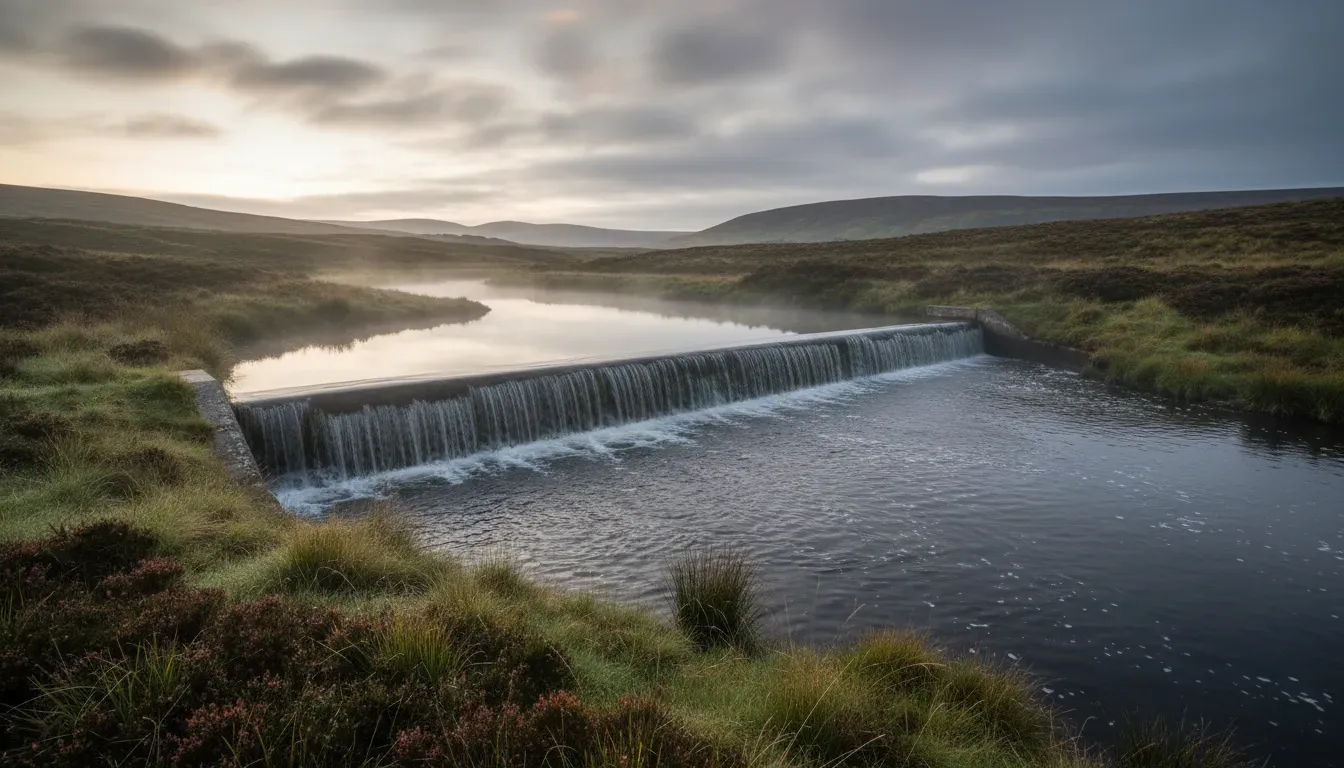
A wide, calm photograph of an upland river gauging weir in northern England at first light, concrete sill, dark water, wet moorland grass on the banks, low mist, overcast sky, documentary style, no people, no text, no signage

Our Conclusion

The hard part of this contract is not the first 214 installations. It is year three, on a wet Tuesday, when a gauge on the upper Ryburn stops reporting and somebody has to decide whether to warn 400 households. We have priced for that day rather than for the opening one. Every number in this presentation is contractual, the price is fixed, and the exit clause hands you your own data in ten days whether you re-appoint us or not.

BID

bids@kelvinridge.example

DIRECT

Aisha Mardell, 01422 496 118

REFERENCE

CVCA/2026/114

CLARIFICATIONS

Open until 13 October 2026

12

Slide 12 · closing · Closes on the one claim the whole bid rests on, and hands over the named contacts for clarification questions.

The structure

What each slide is doing, so you can reuse the order even with different content.

Slide 1cover
Names the tender reference and the three things the bid is actually about, before any claim.
Slide 2agenda
The agenda mapped one to one onto the published evaluation criteria and their weightings.
Slide 3content
Proves the bid team read the ITT by restating the requirement in plain language, including the part most bidders miss.
Slide 4comparison
Answers the mandatory requirements as a matrix of threshold against offer, so the panel can score it without hunting.
Slide 5process
The method statement, which carries the largest single block of quality marks.
Slide 6timeline
Mobilisation as a dated programme so the panel can see when the first catchment actually goes live.
Slide 7tree
Names the people who will actually hold the contract, which is what the panel scores under resourcing.
Slide 8framework
A contract specific risk view rather than a generic register, split by phase and by kind of risk.
Slide 9metrics
Track record on comparable contracts, stated as the same measures the ITT scores.
Slide 10checklist
Answers the social value weighting with commitments the authority can write into the contract.
Slide 11pricing
The price schedule as submitted, so nothing on screen contradicts the sealed commercial envelope.
Slide 12closing
Closes on the one claim the whole bid rests on, and hands over the named contacts for clarification questions.

What makes this deck work

The agenda is the scoring sheet

Six sections in the order the authority published its criteria, with the weighting written into each card. A panel scoring against a sheet can follow the deck without hunting, and the bidder never has to ask where they are.

Compliance is a table, not a claim

Every mandatory requirement appears with the threshold the buyer set beside the number being offered. Seven rows replace several pages of assurance language, and each one is checkable against the written bid.

The risks are contract specific

Nine risks arranged by phase and by kind, all of them things this bidder says it has actually seen on comparable contracts. A generic register scores nothing; a landowner consent problem named in week one does.

Questions people ask

What goes in an RFP presentation, and in what order?

Cover, agenda mapped to the evaluation criteria, your understanding of the requirement, compliance against the mandatory items, the method, the programme and team, risk, past performance, social value and price. Follow the buyer criteria order rather than your own.

Do the slides become part of the scored bid?

It depends on the buyer. US federal rules explicitly allow oral presentations to substitute for or augment written information, and the recording method may be copies of the briefing slides. Certifications and the signed offer still have to be written, so never contradict the written submission on a slide.

How much of the deck should be about social value?

Enough to match the weighting. UK central government now bands it by contract value, with a minimum of 10 percent of the total score on contracts from £1m to £5m and a minimum of 20 percent above £5m. This example gives it a full slide of eight commitments.

Should the price be in the presentation?

Summarise it and keep the detail in the written schedule. This deck shows five lines and a total on one slide. The most common feedback on losing bids is failing to answer the specific question asked, so put the effort into the quality sections rather than into re presenting the pricing.

Build your own in about a minute

The button below opens the generator with this use case already described. Change the wording to match your own, generate, then edit anything you like.

Make my rfp response presentation

Other presentation examples

Want the steps in the builder? Read Make a presentation with AI, then export it to PowerPoint or PDF. For everything this generator can do, see the presentation maker.