Riverbend Council flood recovery
Program streams slide with four cards over a photo
A program streams slide has to answer two questions before anything else: how much is in each stream and who answers for it. This one belongs to a fictional Riverbend Council flood recovery program, and each of the four cards carries a budget, a lead and a completion date.
What is on the slide
- Program framing
- Four streams, one program, $44.7M to June 2028 from the state recovery grant and council reserves. Each card names the budget and the officer who answers for it at the monthly program board.
- Housing, $14.2M
- Repairs to 188 flood damaged homes and 22 rebuilds on raised slabs. Led by Dana Whitlock, housing recovery lead. Complete by December 2027.
- Roads, $22.6M
- Nine road sections and the Miller Street bridge, rebuilt to the 2022 flood level plus 600 millimetres. Led by Sam Iona, works director. Complete by June 2028.
- Business support, $4.8M
- Grants to 143 main street businesses and rent relief for 31 tenants of council buildings. Led by Priya Raman, economic development. Closes June 2027.
- Wellbeing, $3.1M
- Twelve community recovery workers and a drop in centre in each of the four worst hit suburbs. Led by Tom Bergen, community services. Funded to June 2028.
When this is the right slide
Four cards over a photograph suit a program streams slide when the streams run in parallel, each carries a budget and an owner, and the program has an image of its own to sit behind them.
What to swap it for
Grouping: Problem Banner + 4 Column Sections. Swap to the problem banner layout when the program has to be introduced by the problem it answers, since that banner sits above the four columns and this layout has no room for it.
What this slide shows
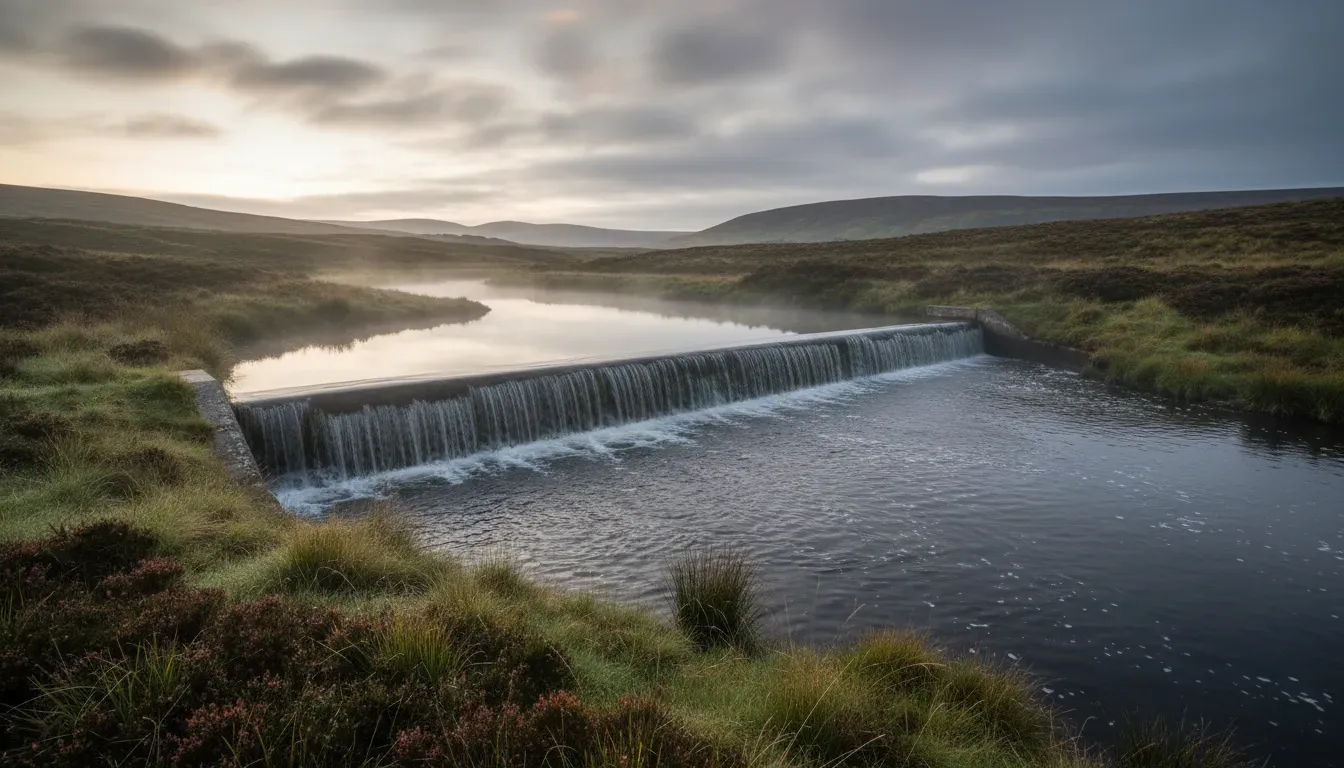
A brand coloured title reads Riverbend Flood Recovery, with a two line intro saying four streams, one program, $44.7M to June 2028 from the state recovery grant and council reserves, and that each card names the budget and the officer who answers for it at the monthly program board. A wide photograph of a river running through open country fills the lower half of the canvas, and four cards float over the boundary between the copy and the picture. Housing, $14.2M, covers repairs to 188 flood damaged homes and 22 rebuilds on raised slabs, led by Dana Whitlock, housing recovery lead, complete by December 2027. Roads, $22.6M, covers nine road sections and the Miller Street bridge rebuilt to the 2022 flood level plus 600 millimetres, led by Sam Iona, works director, complete by June 2028. Business Support, $4.8M, covers grants to 143 main street businesses and rent relief for 31 tenants of council buildings, led by Priya Raman, economic development, closing June 2027. Wellbeing, $3.1M, covers twelve community recovery workers and a drop in centre in each of the four worst hit suburbs, led by Tom Bergen, community services, funded to June 2028.
When this is the right slide
Use it at the opening of a program board pack, a community briefing or a funding report, where the audience needs the shape of the whole program before any stream is discussed in detail. It suits a recovery program, a capital works program, a transformation portfolio or any funded piece of work with three to five parallel streams. It is the wrong slide when the program starts from a problem that has to be stated first, because the layout has no banner above the cards for it. It is also wrong when the streams are sequential rather than parallel, where a timeline or a phase layout shows the handovers. And it needs a photograph that belongs to the program: a generic stock image under four budget figures makes the whole slide look like a brochure.
How to adapt it
First, make the card budgets add up to the number in the intro, and say where the money comes from. A stream slide without a total invites the question immediately, and a total that does not match the cards ends the discussion of anything else. Second, name a person on every card and keep the role after the name, because a program board turns over and the role outlasts the individual. Third, write the date in the same form on all four cards. This one uses complete by, closing and funded to, which are three different kinds of end and each is accurate for its stream. If all four dates mean the same thing, use the same words, and if they do not, say so on the card rather than in the footnotes.
What makes this slide work
The four budgets add to the program total
$14.2M plus $22.6M plus $4.8M plus $3.1M is $44.7M, which is the figure in the framing paragraph. A reader who adds the cards gets the same answer as the headline, which is the first thing an auditor, a councillor or a journalist will test. A stream slide where the parts do not reconcile with the whole loses the room for the rest of the session.
Every stream has a person, not a department
Dana Whitlock, Sam Iona, Priya Raman, Tom Bergen. Naming the housing recovery lead rather than the housing team means a question in the meeting has somewhere to go. It also makes the slide usable as a standing item: at the next program board the same four names are read against the same four dates.
Each card carries a scope and a finish date
188 repairs and 22 rebuilds by December 2027. Nine road sections and the Miller Street bridge by June 2028. Grants to 143 businesses closing June 2027. Twelve recovery workers funded to June 2028. Scope and date together let a reader see that business support finishes a year before the road works, which is the sort of sequencing question a stream slide exists to raise.
Questions people ask
What is a program stream?
A parallel block of work inside a larger program, with its own budget, its own lead and its own schedule. Streams run at the same time and report into one board. They differ from phases, which run one after another, and from projects, which usually sit inside a stream rather than beside it.
How many streams fit on one slide?
Four on this layout, and three to five in general. Above five the cards get too narrow to carry a budget, a lead and a date together. A program with eight streams is usually two programs, or has streams that are really projects, and grouping them into four families makes both the slide and the governance clearer.
Should each stream show a budget?
Yes, if the audience is a board, a funder or a community meeting. The budget is the first thing anyone wants and the first thing they will ask for if it is missing. Make the four add up to the program total and say where the money came from, as this slide does with a state grant and council reserves.
Why name a person rather than a team?
Because a question needs somewhere to go. A card that says led by the works team gets the answer that someone will come back to you; a card that says led by Sam Iona, works director, gets an answer in the meeting. Keep the role beside the name so the slide survives a change of staff.
When should the streams be split across two slides?
Split when each stream needs its own milestones, which is normal once a program is under way and the board wants progress rather than structure. A common pattern is one structure slide like this at the front and one slide per stream after it, each with milestones, spend to date and risks.
What photograph suits a program slide?
One taken in the place the program is about, cropped wide and quiet enough to carry cards over it. This slide uses the river the program exists because of. Avoid anything busy or high contrast in the middle band, since four cards sit on that boundary and detail behind them makes the text hard to read.
Build your own in about a minute
The button below opens the generator with this use case already described. Change the wording to match your own, generate, then edit anything you like.
Make one like thisOther slide examples
Strategic priorities slide with three themes and five columns
A strategy slide fails when it lists initiatives without saying what they are in service of, so the themes have to sit above the work rather than beside it. This one covers a 2027 plan for Westport Health District, a fictional regional health service, with three themes and five funded workstreams.
Balanced scorecard slide with four perspectives in a 2x2
A balanced scorecard slide is only balanced when every perspective carries a measure, because four lists of intentions is a strategy poster rather than a scorecard. This one belongs to Aurora Aged Care, a fictional provider, and each quadrant holds two objectives and the two numbers that track them.
Company values slide with four pillars and a foundation band
Values written as single words cannot be kept or broken, which is why a values slide is only useful when each value is a sentence about behaviour. This one belongs to Kindred Care, a fictional home care provider, and gives every value four commitments a client could hold the company to.
Want the steps in the builder? Read Add and generate images in slides, then Add, reorder and restructure slides. For everything this generator can do, see the slide maker.
Written and checked by the OneCraft team. Last checked .