Videos
Nonprofit video maker
Charity video has a counterintuitive finding at its centre. A large number describing suffering suppresses the response rather than increasing it, while one identifiable named person increases it. So the cold open is a person, and the statistic waits until after the audience already cares.
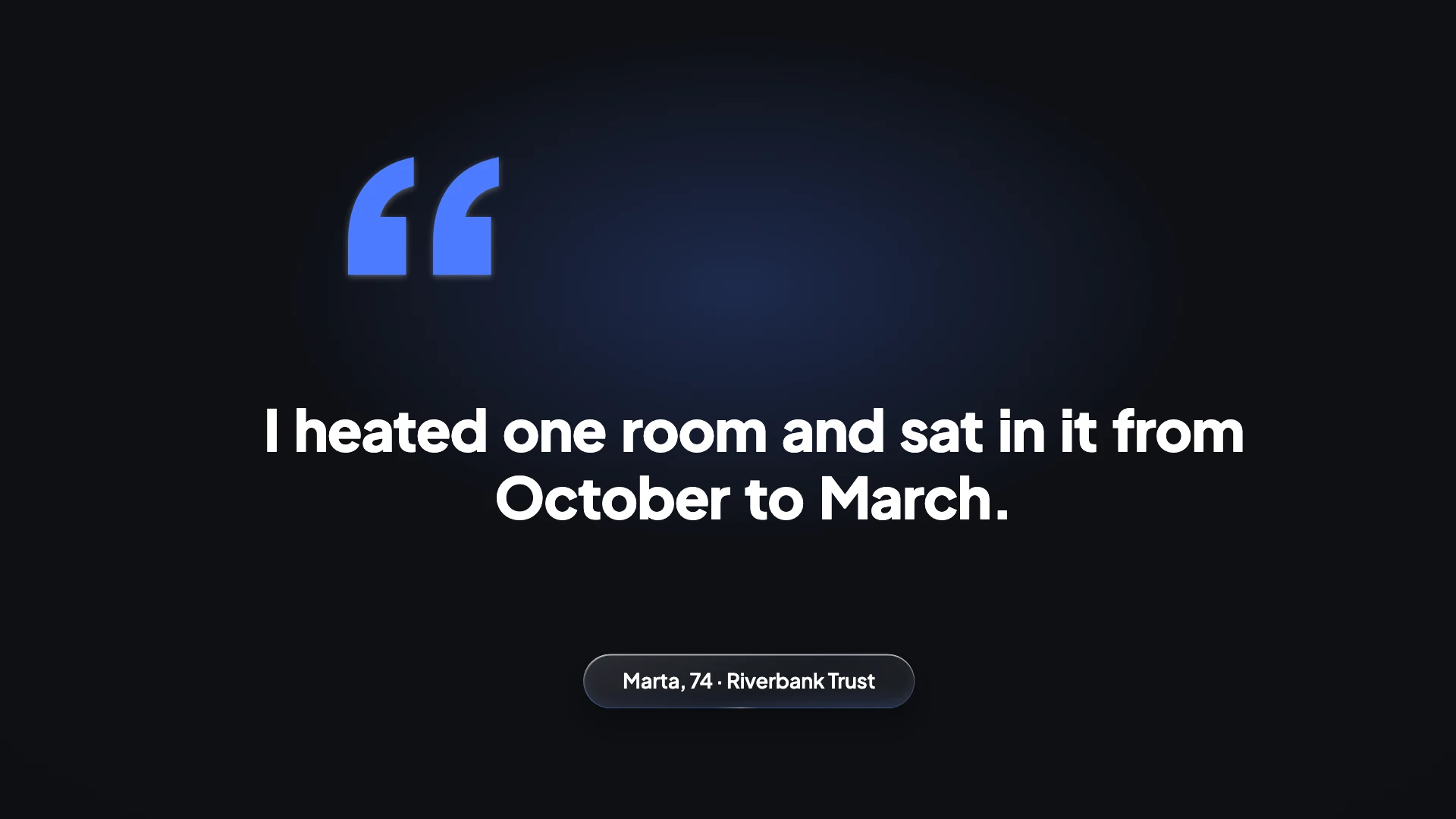
The person, then the problem in their words
Open on one named person rather than an aggregate. Then have the problem told by them rather than narrated over them, which is what the sector's own image codes require: those whose situation is represented should have the opportunity to communicate their stories themselves, in immediate and wider context. Then the intervention shown concretely, then one statistic at most, then the change on the same named person, then the ask, then a thank you that attributes the change to the donor.
The cost handle creates a restricted fund
This is the trap, and it is the most persuasive line in the film. Saying a sum buys a specific thing is a regulated claim: you must not claim a donation will be used for a restricted purpose if it may be used for another, you must state what happens if you raise more or less than the target, and you must hold appropriate evidence for the cost before you make the claim. Guidance for charities is the same: appeal funds become restricted and must be spent on what the appeal said. Derive the figure with finance, not in the edit.
Consent cannot be perpetual
Sector guidance is explicit that an expiry on consent must be provided and shared with contributors, because consent in perpetuity is not supported by data protection law, and that without evidence of informed consent images should not be used for fundraising at all. Informed means a conversation: the contributor understands why you are filming, what the output is and where it will be shown, with forms translated and an interpreter present if the crew does not speak the language.
Children, and the shock rule
For anyone under eighteen, get parent or caregiver consent as standard, involve the child in the conversation from around seven or eight, appoint a safeguarding contact for the shoot, never leave a crew member alone with a child, and never publish a surname or an exact location, which means stripping location metadata from photographs. Separately, fundraising rules prohibit using claims or images people may find shocking merely to attract attention, which rules out the lingering suffering shot as an opener.
The generator behind this page
Every page in this family runs on the same generator; only the advice changes. If you are choosing between them, or you want the full list of what it can do, start here.
How it works, in three steps
Step 1
Get the cost figure from finance first
Before the script. If the sum cannot be evidenced and honoured as restricted spending, use a different line entirely.
Step 2
Open on the person
Upload their photograph first and name them in the brief. The statistic goes after them, and one is the maximum that helps.
Step 3
Record the consent with its expiry
Written, understood, translated where needed, with a date it runs out. Diarise that date, because nothing here tracks it for you.
The full walkthrough with screenshots is in the guide Make a promo video with AI voiceover.
Limits worth knowing
- Photographs are used as uploaded. Nothing strips location metadata, blurs a face or anonymises an image for you.
- A cost figure written into the brief is fixed text in the export, so a change means rebuilding and reissuing.
- Consent, safeguarding and restricted fund obligations are entirely outside the tool. It will print whatever you write.
- There is no filmed interview, so a contributor telling their own story has to be uploaded as a clip or carried as a quote scene.
Questions people ask
How long should an appeal video be?
Sixty to ninety seconds for the appeal and social cut, two to three minutes for a website impact film with a sixty second cutdown. Sector benchmarks put a third of viewers gone by thirty seconds and three fifths gone before two minutes, so the ask has to land inside ninety.
Can I use a statistic at all?
One, and after the person. Leading with an aggregate is what triggers the numbing effect that reduces response. Placed after somebody the viewer already cares about, a figure gives their feeling a scale.
What if the case study details are changed?
Say so on screen. Fundraising rules require that if any details in a case study have been changed, you make that clear. A composite presented as one person is the version to avoid.
Can I use footage from a live emergency?
With great care. Capacity to consent is compromised by shock in an acute situation, and sector guidance points toward producing anonymously in that context rather than gathering consent under pressure.
Make your own video
The button opens the generator with this use case already described. Change the wording to match yours, generate, then edit anything you like.
Create a video with OneCraftRelated pages
Video fonts
Unlike a document, a video does not pair a display face with a body face. One family runs everything, from a five word headline set at 240 pixels down to the caption pill at 26. That is a constraint, and it changes which typefaces are worth choosing.
Faceless video maker
A faceless video maker builds a finished video with nobody on camera: moving type, drawn graphics, your screenshots or stock clips, a synthesised voice and captions burned into the picture. Faceless is a constraint you accept for a reason. Nobody has to be available, nothing has to be filmed twice when a price changes, and the same video can be reissued in another language without anybody appearing to speak it. The trade is that every second has to be carried by type, motion and voice.
Facebook video ad maker
Facebook is the placement where the old advice still holds. The feed autoplays with the sound off, the ad footer sometimes does not render at all, and in-stream lets a viewer skip after five seconds. Everything about how a Facebook video ad is built follows from those three facts.
More finished work of this kind is on the video examples hub.
Written and checked by the OneCraft team. Last checked .