Contract clause
Waiver clause: tolerating a breach without giving up the right
A waiver clause, often headed no waiver, says that a party does not lose a right just because it delays enforcing it, accepts late performance, or lets a breach pass once. It usually adds that a waiver only counts if it is in writing and signed, and that waiving one breach does not waive the next one.
Good commercial relationships run on small tolerances: a late payment accepted, a missed report forgiven. The waiver clause lets a party be reasonable today without being told next year that its patience rewrote the contract.
Nuwan Madhusanka · Co-founder
4 min read · Published
Sample clause
a retail lease between Figtree Arcade Holdings, a fictional shopping arcade owner in Toowong, and a tenant cafe that paid rent late twice during a slow winter before falling behind for a third time
27. No Waiver 27.1 A failure or delay by the Landlord in exercising a right, power or remedy under this Lease does not operate as a waiver of it. 27.2 Acceptance of rent or any other money after a breach, whether or not the Landlord knows of the breach, does not waive the breach or the Landlord's right to terminate for it, unless the Landlord states otherwise in writing. 27.3 A waiver is effective only if it is in writing, signed by the party giving it, and refers to this clause. 27.4 A waiver applies only to the specific instance and purpose for which it is given, and does not waive any later breach of the same or another provision. 27.5 A single or partial exercise of a right does not prevent any further exercise of that right or of any other right.
Sample wording, not legal advice.
Variants
No waiver unless in writing
Most commercial contracts, where the aim is to stop informal conduct from being argued as a waiver.
No right under this Agreement is waived unless the waiver is in writing and signed by an authorised representative of the party waiving the right. No failure, delay, relaxation or indulgence by a party in exercising any right operates as a waiver of that right, and no single or partial exercise of a right precludes any other or further exercise of it or of any other right.
Waiver limited to the instance
A party that expects to grant concessions during the term, such as extra time for a report, and wants each one confined.
A waiver given by a party under this Agreement applies only to the particular breach, obligation or occasion described in it and on the conditions stated in it. It does not waive any other breach or obligation, or the same obligation on a later occasion, and it does not vary this Agreement. A party may withdraw an indulgence on reasonable written notice before the relevant obligation next falls due.
What to negotiate
Acceptance of payment after a breach
Landlords and lenders want express wording that accepting money after a breach does not waive it, because accepting rent can otherwise be treated as electing to continue the lease. Tenants and borrowers accept that, but sometimes ask for a short written warning before a long tolerated practice, such as paying on the fifth rather than the first, can be treated as a breach again.
Who can sign a waiver
A waiver signed by a site manager may not be one the company intended. Requiring an authorised representative, or a named role, protects the waiving party. The other party then knows whose written confirmation it needs before relying on an indulgence, which is fair to both sides.
Waiver against variation
A waiver excuses a breach or suspends a right; a variation changes the contract. Parties sometimes treat a permanent change as a series of waivers, which leaves the change revocable and unclear. Where the change is meant to last, both parties are better served by a signed variation.
The risk of leaving it out
Without a no waiver clause, conduct such as accepting late payments without comment, or continuing to perform after learning of a breach, can be argued to amount to a waiver, an election to affirm the contract, or an estoppel preventing the right being enforced. The party that was accommodating then has to prove it never meant to give anything up.
Election, estoppel and what the clause can and cannot stop
Two doctrines sit behind most waiver arguments. Election applies when a party with a right to terminate for a breach acts in a way consistent only with keeping the contract alive, such as accepting rent that fell due after the breach, which can be treated as choosing to affirm. Estoppel applies when one party leads the other to believe a right will not be enforced and the other relies on that belief to its detriment. A no waiver clause makes both arguments harder, because it tells the other party in advance not to draw conclusions from delay. It is not absolute: a court may still find that clear conduct and genuine reliance override the clause, especially where the tolerance lasted a long time.
Restoring strict compliance after a long tolerance
A party that has accepted late performance for months and now wants strict compliance should say so in writing before relying on the next breach. A short notice stating that the obligation will be enforced from a stated date, and that earlier tolerance is not a waiver, puts the other party on notice and weakens any estoppel argument. The clause supports that step but does not replace it. The same logic applies to reporting deadlines and service levels as well as payment.
Where it sits in a generated document
No waiver wording normally sits with entire agreement, severability and variation among the general clauses. In a generated agreement each of those is numbered separately, which keeps the waiver clause from being folded into a single paragraph where it is easy to miss. The wording is generated from the description with no citations, so lease specific points such as acceptance of rent should be asked for by name.
Documents that carry this clause
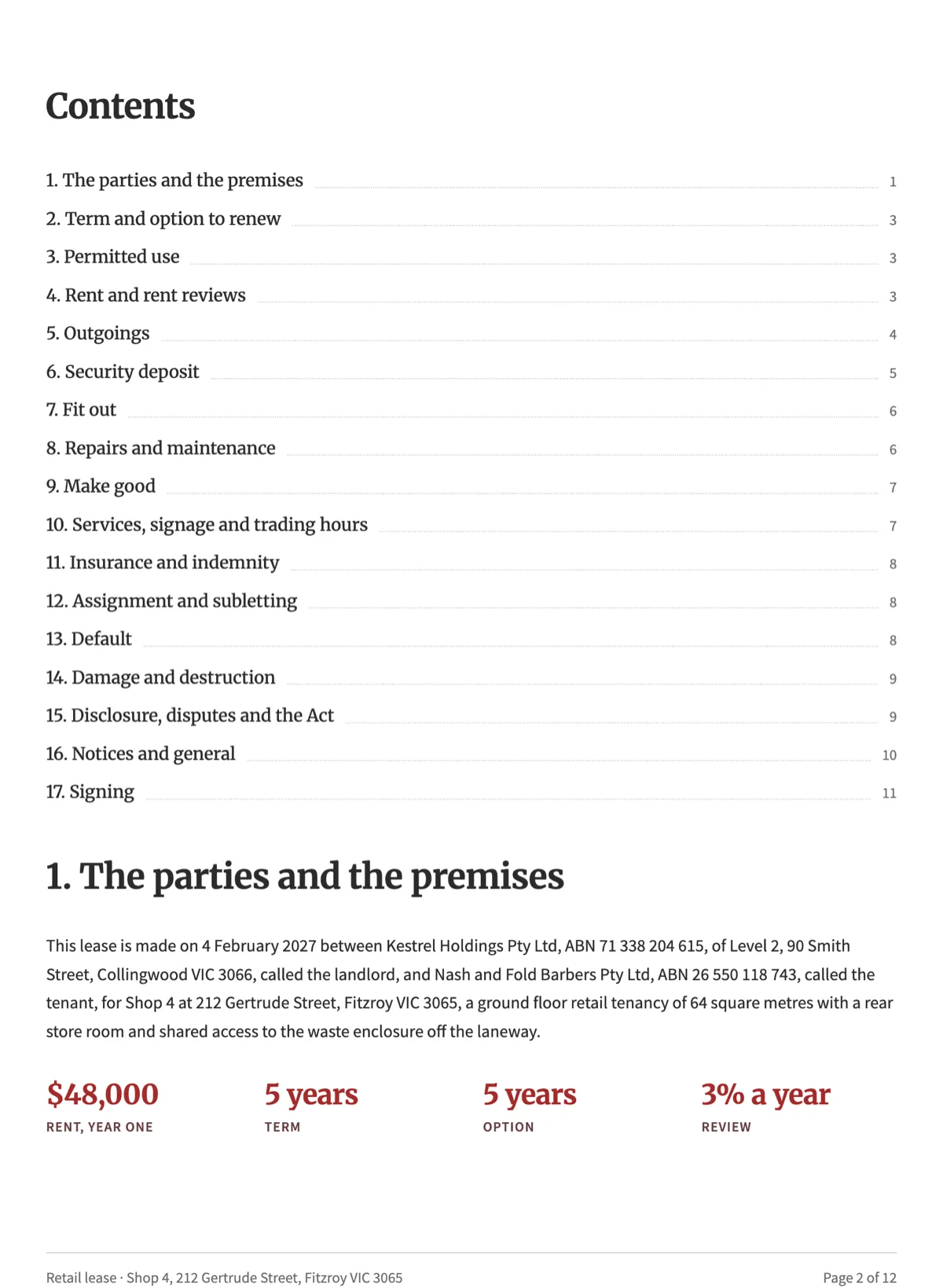 Commercial lease agreement template with outgoings and fit out termsA retail lease is decided by three numbers and two clauses: the rent, the review, the outgoings, the fit out contribution and the make good. This 12 page Victorian lease sets all five out in the open, including the outgoings the landlord is not allowed to recover at all.
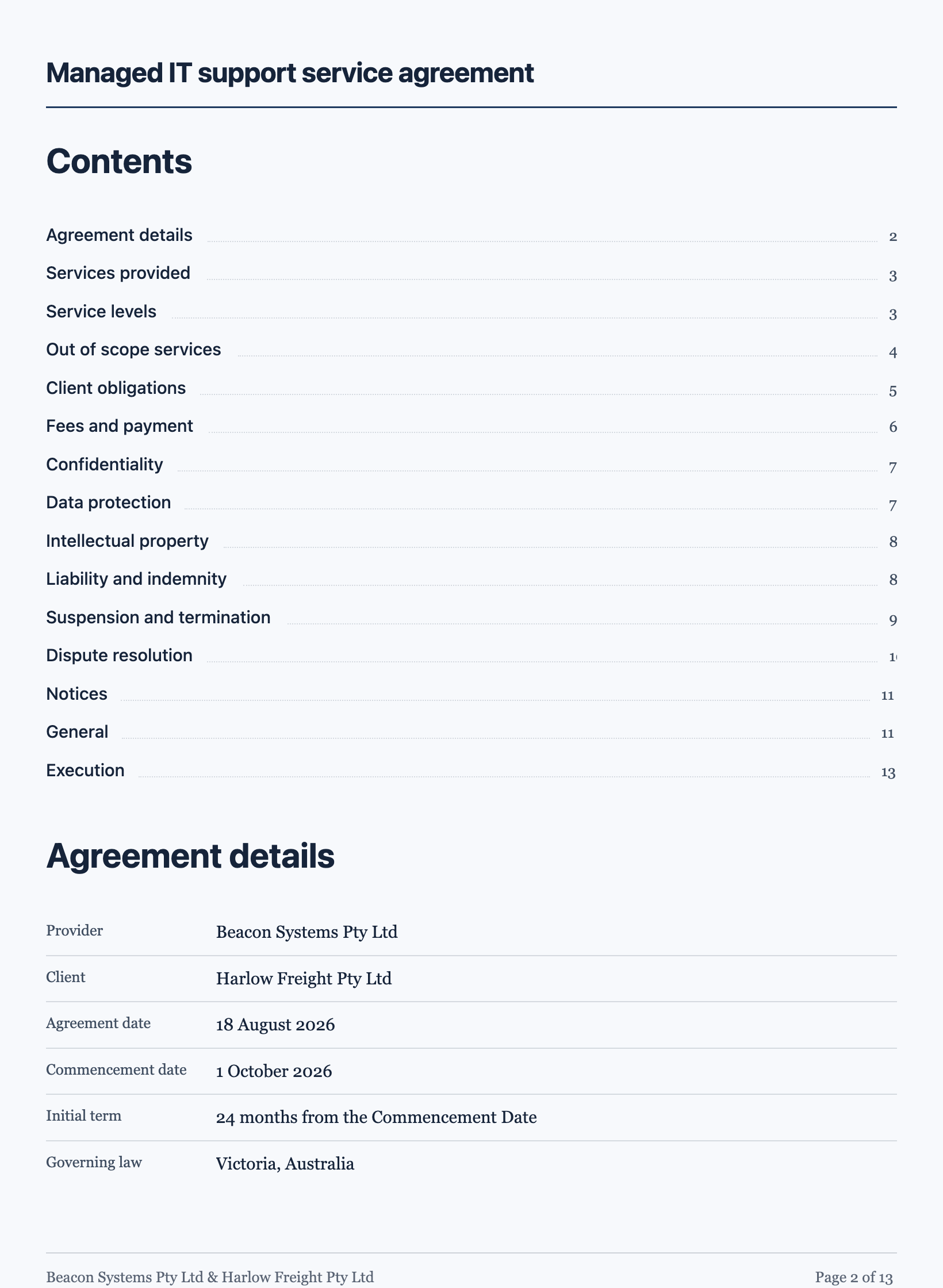 Service agreementBeacon Systems supports Harlow Freight’s IT for an initial 24 months from 1 October 2026 at $8,400 a month plus GST, with 40 hours included and $220 an hour beyond them. Twelve numbered clauses cover the services, a four level severity table, client duties, fees with a CPI adjustment, confidentiality, privacy, IP, a liability cap, termination and a three step dispute ladder.
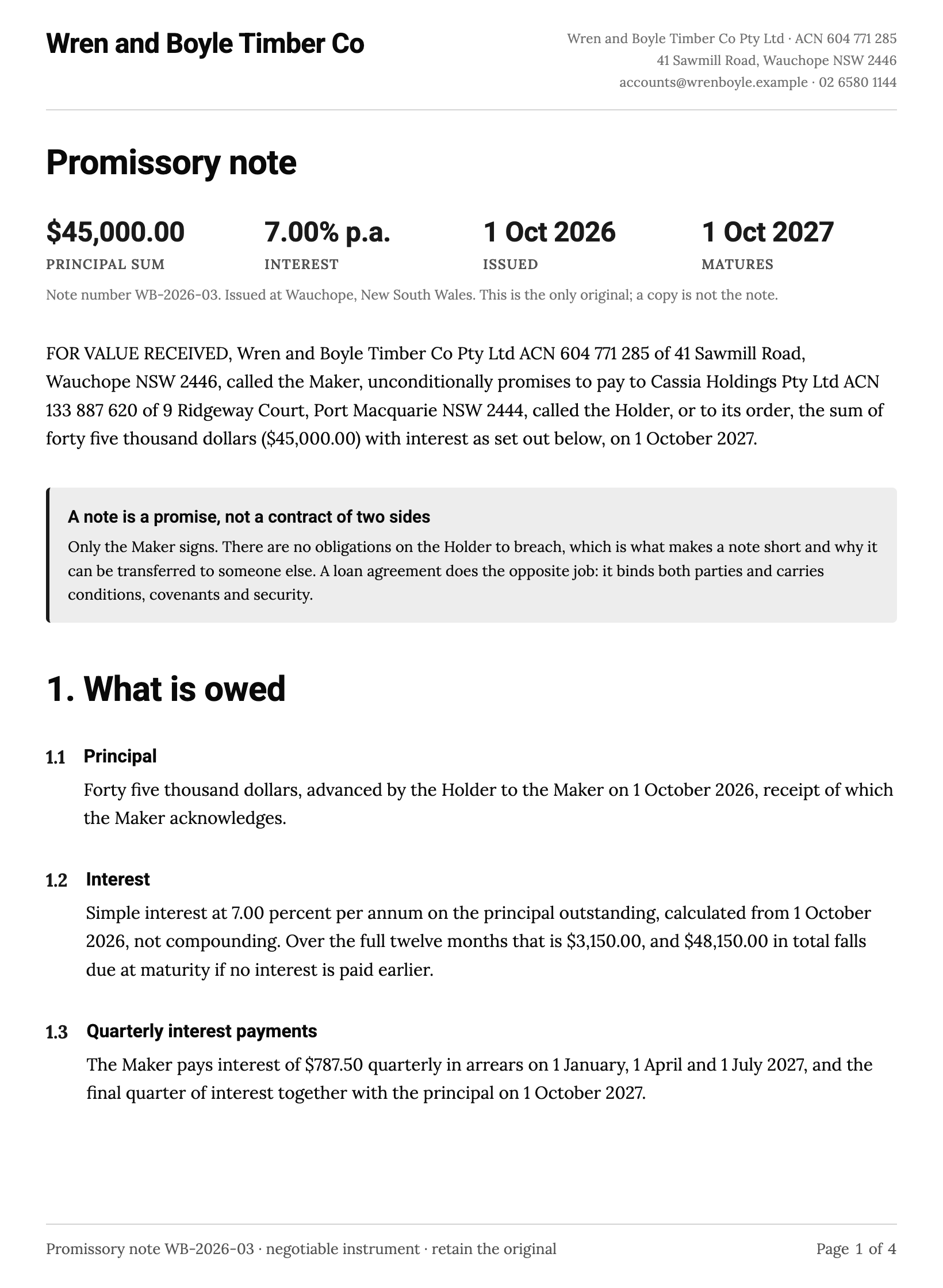 Promissory note templateA timber company owes $45,000 to a private lender and needs one page that says so. No conditions precedent, no covenants, no security. Only the maker signs, which is what keeps a note short and what lets the holder pass it on to somebody else.
Questions people ask
Does accepting late payment waive the right to terminate?
It can, depending on the circumstances. Accepting money that fell due after the breach may be treated as electing to continue the contract. An express clause stating that acceptance of payment does not waive a breach reduces that risk, and a written reservation of rights at the time of acceptance reduces it further.
Can a no waiver clause itself be waived?
Courts have accepted that, in some circumstances, conduct can amount to a waiver even of a clause requiring waivers to be written, particularly where one party clearly and repeatedly represented it would not enforce a right and the other relied on that. The clause shifts the evidential burden rather than making waiver impossible.
What is the difference between waiver and estoppel?
Waiver is a party giving up a right, usually by an intentional act. Estoppel stops a party from enforcing a right because it led the other party to believe it would not, and the other party relied on that belief to its detriment. Both are argued in the same disputes, and the no waiver clause is aimed at both.
Should a waiver be signed by both parties?
Only the party giving up the right needs to sign it, since it is that party's concession. A variation, by contrast, changes the contract and needs both. If a waiver comes with conditions the other party must meet, having both sign is sensible because it records acceptance of the conditions.
How do I reinstate strict deadlines after being flexible?
Give written notice that the obligation will be strictly enforced from a stated date and that past tolerance was not a waiver. Allow a reasonable period before relying on a breach. That notice, combined with a no waiver clause, puts the other party on clear warning and undermines an estoppel argument.
Does the clause matter in a simple services contract?
Yes, because services contracts are where small tolerances accumulate: late reports, relaxed response times, an extra week to pay. The clause is short and costs nothing to include, and it protects both parties, since either may be the one extending patience during the term.
Put the clause in a finished document
The button opens the document generator with a starting description already filled in. Change it to match your own agreement before you run it.
Create a document with OneCraftRelated clauses
- Variation clause: the rule for changing the contract laterA variation clause sets how a contract can be changed after signing. Sample written variation wording, plus email and one sided price change variants.
- Entire agreement clause: the written contract is the whole dealAn entire agreement clause says the signed contract is the whole deal. Australian sample wording, non reliance and US integration variants, and the ACL limit.
- Severability clause: keeping the contract alive when one term failsA severability clause keeps a contract standing when one term is unenforceable. Sample cascading restraint wording, read down and replacement variants, limits.
- Cure period clauseA cure period clause gives a party time to fix a breach before termination. Sample wording, tiered periods, repeat breach rules and what to negotiate.
For everything the document generator can do, see the document maker.
Step by step in the builder: Create a document with AI, then Document builder components.
Written and checked by the OneCraft team. Last checked .