Classic form
Media release form for an interview, recording and attribution
A media release form is the written permission an organisation needs before it records someone and publishes their words or image. This one lets a person interviewed by a foodbank choose what is recorded, how they are named, where the story appears and whether they see it first.
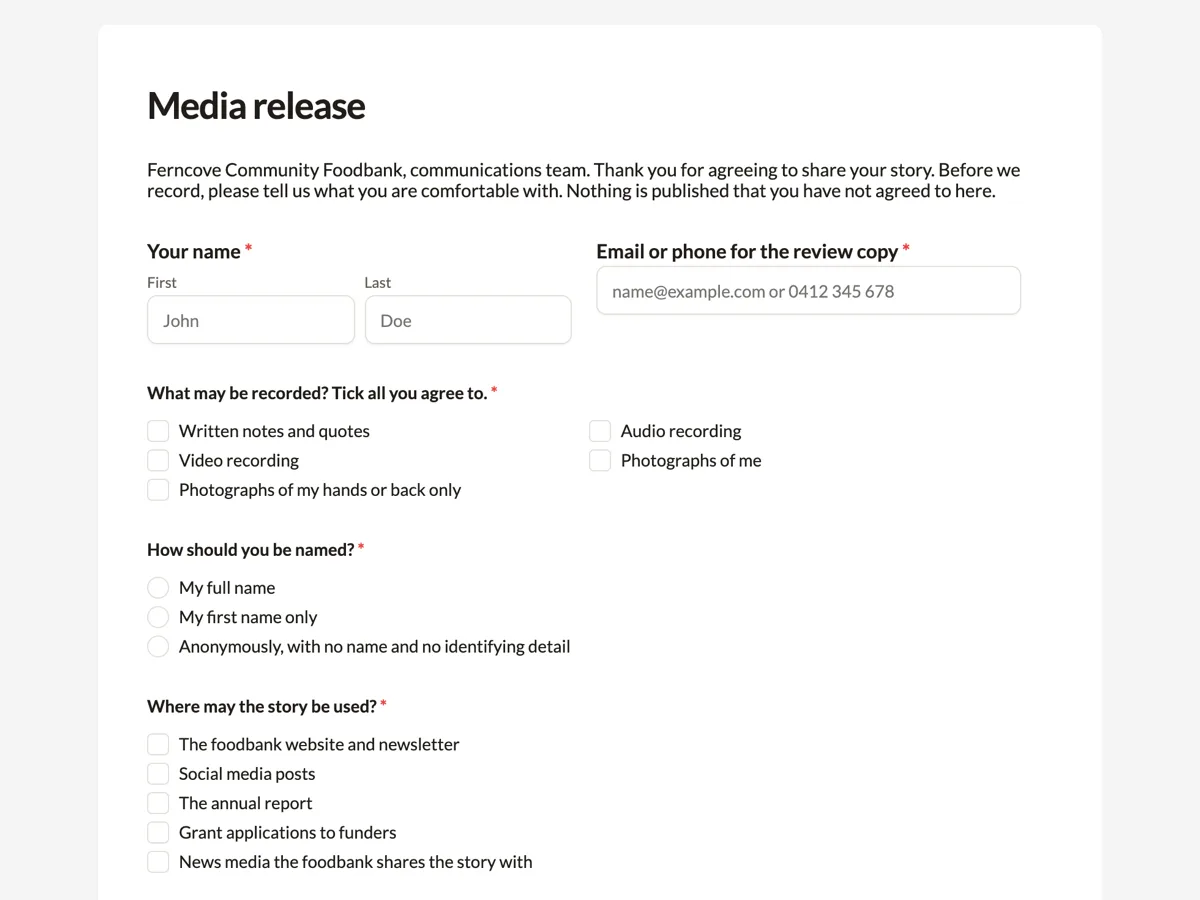
The form itself
A static copy of the finished form, exactly as it renders. Nothing here can be filled in or submitted, so read it as a reference and build your own from the button above.
Every field, and what it collects
The complete field list, in the order respondents meet it.
- Your nameNameRequired
- Email or phone for the review copyShort textRequired
- What may be recorded? Tick all you agree to.Multiple choiceRequired
- Options: Written notes and quotes · Audio recording · Video recording · Photographs of me · Photographs of my hands or back only
- How should you be named?Single choiceRequired
- Options: My full name · My first name only · Anonymously, with no name and no identifying detail
- Where may the story be used?Multiple choiceRequired
- Options: The foodbank website and newsletter · Social media posts · The annual report · Grant applications to funders · News media the foodbank shares the story with
- Do you want to review the story before it is published?Single choiceRequired
- Options: Yes, send it to me first · No, I trust the team to use it as agreed
- SignatureSignatureRequired
- DateDateRequired
What each field on this form collects
The person's name sits beside an email or phone for the review copy. A checkbox of five recording types includes photographs of hands or back only, for people who want to appear without a face. Attribution is a radio of full name, first name, or anonymous with no identifying detail. A second checkbox lists five uses, from the website to news media. A paragraph explains the review choice before the radio that asks it. The release paragraph sets the term, three years without payment, and the right to withdraw future use. The signature and date share the last row. All eight fields are required.
Why attribution is its own question
For a foodbank client, the hardest decision is often not whether to tell the story but whether neighbours, employers or family will recognise them in it. A release that only asks "may we use your image" leaves that unsaid. Three attribution choices make it explicit, and the anonymous option promises no identifying detail, which means no suburb, workplace or children's names either. The photograph options support the same choice: hands sorting a food parcel can carry a story without a face. When the answers are anonymous and no photos of the person, the communications team knows to write the piece accordingly.
Who should keep the signed release
The communications lead keeps the release with the recordings it covers, so anyone reusing a quote or photo later can check what was agreed. Store the attribution and use choices next to the story file, not only in the response list, because a designer picking a photo for an annual report two years on will look there first. When the three year term ends, the story is retired or the person is asked again.
How to adapt this form
A university adds a line for students under 18 and a guardian signature. A business filming a customer testimonial adds paid use in advertising as a separate row and states any fee. A newsroom drops the review option, since editorial independence usually rules it out, and says so plainly in the release paragraph.
What makes this form work
Three ways to be named
Full name, first name only, or anonymously with no identifying detail lets a client tell a story without being recognised by neighbours or an employer.
A face is optional
The recording checkbox includes photographs of hands or back only, so a story can carry an image without revealing who it is.
Review before publishing
A paragraph explains what reviewing means, including that printed stories cannot be recalled, before the person chooses whether to see the final version first.
Questions people ask
What is the difference between a media release and a model release?
A model release covers the use of a person's likeness, usually in photography or advertising. A media release is broader and covers interviews: the person's words, voice, video and how they are named. This form does both, with recording types and attribution as separate questions, so it suits story telling rather than only photo shoots.
Does a media release need to be signed before the interview?
Ideally yes, so the interviewer knows what may be recorded before pressing record. Signing afterwards risks the person feeling they cannot refuse once their story has been told. This form is short enough to complete at the start of a meeting, and the welcome screen says it covers what is recorded.
Can someone withdraw after signing a media release?
This release lets the person withdraw future use at any time by contacting the communications team. What has already been printed, or shared with news media, cannot be fully recalled, and the review paragraph says so. Being clear about that limit is fairer than promising a removal that is impossible.
Should people be paid for their story?
Charities rarely pay, and this release says use is without payment so there is no misunderstanding. Paying can create pressure to share more than someone would otherwise. If a gift card or travel reimbursement is offered, state it separately and make clear it does not depend on what the person says.
Why include grant applications as a use?
Because client stories often end up in funding submissions that the person never sees. Listing grant applications separately lets someone agree to the newsletter and refuse funders, or the other way round. Each use the organisation might reasonably make should be a box, so nothing is covered by implication.
How long should a media release last?
Long enough to be useful and short enough to be fair. This one runs three years, which covers an annual report cycle and a campaign or two. A story about a person's hardship ages quickly, and a fixed term means the organisation must ask again rather than reuse it indefinitely.
Build your own in about a minute
The button below opens the generator with this use case already described. Change the wording to match your own, generate, then edit anything you like.
Make one like thisOther form examples
Parental consent form for a whole club season
A parental consent form for a sports club has to say which activities the child may join, who may drive them, what happens if they are hurt and whether they can be photographed. This one covers a whole junior football season at once, with a medications table for the coach and a guardian signature.
Cosmetic treatment consent form with an eight item risks checklist
A cosmetic treatment consent form records that a client understood the treatment, its risks and the alternatives before agreeing to it. This one, for a skin clinic offering peels and microneedling, lists eight risks to tick, then asks about alternatives, aftercare and before and after photos before the client signs.
Telehealth consent form for video and phone sessions
A telehealth consent form has to record how the session will run, where the client will physically be, what privacy risks they accept and who can be called in an emergency. This one asks those eight things on one page for a psychology practice, with the crisis numbers printed above the emergency question.
Want the steps in the builder? Read Form builder components, then View, export and manage your responses. For everything this generator can do, see the form maker.
Sources
Written and checked by the OneCraft team. Last checked .