Classic form
Cosmetic treatment consent form with an eight item risks checklist
A cosmetic treatment consent form records that a client understood the treatment, its risks and the alternatives before agreeing to it. This one, for a skin clinic offering peels and microneedling, lists eight risks to tick, then asks about alternatives, aftercare and before and after photos before the client signs.
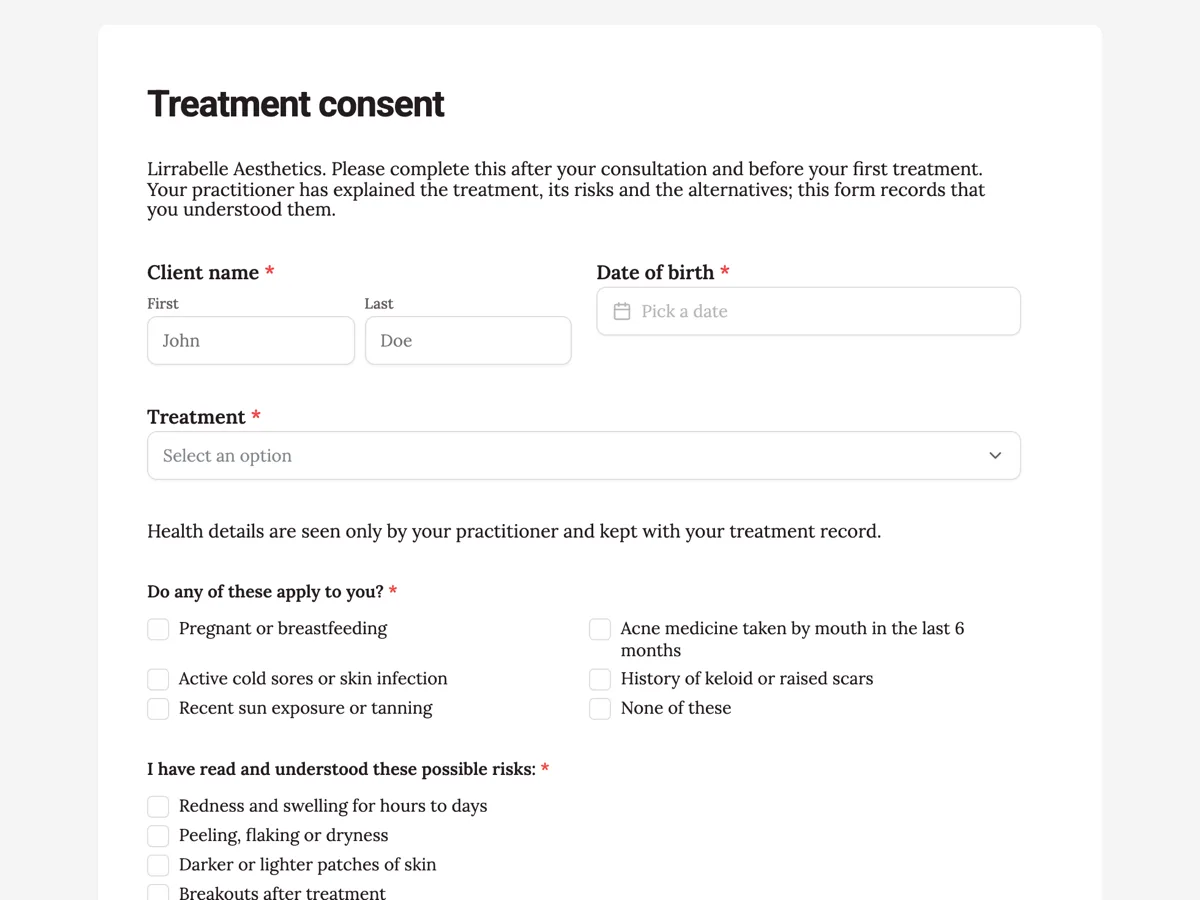
The form itself
A static copy of the finished form, exactly as it renders. Nothing here can be filled in or submitted, so read it as a reference and build your own from the button above.
Every field, and what it collects
The complete field list, in the order respondents meet it.
- Client nameNameRequired
- Date of birthDateRequired
- TreatmentDropdownRequired
- Options: Chemical peel, light · Chemical peel, medium · Microneedling · LED light therapy · Microdermabrasion · Hydrating facial infusion
- Do any of these apply to you?Multiple choiceRequired
- Options: Pregnant or breastfeeding · Acne medicine taken by mouth in the last 6 months · Active cold sores or skin infection · History of keloid or raised scars · Recent sun exposure or tanning · None of these
- I have read and understood these possible risks:Multiple choiceRequired
- Options: Redness and swelling for hours to days · Peeling, flaking or dryness · Darker or lighter patches of skin · Breakouts after treatment · Cold sore flare up · Infection · Scarring, which is rare · Results that differ from what I expected
- Did your practitioner discuss alternatives, including no treatment?Single choiceRequired
- Options: Yes · No, I would like to discuss them first
- Have you received written aftercare instructions?Single choiceRequired
- Options: Yes, I have them · No, please send them
- Before and after photosSingle choiceRequired
- Options: For my clinical record only · For my record and, without my face, for the clinic's marketing · No photos
- Practitioner nameShort textRequired
- SignatureSignatureRequired
- DateDateRequired
What each field on this form collects
The client's name sits beside date of birth. The treatment dropdown lists six skin treatments. A privacy paragraph introduces a health checkbox of five items and "none of these", including acne medicine taken by mouth, which affects healing. The risks checkbox lists eight possible outcomes, from redness to scarring and results that differ from expectations. Alternatives, aftercare and photos are three radios, each with an answer that pauses the process. The practitioner's name is short text, and the signature and date share the last row. All eleven fields are required.
Why every risk is a separate tick
A paragraph of risks followed by one signature proves only that a client signed. Eight ticks, one per risk, show that each was put in front of them, including the two clients most often say nobody mentioned: darker or lighter patches of skin, and results that differ from what they hoped. The form cannot force every box to be ticked, so the practitioner checks the response before treating and talks through anything left blank. The radios work the same way. "No, I would like to discuss them first" on alternatives is a reason to pause, not a box to argue with.
What the practitioner checks before treating
Before the first treatment, the practitioner opens the response and checks four things: every risk ticked, the health answers, the alternatives answer and the photo choice. A blank risk or a pause answer means a conversation before anything starts. A yes on acne medicine, cold sores or recent tanning can mean postponing. The practitioner's name on the form ties the consent to the consultation it followed, which matters if a question is ever raised about what the client was told.
How to adapt this form
A clinic offering laser or light based treatments adds skin type and recent sun exposure, as the laser hair removal form on this site does. A clinic run by a registered medical practitioner adds a cooling off period field and a referral history. A spa doing only facials can drop the risk list to the four items that apply.
What makes this form work
Eight risks, eight ticks
Redness, peeling, pigment change, breakouts, cold sores, infection, scarring and unexpected results are each ticked, so the record shows every risk was put in front of the client.
Answers that pause the process
"I would like to discuss them first" for alternatives and "please send them" for aftercare give the client a way to say not yet without refusing treatment.
Photos with three clear choices
Clinical record only, faceless marketing use or no photos keeps marketing consent separate from consent to the treatment itself.
Questions people ask
What should a cosmetic treatment consent form include?
The treatment, the client's relevant health history, the material risks in plain words, the alternatives including doing nothing, aftercare, any photography, the practitioner's name and the client's signature and date. This form covers each in that order. Consent also needs a conversation: the form records that the consultation happened, it does not replace it.
Why ask about acne medicine taken by mouth?
Some oral acne treatments change how skin heals, and practitioners often wait months after a course ends before peels or microneedling. The form asks about the last six months in plain words rather than naming a medicine, and the practitioner follows up with the client and, if needed, their doctor.
Can a client refuse before and after photos?
Yes. The photo question offers clinical record only, record plus faceless marketing use, or no photos at all. Photos help track results and resolve disputes, so many clinics encourage the first option, but marketing use must be a separate choice, never assumed from consent to treatment.
What is a cooling off period?
Time between the consultation and the treatment so the client can think it over without pressure. The thank-you screen promises at least one day. For some procedures in some places a cooling off period is required by professional guidance; for most skin treatments it is simply good practice that reduces regret and complaints.
Does the practitioner need to sign too?
Many clinics have the practitioner countersign in the treatment notes. This form records the practitioner's name so the response shows who did the consultation. A clinic that wants a second signature on the same record can add one beside the client's, labelled for the practitioner.
How long is cosmetic treatment consent valid?
For the course of treatment described, as long as nothing changes. A new treatment, a change in health such as pregnancy or new medication, or a long gap between sessions calls for a fresh form. The date field makes the age of each consent obvious in the client's record.
Build your own in about a minute
The button below opens the generator with this use case already described. Change the wording to match your own, generate, then edit anything you like.
Make one like thisOther form examples
Laser hair removal consent form with skin type and sun exposure
A laser hair removal consent form records the facts that decide safe laser settings, such as skin type, recent sun and light sensitising medicines, and that the client understands the risks. This one asks twelve questions before the patch test, with all six Fitzpatrick skin types described in plain words.
PAR Q form online: seven questions, clearance and a signature
A PAR Q form is a short physical activity readiness questionnaire that asks seven yes or no questions to find people who should check with a doctor before exercising more. This one puts the seven questions online for a Pilates studio, then asks about clearance for any yes and takes a dated signature.
Escape room waiver with a player table and a claustrophobia check
An escape room waiver records that the team has read the room rules and told the host about anything that could make a dark, enclosed room unsafe. This one is signed once by the lead player, with a six player table, a conditions checklist and the promise that doors are never locked.
Want the steps in the builder? Read Form builder components, then View, export and manage your responses. For everything this generator can do, see the form maker.
Written and checked by the OneCraft team. Last checked .