Classic form
Massage consent form with draping, areas and the right to stop
A massage consent form records which treatment a client agrees to, which parts of the body may be massaged and that they can stop at any time. This one also explains draping in plain words, asks about pregnancy and health conditions, and takes the client's signature before the first appointment.
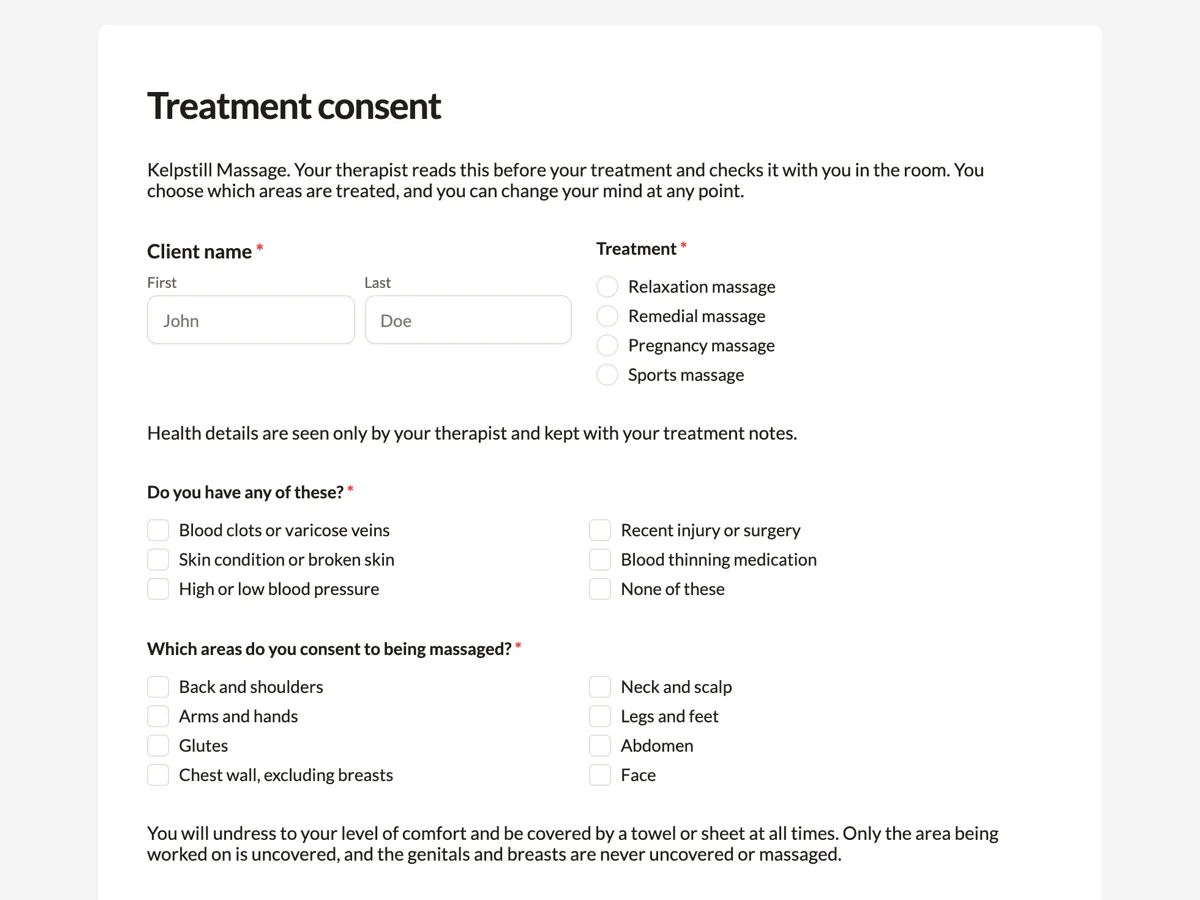
The form itself
A static copy of the finished form, exactly as it renders. Nothing here can be filled in or submitted, so read it as a reference and build your own from the button above.
Every field, and what it collects
The complete field list, in the order respondents meet it.
- Client nameNameRequired
- TreatmentSingle choiceRequired
- Options: Relaxation massage · Remedial massage · Pregnancy massage · Sports massage
- Do you have any of these?Multiple choiceRequired
- Options: Blood clots or varicose veins · Recent injury or surgery · Skin condition or broken skin · Blood thinning medication · High or low blood pressure · None of these
- Which areas do you consent to being massaged?Multiple choiceRequired
- Options: Back and shoulders · Neck and scalp · Arms and hands · Legs and feet · Glutes · Abdomen · Chest wall, excluding breasts · Face
- Draping acknowledgementMultiple choiceRequired
- Options: I understand how I will be draped and that I can ask for more covering at any time
- Are you pregnant?Single choiceRequired
- Options: No · Yes, under 12 weeks · Yes, 12 weeks or more
- Right to stopMultiple choiceRequired
- Options: I understand I can stop the treatment at any time
- SignatureSignatureRequired
What each field on this form collects
The client's name sits beside the treatment, one of four types. A privacy paragraph introduces a checkbox of five health conditions and "none of these". The areas checkbox lists eight regions, including glutes, abdomen and face, so the client chooses each one. The draping paragraph explains coverage before a tick that acknowledges it. Pregnancy is a radio with weeks, because the first trimester and later pregnancy are handled differently. The right to stop paragraph comes before its own tick, and the client signs. All eight fields are required.
Why consent is given area by area
Most complaints about massage start with a client feeling touched somewhere they did not expect, often the glutes, abdomen or upper chest, which are normal areas in remedial work but not in everyone's idea of a massage. A checkbox of areas turns a vague "I consent to treatment" into a list the therapist can read before starting. Unticked areas are simply not worked on. The chest wall option says "excluding breasts" in its label, so there is no ambiguity, and the draping paragraph repeats that breasts and genitals are never uncovered or massaged. The areas can still change in the room, and the right to stop paragraph says so.
How the therapist uses the form in the room
The therapist reads the answers before the client arrives and confirms them in the first two minutes of the appointment: the treatment, the ticked areas, any health condition and pregnancy. If the client wants to add or remove an area, the therapist notes it in the treatment record. Unticked areas are left alone even if they seem related, such as glutes for lower back pain, unless the client agrees in the room.
How to adapt this form
A myotherapy clinic adds dry needling and cupping as separate consent ticks, each with its own risks paragraph. A day spa offering hot stone massage adds a question on heat sensitivity and diabetes. A clinic that bills health funds adds a referral question and the fund name.
What makes this form work
Eight areas, each a choice
Back, neck, arms, legs, glutes, abdomen, chest wall excluding breasts and face are separate ticks, so the therapist knows exactly where the client has agreed to be touched.
Draping explained before it happens
A plain paragraph says the client is covered at all times and only the area being worked on is uncovered, before a tick records that they read it.
The right to stop, in writing
A separate paragraph and acknowledgement say the client can change pressure, skip an area or stop at any time without explanation or consequence.
Questions people ask
Is a massage consent form required?
Professional associations expect therapists to obtain informed consent before treatment and to record it, and many health funds require records for remedial claims. A signed form is the simplest record. It does not replace the conversation in the room: the therapist still checks the plan and the areas before starting, as this form's intro promises.
Why ask about blood clots and blood thinners?
Deep massage over a clot can dislodge it, and blood thinners make bruising more likely, so both change what the therapist does. Varicose veins are avoided rather than massaged. These are standard precautions, and "none of these" lets most clients answer in one tick while the question stays required.
Can a client change their mind during a massage?
Yes, at any moment. They can ask for less pressure, for an area to be skipped, or for the treatment to stop, with no explanation needed. This form states it in its own paragraph and asks for a tick, so the client reads it before arriving instead of wondering whether it would be rude to ask.
Is massage safe in early pregnancy?
Many therapists avoid or modify treatment in the first trimester and use side lying positions later in pregnancy. That is why the pregnancy question separates under 12 weeks from 12 weeks or more. A therapist trained in pregnancy massage will adjust positioning and pressure, and may ask for a midwife or doctor's clearance in some cases.
What does draping mean in massage?
Using a towel or sheet to cover the client so only the area being worked on is exposed. The client undresses to their own comfort level, which can mean staying partly clothed. The form explains this in a paragraph so first time clients know what to expect, and the acknowledgement records that they read it.
How long is a massage consent form valid?
Until something changes. Most clinics ask returning clients to update it if their health changes and to complete a fresh form once a year. The areas question is often revisited each visit, since a client booked for neck and shoulders one week may want legs worked on the next.
Build your own in about a minute
The button below opens the generator with this use case already described. Change the wording to match your own, generate, then edit anything you like.
Make one like thisOther form examples
Adventure tour waiver for fitness, medical and evacuation
An adventure tour waiver records that a guest understands the risks of a remote trip, has declared their fitness and health honestly and knows who pays if they need to be evacuated. This one does it for a guided multi day walking company in eleven fields, with a four level fitness rating and an evacuation cost acknowledgement.
Horse riding waiver with rider weight, height and experience
A horse riding waiver records that a rider understands the inherent risks of riding and has given the details needed to match them with a suitable horse. This one asks a trail ride customer for weight, height and experience first, then a helmet choice, medical details, the risk acknowledgement and a signature.
Informed consent counselling form, confidentiality first
Informed consent for counselling means the client knows, before the first session, what stays private, when it cannot, what it costs and how notes and contact are handled. This form puts the four limits of confidentiality first, each ticked separately, then fees, notes and contact, and ends with a signature and date.
Want the steps in the builder? Read Form builder components, then Design your welcome and thank-you screens. For everything this generator can do, see the form maker.
Written and checked by the OneCraft team. Last checked .