Conversational form
Party RSVP form
A party RSVP form tells the host who is coming, how many chairs to put out and what the food depends on, in a reply short enough to finish on a phone. This one is for a fortieth birthday where the food is shared and the hall is booked, and it also stops nine people arriving with dessert. It is conversational, nine questions one at a time, because an RSVP arrives as a link in a group chat and gets answered standing up.
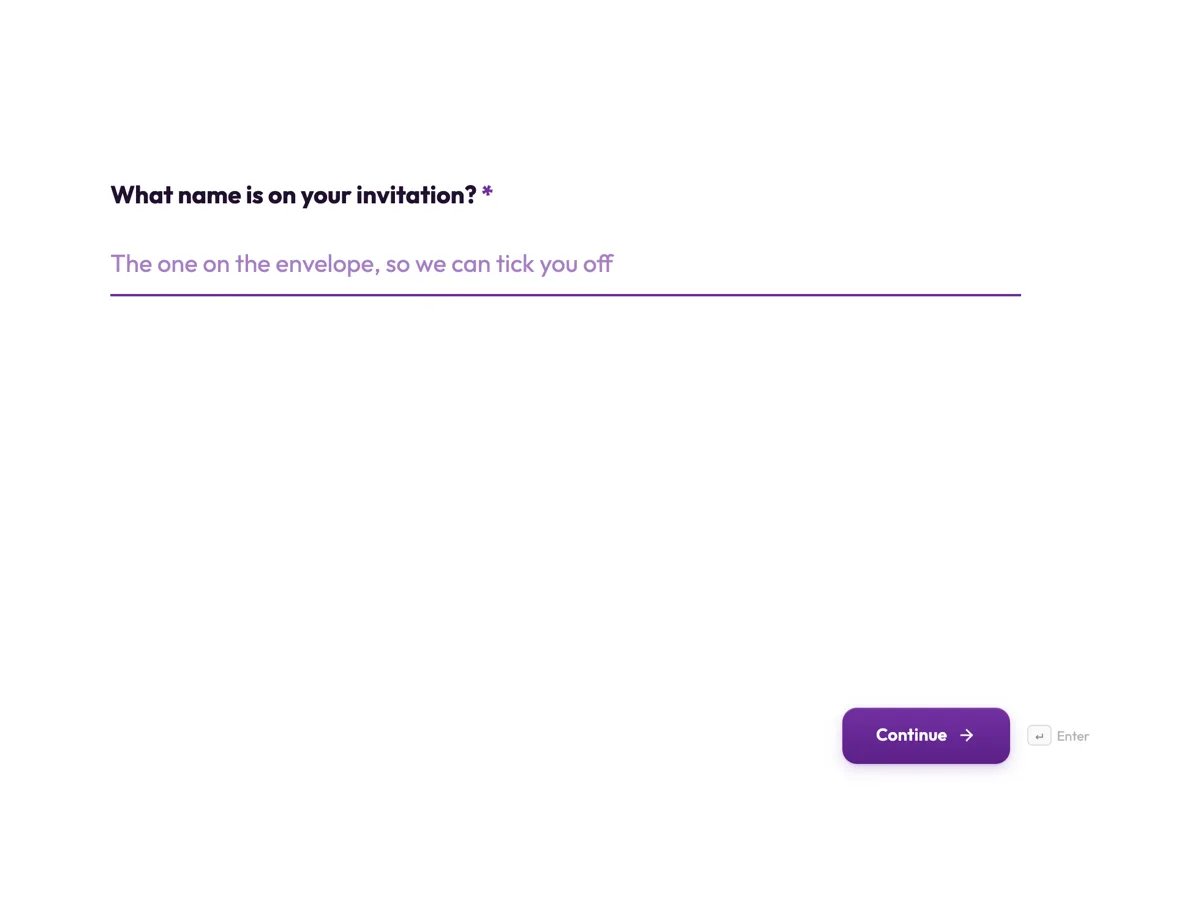
The form itself
The first screen of the form. A conversational form shows one question per screen, so the remaining screens are listed in the field table below. Nothing here can be filled in or submitted, so read it as a reference and build your own from the button above.
Every field, and what it collects
The complete field list, in the order respondents meet it.
- What name is on your invitation?Short textRequired
- Can you make it on 5 December?Single choiceRequired
- Options: Yes, all night · Yes, but I will have to leave early · No, I cannot make it
- How many of you are coming?Single choice
- Adults only this time. Marisol is very sorry and says the sitter is worth it.
- Options: Just me · Two of us · Three of us · I will confirm closer to the day
- Best mobile number for youShort text
- Only used on the day, and only if something moves.
- What are you bringing to the table?Dropdown
- The roast and the bread are covered. Everything else is guests, which is how these have always worked.
- Options: A salad or a side · A dessert · Cheese and crackers · Drinks for the table · Nothing, I am coming straight from work
- Roughly how many does that feed?Number
- A rough number is fine. It stops us ending up with nine desserts and no salad.
- Allergies or anything the kitchen must avoid?Long textRequired
- Required, because the menu is locked in on 25 November and the kitchen would much rather know now.
- No presents. Chip in for the group gift instead?Single choice
- Her words, not ours. There is one envelope going around, and the host texts the link to everyone who says yes.
- Options: Yes, count me in · No thanks · Already sorted, I have given it to Dev
- Anything we have forgotten to ask?Long text
What each question on this RSVP is for
The form has nine questions and three of them are required: the name on the invitation, whether the guest can come, and allergies. The name is the one the host wrote on the invitation list, not a legal name, so replies can be ticked off in seconds. The attendance question has two kinds of yes, because a guest leaving early changes the speeches, not the catering. The headcount, mobile number, dish, portion count, group gift and a last open box are optional, so a guest who is not coming answers three questions and skips past the rest. The allergy question stays required even for a no, which costs a second and means the host never has to wonder whether a blank means nothing to declare.
How the group gift works without an email
The gift question asks whether the guest wants to chip in, with three answers including already sorted. Its description says the host texts the link, because a published form does not email the person who filled it in, and this form does not ask for an email address anyway. In practice the host exports the replies, filters the yes answers and texts the gift link to those mobile numbers. You can also leave the gift out of the form and handle it in the group chat.
Reading the replies before the day
Two weeks out, sort the responses by attendance and add up the headcount answers, counting the confirm closer to the day replies as a list to chase rather than a number. Then sort by dish and compare the portion counts against the guest total, which shows at a glance whether the table is short of salad or long on cheese. The allergy column goes to whoever is cooking the roast, unedited. Anything that arrives after the reply date is still recorded, so check the list once more the day before rather than trusting the count from a week earlier.
What makes this form work
What you are bringing is asked with a portion count
A dish question on its own gets you five desserts. Asking roughly how many it feeds turns a list of good intentions into a plan, and it takes one number. It is the field that separates a shared table that works from one where somebody drives out for bread at eight.
The no presents line is a question, not a footnote
Written on the invitation it gets ignored, because guests assume it is politeness. Asked as a question with three real answers, including "already sorted", it is settled before anyone stands in a shop, and one person ends up holding one envelope.
Adults only is explained where it is felt
The line sits on the headcount question rather than in the invitation copy, at the exact moment somebody is counting their household. Saying it once, plainly, with an apology attached, avoids the conversation where two children turn up and there are no chairs for them.
Questions people ask
What should a party RSVP form ask?
The name on the invitation rather than a legal name, so you can tick the list. Then a clear yes or no, a headcount, a mobile number for the day, and anything the food depends on. A private party needs no address, no title and no postcode, which is most of what a generic RSVP template will hand you.
How do I ask for a headcount when some guests are unsure?
Give the count question an option that covers the people who are not coming and the people who genuinely do not know yet. "I will confirm closer to the day" is an honest answer, and it gets you a list of people to chase rather than a silent gap where somebody skipped the question.
Should the dietary question be required?
On a shared table, yes. The description says the menu is locked in on 25 November, which is the only thing that makes a required question feel reasonable rather than nosy. Somebody with nothing to declare types "all good" and moves on in a second.
Can people change their reply later?
They can open the same link and send a new one, which is what the thank-you screen tells them to do. It also gives a cut-off after which a text is better, because a second reply arriving the night before is a message the host will not see in time.
How should a party form handle food people are bringing?
Ask what and how much. This form asks what you are bringing to the table, then roughly how many that feeds. The second answer is the useful one, because six people all bringing a salad is a known failure of shared meals, and a host reading the replies can rebalance before the day.
Is it acceptable to ask about a group gift on an RSVP?
It is, if the wording gives an easy no. This form says no presents, then asks whether the guest would rather chip in for a group gift. Making it a question rather than a line in the invitation means people can decline privately, which is the whole reason it belongs on the form.
Build your own in about a minute
The button below opens the generator with this use case already described. Change the wording to match your own, generate, then edit anything you like.
Make one like thisOther form examples
Wedding RSVP form
A wedding RSVP for Nina and Tomas that asks eight questions one screen at a time, starting with who is replying and whether they can join on 12 September. Guests who say yes list their party, pick from three mains or "whatever is going", note allergies, leave a mobile number for the day and add a song request.
Raffle ticket form
A raffle is a cash transaction that has to survive a draw four weeks later, so the form has one real job: produce a record both sides will still trust when a number is read out in a hall. This one collects the name that gets called, the address the numbers go to, and the seller who should be credited. It is conversational, because most tickets are bought standing at a market stall with a phone in one hand. Raffle rules in Australia are set by each state; this example is a Victorian brigade, where only a declared community or charitable organisation may run a raffle and buyer contact details have to be recorded.
Open day registration form
An open day registration is not a headcount. It is the only chance an institution gets to find out what a visitor came for before they arrive, which is what turns a corridor full of strangers into a printed plan with room numbers on it. This one asks who the visitor is, what they want to look at and how many are in the car, in ten screens. It is conversational, because it is answered on a phone at a kitchen table with a course guide open.
Want the steps in the builder? Read Create a conversational form with AI, then Design your welcome and thank-you screens. For everything this generator can do, see the form maker.
Written and checked by the OneCraft team. Last checked .