Classic form
Dental patient intake form the dentist can read before you sit down
A dentist needs eleven medical facts before touching a patient, and a paper form on a clipboard in the waiting room gets them four minutes before the appointment. This form asks for them on the phone the day before, with the health fund and child benefit questions the front desk needs, and the consent lines signed once.
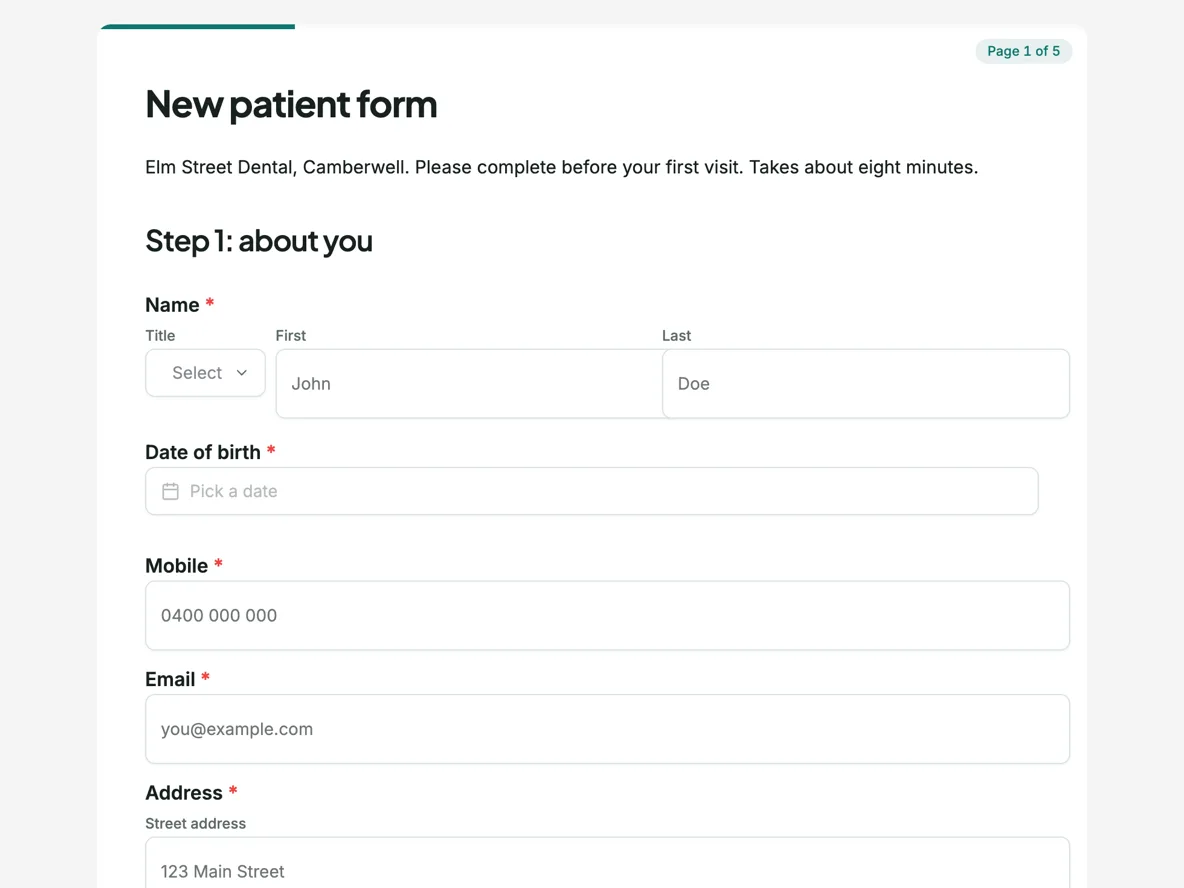
The form itself
A static copy of the finished form, exactly as it renders. Nothing here can be filled in or submitted, so read it as a reference and build your own from the button above.
Every field, and what it collects
The complete field list, in the order respondents meet it.
- NameNameRequired
- Date of birthDateRequired
- MobileShort textRequired
- EmailShort textRequired
- AddressAddressRequired
- Emergency contact and phoneShort textRequired
- Health fund and member numberShort text
- Is the patient under 18 and eligible for the Child Dental Benefits Schedule?Single choiceRequired
- Options: Yes · No · Not sure
- Medicare number and referenceShort text
- Who referred you?Dropdown
- Options: Google · A friend or family · Another dentist · Health fund directory · Walked past
- Do you have, or have you had, any of these?Multiple choiceRequired
- Options: Heart condition or valve replacement · High blood pressure · Diabetes · Bleeding disorder or blood thinners · Asthma or breathing problems · Epilepsy · Hepatitis or HIV · Osteoporosis medication (bisphosphonates) · Joint replacement · Pregnant or breastfeeding · None of these
- AllergiesMultiple choiceRequired
- Options: Penicillin · Latex · Local anaesthetic · Other · None
- Other allergies and medicationsLong text
- Your GP and practiceShort text
- Dental historyRating gridRequired
- Statements:
- Bleeding gums
- Sensitivity to hot or cold
- Grinding or clenching
- Jaw pain or clicking
- Dry mouth
- Anxious about dental visits
- Last dental visitSingle choiceRequired
- Options: Under 6 months · 6 to 12 months · 1 to 2 years · Over 2 years · Never
- What brings you in?Long text
- I agreeMultiple choiceRequired
- Options: I agree to the statement above
- Photo of your health fund or Medicare cardPhoto upload
- Front of the card only.
- SignatureSignatureRequired
Step 1: about you
Step 2: your health
Step 3: consent
What a dentist needs to know before treating you
Each line of the medical checklist changes something in the chair. Heart valves and joint replacements can mean antibiotic cover; blood thinners and bleeding disorders change how extractions are planned; bisphosphonates, the osteoporosis drugs, carry a rare jaw complication a dentist must know about before pulling anything; diabetes slows healing; epilepsy shapes how long appointments run; pregnancy defers x-rays that can wait. The list is eleven items because those are the ones the Australian dental profession keeps asking about, and None of these closes it so a healthy patient can answer a required question truthfully in one tick.
How to adapt this form
An orthodontist adds a growth and habits question for children, thumbs and mouth breathing included, and keeps the CDBS block because much of the caseload is eligible. A hygiene-only clinic can halve step two, keeping the medical checklist and allergies but dropping the treatment-planning questions. A private-only practice removes the CDBS and Medicare lines entirely and step one gets four fields shorter. In all versions the checklist stays a checklist rather than becoming eleven yes or no questions, because one screen of ticks is what patients actually finish.
What makes this form work
Eleven conditions and an honest way out
The medical checklist names the eleven things that change dental treatment and ends with None of these, so the field can be required without forcing a healthy patient to lie or skip. Every submission answers the question, which is the entire value of asking it before the visit.
The dental history is a grid, not six questions
Bleeding gums, sensitivity, grinding, jaw pain, dry mouth and dental anxiety are rated never, sometimes or often in one six row grid. That is how the dentist scans it in the chair, six answers in one glance, including the anxiety row that changes how the first visit is paced.
The CDBS question lives with the front desk fields
Child benefit eligibility sits in step one beside the health fund, not in the health step, because it is a billing question the desk settles with Medicare before the appointment. The dentist's reading, step two, stays purely clinical.
Questions people ask
Why does a dentist ask about heart conditions and blood thinners?
Because both change treatment before it starts: some heart conditions and joint replacements call for antibiotic cover before invasive work, and anticoagulants change how bleeding is managed in extractions and surgery. The checklist puts both near the top so the dentist reads them before the patient sits down.
What is the Child Dental Benefits Schedule?
A Medicare benefit covering basic dental services for eligible children, capped over two calendar years. The form asks eligibility as yes, no or not sure, and the desk confirms with Medicare either way, which is why the Medicare number field says it is only needed for a yes or a not sure.
Is the drawn signature valid consent?
For the practice records, yes: it evidences that the history was given and the general consent read. Procedure-specific consent, for an extraction or a root canal, is taken separately in the chair where risks can be explained. The form is the record-keeping layer, not the clinical conversation.
Where is this information stored and who sees it?
In the practice's account, behind its login, read by the dentist and the front desk. Health information sits in the strictest category of Australian privacy law, and the OAIC's guidance for health providers, linked below, is the standard a practice holds itself to when it collects a form like this.
Can the form be filled in at the desk instead?
Yes, the same link works on a tablet at reception, and the three step pagination suits a patient standing at a counter. The point of sending it the day before is simply that the dentist reads the history before the appointment, not during its first four minutes.
Why is the Medicare number optional?
Adults claiming through a health fund do not need to supply it here, so requiring it would block the majority for the sake of the CDBS minority. The child benefit question gates it instead: answer yes or not sure and the next field asks for the number.
Build your own in about a minute
The button below opens the generator with this use case already described. Change the wording to match your own, generate, then edit anything you like.
Make my dental patient intake form the dentist can read before you sit downOther form examples
Vaccination clinic registration form with the screening questions
A workplace flu clinic lives or dies on how fast the table moves, and every minute spent asking screening questions is a minute nobody else is being vaccinated. This form asks the nine screening questions before the day, explains what each answer changes, and ends with a four part consent that includes reporting to the register.
Childcare enrolment form that covers the regulation's list in one sitting
The regulations list what an enrolment record must contain, and most centres collect it across three PDFs and a phone call. This form is that list in one sitting, with the authorised pickup table, the immunisation upload and the subsidy numbers, ending in the consents signed once by each parent.
Tattoo consent form signed on a tablet before the needle
A tattoo consent form is a health questionnaire, an age check and a design confirmation, signed in the same minute. This one does all three on a tablet, asks the eight health questions an artist needs, takes a photo of the ID, and files a PDF the studio can produce two years later.
Want the steps in the builder? Read Paginate a classic form into steps, then Form builder components. For everything this generator can do, see the form maker.
Written and checked by the OneCraft team. Last checked .