Industry kit
Dental office forms and the rest of the practice kit
A dental practice runs on a new patient form, treatment consent, a recall list and a way for new patients to find it. This kit links finished examples of each, written for invented Australian practices, from the intake form to the consent signed before treatment.
The paperwork of a dental visit
A new patient at a dental practice meets three documents before the chair. The intake form collects contact details, health fund information, medical history, medications and allergies, because those decide what treatment is safe. The consent form explains the proposed treatment, its risks and the alternatives, and records the patient agreeing to it. Then come the recall and feedback steps that bring the patient back in six or twelve months. Each of these is a place where a missing question becomes a clinical or legal risk later.
Online, the front door matters
Most new dental patients now find a practice through search and book from a phone. A practice website that shows fees for common items, the health funds it works with and how to book does more than a long list of services. A flyer still works for a new practice or a new location, and a short feedback survey after the first visit tells the practice manager what new patients actually noticed. The examples below cover each of those steps as finished pieces rather than outlines, so a practice manager can read the questions and wording before deciding what to copy.
Who the kit is for
The kit is written for general dental practices in Australia, from a single chair to a small group. Specialist practices such as orthodontics or oral surgery will add their own consent wording, but use the same intake, booking and feedback steps. Dentists are registered through the Dental Board of Australia, and advertising, including websites and flyers, has to follow the national guidelines on health advertising, so the examples avoid testimonials and claims of outcomes.
The kit, piece by piece
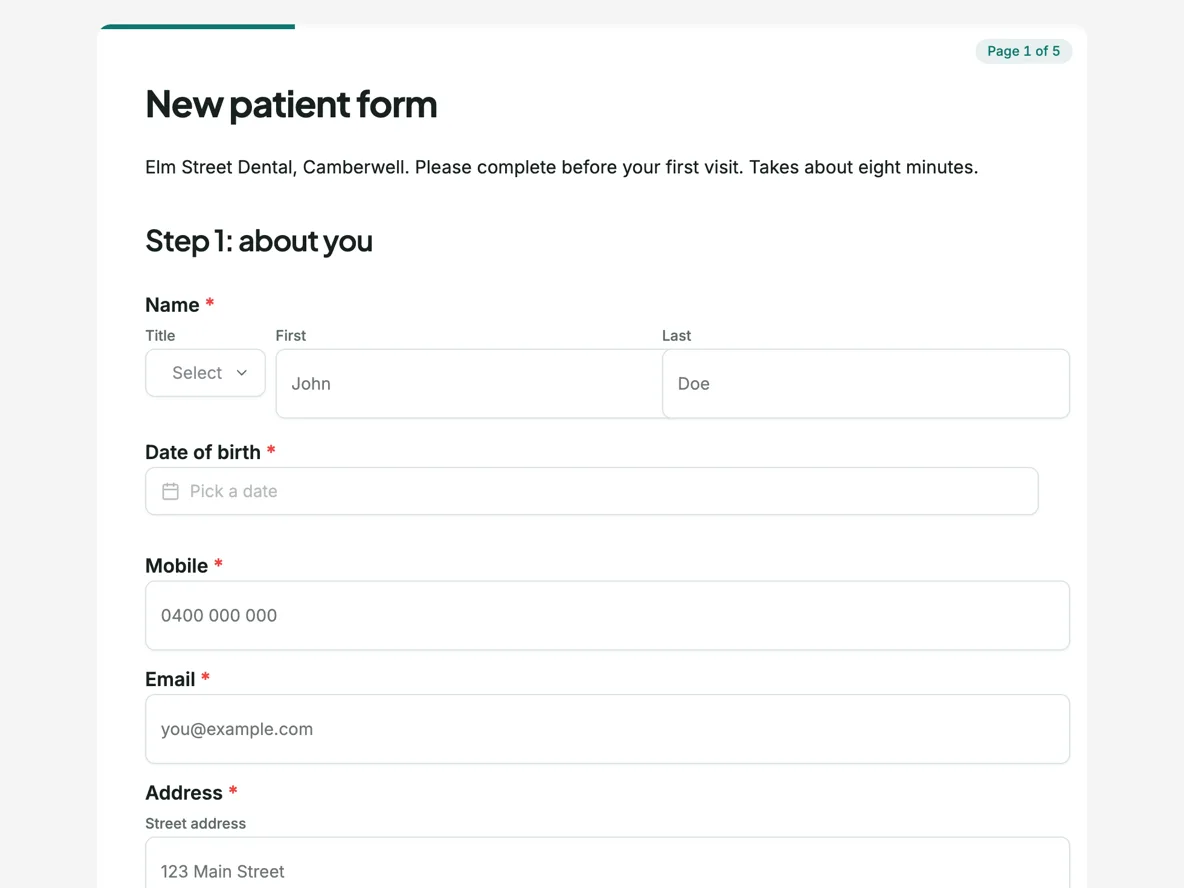
New patient form
Dental patient intake form the dentist can read before you sit downMedical history, medications, allergies, health fund and dental anxiety, the questions a dentist reads before the first exam.
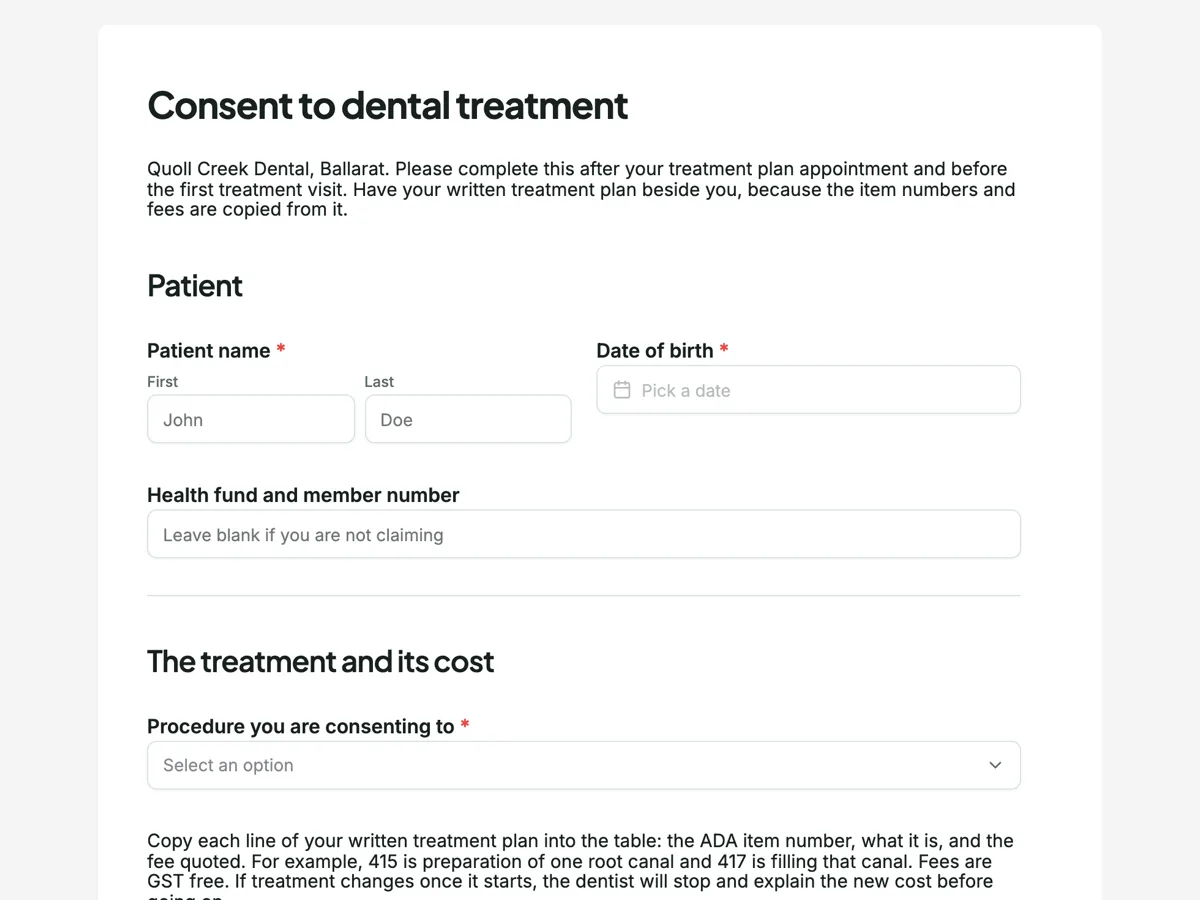
Treatment consent form
Dental treatment consent form with item numbers and feesThe procedure, its risks and alternatives, and the patient agreement, as a form the patient completes before treatment.
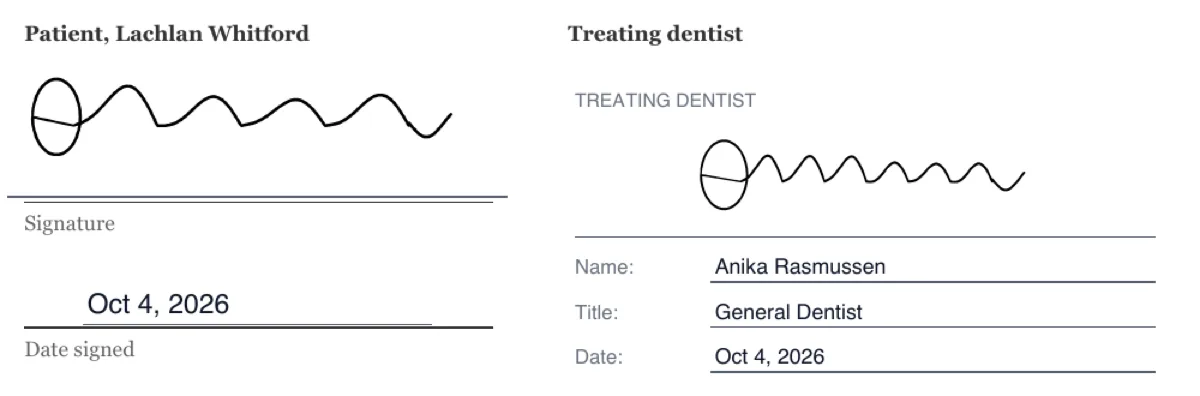
Consent signing
Sign a dental treatment consent onlineThe same consent sent for e-signing, so the patient signs at home with an email code and the practice keeps a certified PDF.
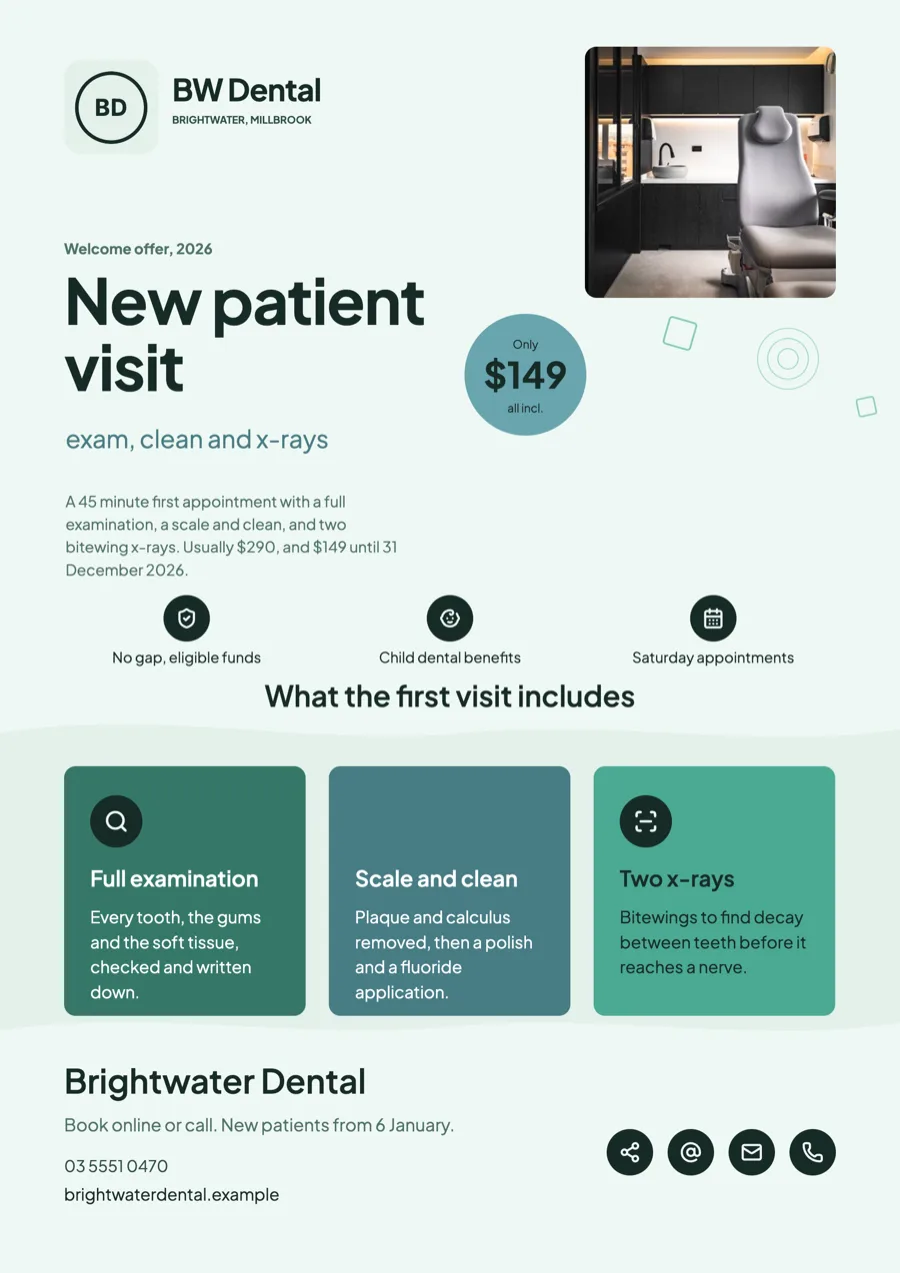
Clinic flyer
Dental clinic flyer for a family dental practiceA new patient flyer for a local practice: check up and clean price, health funds and how to book.
Dentist website
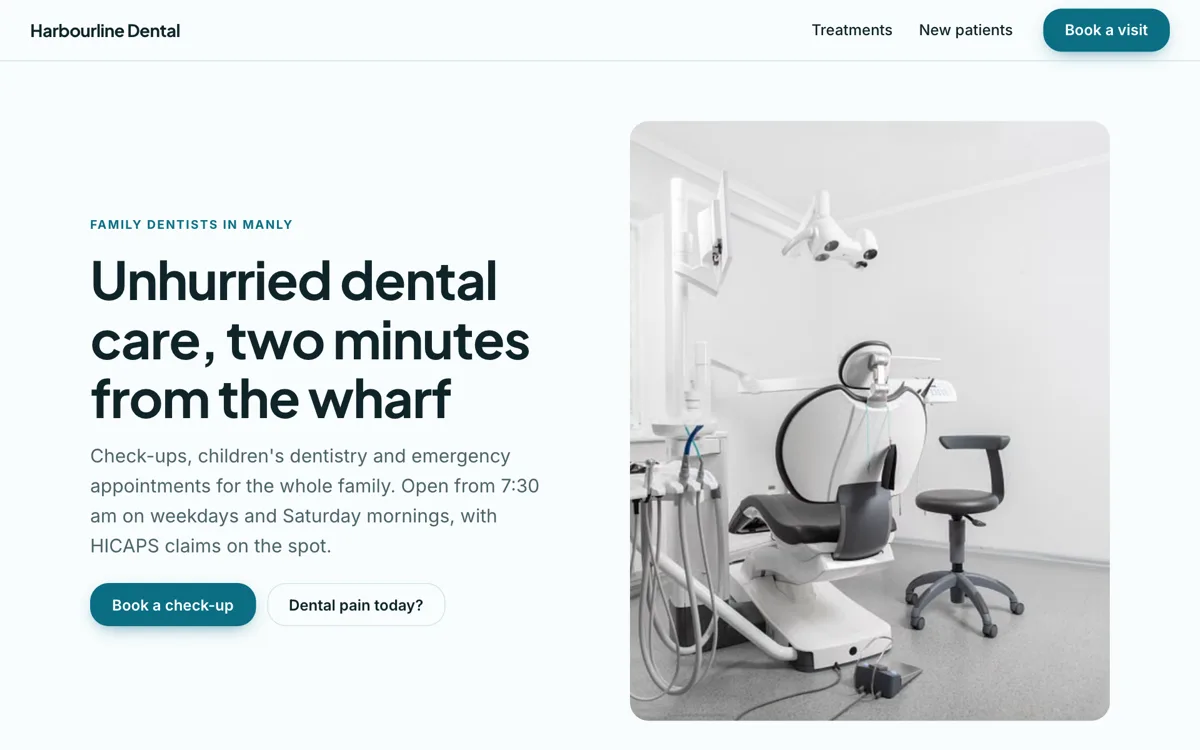
Dentist website example with fees on the pageA dental practice website with fees on the page and a booking request, written as code.
Appointment request form
Appointment request form that reception confirmsA request form that reception confirms by phone, for practices that do not take live bookings.
Patient satisfaction survey
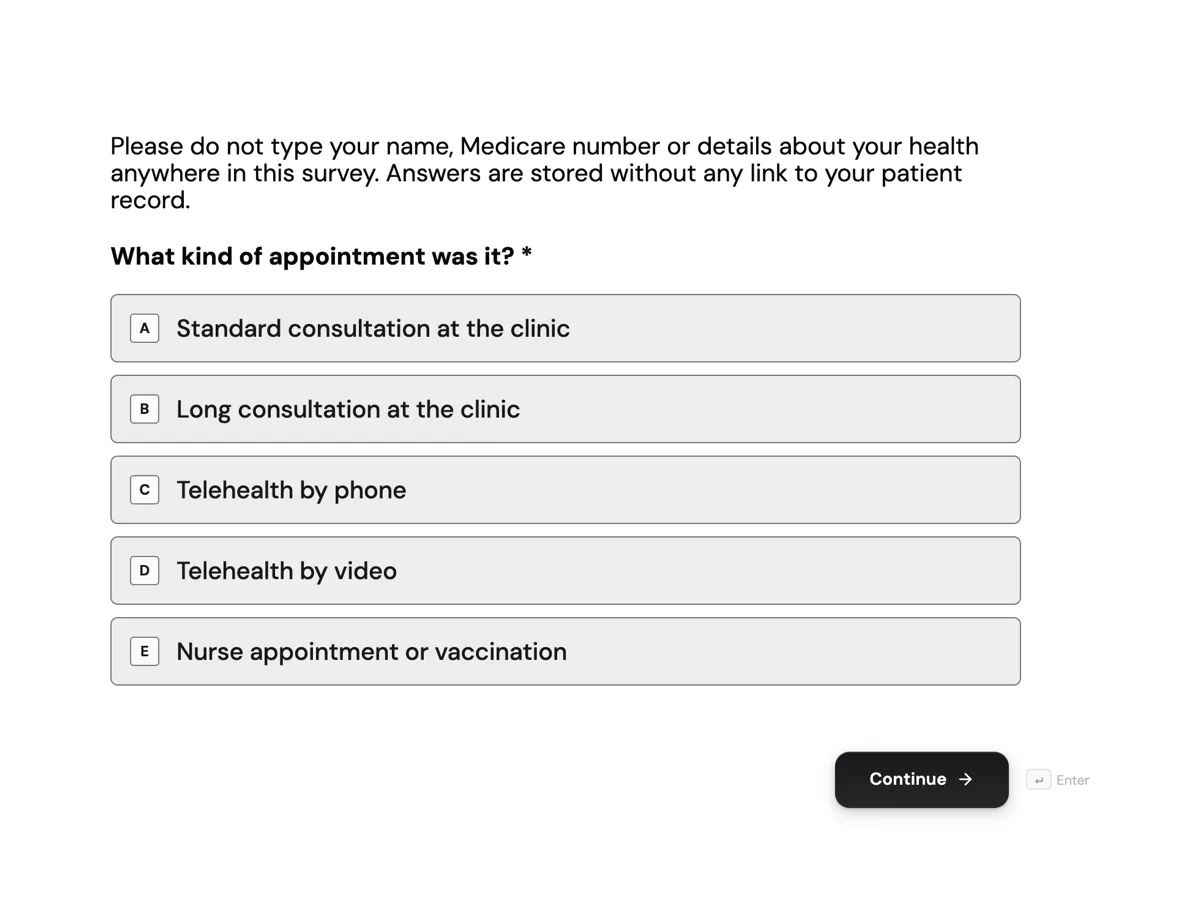
Patient satisfaction survey template for an Australian GP clinicA short post visit survey on booking, waiting time, explanation of costs and comfort.
Patient registration template
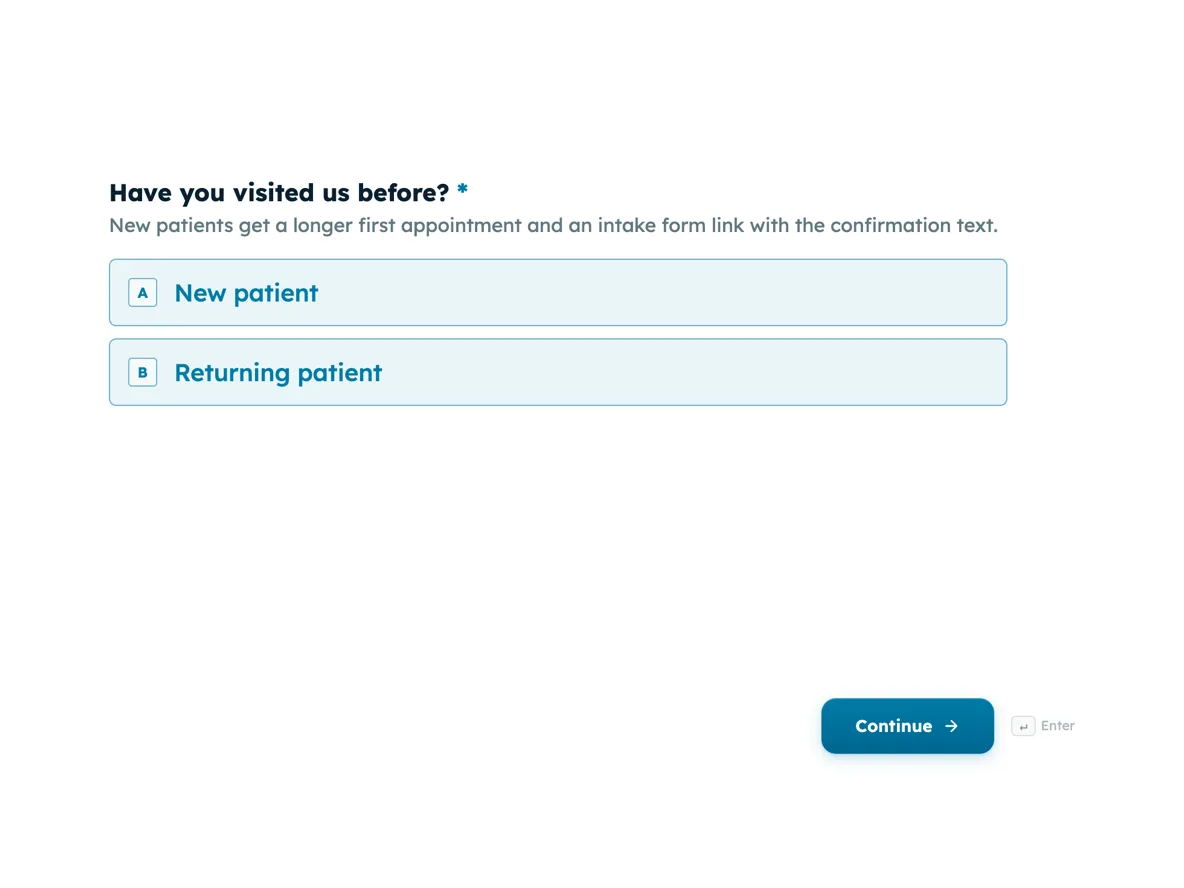
New patient registration templateA new patient registration form template to start from and adapt to a dental practice.
What the intake form must ask
A dental intake form needs the patient details and an emergency contact, health fund and Medicare details where relevant, a medical history that covers heart conditions, bleeding disorders, diabetes, pregnancy and joint replacements, a full medication list including blood thinners and bisphosphonates, allergies, previous dental treatment and the reason for the visit. A question on dental anxiety helps the dentist plan the appointment. The dental intake example asks each of these and keeps the medical questions as yes or no items with a field for detail.
Consent that holds up
Consent is a conversation, and the form records it. It should name the treatment, the tooth or area, the material where relevant, the main risks, the alternatives including no treatment, the cost estimate, and give the patient room to ask questions. Signing electronically works well for planned treatment: the e-sign flow sends the consent to the patient, they confirm with a code sent to their email, and the practice receives a certified PDF with an audit trail of when it was signed.
Privacy and health information
Every health service provider in Australia is covered by the Privacy Act for the health information it holds, whatever its size. That covers intake forms, consent records and feedback. Collect only what you need, tell patients why you collect it, and limit who can open a form. A published form can be set to login required or secret key access, and the form does not email the patient a copy of their answers; the practice receives an alert when a form is submitted.
The tools behind the kit
Step by step in the builders: Create a form with AI, then Send a document for e-signature.
Questions people ask
What forms does a new dental patient fill in?
A new dental patient usually completes a registration and medical history form before the first visit, and a consent form before any planned treatment beyond an exam and clean. Many practices also ask for a health fund and Medicare details form and a privacy acknowledgement. The dental intake form in this kit combines registration and history in one form.
Should dental consent forms be signed electronically?
Electronic signing is valid for most consent in Australia, and it lets patients read the consent at home before treatment rather than in the waiting room. The practice should still discuss the treatment and record that conversation. An e-signed consent comes back as a certified PDF with a record of who signed and when.
Can a dental website show fees?
Yes. Showing indicative fees for common items such as an exam and clean, a filling or a crown helps patients decide, as long as the fees are accurate and the page explains that the final cost follows an examination. Advertising must follow the national health advertising guidelines, which restrict testimonials and misleading claims.
How often should a dental practice survey patients?
A short survey after a new patient first visit and an annual survey of regular patients is a common rhythm. Keep it to a few questions: ease of booking, waiting time, how well costs were explained and comfort. The patient satisfaction survey in this kit is written for a clinic and takes under two minutes.
Is a medical history form required for dental treatment?
There is no single mandated form, but taking and updating a medical history is part of safe practice, because medications and conditions change what treatment and anaesthetic are safe. Ask patients to update it at each recall visit, and record any change before treatment begins.
Start the first piece of the kit
The button opens a generator with a starting description already filled in. Change the business details to your own before you run it.
Create a form with OneCraftMore industry kits
Written and checked by the OneCraft team. Last checked .