Industry kit
Event planning templates from the pitch to the post event survey
An event planner pitches with a proposal, signs a contract, writes the plan and run sheet, books the venue and vendors, registers guests and asks how it went. This kit links a finished example of each step, written for invented Australian event businesses.
From brief to run sheet
Event planning is a long chain of documents that ends in one night. It starts with a brief and a proposal that sets the concept, the budget and the fee. A contract fixes the scope, the payment stages and what happens if the event is cancelled or changes size. The event plan carries the budget, the timeline and the run sheet, which is the minute by minute document everyone works from on the day. Around it sit the venue hire agreement, vendor agreements, speaker agreements for conferences and the registration form guests fill in.
After the event
When the event is over, two documents matter. The feedback survey, sent while the night is still fresh, tells the planner and the client what to repeat and what to fix, and gives the planner evidence for the next proposal. The final invoice reconciles the budget against what was spent, including any variations the client approved along the way. Planners who keep these well win repeat business, because the client can see exactly what they got. Each of these is in the kit as a finished example, from the first proposal to the last invoice.
Who the kit is for
The kit is written for corporate, social and conference event planners in Australia, from solo planners to small agencies. Events at public venues carry work health and safety duties, food safety rules for catering and sometimes council permits, so the plan and the contracts should say who holds each duty. Prices are in dollars with GST at 10%, the businesses are invented, and every card opens a complete example rather than a description, so the structure can be copied with confidence.
The kit, piece by piece
Event proposal
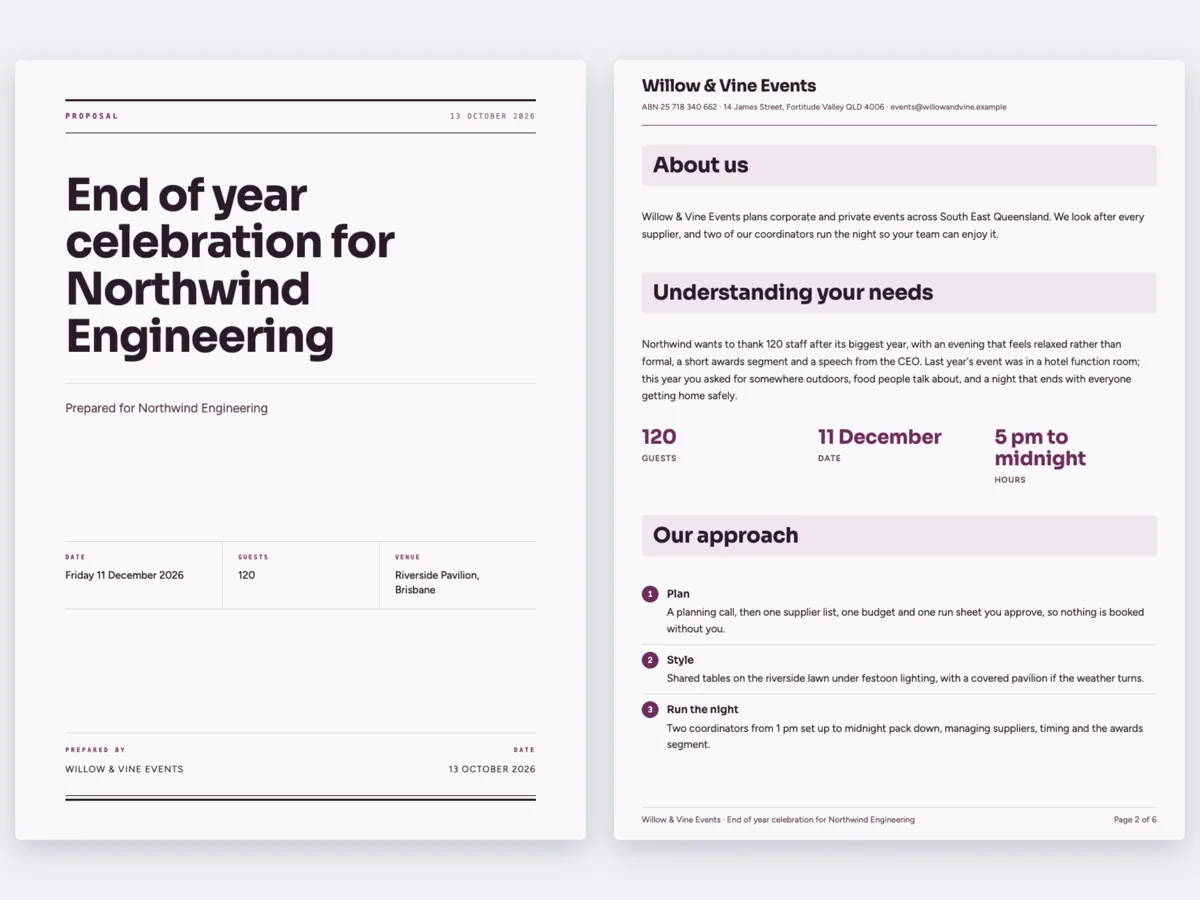
Event planning proposal for a corporate end of year partyA corporate end of year party priced as a planning fee plus pass through costs, with optional extras.
Event planning contract
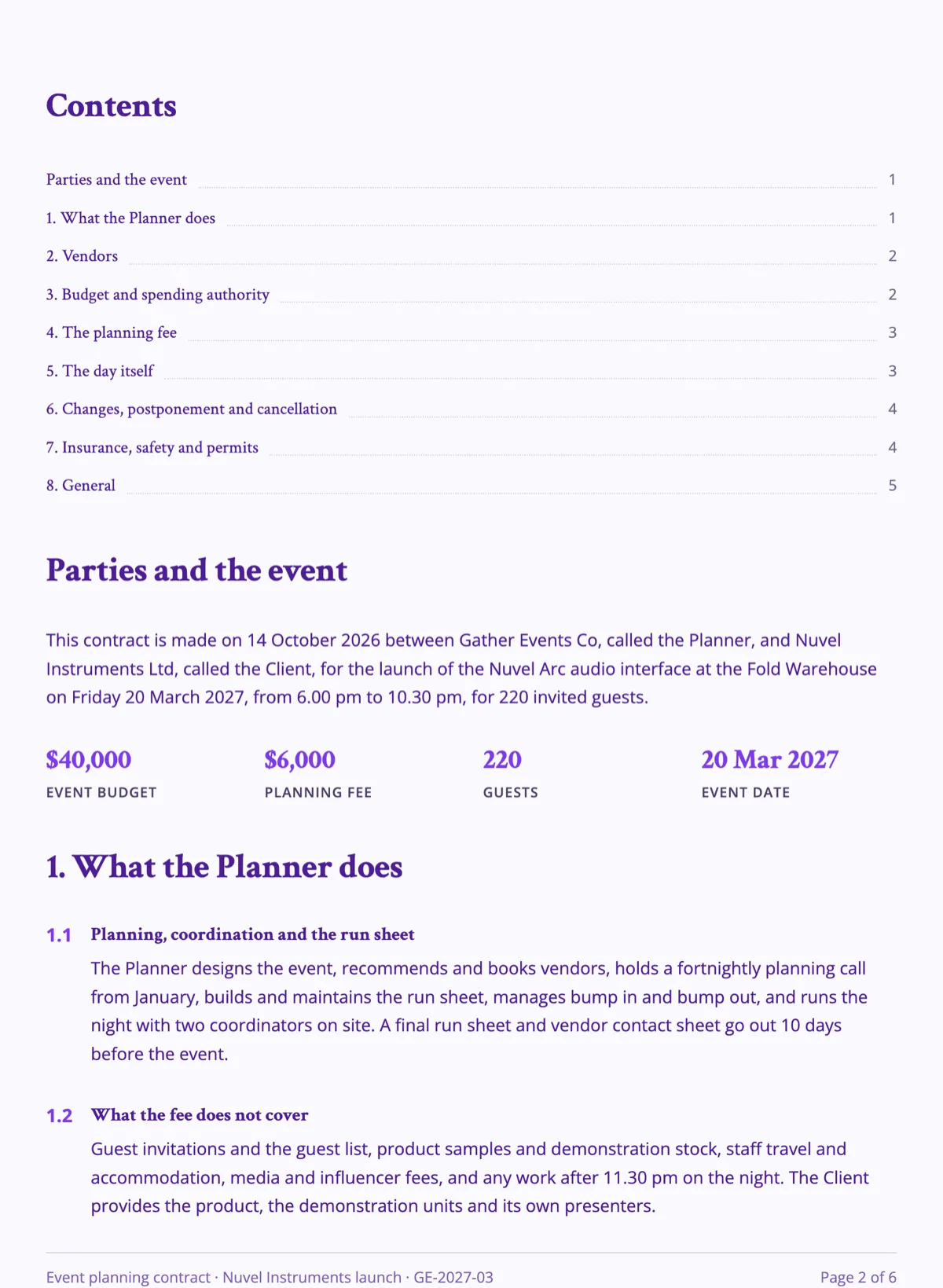
Event planning contract with a vendor table and a spending limitScope, payment stages, client approvals, cancellation and what happens if guest numbers change.
Event plan and run sheet
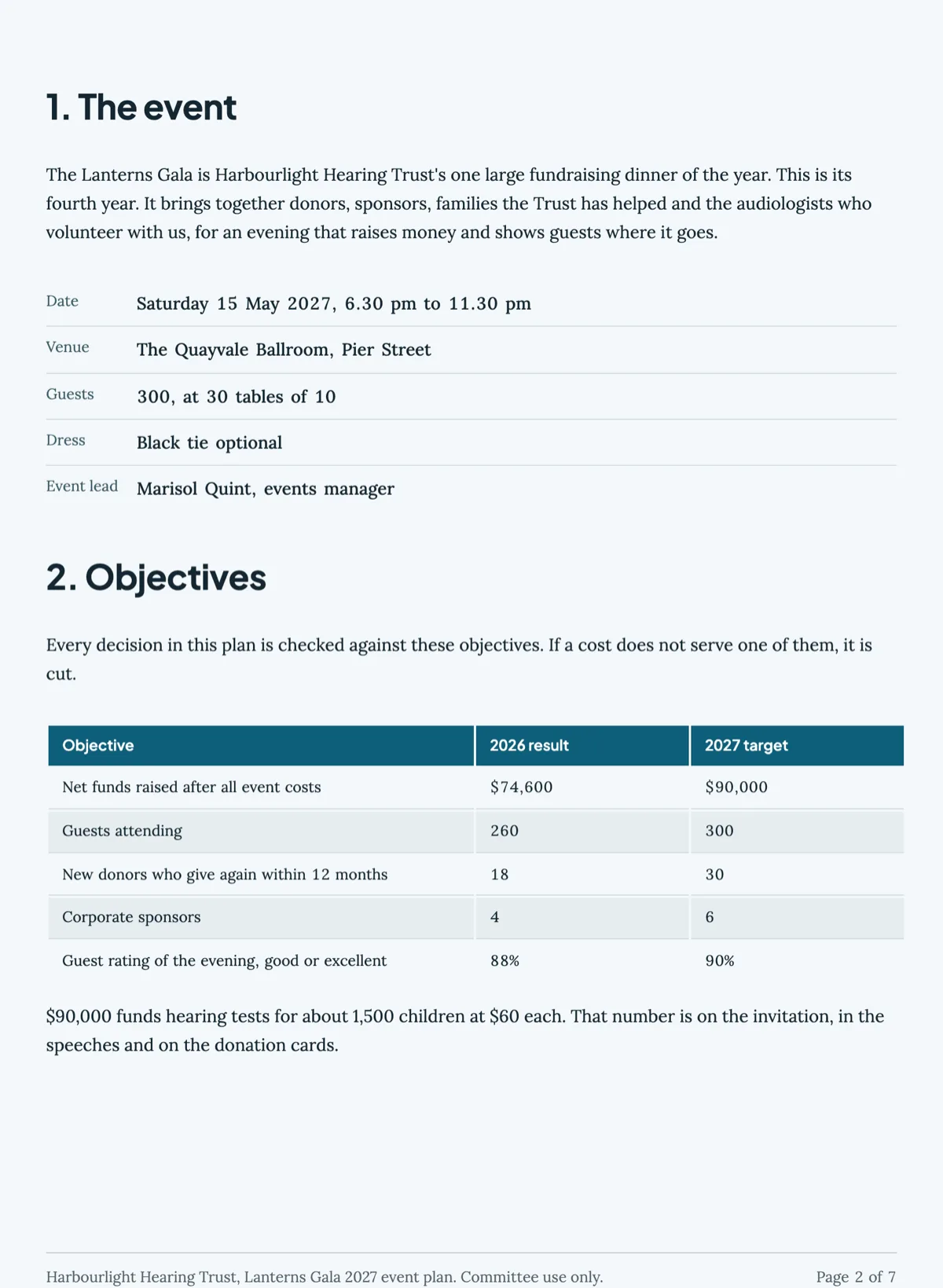
Event plan template with budget, timeline and run sheetThe budget, timeline and run sheet in one document, the one everyone reads on the day.
Venue hire agreement
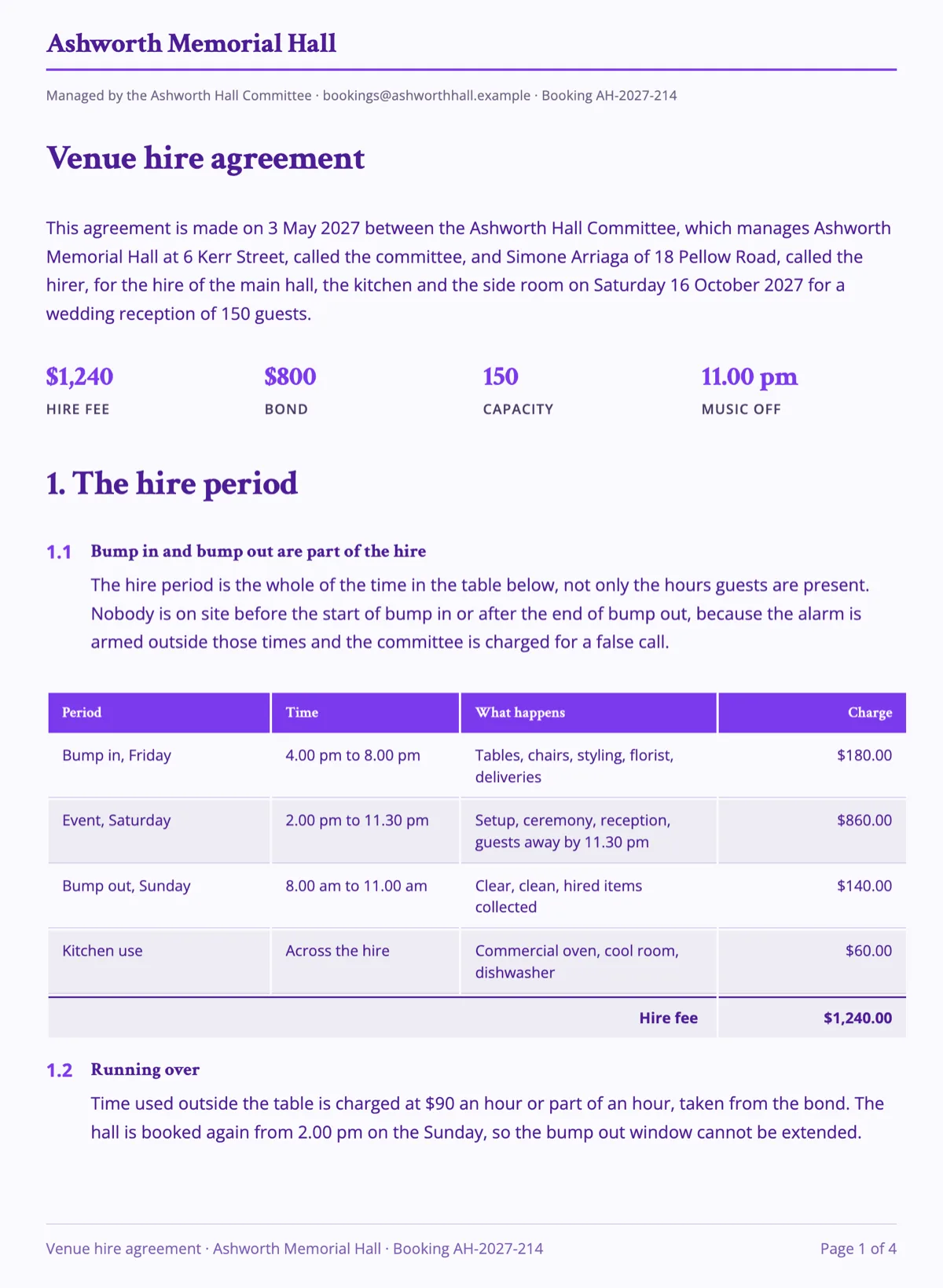
Venue hire agreement template with bump in, noise and a bondAccess times, bond, capacity, cleaning and damage terms for the venue.
Vendor agreement signing
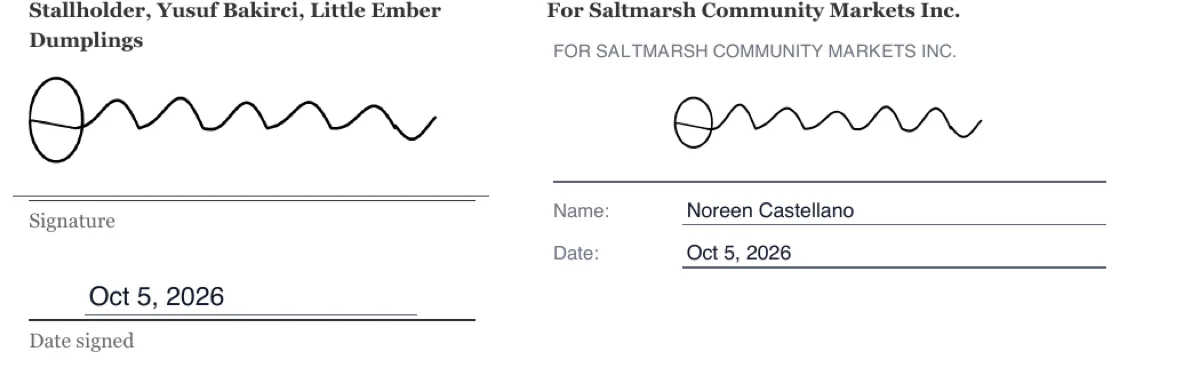
Sign an event vendor agreement onlineA vendor agreement signed online, so every supplier has signed terms before the event.
Conference registration form
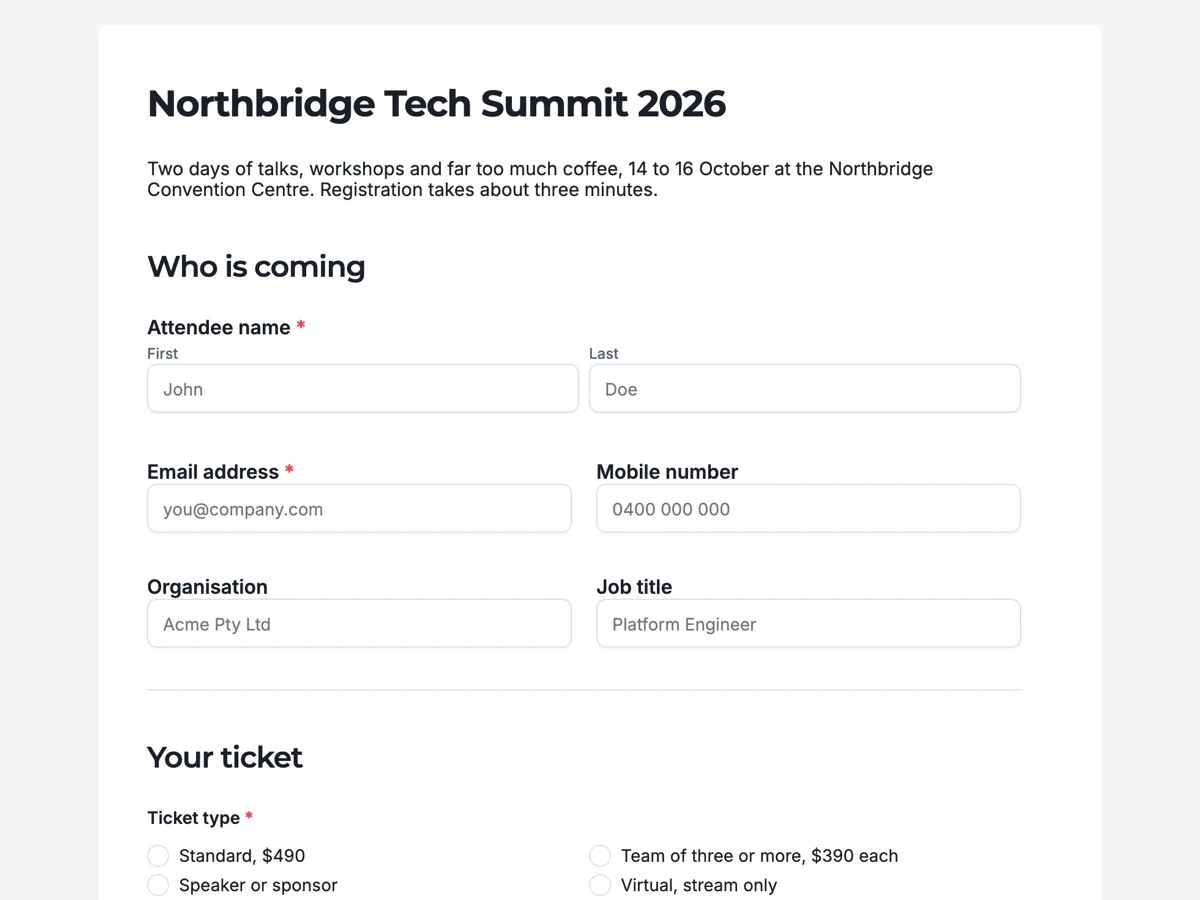
Conference registration formAttendee details, sessions, dietary needs and ticket type for a conference.
Exhibitor booking form
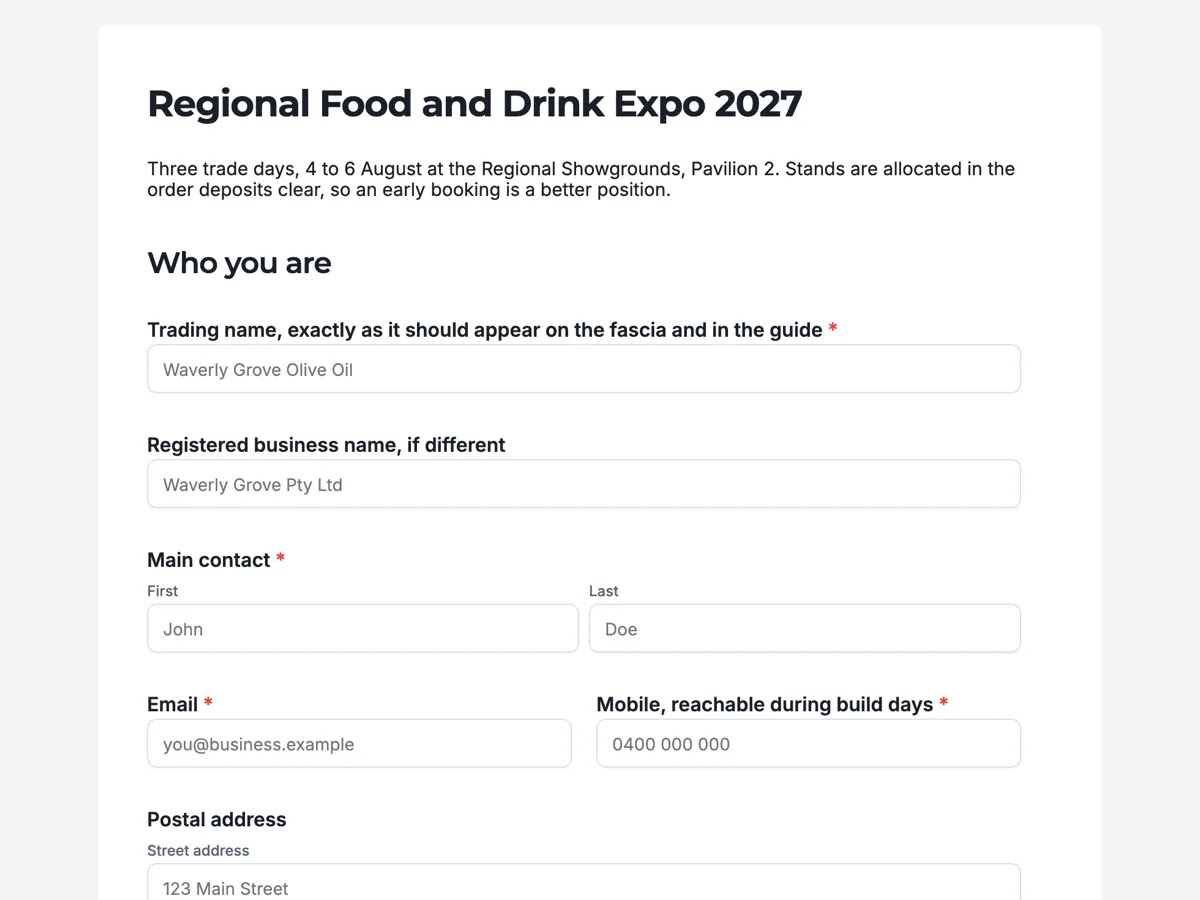
Exhibitor stand booking formStand size, power, logistics and insurance for exhibitors at an expo or conference.
Speaker agreement
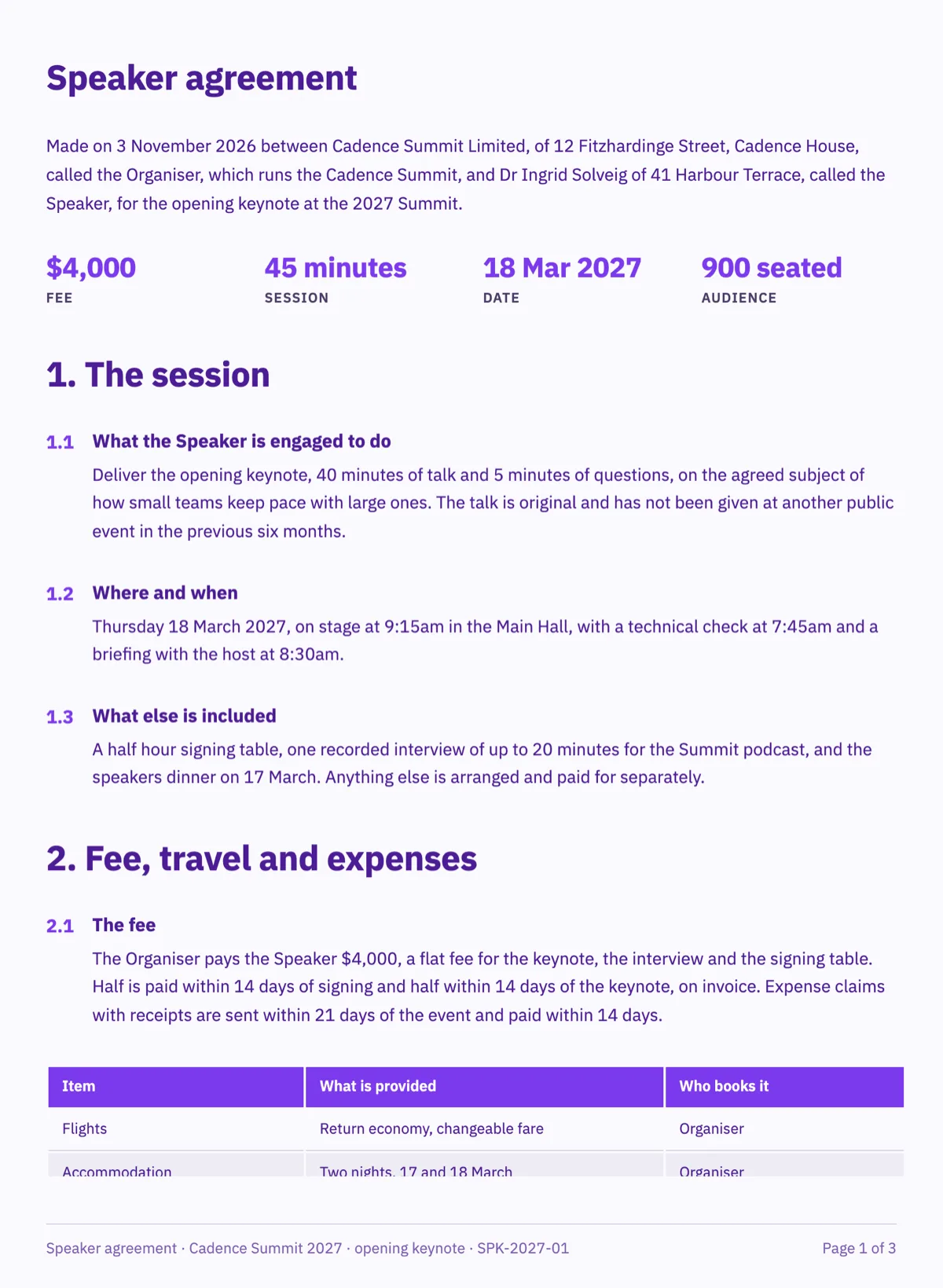
Speaker agreement template covering the fee, travel and the recordingThe fee, travel, the talk and the recording rights for a conference speaker.
Event feedback form
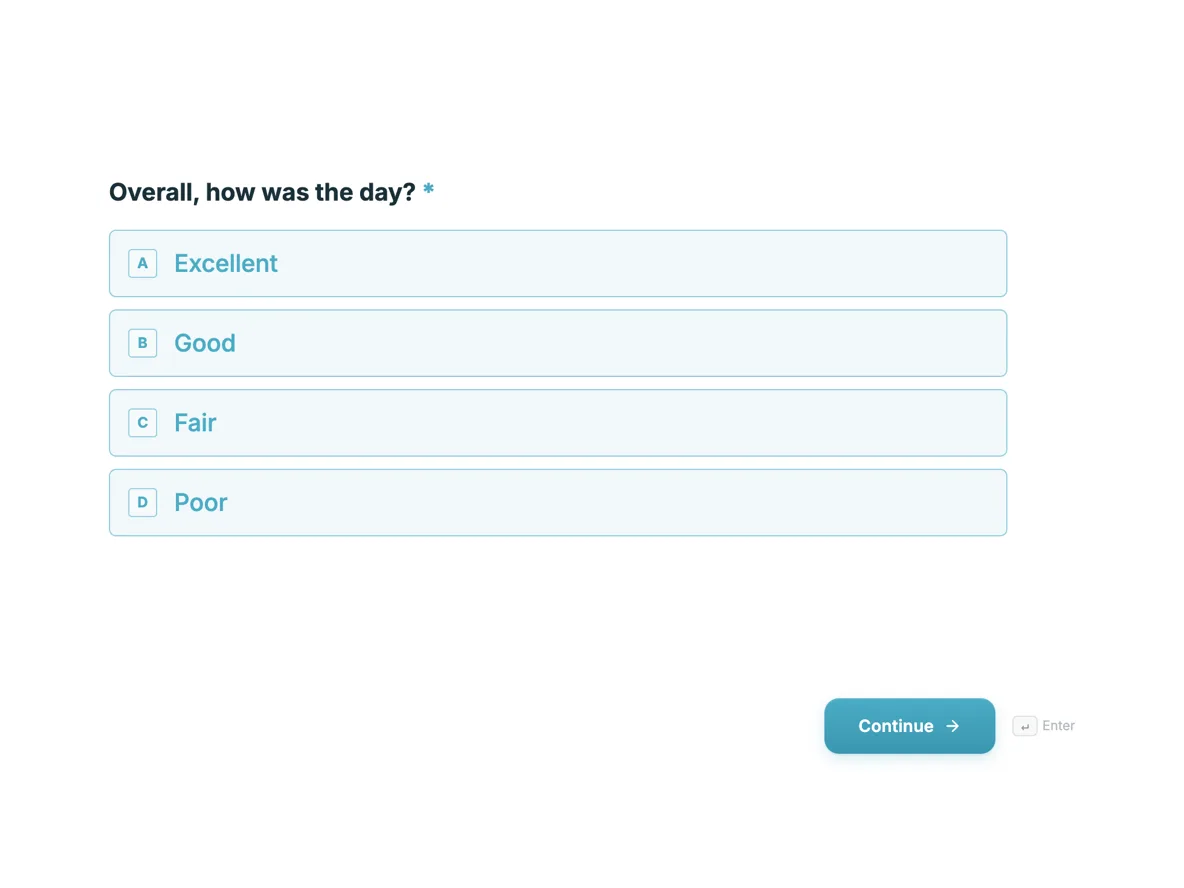
Event feedback form that asks what to changeA post event survey that asks what to change, sent while the event is fresh.
Conference flyer
Conference flyer for an events company's three annual conferencesA conference flyer with the program highlights, speakers and the early bird date.
Event services template
Event services proposal templateA proposal template for event services, ready to price.

Price the fee and the costs separately
Clients compare planners on the fee and on control of the budget, so show them separately. The planning fee covers the planner time; venue, catering, entertainment and decor are costs the client pays, either through the planner or directly. A proposal that lists them in groups, with optional extras the client can tick, makes the decision easier. The event proposal example is priced this way and can be accepted online, issuing the deposit invoice on acceptance.
The run sheet is the event
The run sheet lists every moment of the event with the time, what happens, who is responsible and where. It is the document the venue manager, caterer, AV crew and MC all work from, so it should be in one place and final a few days before. The event plan example in this kit includes a run sheet alongside the budget and the timeline, so a client can see how the night will run when they approve the plan.
Registrations and feedback
A registration form collects attendee details, sessions or meal choices, dietary needs and accessibility needs, and the answers become the catering numbers and the name badges. Export the responses as a CSV with one column per question to hand to the venue. After the event, send the feedback form within a day. The event feedback example asks what to keep and what to change, which is more useful than a satisfaction score alone.
The tools behind the kit
Step by step in the builders: Create a quote with AI, then Add e-signatures with multiple signers.
Questions people ask
What should an event planning proposal include?
It should include the client brief, the concept, the venue options, the scope of services, a budget split into the planning fee and costs, optional extras, the timeline to the event, the payment schedule and how changes are handled. Keep the fee visible.
What is a run sheet?
A run sheet is the minute by minute schedule for an event, listing each moment, its time, what happens, who is responsible and where. Everyone working on the event uses it on the day. It is usually finalised a few days before, after the final numbers are confirmed.
Do event planners need contracts with clients?
Yes. A contract sets the services, the fee, what the client approves, the payment stages and what happens if the event is cancelled, postponed or changes size. Without it, a cancellation weeks before the event can leave the planner paying vendor deposits.
How do planners manage vendor agreements?
Get every vendor to sign terms before the event: services, times, setup, power, insurance, payment and cancellation. Sending vendor agreements for e-signing keeps them in one place, with a certified PDF and an audit trail for each, and shows at a glance which supplier has not signed yet.
When should an event feedback survey be sent?
Within a day of the event, while attendees remember it. Keep it short, ask what they valued and what should change, and ask organisers separately about the planning process. Share the results with the client as part of the wrap up.
Start the first piece of the kit
The button opens a generator with a starting description already filled in. Change the business details to your own before you run it.
Create a proposal with OneCraftMore industry kits
Written and checked by the OneCraft team. Last checked .