Industry kit
IT support templates for managed service providers and IT consultants
An IT support business sells managed services by the user, signs an agreement with response times, writes the policies its clients need and takes requests through forms. This kit links finished examples of each, written for invented Australian IT businesses.
Selling managed services
A managed service provider sells a monthly service, usually priced per user or per device, with response times by priority and a list of what is included. The proposal sets the tiers and the price, a sales deck explains the service to the business owner who signs, and the support agreement sets the service levels, the exclusions, security responsibilities and the term. Clients ask about cyber security in almost every sale now, so the policies and plans an MSP writes for clients are part of what it sells.
The documents clients ask an MSP for
Small businesses rarely have an information security policy or an IT disaster recovery plan until a client, insurer or auditor asks for one. An MSP that can produce them, based on the controls it actually runs, adds value and locks in the relationship. Day to day, request forms for access, software and bug reports keep tickets complete. The examples below show the proposal, the agreement, the deck, the policies and the forms as finished pieces, so the structure and wording can be judged before adapting. Each card opens the complete example, as a client would receive it.
Who the kit is for
The kit is written for managed service providers, IT consultants and small IT support businesses in Australia. The Australian Cyber Security Centre publishes the Essential Eight and guidance for small business that clients and insurers increasingly refer to, and businesses covered by the Privacy Act must report eligible data breaches. The Australian Computer Society publishes professional standards for IT practitioners. The businesses and prices in the examples are invented, with GST at 10%, and none of the policies is offered as a security audit.
The kit, piece by piece
Managed services proposal
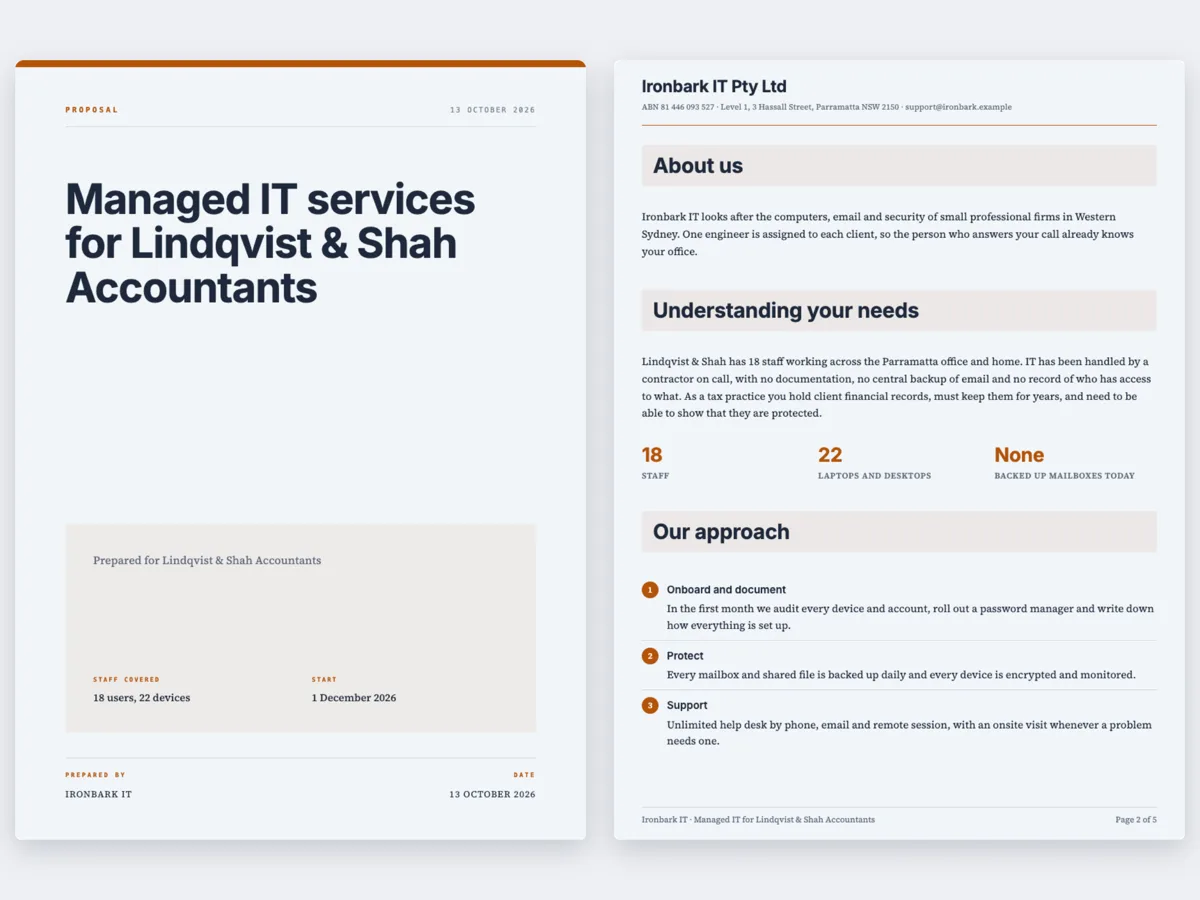
IT managed services proposal with per user pricingPer user pricing for help desk, devices, backup and monitoring, with the response times.
IT support agreement
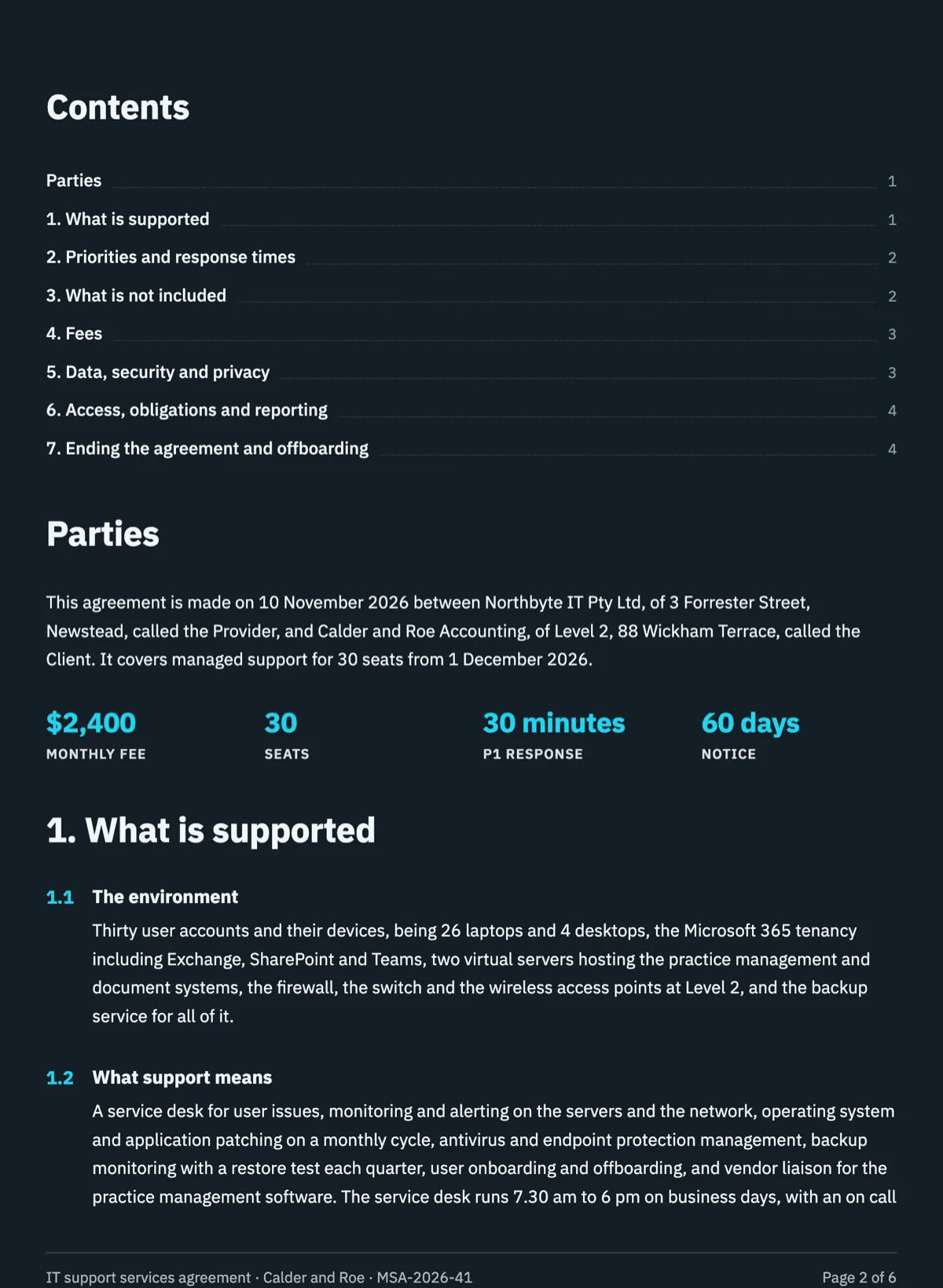
IT support services agreement with response times by priorityService levels, inclusions and exclusions, security duties, fees and the term.
Sales deck
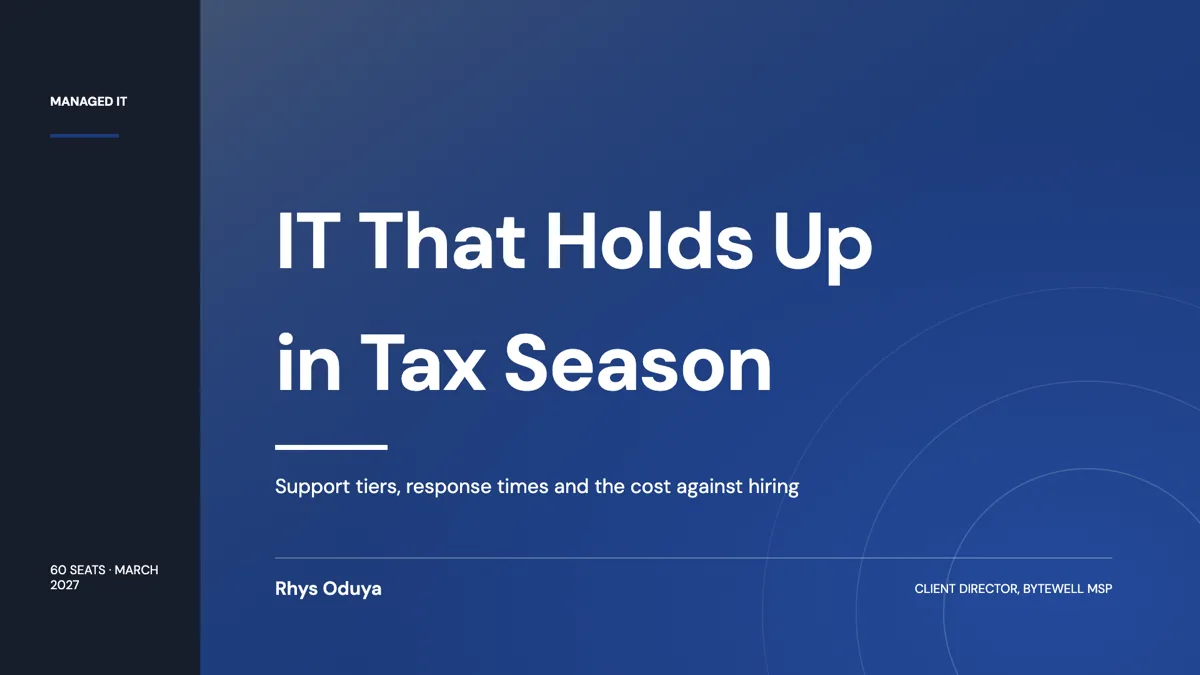
Managed IT services sales deck: tiers and response timesService tiers and response times on slides for the business owner who signs.
IT support flyer
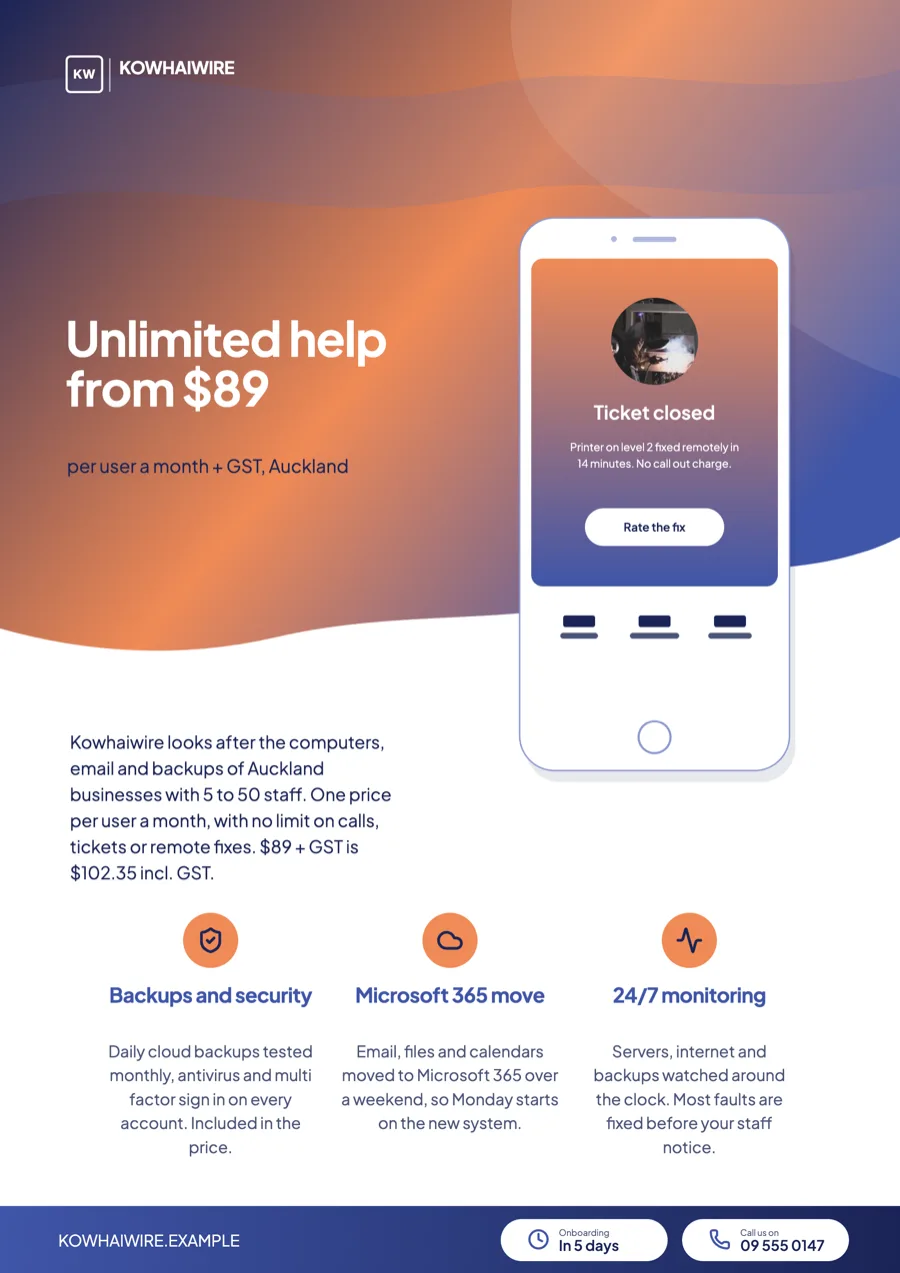
IT support flyer with per user managed service pricingA local IT support flyer with the services and a first audit offer.
Cyber security flyer
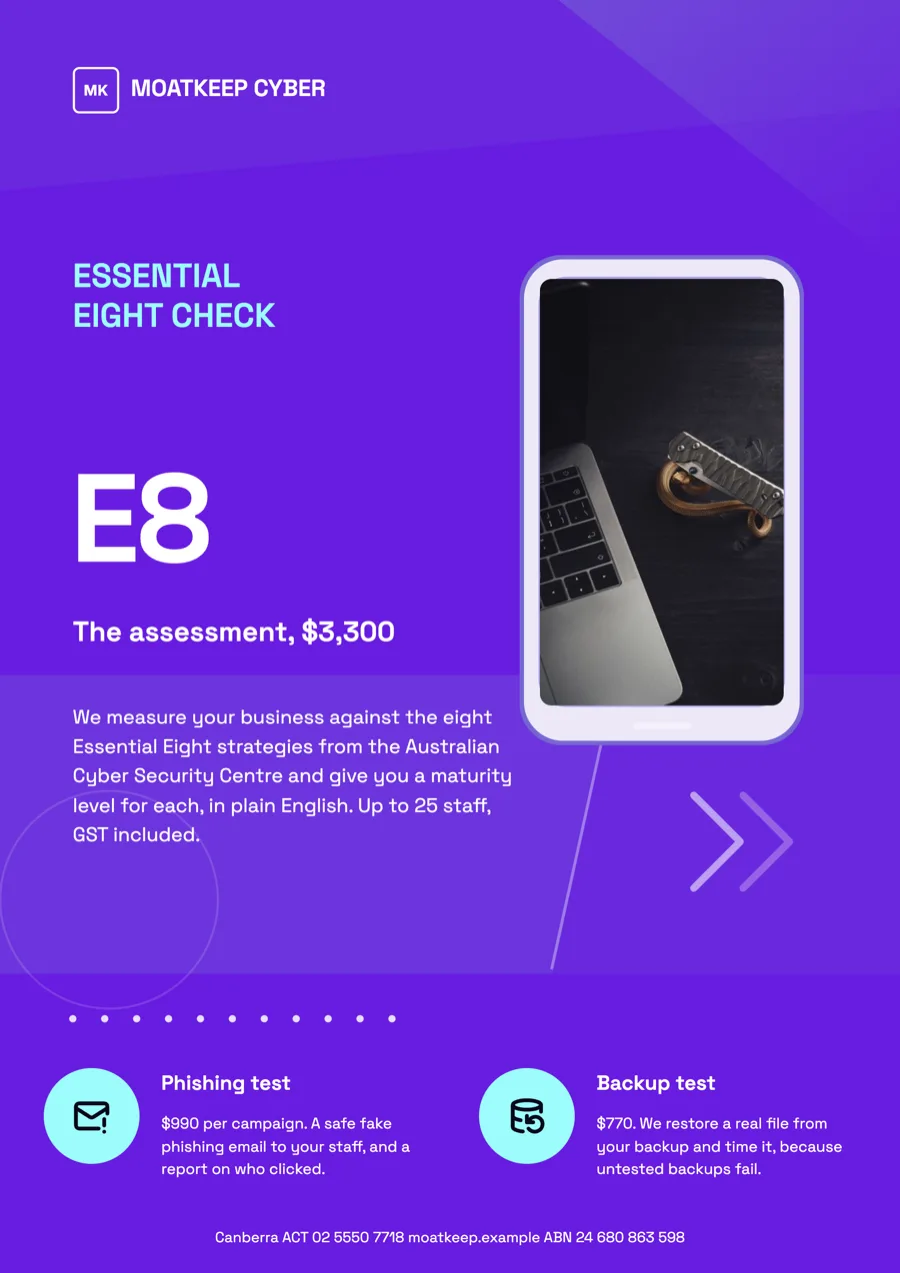
Cyber security services flyer with an Essential Eight assessment offerA flyer for a cyber security check, written for small businesses.
Information security policy
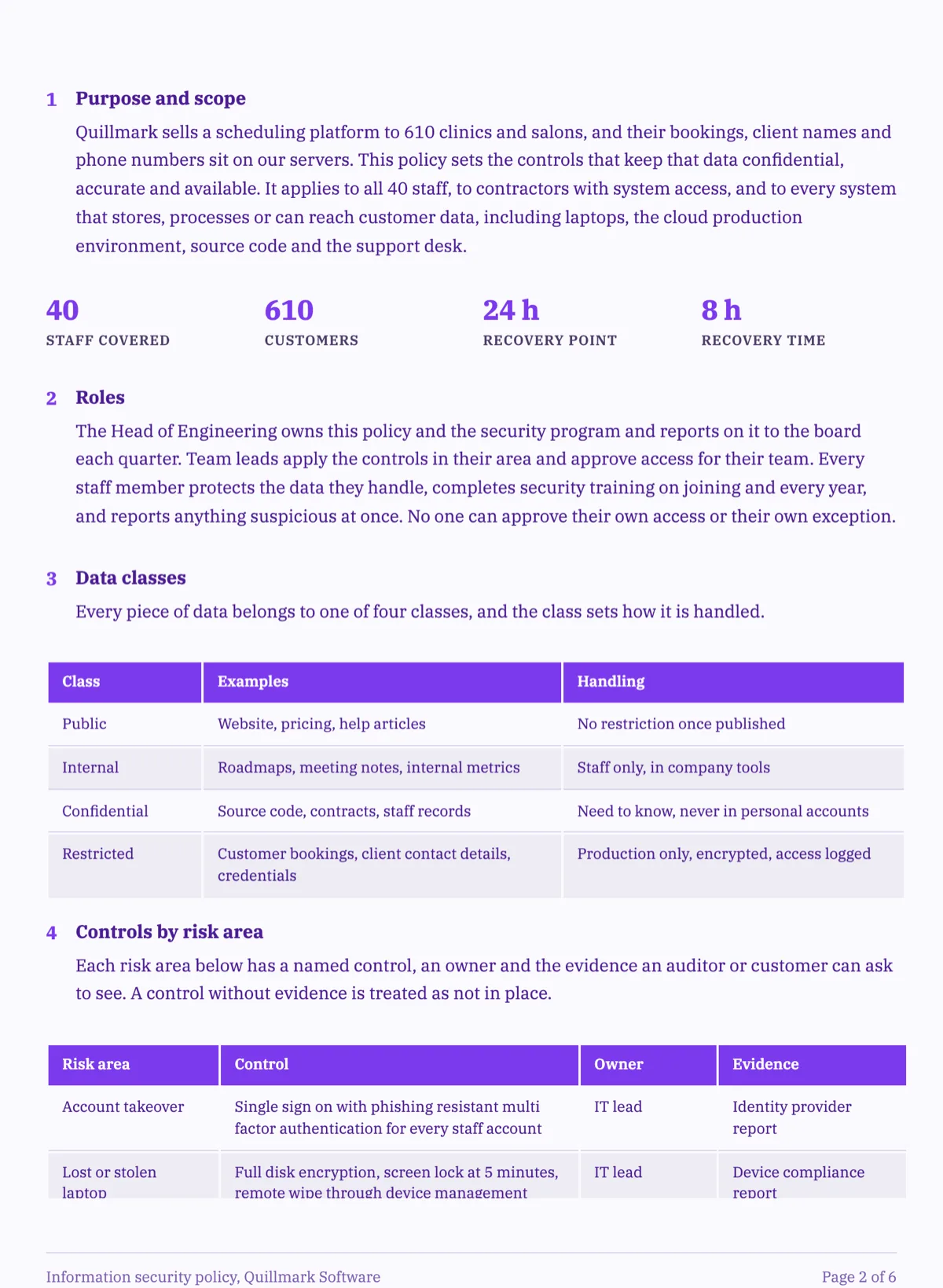
Information security policy template with a controls table by risk areaA policy with a controls table by risk area, written for a client business.
Disaster recovery plan
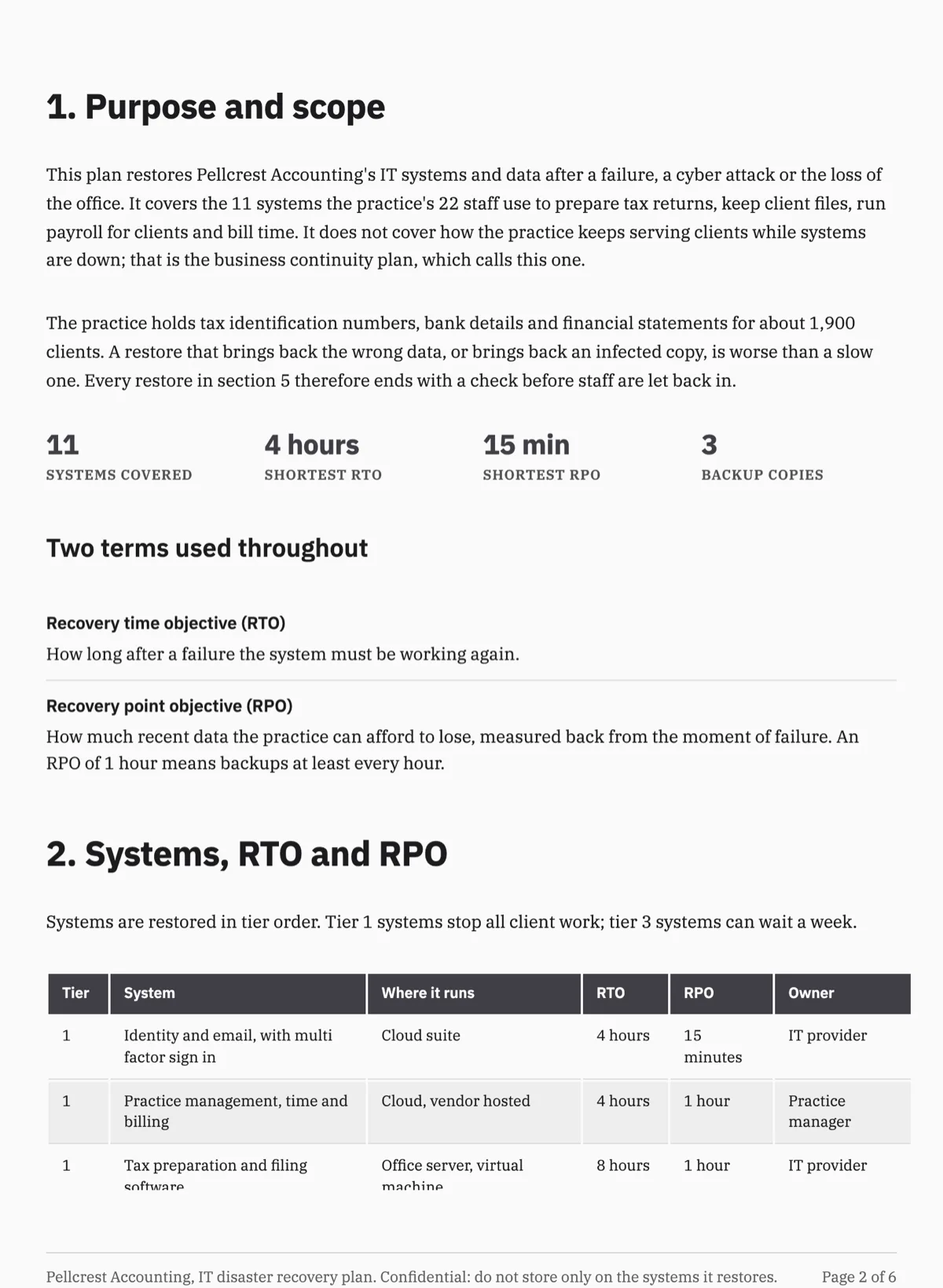
IT disaster recovery plan template with systems, RTO and restore stepsSystems, recovery time objectives and restore steps for a client.
IT access request form
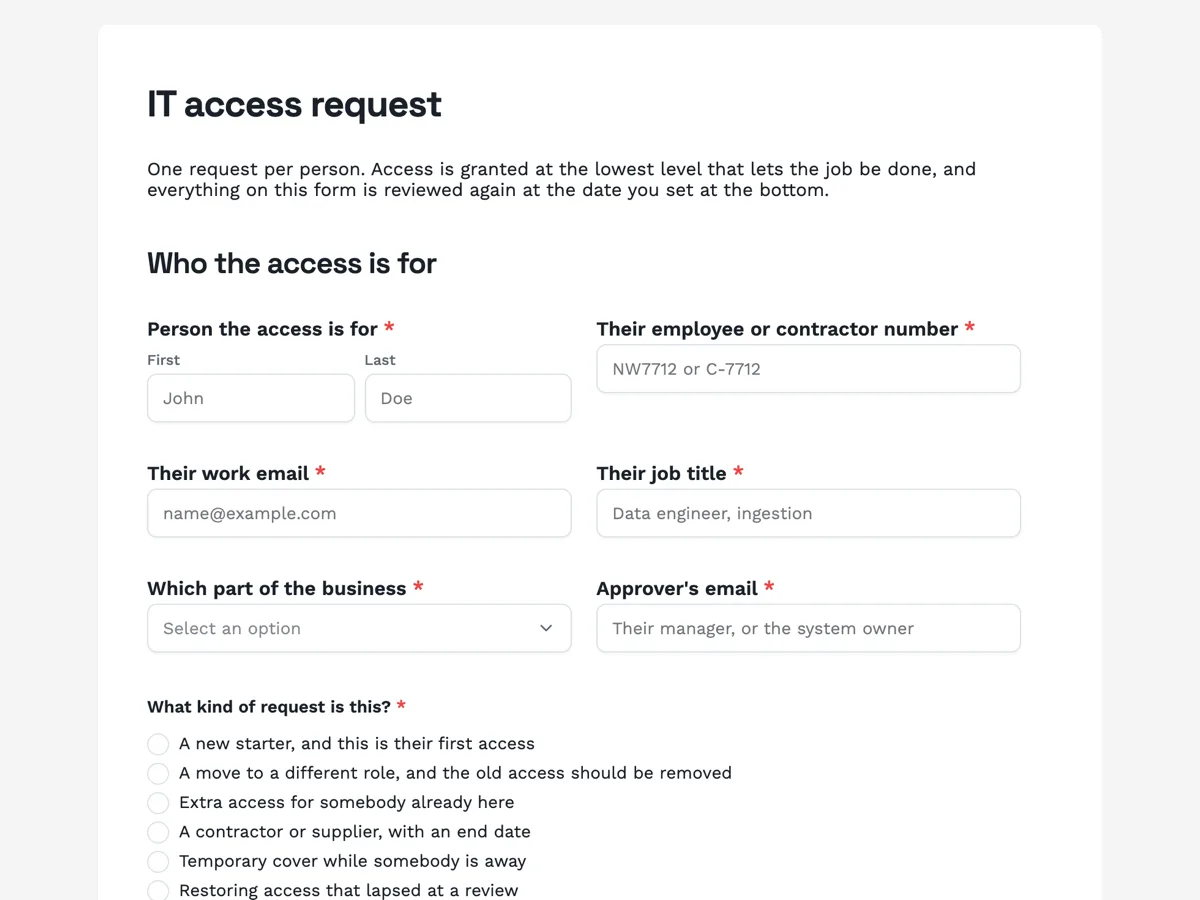
IT access request formNew starter and change access requests with the approver named.
Bug report form
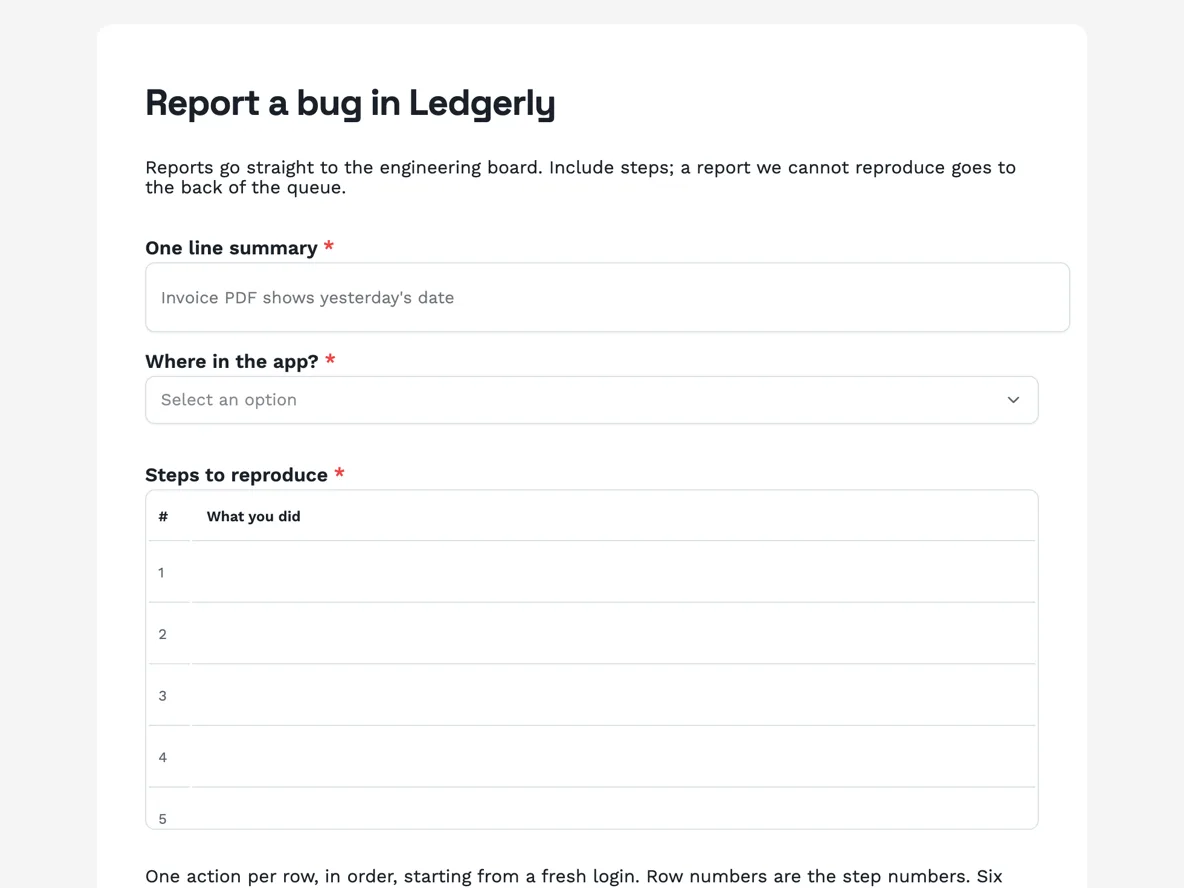
Bug report form that produces reports a developer can reproduceA structured bug report that gives the technician steps, impact and screenshots.
Cyber security clause
Cyber security clause: the controls a supplier must keepThe contract clause that sets security duties between a provider and a client.
Support ticket feedback questions
Support ticket feedback questionsQuestions for a short survey after each support ticket closes.
Price per user, list the service levels
Business owners compare MSPs on the price per user and on how fast someone answers when things break. Show the tiers with what each includes, the response and resolution times by priority, the hours of cover and what costs extra, such as projects and hardware. The managed services proposal in this kit shows this, and the client can accept it online; acceptance with an onboarding deposit issues the deposit invoice at once.
An agreement that splits security duties
A support agreement should set out who is responsible for what in security: the MSP for the tools it manages, the client for its staff behaviour and its own decisions. It should cover backups and their testing, incident response, breach notification support, access to client systems and what happens to data when the agreement ends. The cyber security clause page explains the contract wording with a sample.
Policies and forms clients will use
The information security policy and the disaster recovery plan in this kit are written as documents an MSP prepares for a client, based on the controls in place, with a controls table and restore steps. Forms for access requests, software requests and bug reports keep tickets complete and give an audit trail. A short survey after each ticket shows the client the service is measured.
The tools behind the kit
Step by step in the builders: Create a quote with AI, then Create a document with AI.
Questions people ask
What should a managed IT services proposal include?
It should include the services in each tier, the price per user or device, response and resolution times by priority, hours of cover, onboarding steps and fee, exclusions, the term and notice period. Show security services clearly, because clients ask about them first.
What should an IT support agreement cover?
It should cover the services, service levels, client responsibilities, security duties, backups, data handling, access to systems, fees and billing, exclusions, liability, the term and what happens at the end, including handing back admin credentials, documentation and client data within a set time.
Do small businesses need an information security policy?
Many do once a client, insurer or auditor asks, and writing one clarifies what controls are in place. It should set out the risks, the controls, who is responsible and how incidents are handled. The Essential Eight is a common reference for the controls.
What is a disaster recovery plan for IT?
It is a document that lists the critical systems, how long each can be down, how data is backed up, the steps to restore each system and who does what. Test it at least once a year so the restore steps are known to work.
Should IT support businesses survey clients after tickets?
A one or two question survey after each ticket closes gives a steady measure of service and spots problems early. Ask how satisfied the client was and whether the issue was fixed, review the results monthly, and share the trend with the client at each quarterly review meeting.
Start the first piece of the kit
The button opens a generator with a starting description already filled in. Change the business details to your own before you run it.
Create a proposal with OneCraftMore industry kits
Written and checked by the OneCraft team. Last checked .