Industry kit
Law firm templates for small practices, from intake to retainer
A small law firm takes instructions through an intake form, discloses costs and signs a retainer, sends letters, and markets itself to the next client. This kit links finished examples of each piece, written for invented Australian practices.
Instructions, costs and the retainer
A legal matter begins with instructions. A client intake form records who the client is, the other parties for a conflict check, what happened, the key dates and what the client wants. Before work starts, the firm must disclose its costs: how fees are calculated, an estimate of the total, disbursements, and the client rights. The retainer or costs agreement then sets the scope, the fees and the terms, and in most states the client signs it before the firm is bound to act.
Letters, documents and marketing
Much of a small firm output is letters and documents: letters of demand, cease and desist letters, statutory declarations, affidavits and powers of attorney. Clients choose firms through referrals and search, so a clear website with fixed fee services and a flyer for a local business network or community event still bring work. The examples below show each piece finished, written for invented firms and clients, and none of them is legal advice. Each card opens the complete example, so the wording can be read as a client would read it before deciding to call.
Who the kit is for
The kit is written for sole practitioners and small law firms in Australia. Legal practice is regulated by state law societies and, in the states under the Legal Profession Uniform Law, by the Legal Services Council and local regulators such as the Victorian Legal Services Board, which set the costs disclosure and trust rules. Use your regulator required disclosure forms where they exist, and treat these examples as a model of plain language and structure that a client can follow without a second phone call.
The kit, piece by piece
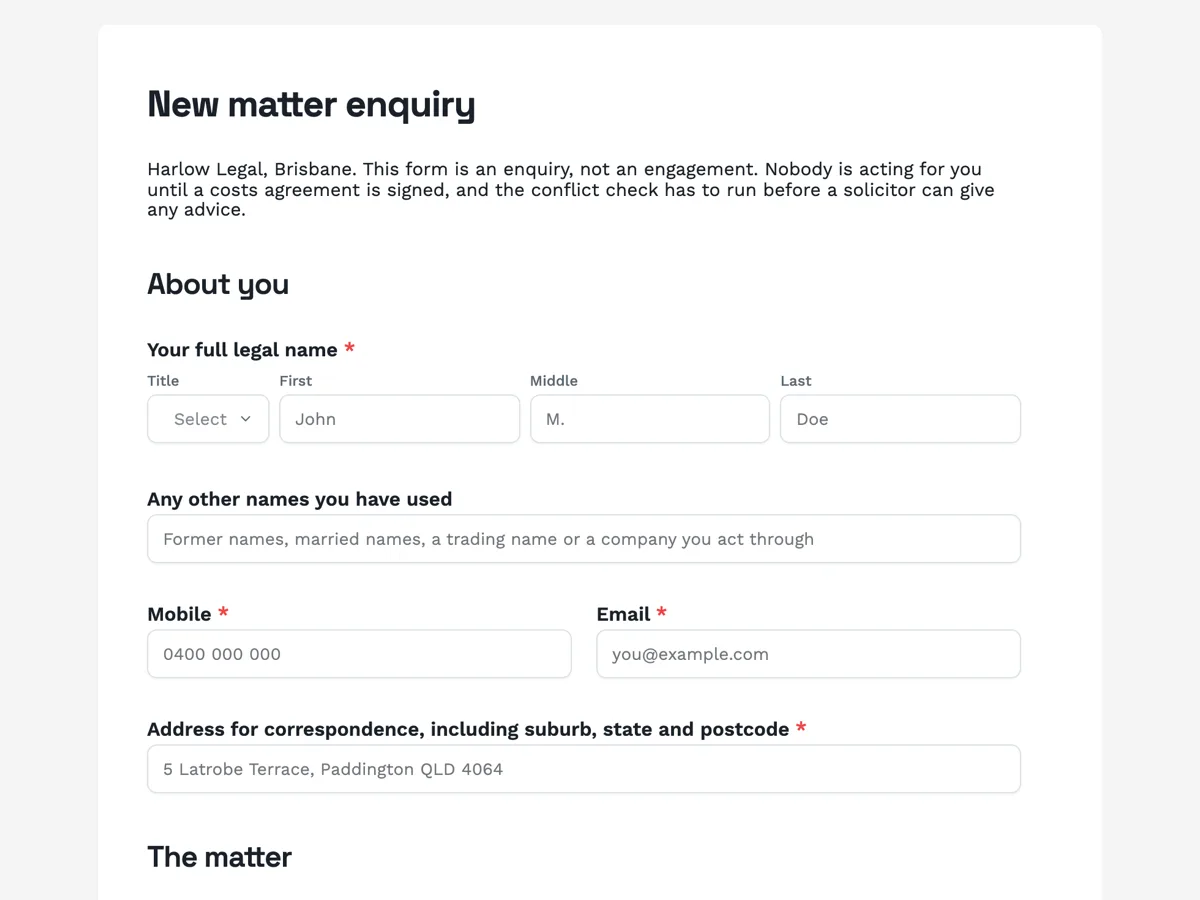
Client intake form
Law firm client intake form with the conflict check on itClient details, other parties for a conflict check, the facts, key dates and what the client wants.
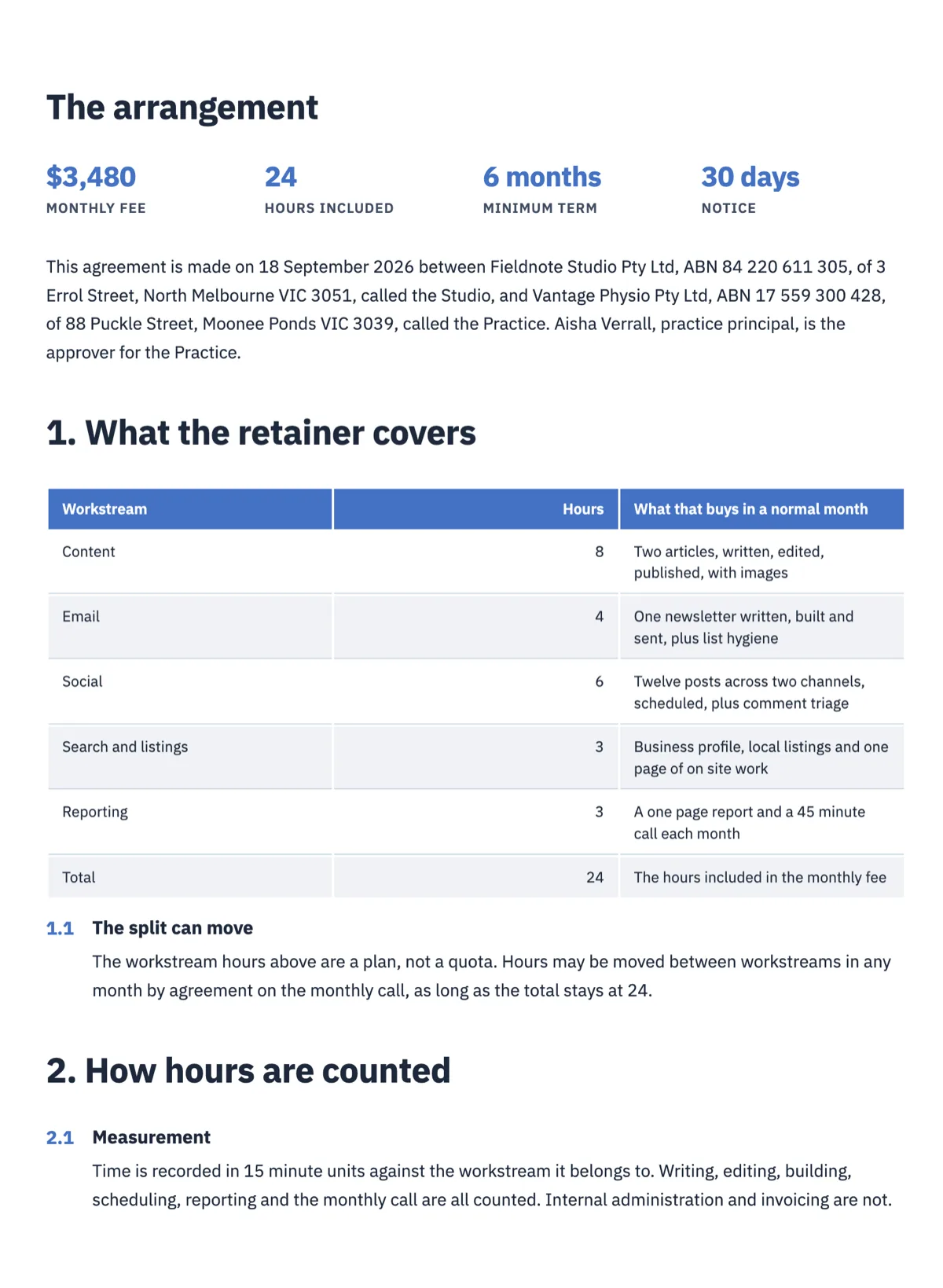
Retainer agreement
Monthly retainer agreementScope, fees, billing, trust money and how the retainer ends, in plain language.
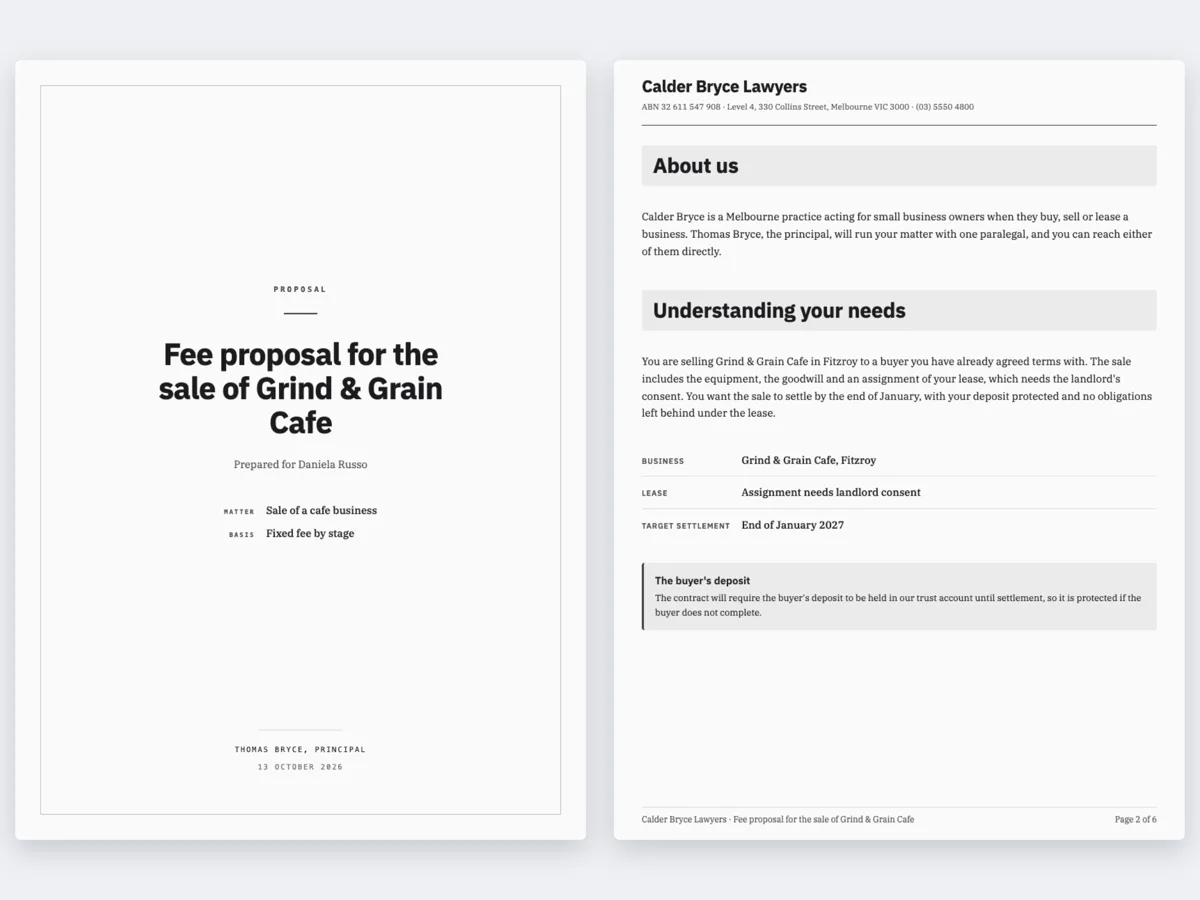
Fee proposal with costs disclosure
Legal fee proposal with fixed stage fees and costs disclosureFixed stage fees and a disbursements estimate with the costs disclosure, accepted online.
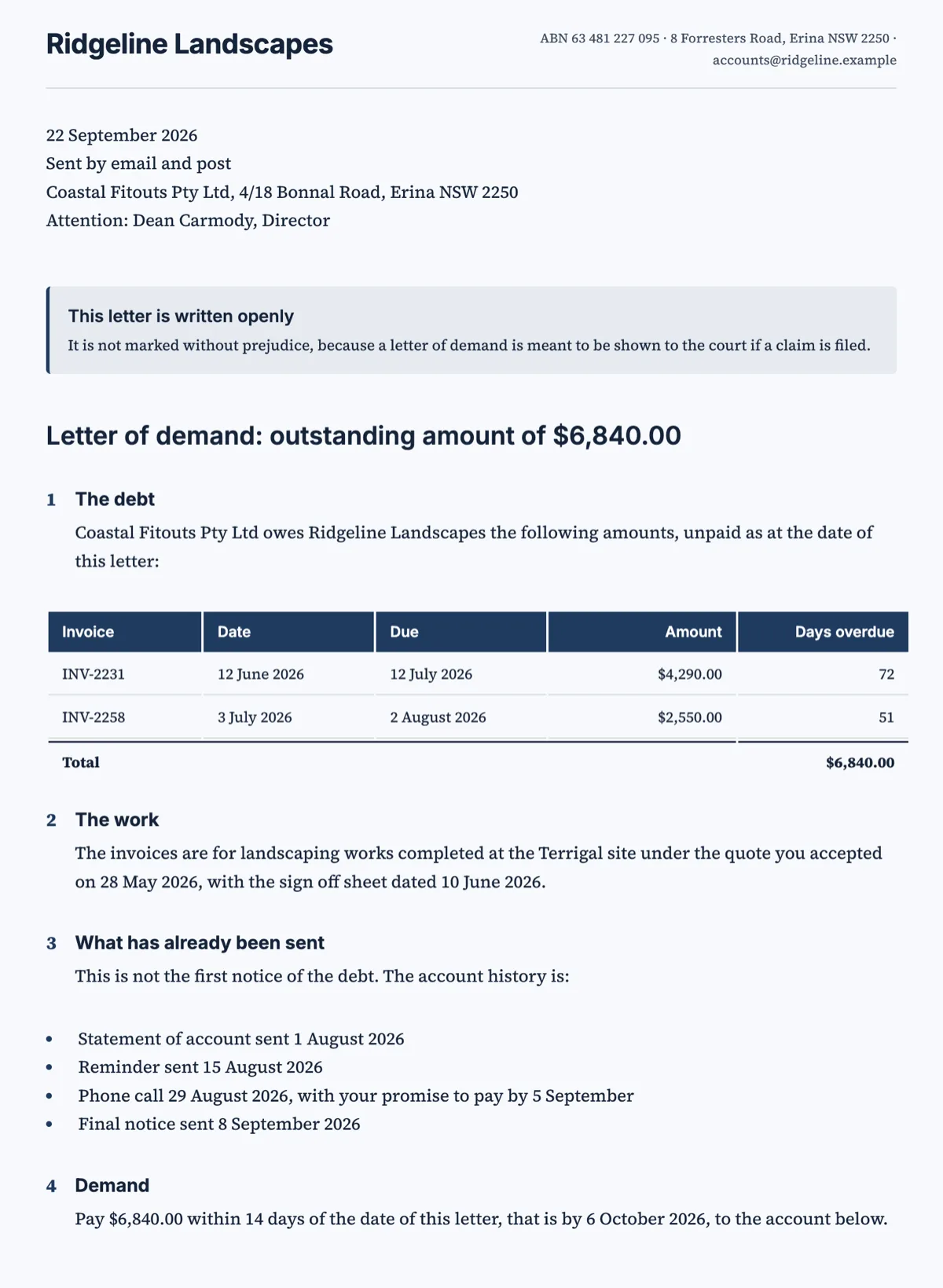
Letter of demand
Letter of demand template that can go straight to the tribunalA letter of demand with the amount, the basis and the deadline before further action.
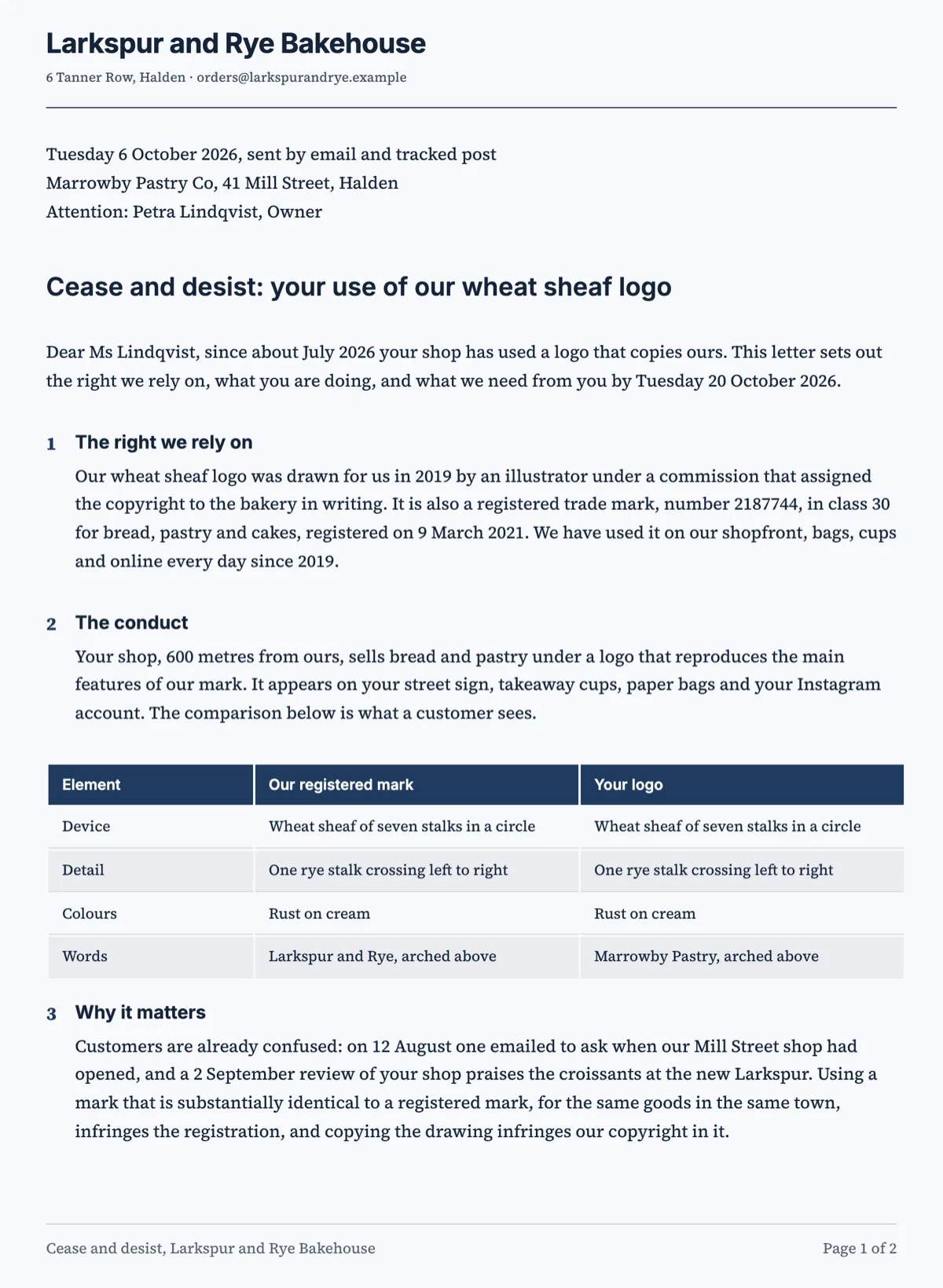
Cease and desist letter
Cease and desist letter template that names the right, the conduct and the deadlineA letter requiring a person to stop conduct, with the basis and the response date.
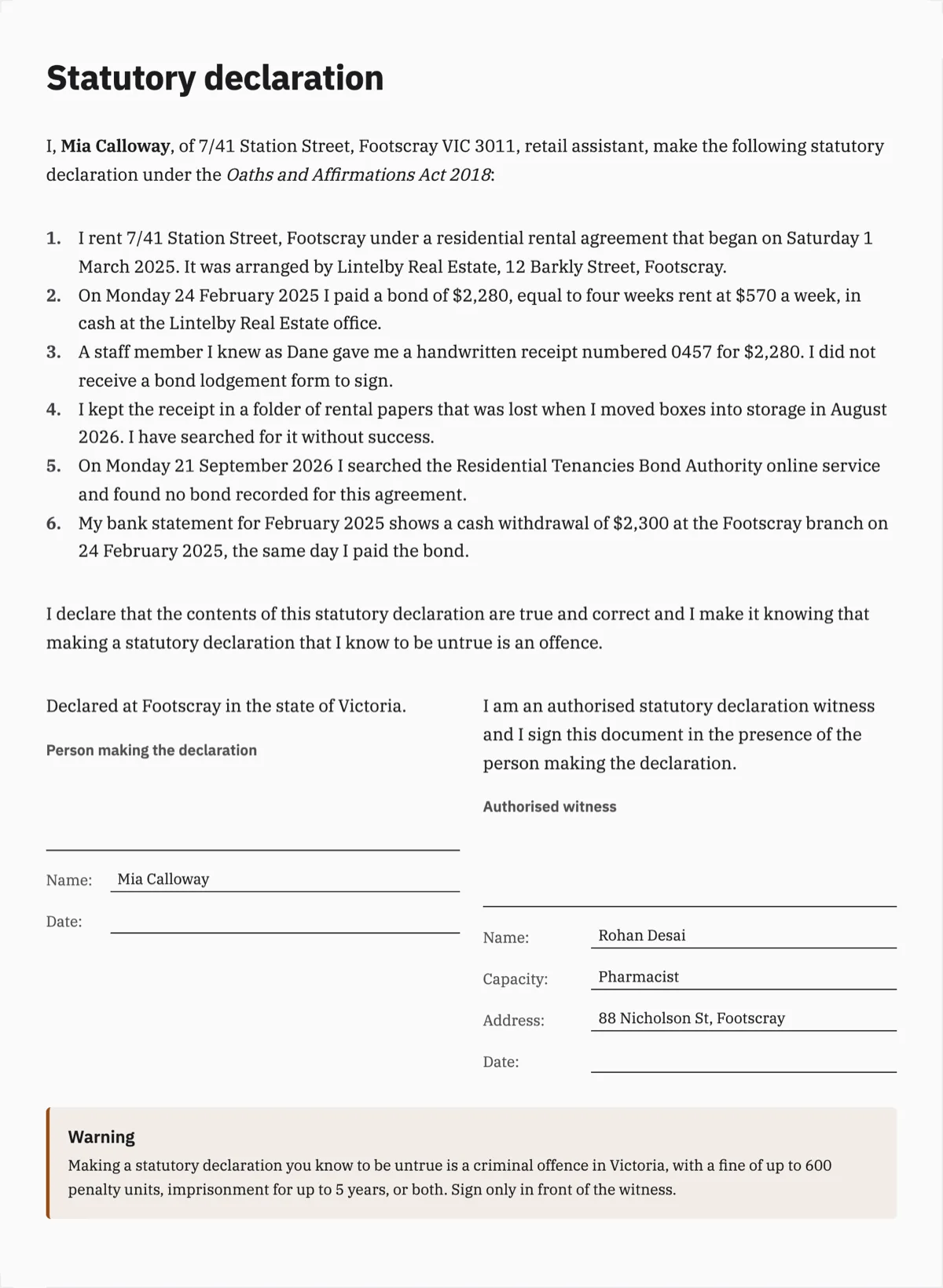
Statutory declaration
Statutory declaration template in the correct Victorian formA statutory declaration laid out for a witness to sign.
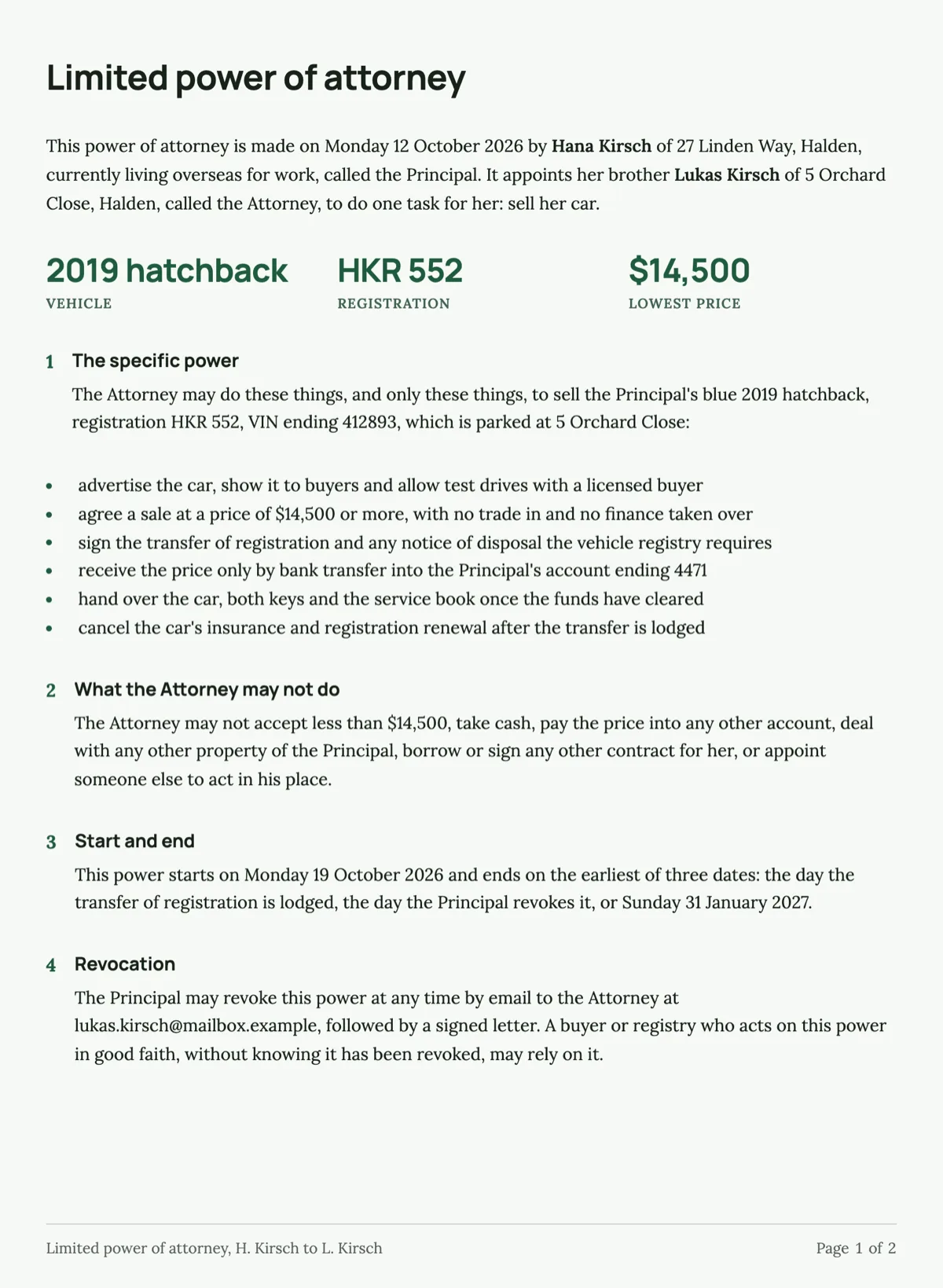
Limited power of attorney
Limited power of attorney template for a single taskA power of attorney limited to a stated purpose and period.
Law firm website
Law firm website example with a fixed fee pageA law firm website with a fixed fee page and an enquiry form, written as code.
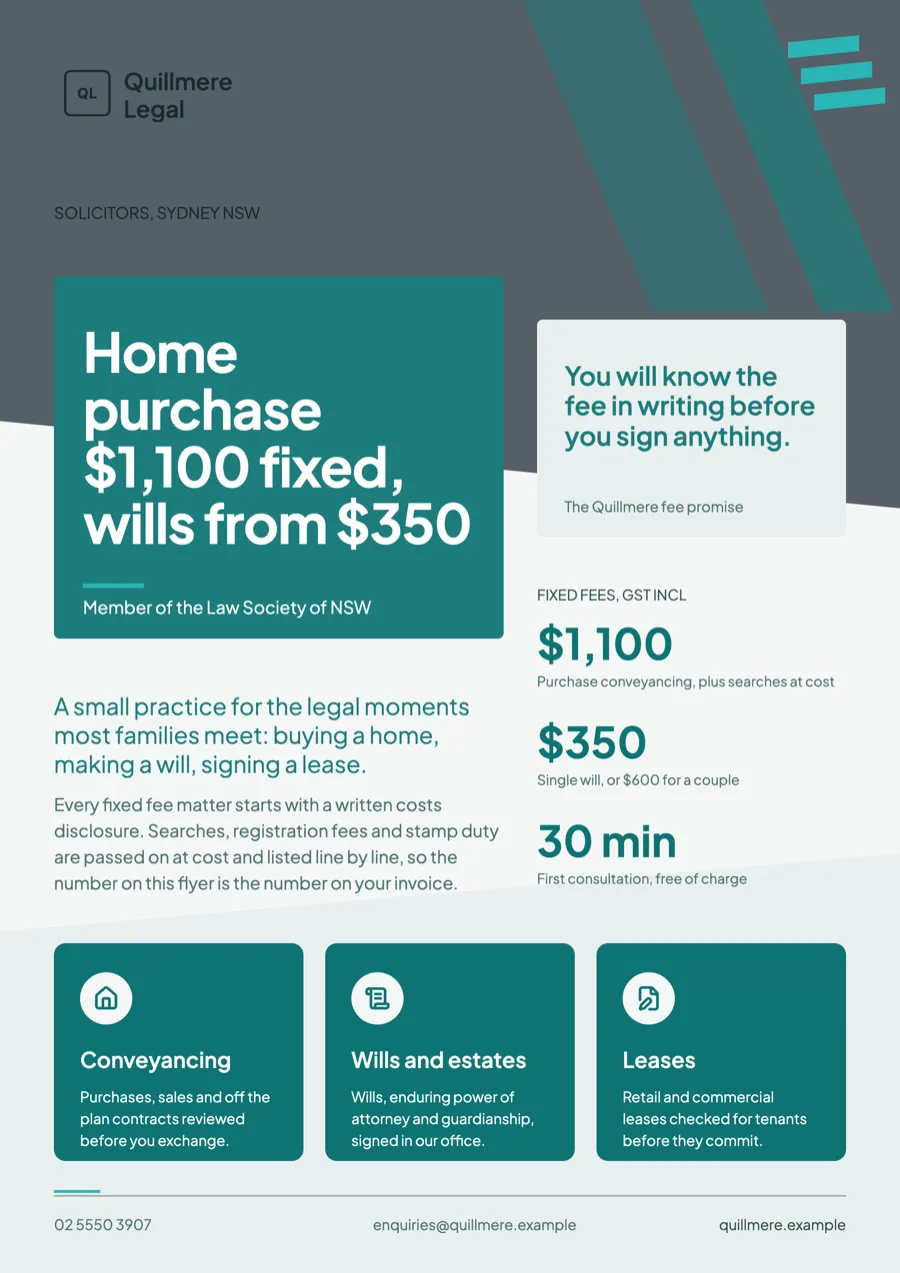
Law firm flyer
Law firm flyer for fixed fee conveyancing and willsA flyer for a local practice with its areas of law and how to book a first meeting.

Intake that supports the conflict check
The intake form should collect the client full name and contact details, the other parties and their representatives, the facts in the client words, key dates such as limitation periods, documents the client holds and the outcome they want. Collecting the other parties first lets the firm run a conflict check before reading the detail. The legal client intake example asks in that order and keeps the free text fields short enough to finish on a phone.
Costs disclosure in plain words
Under the uniform law and similar state rules, a firm must disclose how it will charge, an estimate of total costs and the client rights before or when it is engaged, with simpler disclosure for smaller matters. A fee proposal that sets fixed fees for stages, estimates disbursements and states the disclosure in plain words is easier for clients to accept. In the proposal builder the client accepts online, and a deposit can be requested on acceptance.
Letters that get a response
A letter of demand should state who is owed what, why, the amount with how it is calculated, the deadline to pay and what will happen if they do not. Keep it factual and avoid threats the firm cannot carry out. The letter of demand and the cease and desist letter in this kit follow that structure and can be exported as PDF on the firm letterhead.
The tools behind the kit
- AI document generator
- AI proposal generator
- AI form builder
- E-signature software
- AI website builder
- AI flyer maker
Step by step in the builders: Create a document with AI, then Send a document for signature.
Questions people ask
What should a legal client intake form include?
It should include the client details, the other parties for a conflict check, a summary of the facts, key dates and deadlines, documents held, the outcome wanted, how the client heard of the firm and consent to how their information will be used. Keep detailed facts for the first meeting.
What is a costs disclosure?
A costs disclosure tells a client how legal fees will be calculated, an estimate of the total costs, the disbursements expected and the client rights, such as negotiating the agreement and disputing a bill. Each state and the uniform law set when and how it must be given.
What is the difference between a retainer and a costs agreement?
The terms overlap. A retainer agreement sets the scope of the engagement and the terms on which the firm acts; a costs agreement sets how the firm will charge. Many firms combine them into one document that the client signs before work starts.
Can legal documents be signed electronically?
Many can, including retainers and most commercial agreements. Some documents, such as certain deeds, statutory declarations and affidavits, have specific witnessing rules that vary by state and change over time, so check the current rules in your state before signing or witnessing them electronically.
Should a law firm publish fixed fees?
Publishing fixed fees for common matters, such as a will, a lease review or a simple contract, helps clients choose and reduces time spent on enquiries that will not proceed. Say what the fee includes and when extra costs apply.
Start the first piece of the kit
The button opens a generator with a starting description already filled in. Change the business details to your own before you run it.
Create a document with OneCraftMore industry kits
Written and checked by the OneCraft team. Last checked .