Industry kit
Personal trainer forms and the coaching kit around them
A personal trainer needs to know a client before the first session, screen them for risk, agree the terms of the sessions and get paid for packages up front. This kit links finished examples of each piece, written for invented Australian trainers and coaches.
What a trainer needs before session one
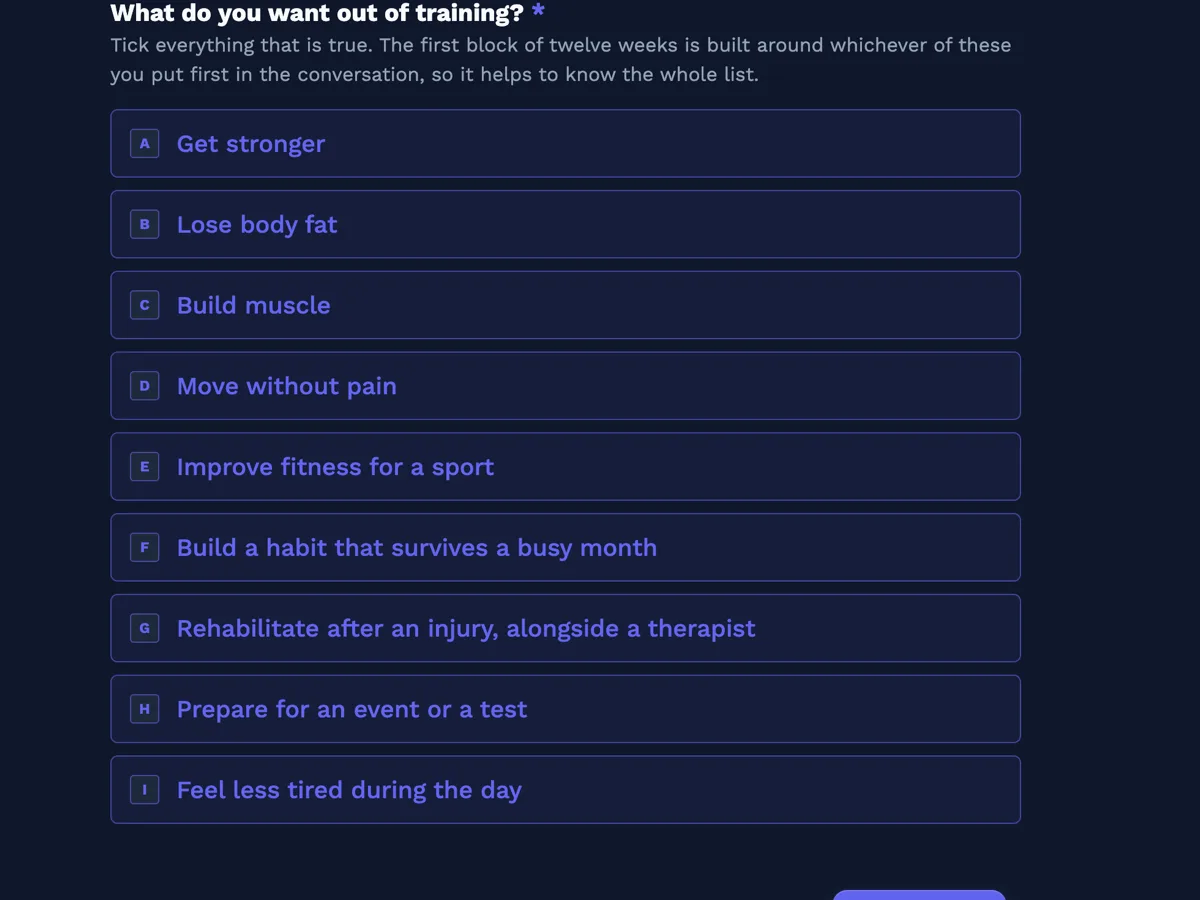
A personal trainer meets a new client with no history to work from, so the intake form does the first assessment. It asks about goals, training history, injuries, medical conditions, medications and lifestyle, and holds the screening questions that decide whether the client should see a doctor before training starts. It also captures availability, which is the hardest part of filling a trainer week with paid sessions. The answers shape the first session and give the trainer a baseline to measure progress against.
Agreements and packages
Most trainers sell packages of sessions, and most disputes are about cancellations and unused sessions. A short personal training agreement sets the price, the number of sessions, how long they remain valid, the cancellation notice and what happens if the client is injured or moves away. Coaches who sell longer programs often send a proposal first, with the program stages and a price the client can accept online. The examples below show each step as a finished document, including the link in bio page many trainers use instead of a website.
Who the kit is for
The kit is written for independent personal trainers, strength coaches and online coaches in Australia, whether they train in a gym, a park or online. Trainers working inside a gym may use the gym forms for membership and the trainer forms for their own clients. AUSactive publishes industry standards for registered exercise professionals. Prices in the examples are in dollars with GST at 10%, for trainers registered for GST, and the businesses and clients are invented. Each card below opens the complete example.
The kit, piece by piece
Training intake form
Personal training intake form with the readiness screen built inGoals, history, injuries, availability and preferences, the baseline for a first session.
PAR-Q form
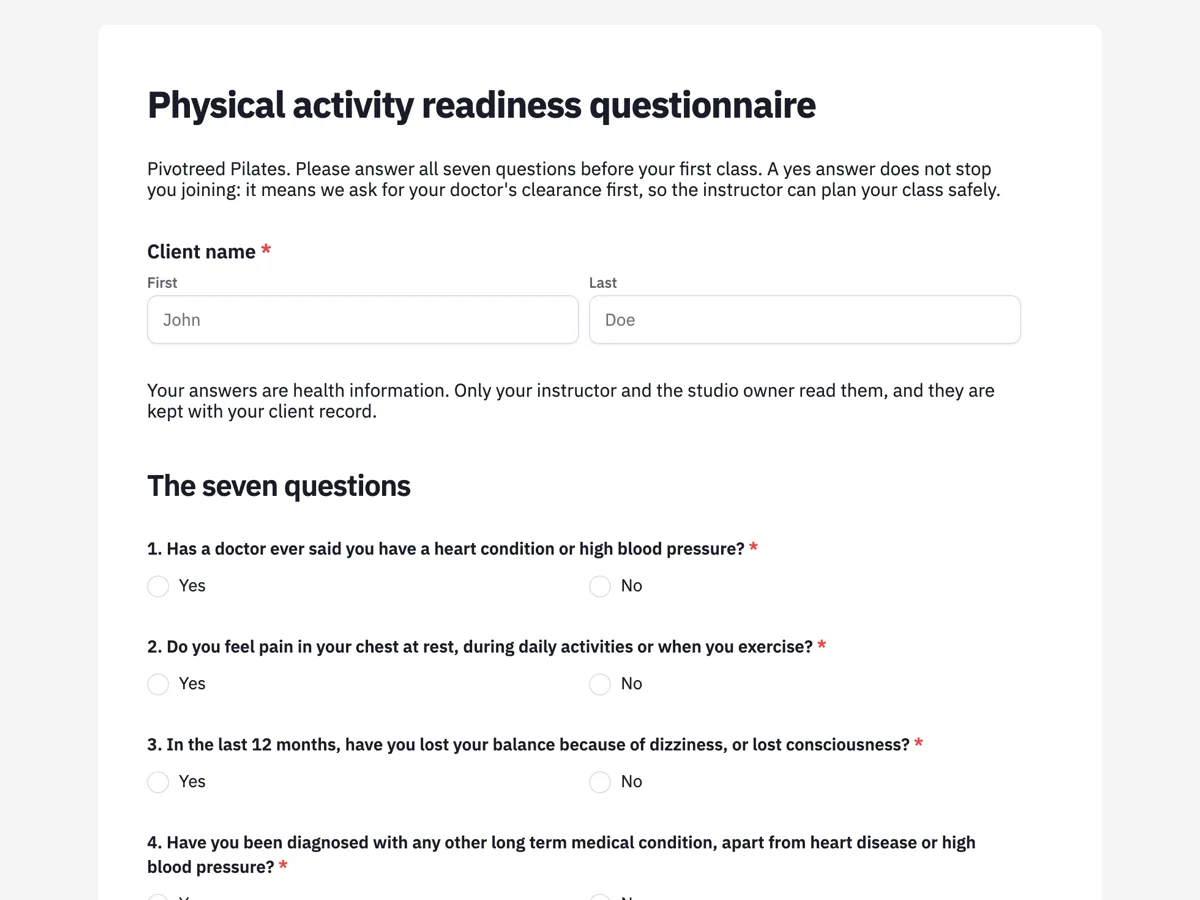
PAR Q form online: seven questions, clearance and a signaturePre exercise screening questions, with the instruction to get medical clearance on any yes answer.
Training agreement
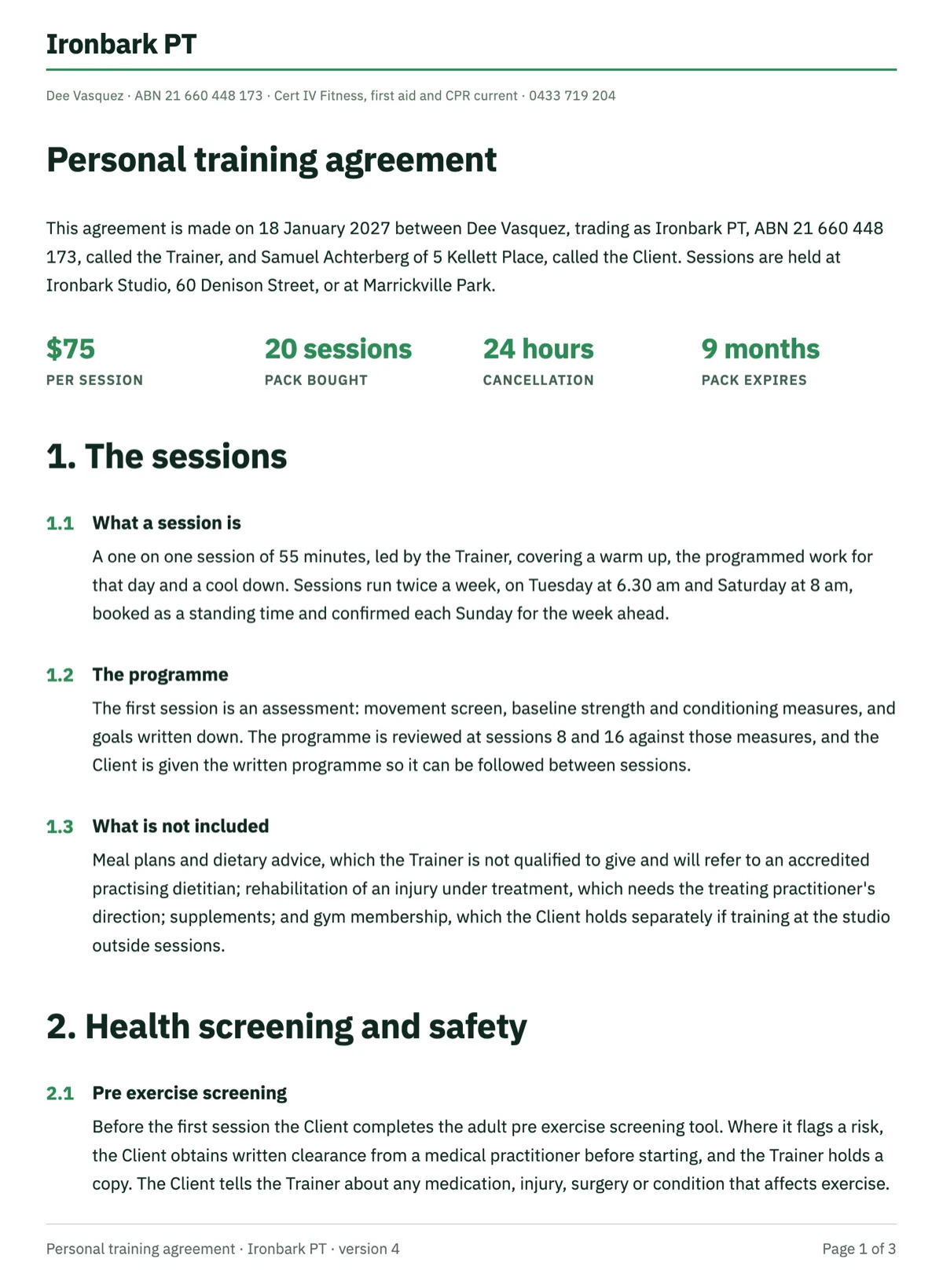
Personal training agreement with session packs and a health screenPackage price, sessions, expiry, cancellation notice and what happens after an injury.
Coaching package proposal
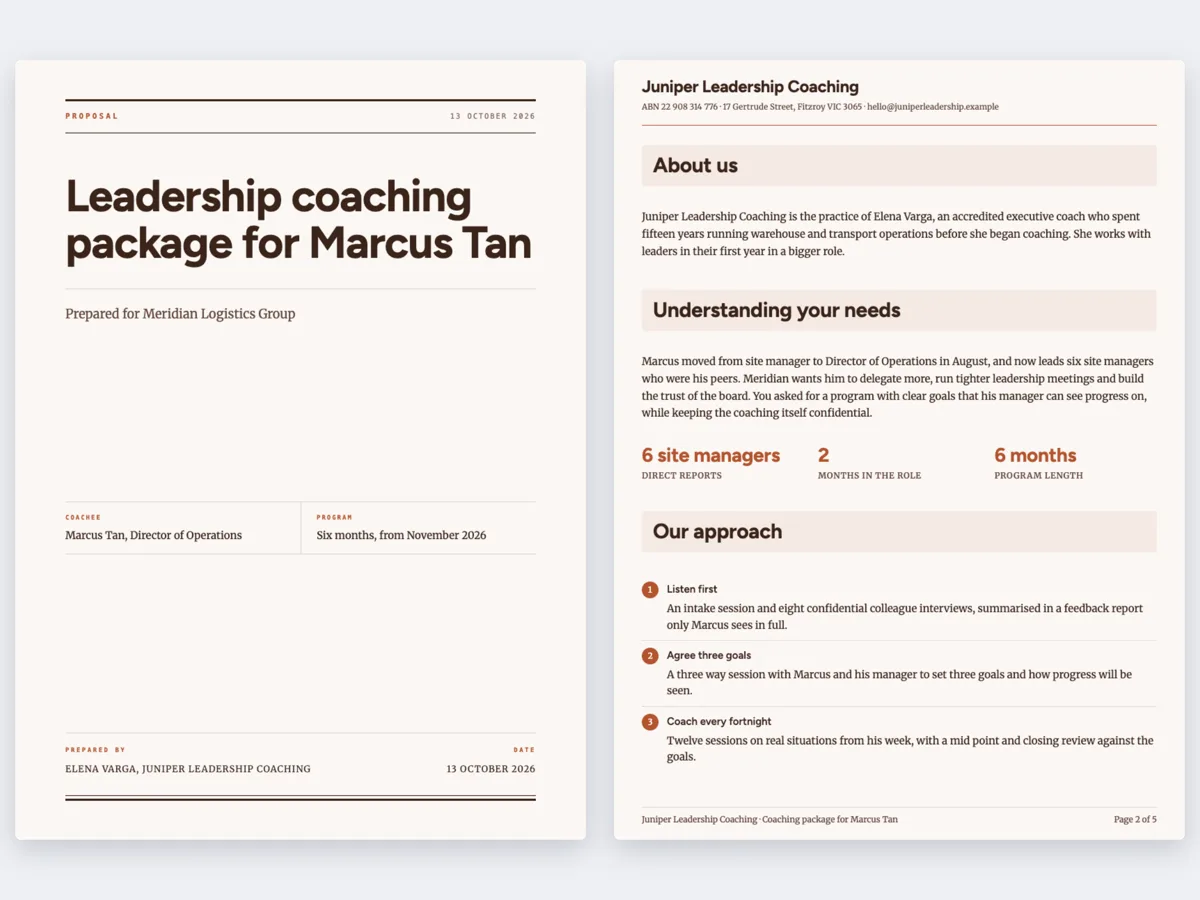
Coaching package proposal for a six month executive programA six month program priced in stages that the client accepts online with a drawn signature.
Link in bio page
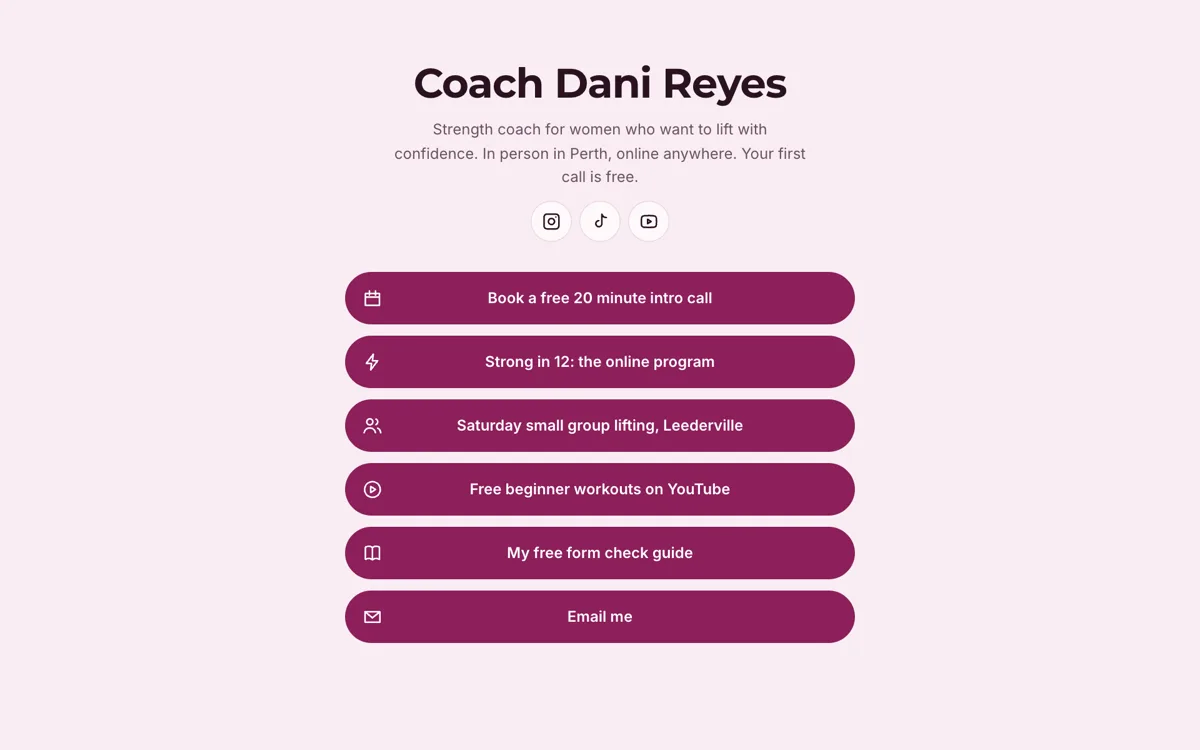
Link in bio for fitness coaches that books intro callsA fitness coach link in bio page that books intro calls, for trainers who live on Instagram.
Bootcamp flyer
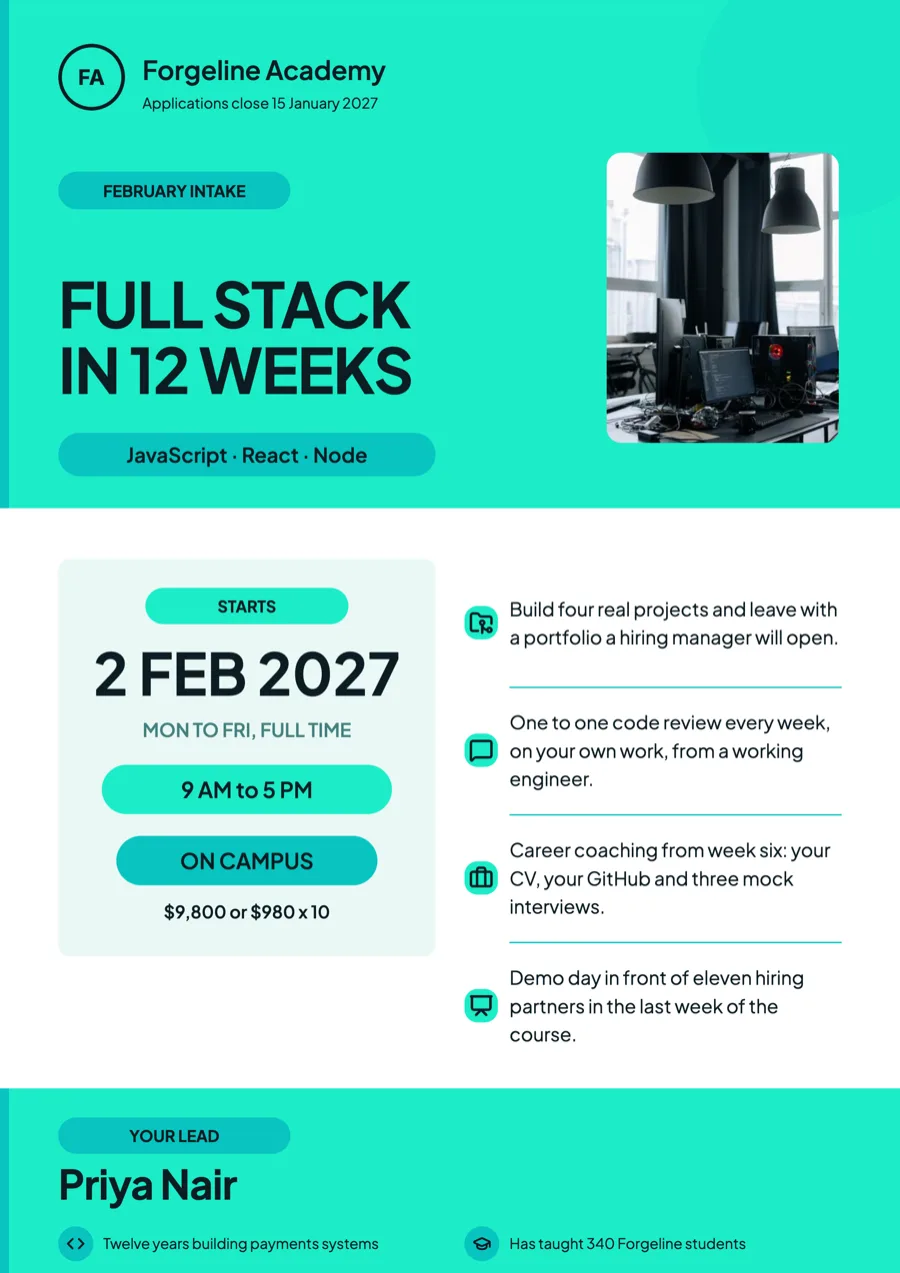
Coding bootcamp flyer for a 12 week career change courseAn outdoor bootcamp flyer with times, the park location and a first week offer.
Waiver signing
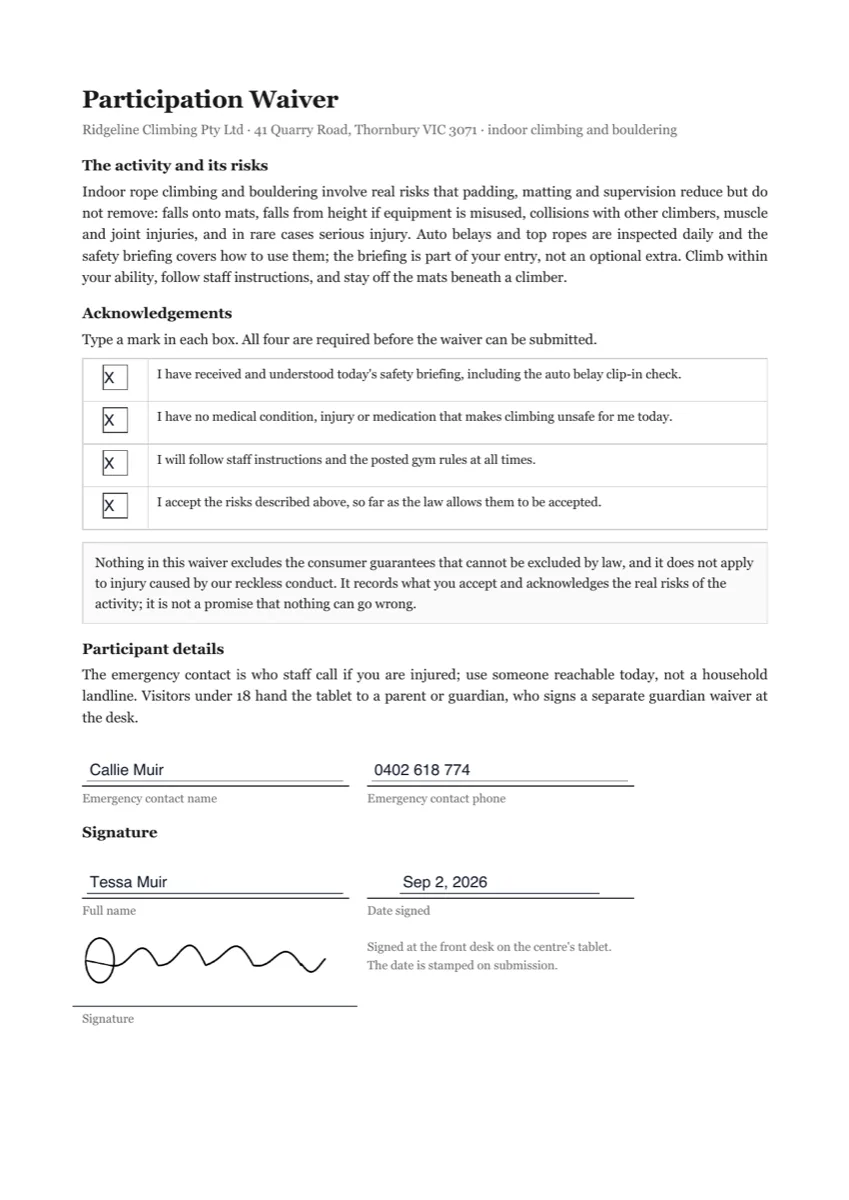
Sign a waiver onlineA waiver signed online with an email code before the first session.
Coaching package template
Coaching package proposal templateA proposal template for coaching packages with stages and a price table.
Personal training intake template
Personal training intake templateAn intake template to adapt for your own training style.
Screening is part of the intake
Put the screening questions inside the intake rather than on a separate sheet, so a client cannot skip them. Ask about heart conditions, chest pain, dizziness, blood pressure, joint problems, pregnancy and medications, and tell the client on the form that a yes answer means getting clearance first. Record the date the client completed screening, and ask again after a long break or a new diagnosis.
Write the cancellation rule where it is read
The cancellation rule belongs in the agreement and again on the booking confirmation. Say how much notice is needed, whether a late cancellation forfeits the session, how long a package stays valid and whether sessions can be paused for injury or travel. Clients rarely argue with a rule they agreed to in writing, and the personal training agreement in this kit puts the rule beside the signature.
Selling programs with a proposal
For longer programs, a proposal sets out the stages, the sessions in each, any nutrition or online check ins and the price. In the proposal builder the client receives a tracked link, can accept with a drawn signature, and acceptance with a deposit issues the deposit invoice at once. There are no recurring invoices, so a monthly program is billed with one invoice per month; card payments need a paid plan and a connected Stripe account.
The tools behind the kit
Step by step in the builders: Create a form with AI, then Send a proposal and get paid.
Questions people ask
What forms does a personal trainer need?
A personal trainer needs an intake form with goals and history, pre exercise screening such as a PAR-Q, a training agreement covering price, sessions and cancellations, a waiver, and a progress or check in form. Trainers selling longer programs also use a proposal and invoices.
What should be in a personal training agreement?
It should name the trainer and client, the package and price, how many sessions and how long they stay valid, where sessions happen, the cancellation notice and penalty, what happens if the client is injured or moves, and how the agreement ends. Both parties sign it before the first paid session.
Do personal trainers need clients to sign a waiver?
A waiver is common and records that the client understands the risks. It does not remove the trainer duty of care, so it works alongside screening, a qualification and insurance. Keep the wording specific to the training you deliver, and review it when you add a new kind of session.
How often should a trainer reassess a client?
A formal reassessment every six to twelve weeks is common, with screening repeated after illness, injury or a long break. Use the intake answers as the baseline, and record measurements and goals each time so progress is visible to the client.
Can trainers take payment for packages online?
Yes. A coaching proposal or an invoice from the proposals module carries a pay link that opens Stripe Checkout on a paid plan with a connected Stripe account, and the money goes to the trainer own Stripe account. On the free plan, bank details are printed on the invoice.
Start the first piece of the kit
The button opens a generator with a starting description already filled in. Change the business details to your own before you run it.
Create a form with OneCraftMore industry kits
Written and checked by the OneCraft team. Last checked .