Industry kit
Photography business templates from booking to release
A photography business books a shoot, quotes it, signs a contract that says who owns the images, collects releases from the people in them and licenses the pictures for use. This kit links finished examples of each, written for invented Australian photographers.
What a photographer has to get in writing
Photography sells time on the day and images afterwards, and both need writing down. The booking form collects the date, the location, the kind of shoot and the people involved. The quote sets the hours, the number of edited images, the delivery date and the price. The contract adds what matters later: who owns the copyright, what the client may do with the images, whether the photographer can use them in a portfolio, what happens if the day is cancelled or the weather turns, and how the deposit and balance are paid.
Releases and licences
People in photographs have rights too. A model release records that a person agreed to their image being used for stated purposes, and a property or location release does the same for a place. Commercial photographers then license images to clients for a stated use, territory and period, which is how the same picture can earn more than once. Getting a release signed on location is easier with a phone than with paper, which is why the signing flows below sit beside the documents.
Who the kit is for
The kit is written for wedding, portrait, event and commercial photographers in Australia, and for videographers who sell the same way. Copyright in commissioned photographs depends on the agreement and the purpose, so the contract should say who owns what rather than relying on defaults; the Australian Copyright Council publishes an information sheet on this. The businesses in the examples are invented, prices are in dollars with GST at 10%, and each card opens a finished example, so the terms can be read in full before any of them is reused.
The kit, piece by piece
Booking form
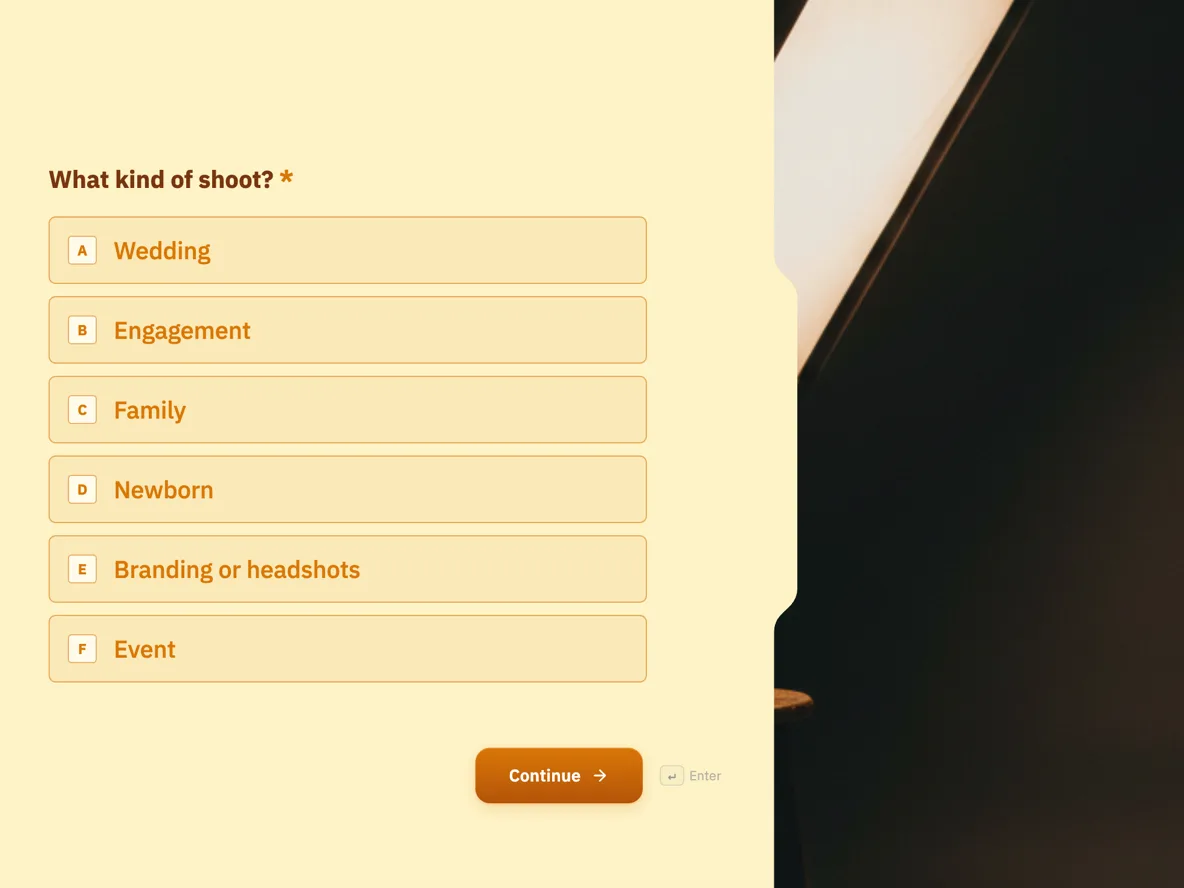
Photography booking form that gets a quote backThe date, location, type of shoot and people involved, collected so a quote can come straight back.
Photography contract
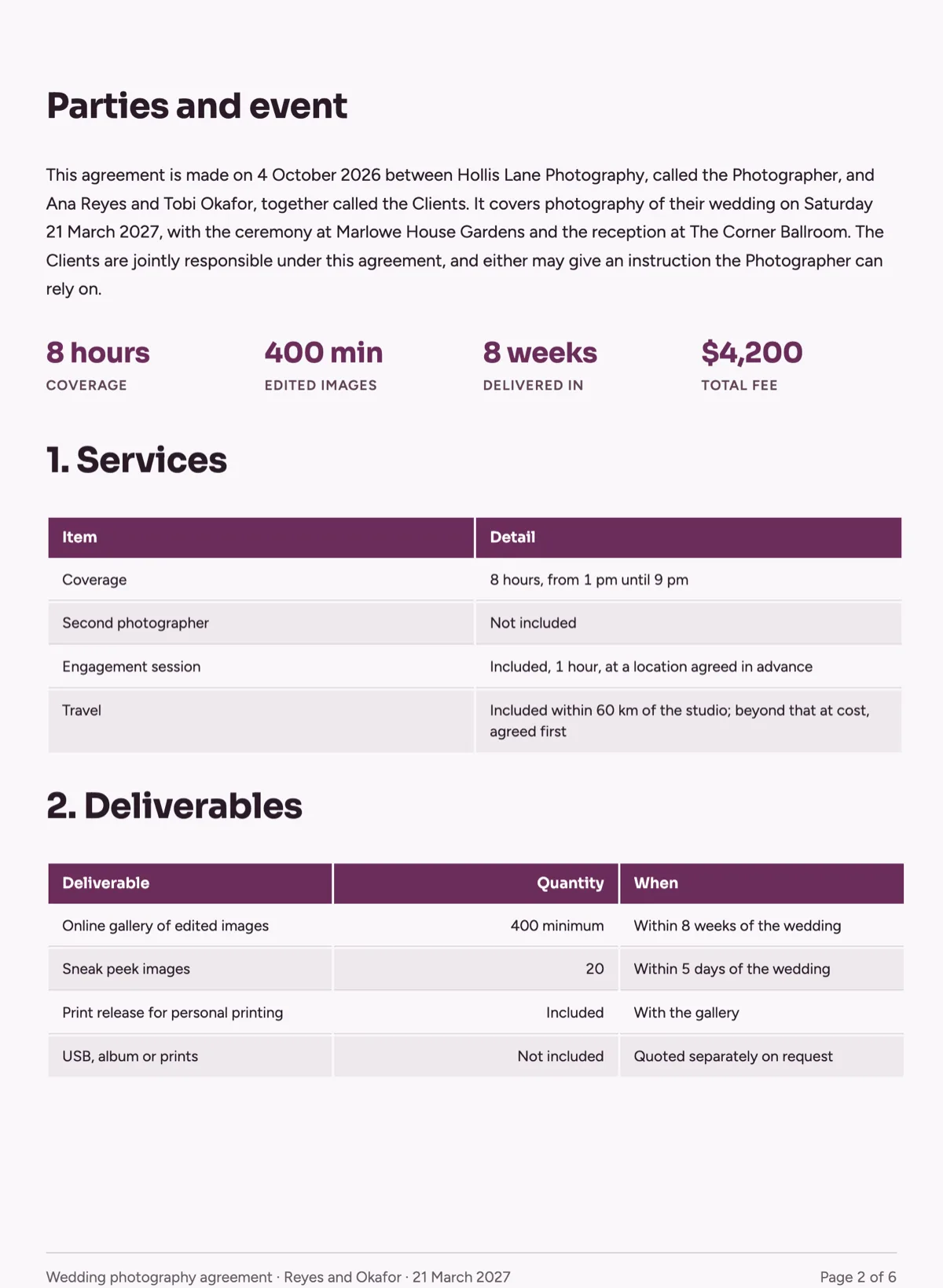
Photography contract template with deliverables you can countDeliverables you can count, usage rights, portfolio use, cancellation and payment terms.
Wedding photography quote
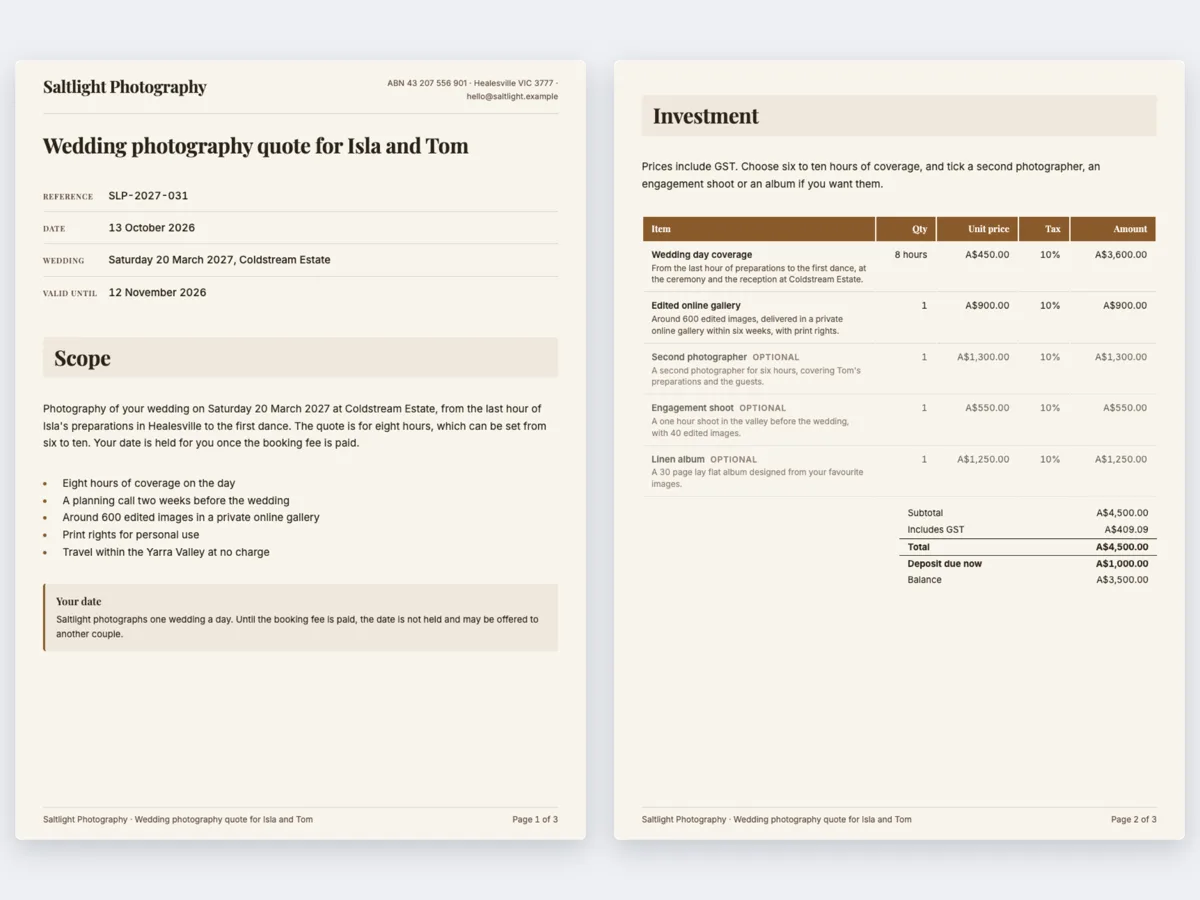
Wedding photography quote with adjustable hours and extrasCoverage hours the couple can adjust, a second shooter and an album as optional extras.
Model release
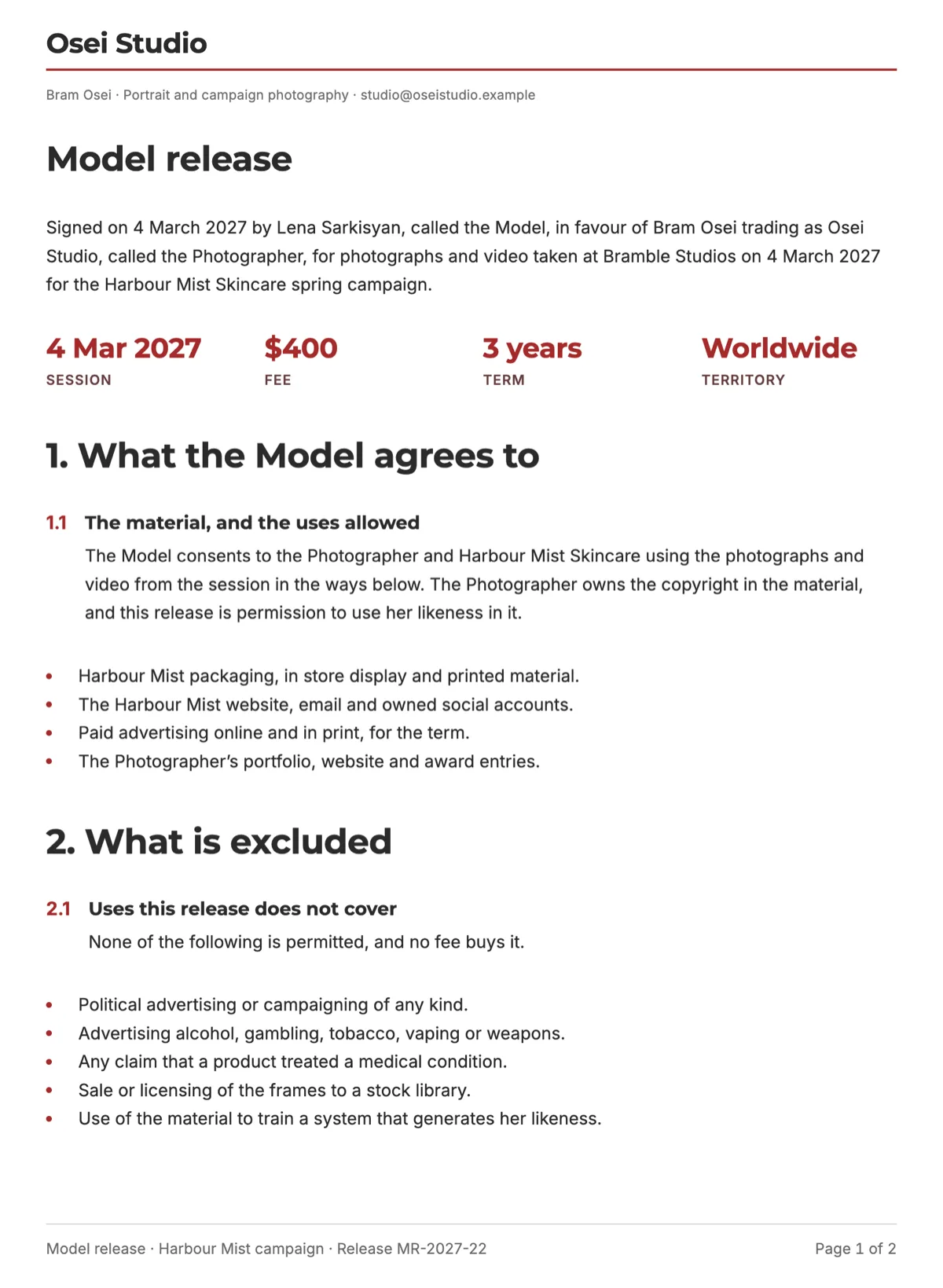
Model release template with uses allowed and uses excludedThe person in the photograph agrees to stated uses, written so it holds up later.
Model release signing
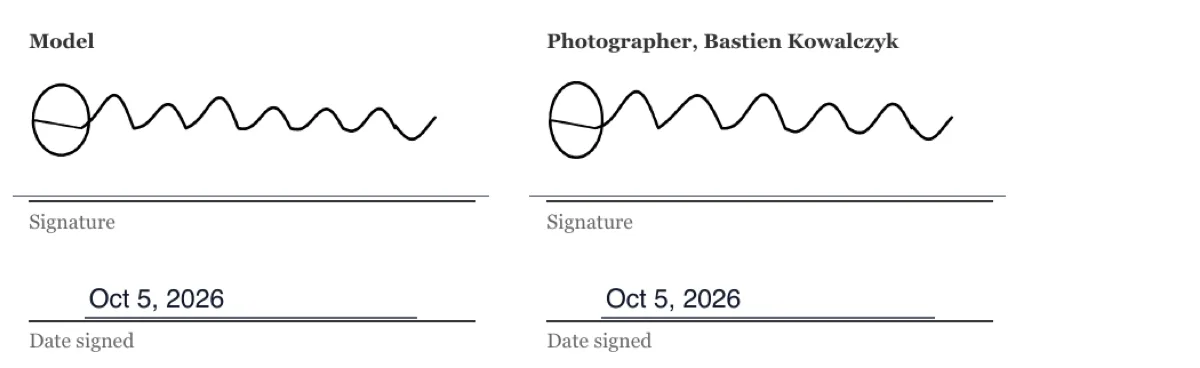
Sign a model release form onlineA model release signed on a phone on location, with an email code and a certified PDF.
Photo release signing
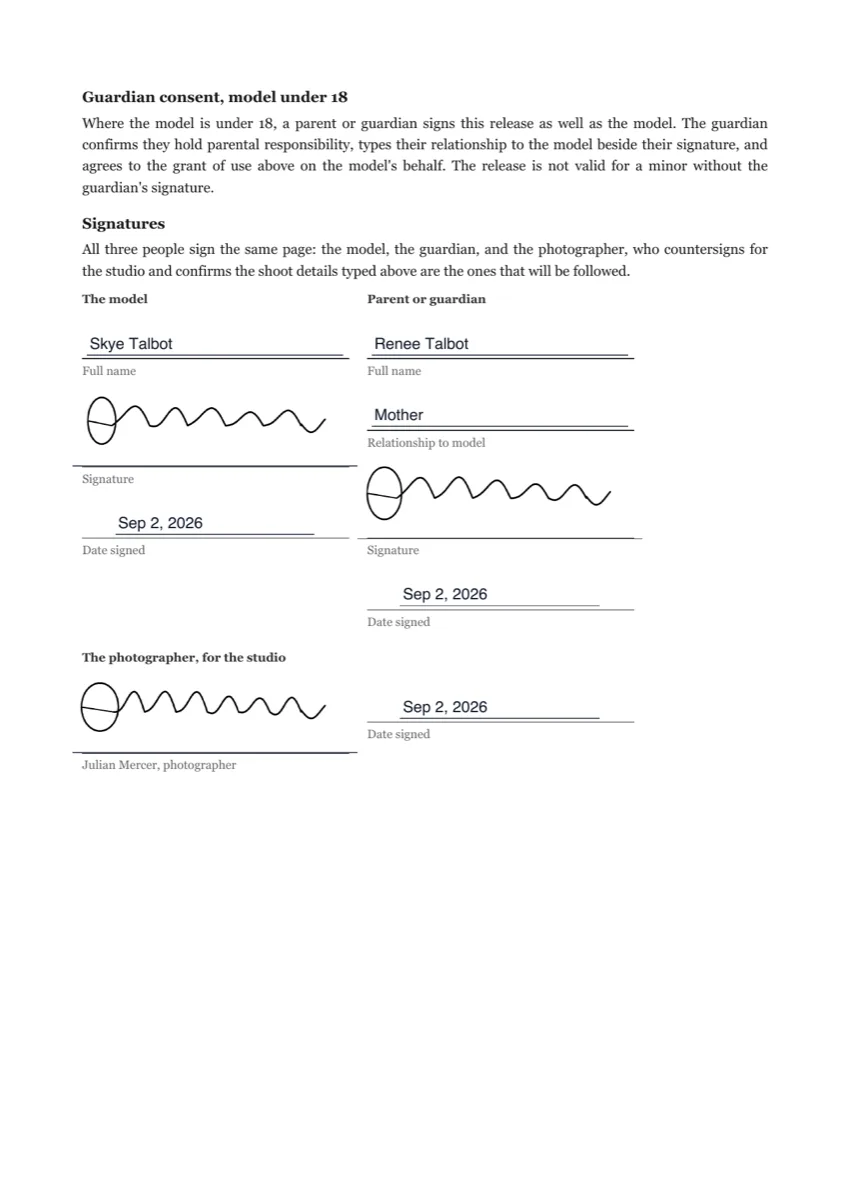
Photo release form signatureA release for event or portrait subjects signed online before the images are used.
Photo licence agreement
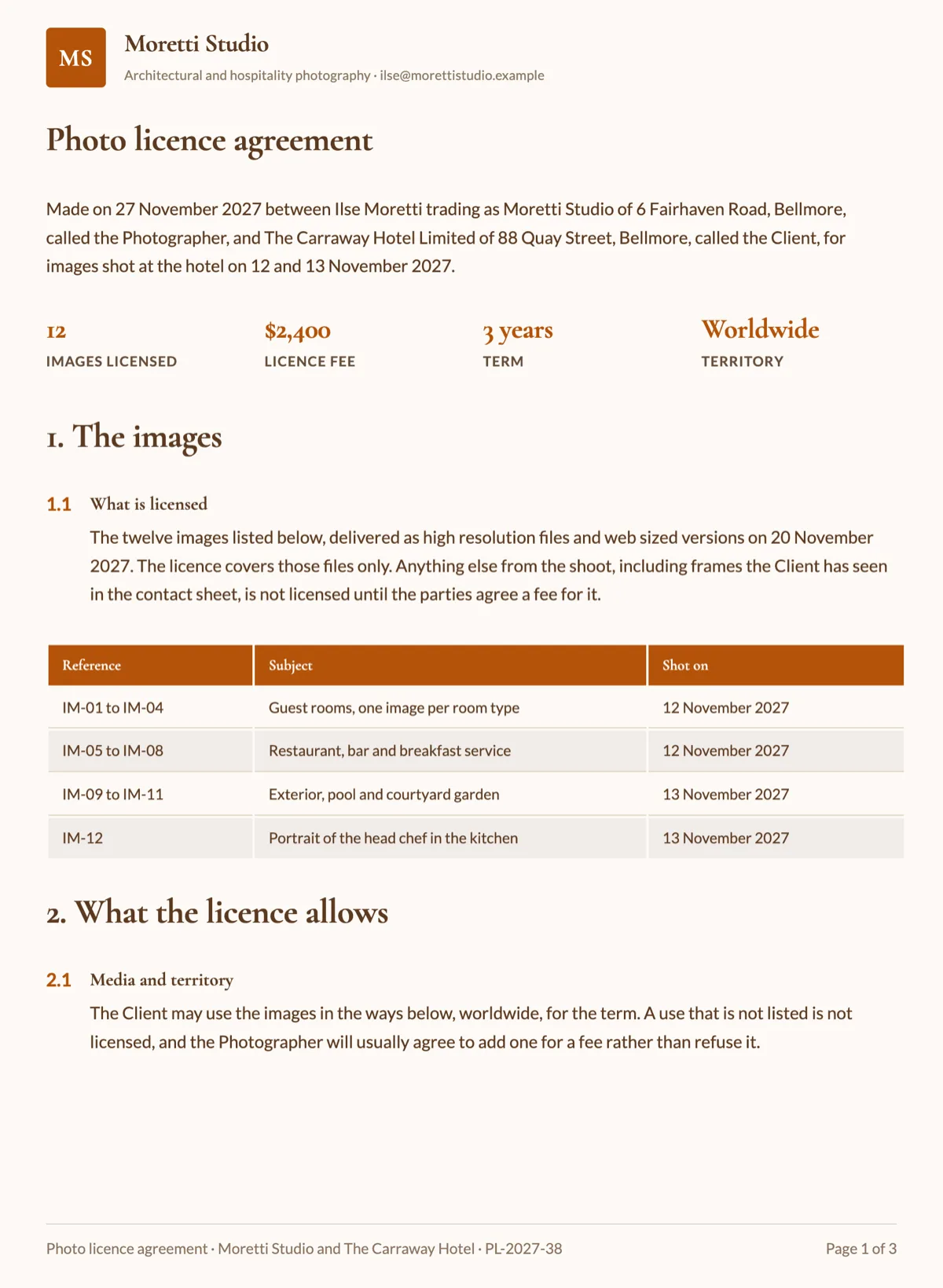
Photo licence agreement covering media, territory and durationLicenses images to a client for set media, territory and duration.
Photographer flyer
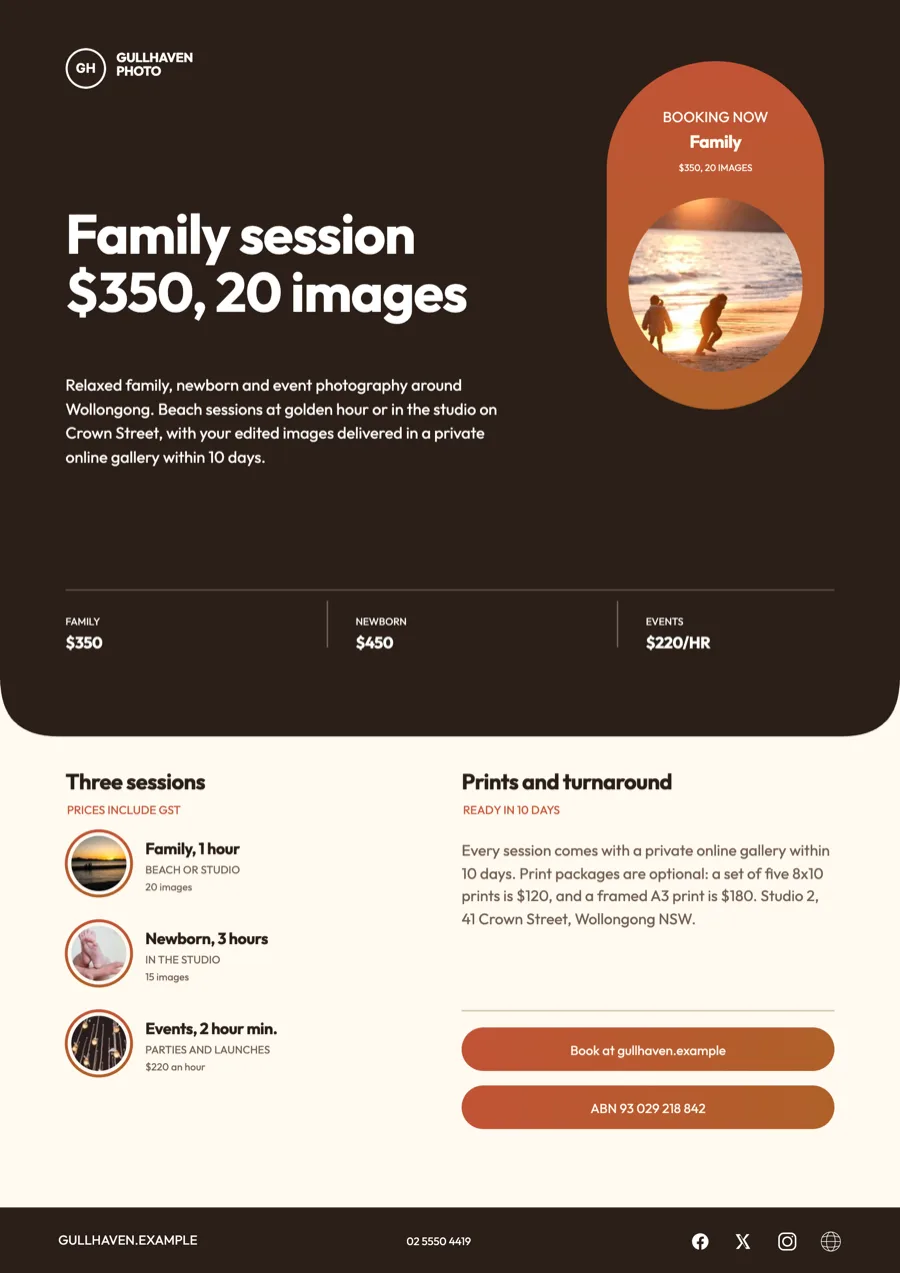
Photographer flyer example with family, newborn and event ratesA photographer flyer with packages and a booking contact.
Photography and video template
Photography and video shoot proposal templateA proposal template for photography and video shoots.
Photography contract template
Photography Contract templateA photography contract template to start from.
Deliverables you can count
Disputes in photography usually start with a vague deliverable. State the hours of coverage, the number of edited images or a minimum, the editing style, the delivery date and how they are delivered, such as an online gallery. Say what is not included, such as retouching beyond basic edits. The photography contract in this kit counts every deliverable, and the wedding quote lets the couple adjust the hours and add extras before accepting.
Who owns the pictures
The contract should say who owns copyright and what each party may do with the images. Many photographers keep copyright and grant the client a licence for personal use, and keep the right to use selected images in a portfolio. Commercial work usually licenses images for a stated use, territory and period. Because the default rules for commissioned photographs depend on the purpose, write it down rather than relying on them.
Releases on location
A model release should name the person, the shoot, the uses agreed and any limits, and be signed before the images are used. On location, sending it for e-signing to the subject phone is faster than paper: they confirm with a code sent to their email, sign with a finger, and the photographer receives a certified PDF with a record of when it was signed. For minors, a parent or guardian signs.
The tools behind the kit
Step by step in the builders: Send a document for e-signature, then Create a quote with AI.
Questions people ask
What should a photography contract include?
It should include the parties, date and location, coverage hours, deliverables and delivery date, editing scope, copyright and usage rights, portfolio use, payment and deposit, cancellation and rescheduling, what happens if the photographer is ill, and limits of liability. Count every deliverable rather than describing it.
Who owns the copyright in wedding photos?
It depends on the agreement and the purpose of the photos, so the contract should say. Many photographers keep copyright and give the couple a licence to print and share the images. The Australian Copyright Council information sheet on photographers explains the default rules.
When do I need a model release?
You need a release when you want to use an identifiable person image for commercial or promotional purposes, such as advertising, stock or a client marketing campaign. Editorial and personal use rules differ. A signed release records what the person agreed to.
How much deposit do photographers take?
Deposits of 20% to 50% are common for weddings and events, often called a booking fee, with the balance due before the day or before delivery. State in the contract whether the deposit is refundable and under what conditions, and what happens if the date moves.
Can a release be signed on a phone?
Yes. A release can be sent for e-signing to the subject phone. They confirm with a code sent to their email, sign, and the photographer receives a certified PDF. This works well at events and on location where paper is impractical.
Start the first piece of the kit
The button opens a generator with a starting description already filled in. Change the business details to your own before you run it.
Create a document with OneCraftMore industry kits
Written and checked by the OneCraft team. Last checked .