Industry kit
Property management templates for the whole tenancy
A property manager handles a tenancy from the rental application to the bond claim, with leases, condition reports, inspections, repairs, notices and renewals in between. This kit links finished examples of each step, written for invented Australian agencies and landlords.
A tenancy is a chain of documents
Every tenancy follows the same chain. A prospective tenant applies, the manager screens the application within the rules, the lease is signed, an entry condition report records the property, and the bond is lodged. During the tenancy come routine inspections, maintenance requests, rent increase notices, entry notices, renewals and sometimes breach notices. At the end come the notice to vacate, the exit inspection and the bond claim. Each document has a legal job, and most of them have rules about content, notice periods and timing set by state tenancy law, which is why the examples name the step each one belongs to.
Where the paperwork protects the owner and the tenant
The condition report is the document that decides most bond disputes, so it has to be detailed, dated and signed by both parties. Maintenance requests need a record of when they were reported and fixed, because urgent repairs have legal timeframes. Notices need the right period and the right form. The examples below cover the forms and documents a manager writes, and link the signing flows for the documents that need both parties to agree before the tenancy moves on.
Who the kit is for
The kit is written for property managers at small agencies and for landlords who manage their own properties in Australia. Residential tenancy law is set by each state and territory, with standard lease forms and approved notices in most of them, so use the official forms where your state requires them and treat these examples as a guide to what each step should cover. Each card opens the complete example rather than a summary of it, in the order a tenancy meets them.
The kit, piece by piece
Rental application form
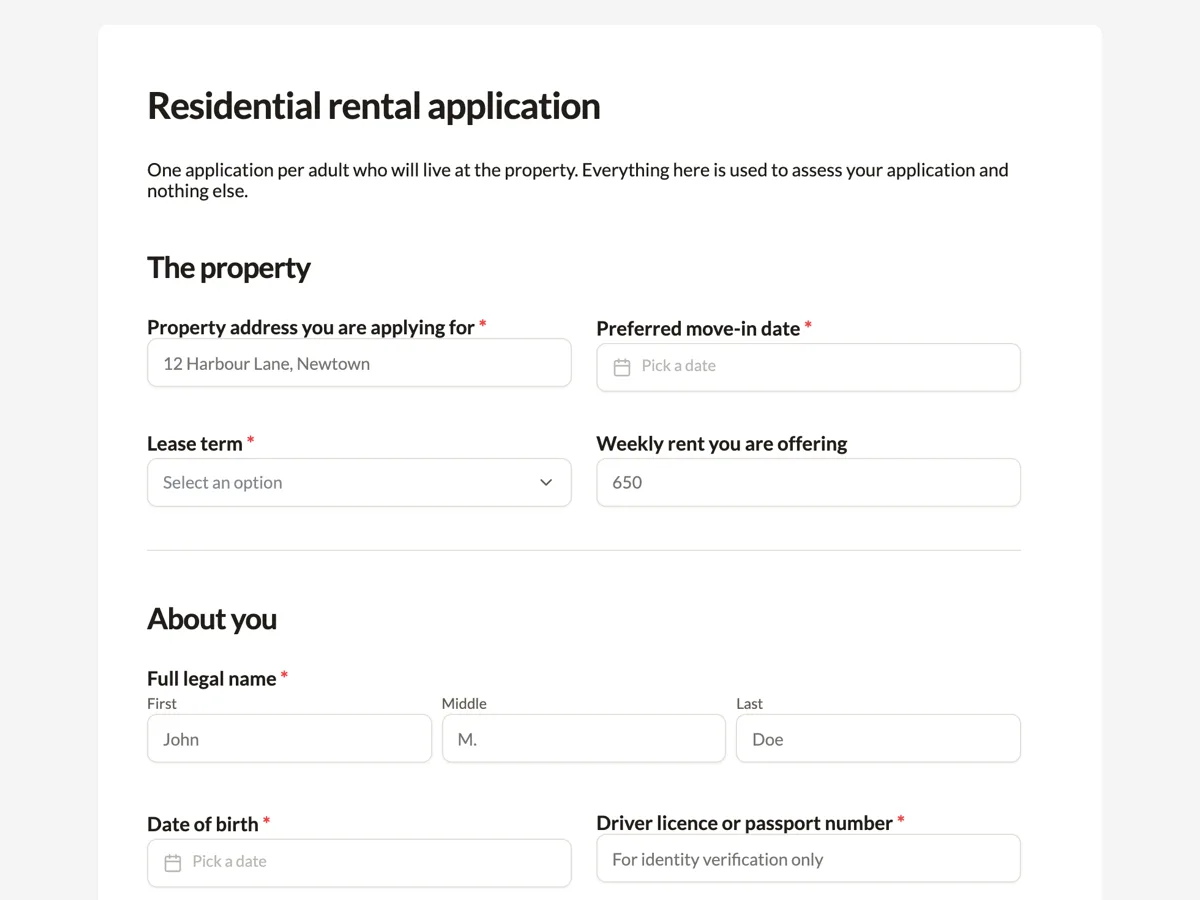
Rental application formApplicant details, rental history, income and references, with the consent for checks.
Residential lease
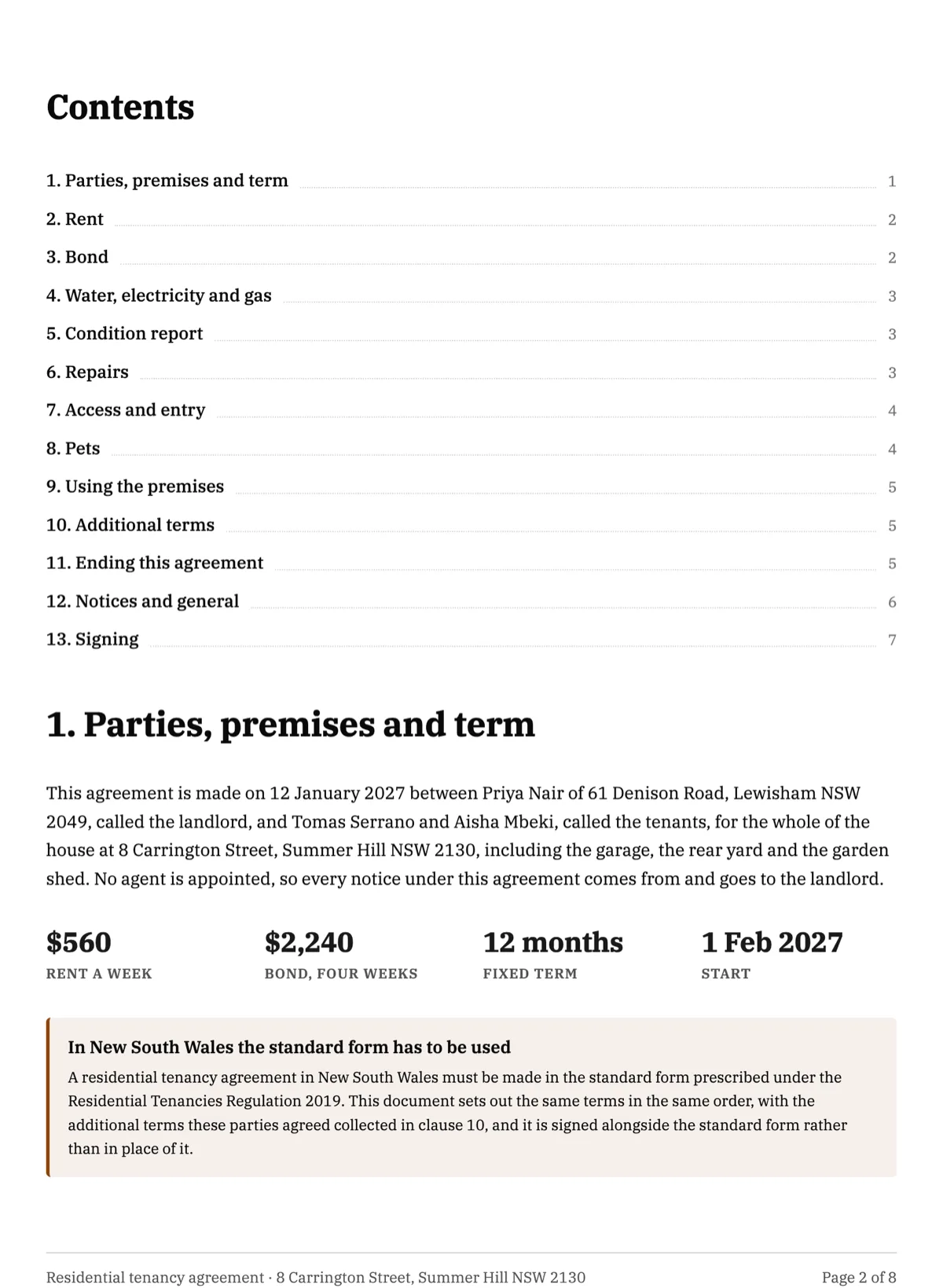
Residential lease agreement template for a New South Wales fixed termA residential lease agreement with the terms, rent, bond and special conditions set out.
Entry condition report signing
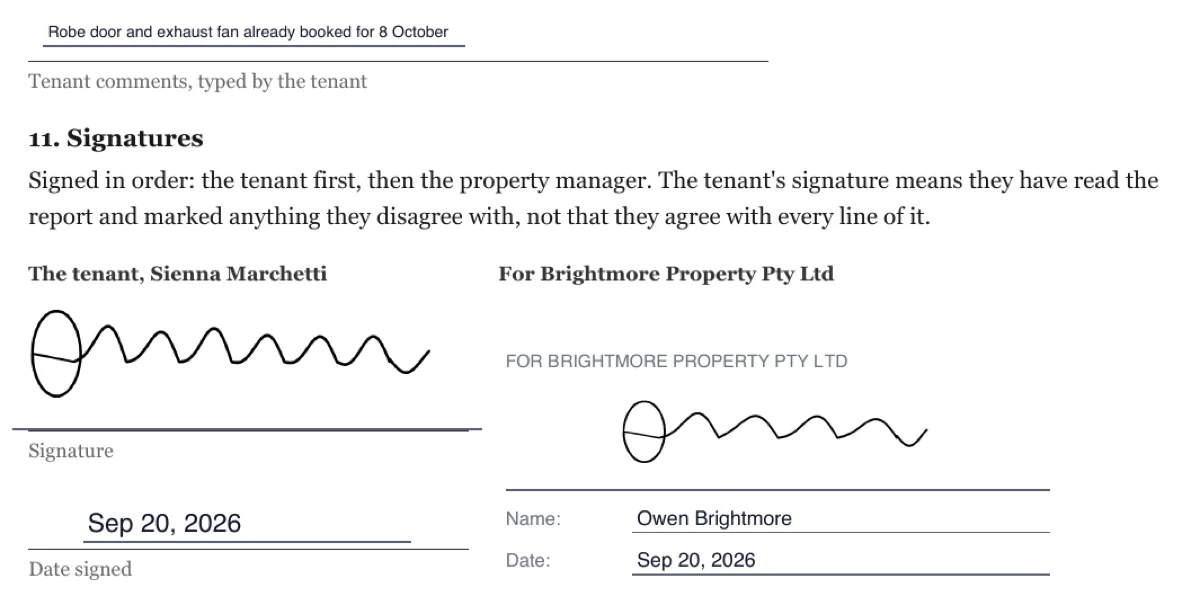
Sign an entry condition report onlineThe condition report signed online by the tenant, the document that decides bond disputes later.
Routine inspection form
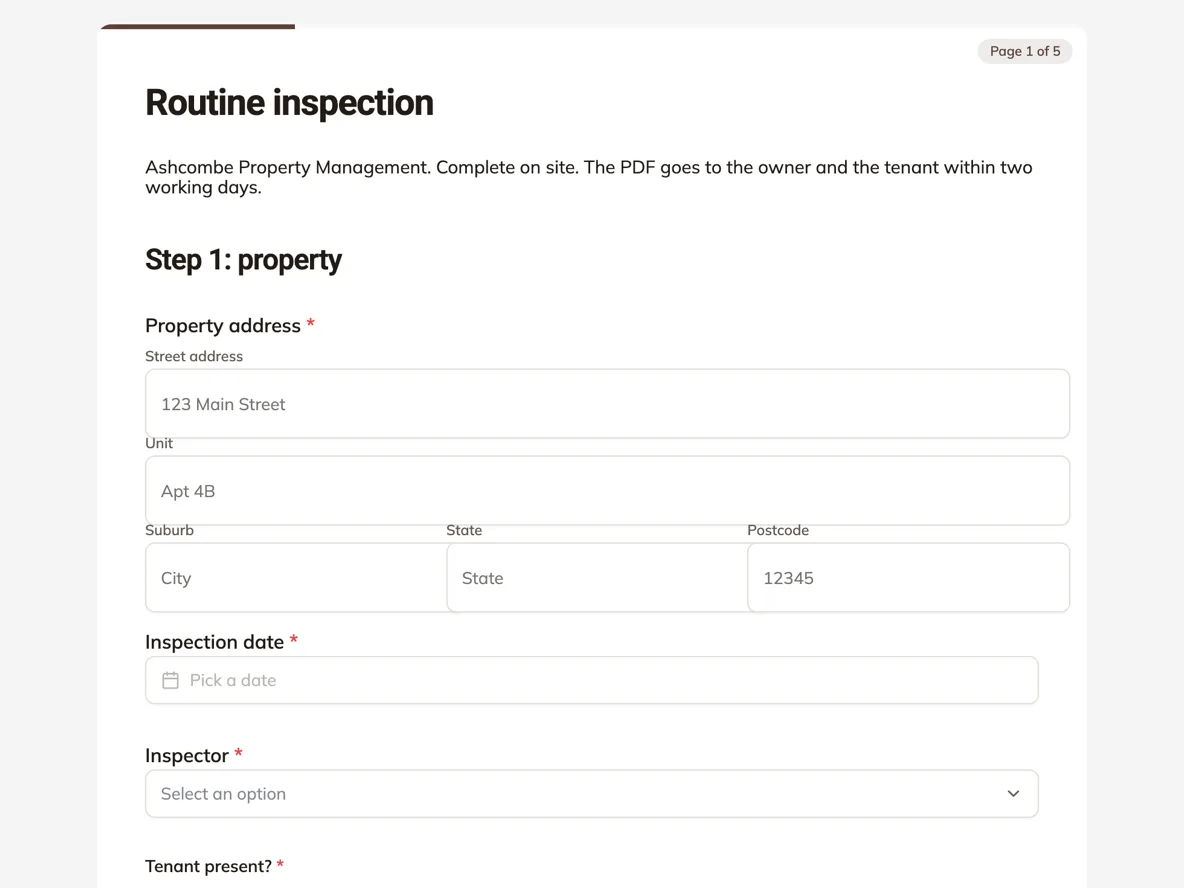
Routine property inspection form done room by room on a phoneA room by room inspection done on a phone, with photos and notes for the owner.
Maintenance request form
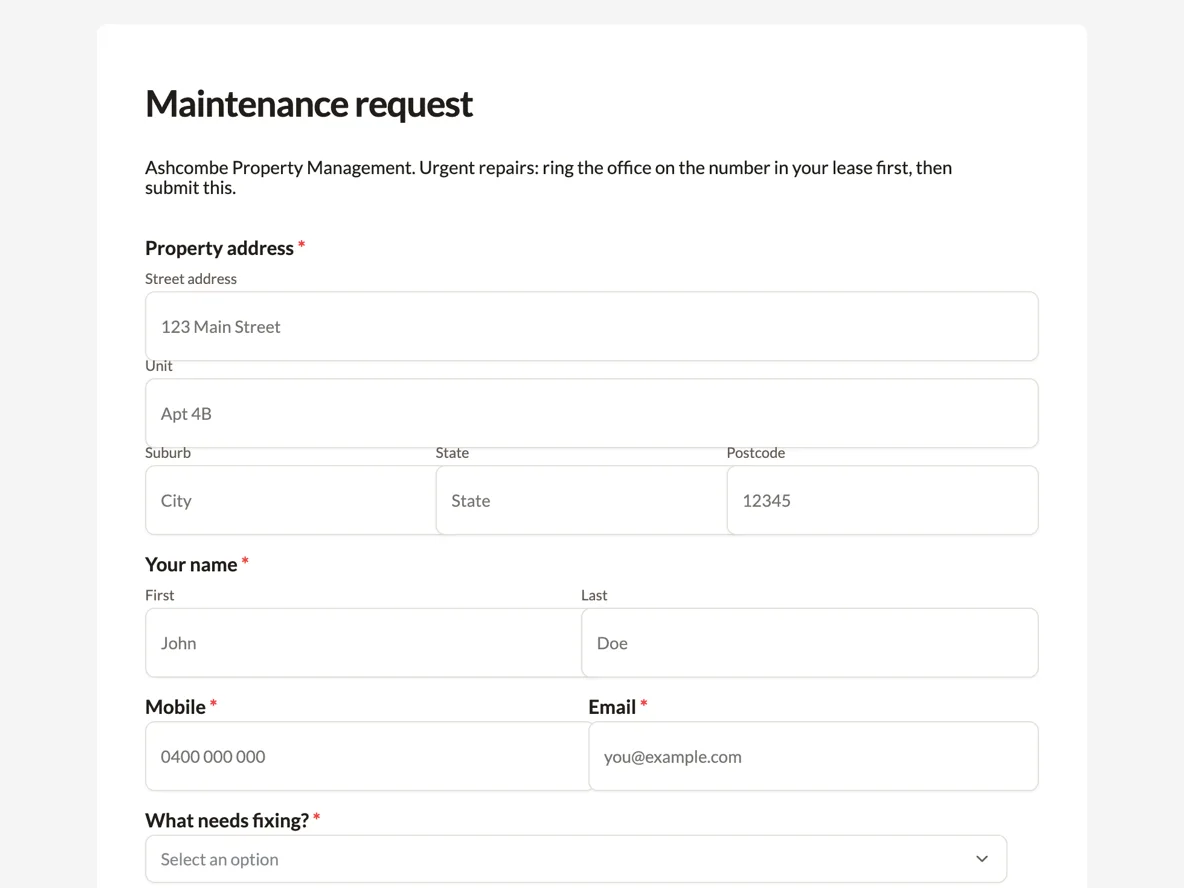
Maintenance request form with the urgent repairs list built inA tenant repair request with the urgent repairs list built in, so urgent jobs are flagged.
Rent increase notice
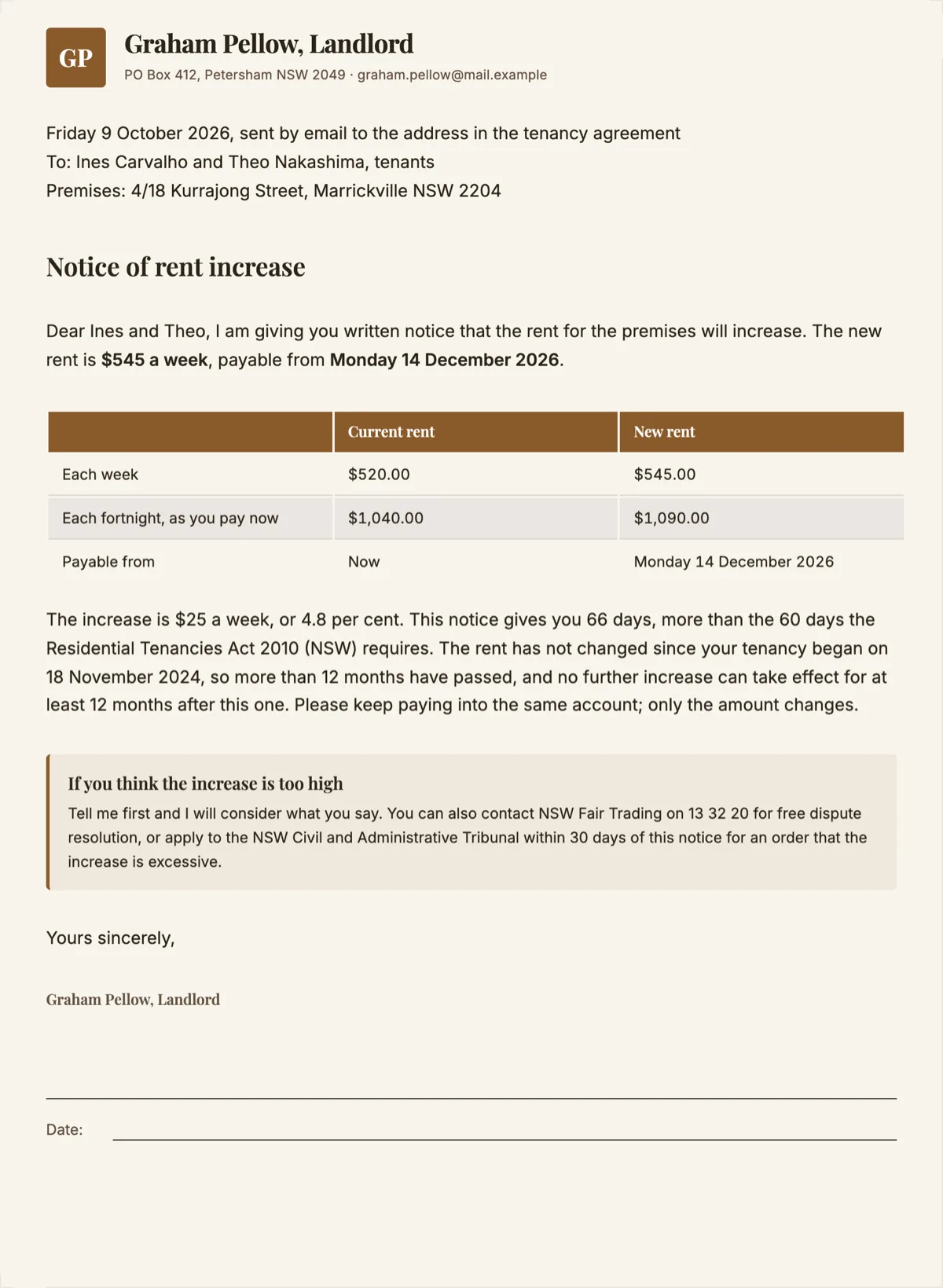
Rent increase notice template with the new amount and 60 days noticeThe notice that tells a tenant about a new rent, with the date and the notice period.
Notice of entry
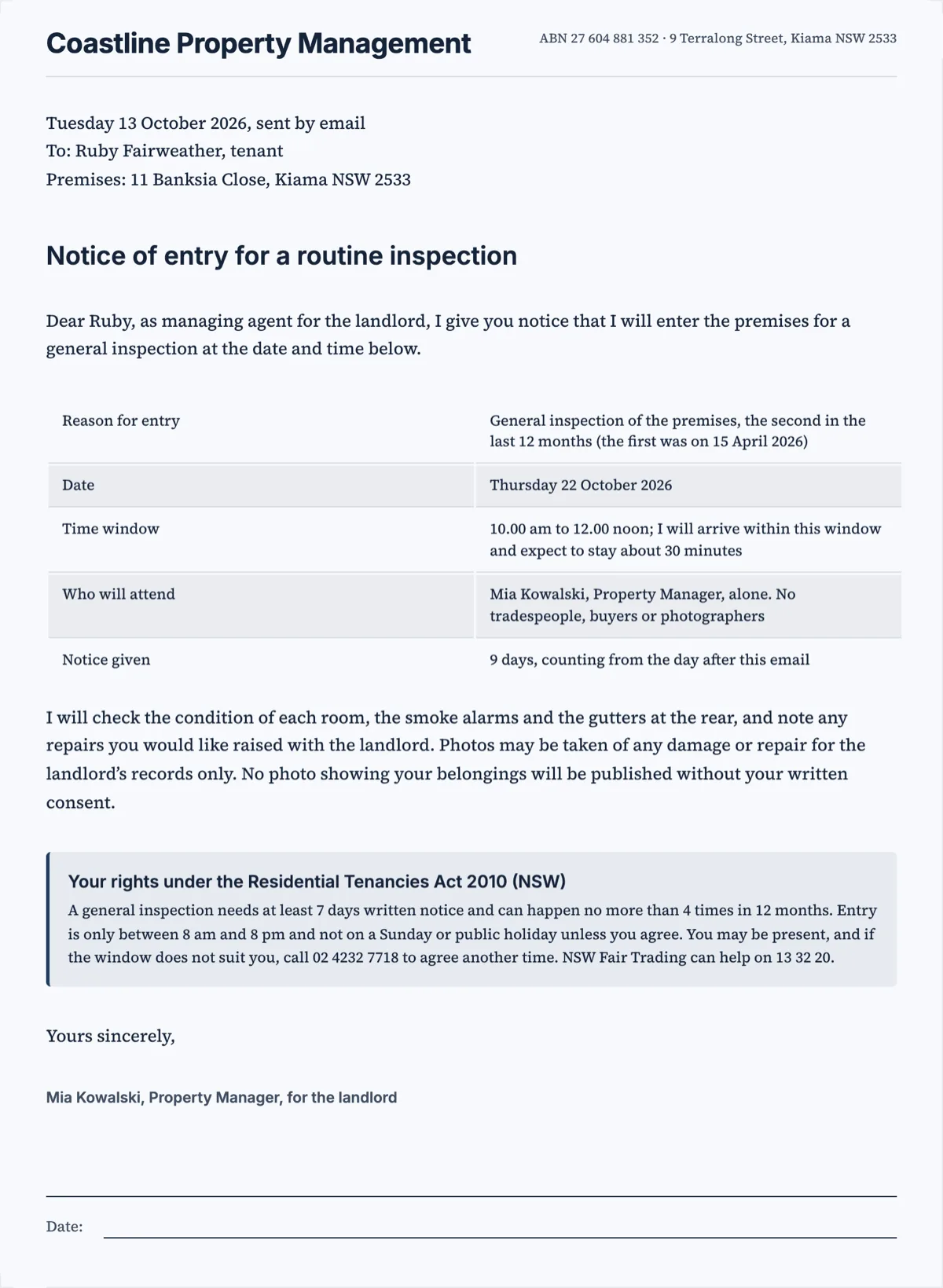
Notice of entry template for a routine inspectionA landlord or agent notice to enter the property, with the reason and the time.
Bond claim notice
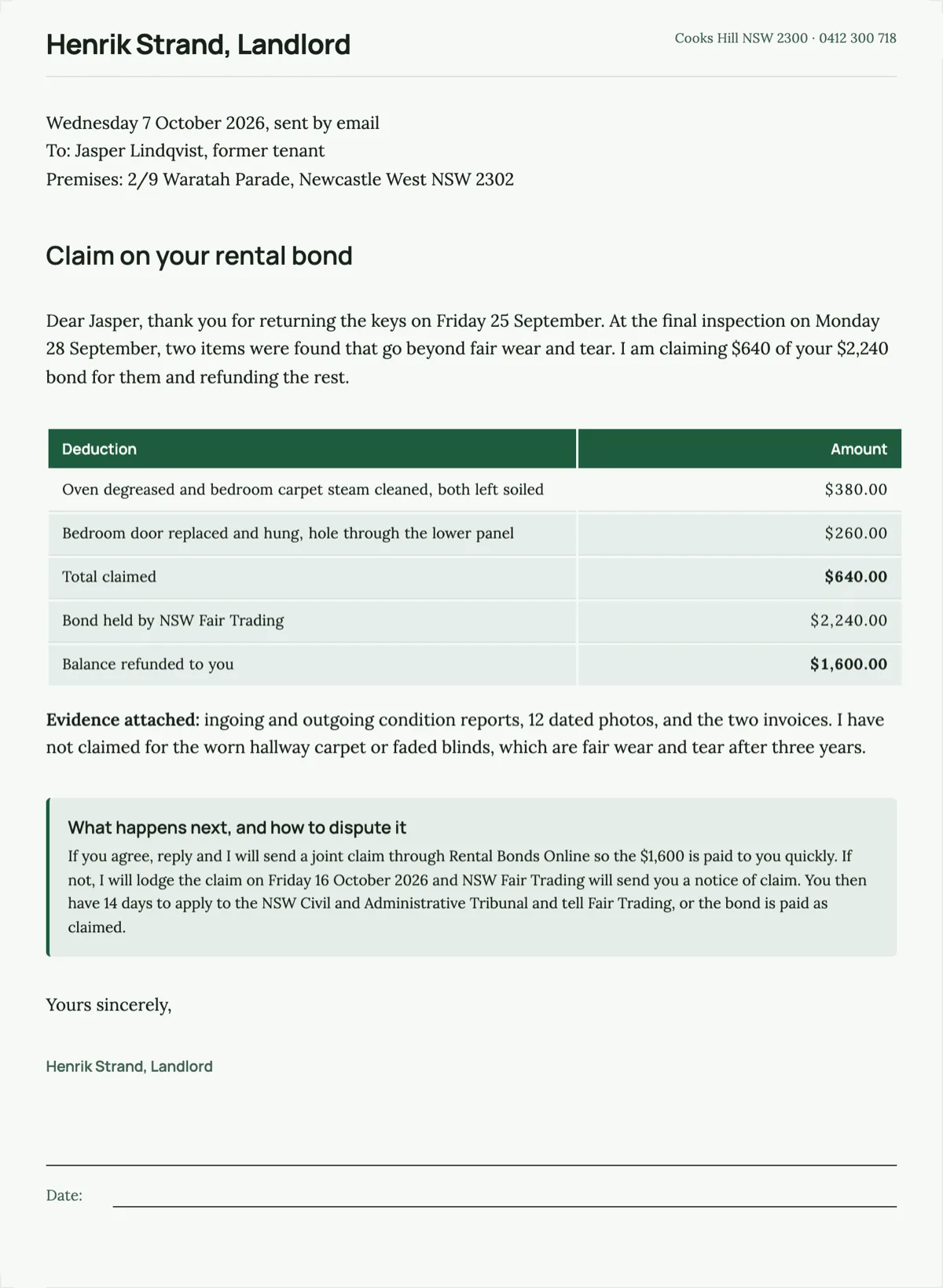
Bond claim letter template with itemised deductionsThe claim on the bond at the end of a tenancy, itemised against the exit report.
Lease renewal signing
Sign a lease renewal onlineA renewal signed online by the tenant without a trip to the office.
Tenant screening questions
Tenant screening questions that stay within the rulesScreening questions that stay within the rules on what an applicant can be asked.
Applications that stay within the rules
Several states now limit what a rental application can ask and require a standard set of information. Ask for identity, rental history, income and references, and avoid questions about matters the law protects. Get consent for any tenancy database or identity check. The tenant screening question bank in this kit is written to stay within those limits, and the rental application example shows the questions laid out for a phone.
Condition reports and inspections
The entry condition report should record every room, every fixture and its condition, with photos, and both parties should sign it within the time the state sets. Routine inspections follow the same room by room order so changes are easy to spot. The inspection form in this kit is done on a phone, and the signed condition report can go through e-signing, where the tenant confirms with a code sent to their email and both sides receive a certified PDF.
Notices, renewals and the end of the tenancy
Rent increases, entry, breaches and vacating all need written notice with a set period, and many states prescribe the form. Keep each notice dated and keep proof it was sent. Renewals can be signed online, and at the end the bond claim should be itemised against the exit report so the tenant can see each deduction. Where the state supplies an approved form, use it, and keep the examples here as a check of what the notice should say.
The tools behind the kit
Step by step in the builders: Create a form with AI, then Send a document for e-signature.
Questions people ask
What documents does a property manager need?
A property manager needs a rental application, a residential lease in the state required form, an entry condition report, a bond lodgement, routine inspection reports, maintenance records, rent increase and entry notices, renewal or termination notices, an exit report and a bond claim. Agencies also need a management agreement with each owner.
What can a rental application ask?
It can ask for identity, contact details, rental history, income and employment, references and the number of occupants. Several states restrict questions beyond this, such as about rental bond disputes or past disputes with landlords. Check your state rules before adding questions.
Can a condition report be signed electronically?
In most states yes, as long as both parties receive the report within the required time and can return their comments. An e-signed condition report records who signed and when, which helps if the bond is disputed at the end of the tenancy.
How much notice is needed for a rent increase?
It depends on the state and the type of lease, and several states have lengthened notice periods and limited how often rent can rise. Check the current rules with your state tenancy authority before sending a notice, and use the approved form where one exists.
How should urgent repairs be handled?
Urgent repairs such as a burst pipe, a gas leak or a broken hot water system have legal timeframes in every state. A maintenance request form that lists urgent repairs separately lets the manager act quickly, and the record of when it was reported protects both owner and tenant.
Start the first piece of the kit
The button opens a generator with a starting description already filled in. Change the business details to your own before you run it.
Create a form with OneCraftMore industry kits
Written and checked by the OneCraft team. Last checked .