Industry kit
Restaurant templates for bookings, menus and the opening
A restaurant takes bookings, prints and publishes its menu, takes orders for pickup, asks guests how it went and, before any of that, pitches the idea to investors or a landlord. This kit links a finished example of each, written for invented Australian restaurants.
The front of house paperwork
Most of what a restaurant writes down happens before the guest sits. Reservations need the date, the time, the party size and any dietary or accessibility needs, and the restaurant needs a way to hold the table and confirm it. Private dining and functions need more: a set menu choice, dietary counts, a minimum spend and a deposit, written so that nobody is surprised by the bill. After the meal, a short feedback survey with a rating for each course tells the chef and the floor manager where the night went wrong.
Menus, ordering and the launch
The menu is the restaurant most read document and now lives in three places: on the table, on a website and on phones for pickup orders. A menu website that loads fast and shows prices clearly, an ordering app for pickup, and a promo video for the opening or a new menu cover the digital side. Before opening, a pitch deck explains the concept, the numbers and the site to investors or a landlord. The cards below open each of these as finished pieces, so the structure and copy can be read in full.
Who the kit is for
The kit suits independent restaurants, from a 40 seat neighbourhood place to a group with a function room. Food businesses must meet the national food safety standards, and many now need a food safety supervisor and trained food handlers, so menus and dietary questions should be honest about allergens. Staff pay follows the relevant award, which the Fair Work Ombudsman publishes. The examples use invented restaurants and prices in dollars with GST included on menus.
The kit, piece by piece
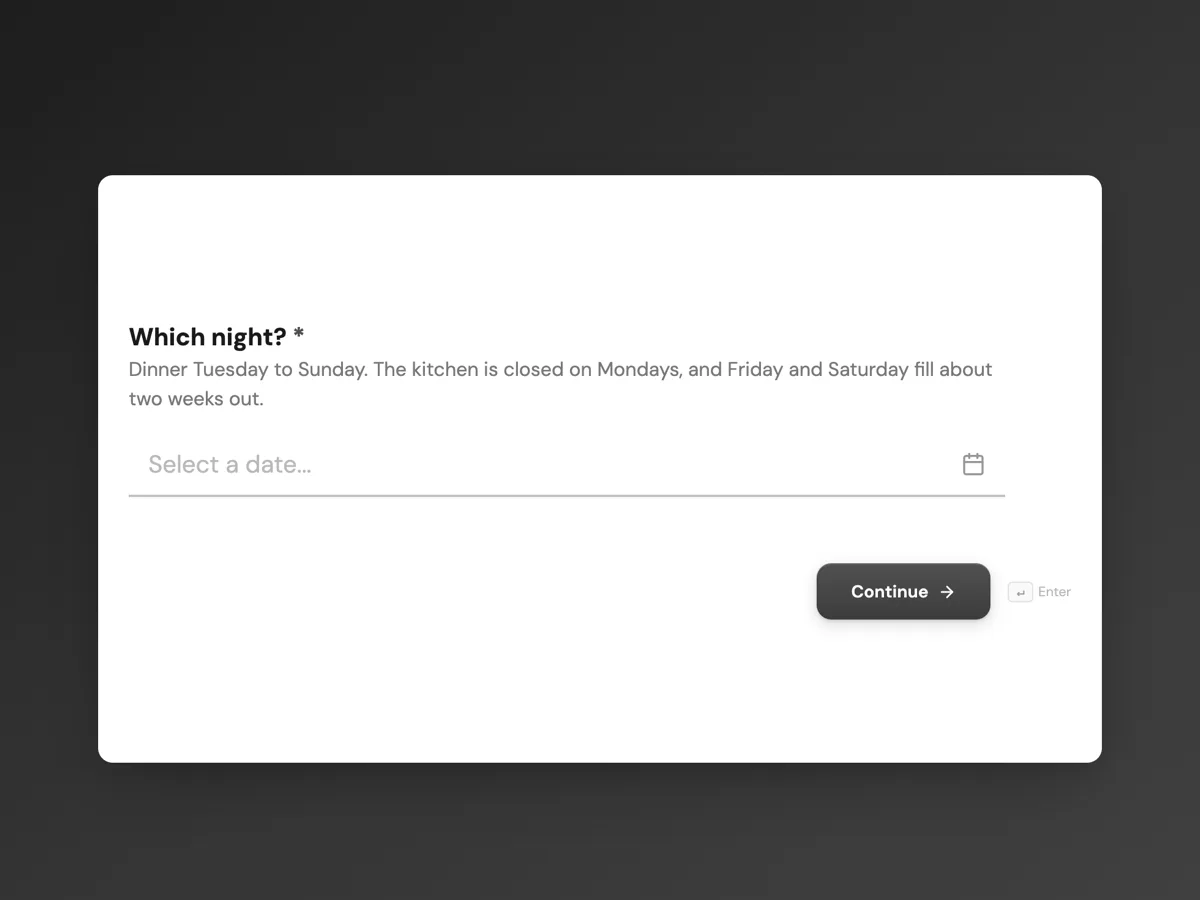
Reservation form
Restaurant reservation form with the occasion and the seatingDate, time, party size, dietary and accessibility needs and a phone number to confirm the table.
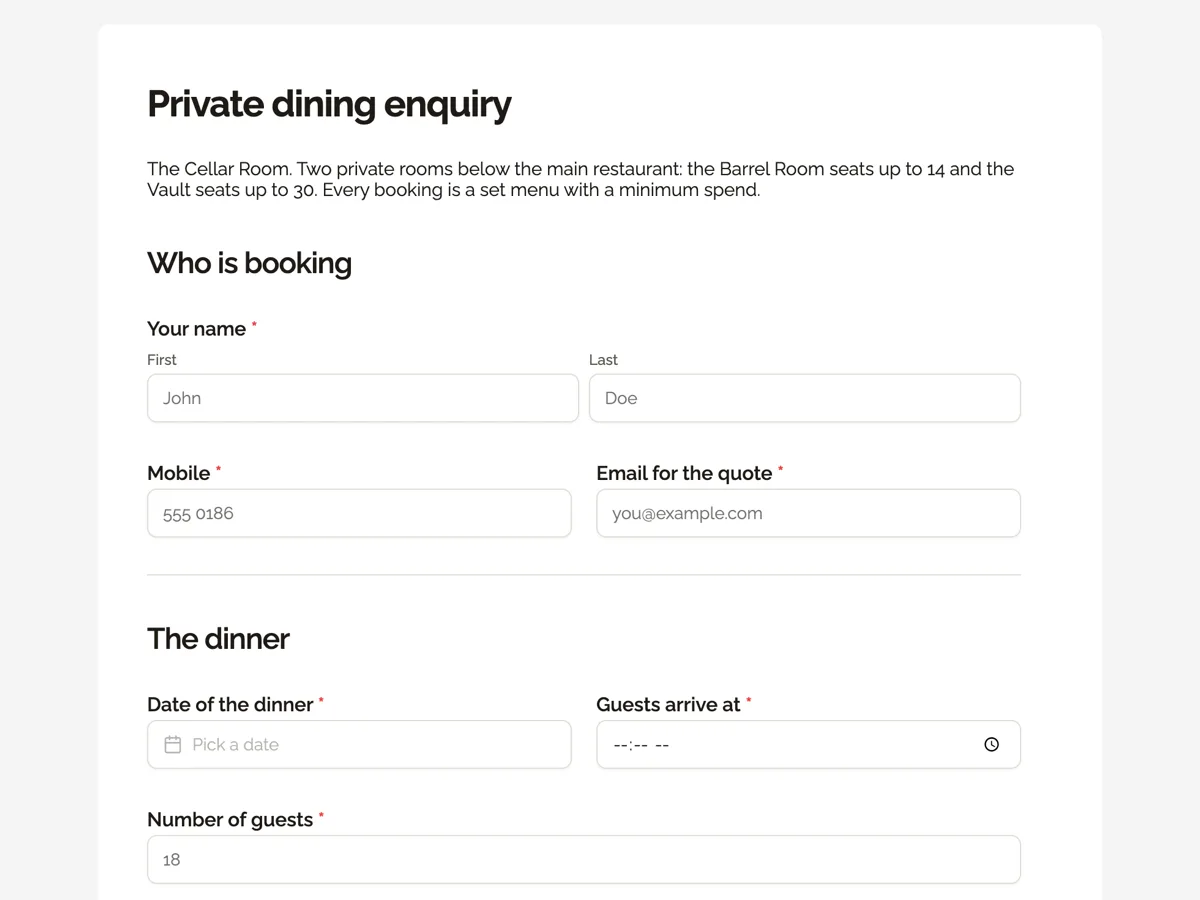
Private dining form
Private dining enquiry form with the minimum spend in writingA function enquiry with the minimum spend in writing, set menu choice and dietary counts.
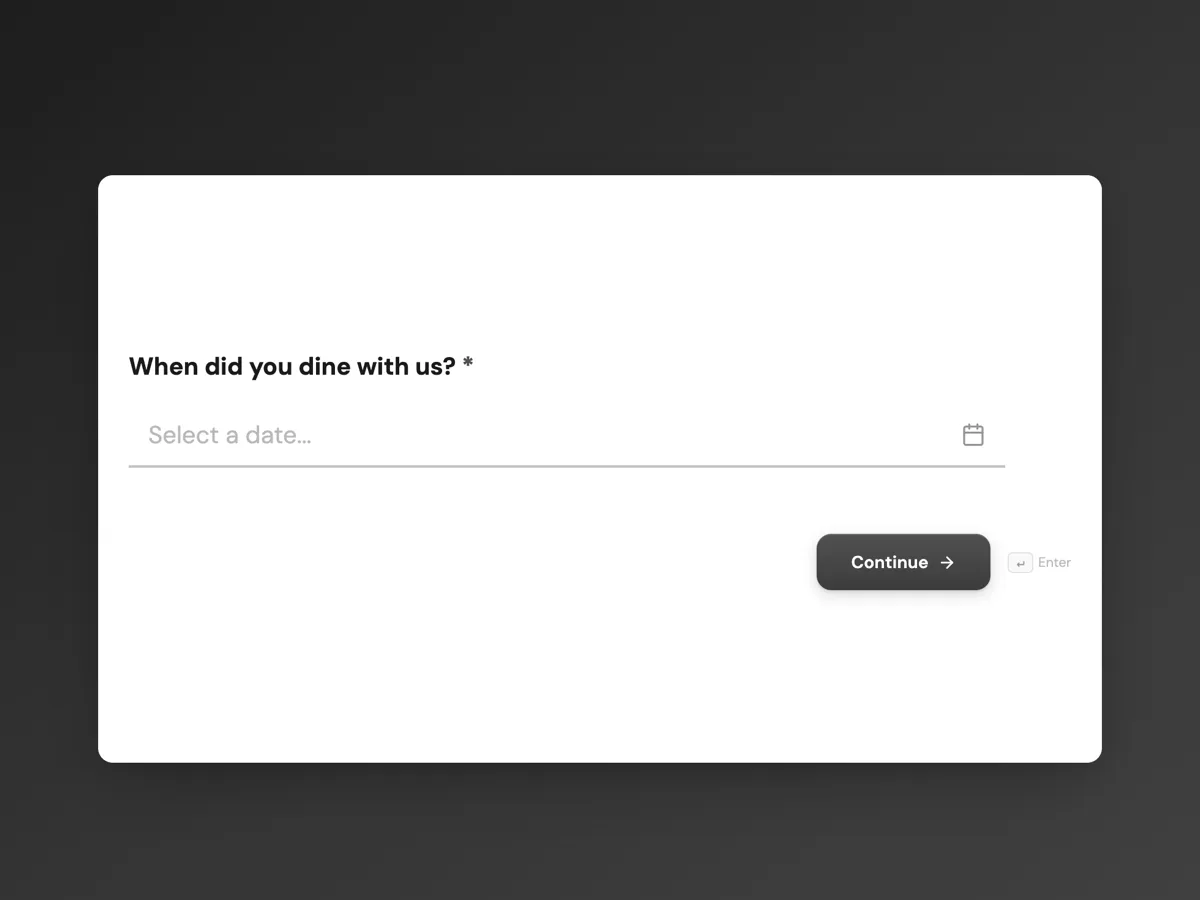
Feedback survey
Restaurant feedback form with a course by course rating gridA course by course rating grid plus service and value questions, sent the morning after.
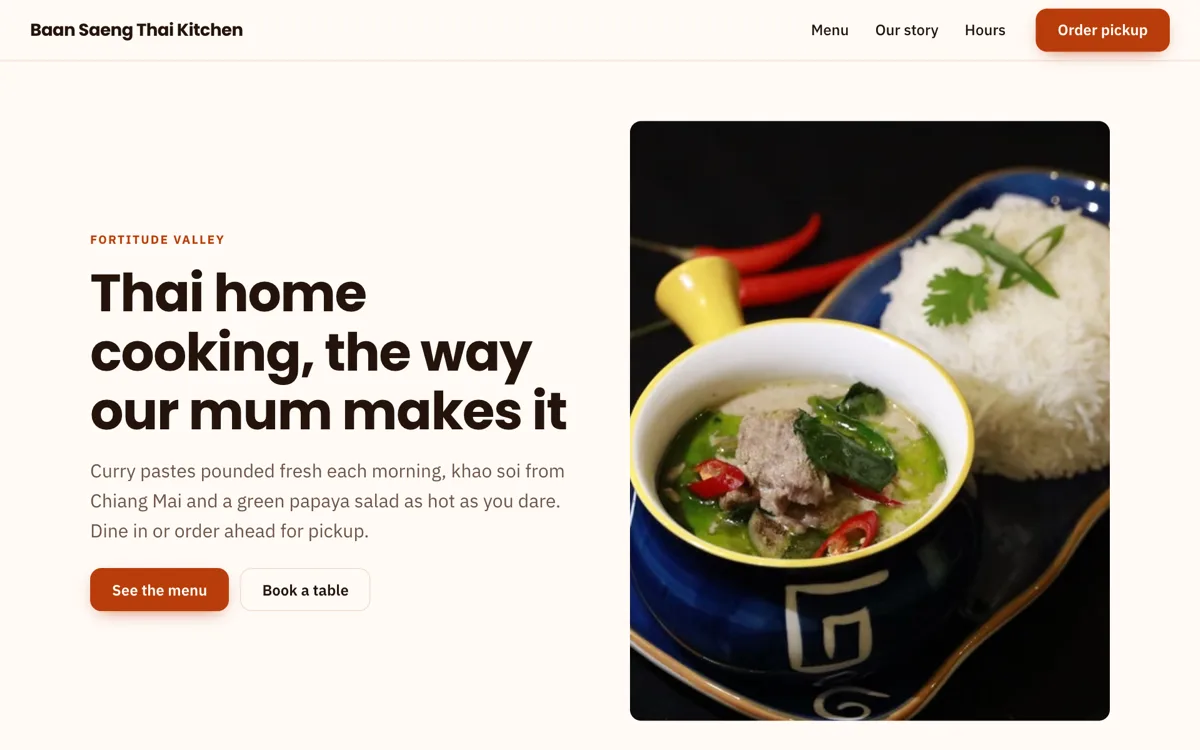
Menu website
Thai restaurant menu website with a printed style menuA Thai restaurant menu website laid out like a printed menu, with prices and dietary marks.
Order ahead menu
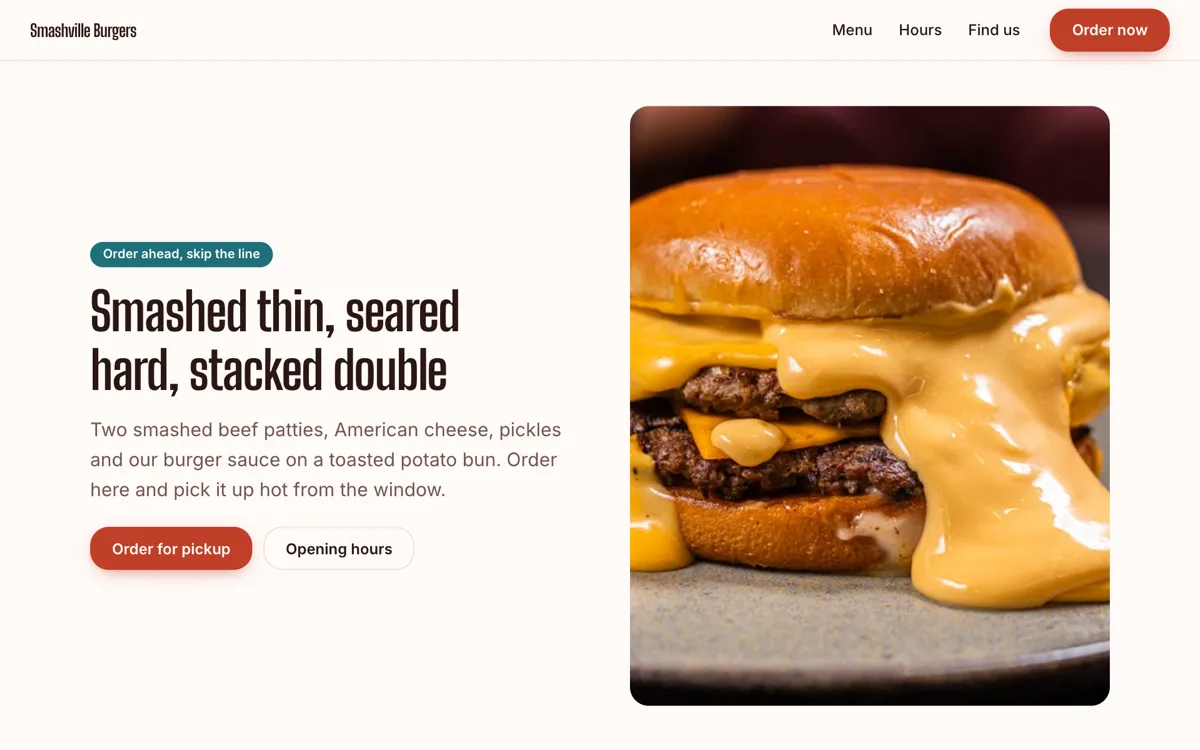
Burger restaurant menu website built for order aheadA burger restaurant menu website built for ordering ahead for pickup.
Ordering app
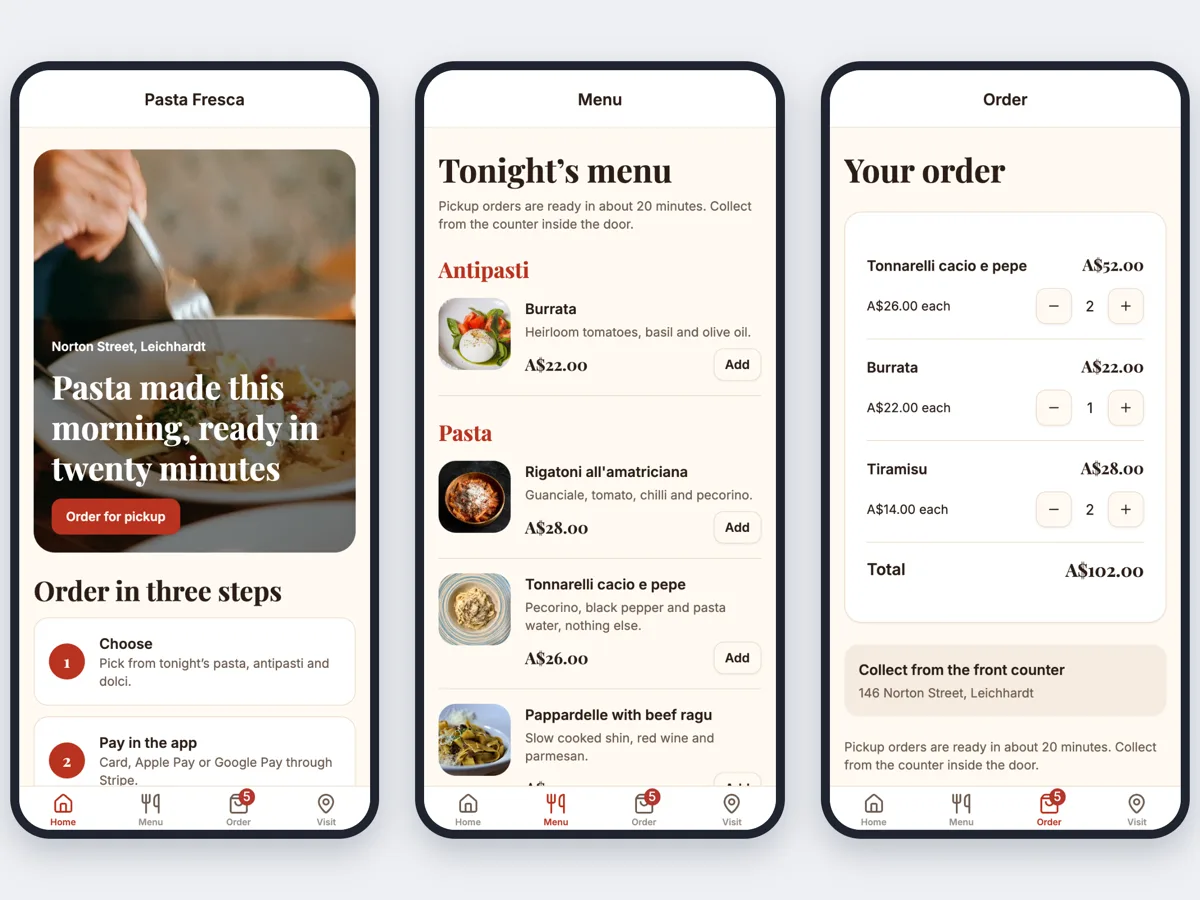
Restaurant ordering app example for pickup ordersA restaurant ordering app for pickup orders, written as an Expo app.
Promo video
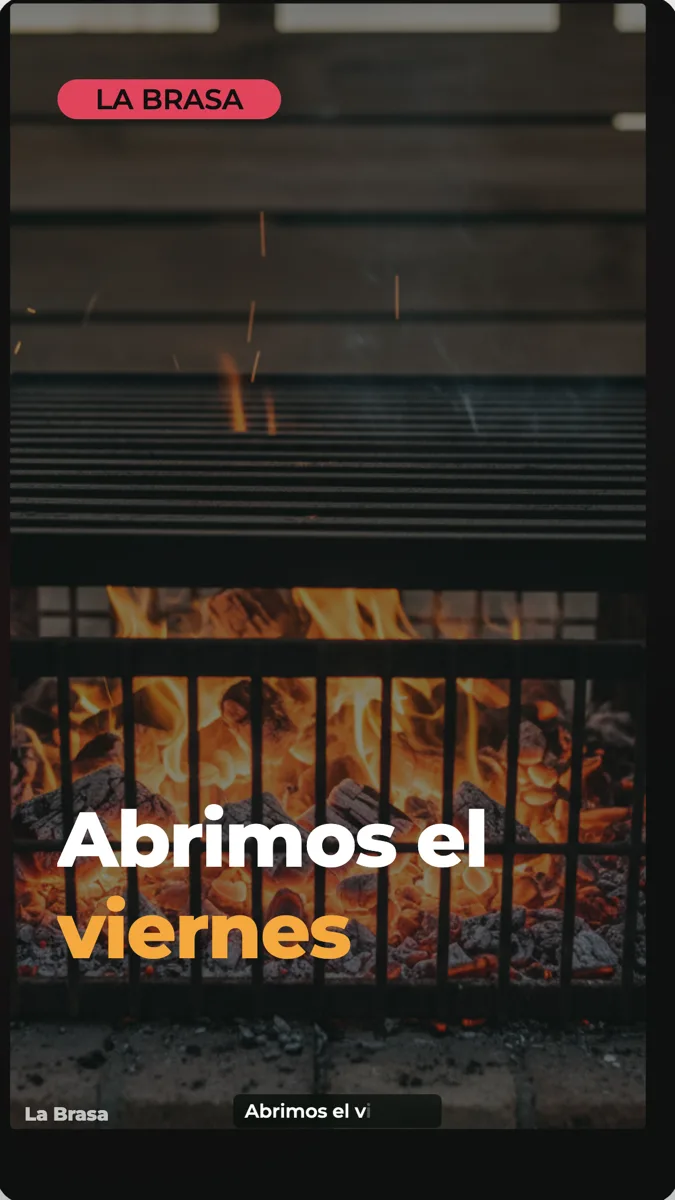
Restaurant promo video exampleAn opening promo video with the dishes, the room and the date, in vertical and landscape.
Pitch deck
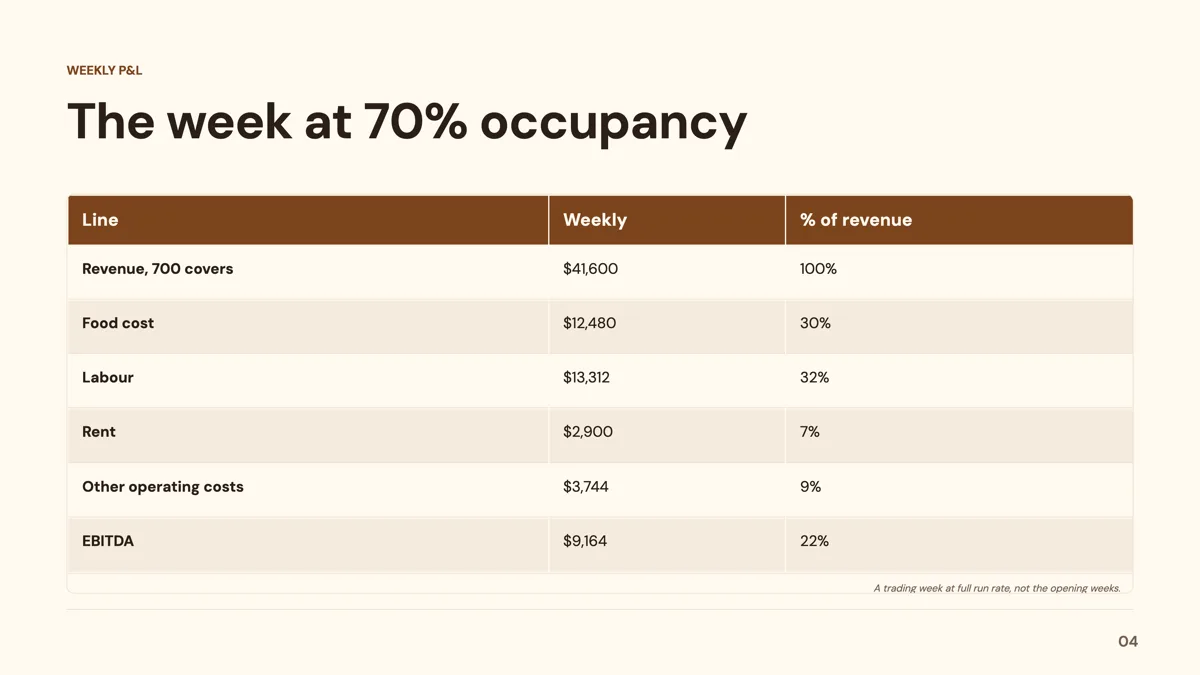
Restaurant pitch deck that shows the weekly P&L before the concept photosA restaurant pitch deck with the concept, site, covers and the numbers investors ask for.
Reservation template
Table reservation templateA table reservation form template to adapt to a restaurant.
Bookings that cut no shows
A reservation form that asks for a phone number and sends a reminder reduces no shows, and a deposit for large groups or busy nights reduces them further. Ask about dietary and accessibility needs at booking, not at the table, so the kitchen and floor can prepare. For functions, put the minimum spend, the deposit and the cancellation rule in the enquiry form itself; the private dining example in this kit does this and asks the guest to confirm they have read it.
A menu that works on a phone
Most guests read the menu on a phone before they arrive. A menu website should load fast, show every price, mark dietary options clearly and avoid PDFs that need zooming. Sites writes the menu as a real web page, published at a free onecraft.live address or a custom domain on a paid plan. Pickup ordering is written into the site own database from a capability guide; a hosted site database needs the Pro plan or a connected Supabase account, and card payments through Stripe need a paid plan and a connected Stripe account.
Allergens and honesty on the menu
Food businesses must give accurate allergen information when a customer asks, and packaged food must follow the plain English allergen labelling rules. Menus and websites should not promise a dish is free from an allergen unless the kitchen can guarantee it. Use the feedback survey to catch problems early, and make sure the dietary questions on booking forms reach the kitchen on the night.
The tools behind the kit
Step by step in the builders: Create a form with AI, then Make a promo video with AI voiceover.
Questions people ask
What forms does a restaurant need?
A restaurant needs a reservation form, a private dining or function enquiry, a catering or large order form if it offers one, a feedback survey, a casual job application and incident and food safety records. The first two shape the guest experience most and are worth writing carefully.
Should restaurants take deposits for bookings?
Deposits are common for large groups, private dining and busy nights such as holidays, and they reduce no shows. State the deposit, what it covers and the cancellation rule on the booking form. Smaller tables usually need only a phone number and a reminder.
How should a restaurant collect feedback?
Send a short survey the morning after, with a rating for each course, service, value and the room, and one open question about what to change. Keep it under two minutes. The restaurant feedback survey in this kit uses a course by course grid for this.
Does a restaurant need its own ordering app?
Not always. A menu website with pickup ordering covers most restaurants. An app suits places with many regulars who order often. Sites can build either, and test or store builds of an app need a paid plan and the restaurant own developer accounts for submission.
What goes in a restaurant pitch deck?
A restaurant pitch deck covers the concept, the site and why it works, the menu and price point, covers per week, the build out budget, the opening timeline, the team and the ask. The restaurant pitch deck in this kit shows each of these on its own slide.
Start the first piece of the kit
The button opens a generator with a starting description already filled in. Change the business details to your own before you run it.
Create a form with OneCraftMore industry kits
Written and checked by the OneCraft team. Last checked .