Classic form
Routine property inspection form done room by room on a phone
A routine inspection is a walk through five rooms with a phone, and the report is only worth anything if it is written during the walk, not from memory in the car. This form is the walk: one condition grid per room, one photo per area, a maintenance list, and a PDF at the end for the owner and the tenant.
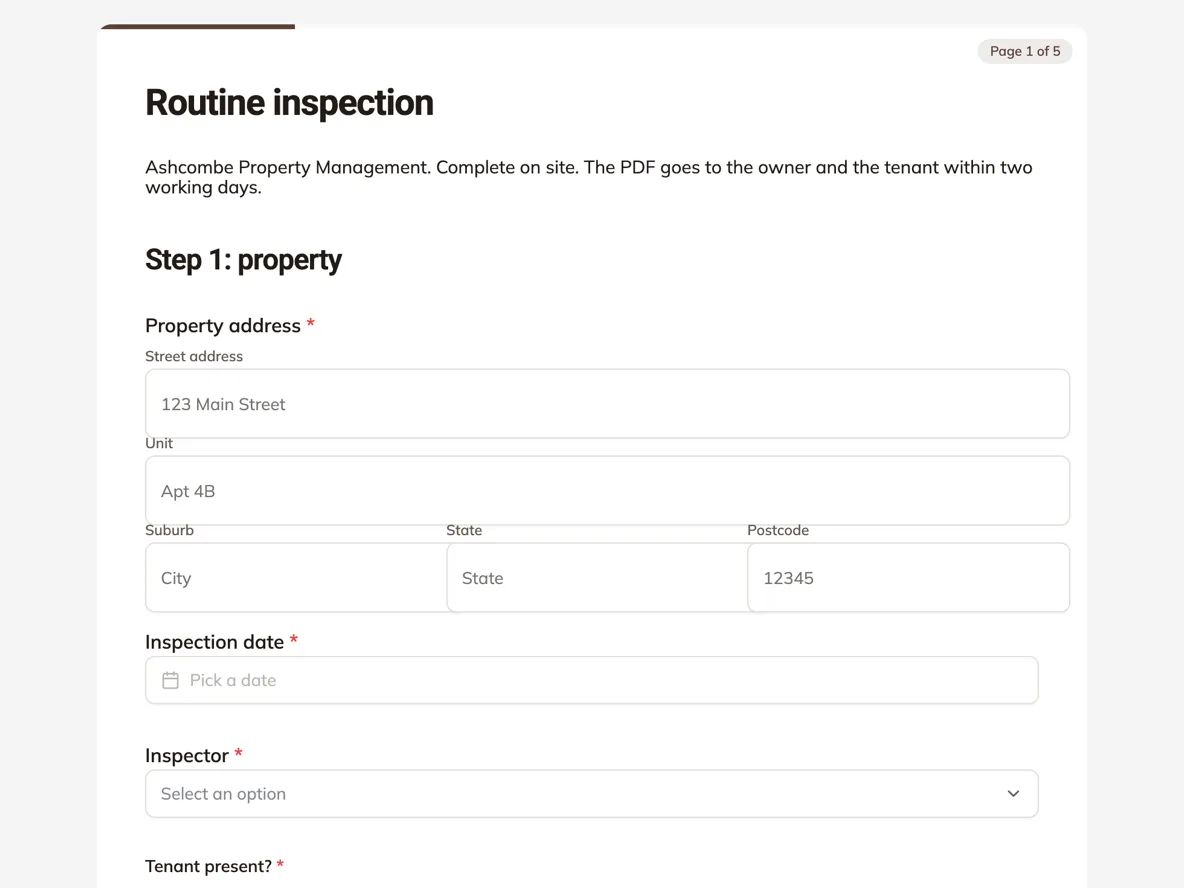
The form itself
A static copy of the finished form, exactly as it renders. Nothing here can be filled in or submitted, so read it as a reference and build your own from the button above.
Every field, and what it collects
The complete field list, in the order respondents meet it.
- Property addressAddressRequired
- Inspection dateDateRequired
- InspectorDropdownRequired
- Options: Priya Nair · Tom Whitlam · Casual inspector
- Tenant present?Single choiceRequired
- Options: Yes · No, entered with notice
- Living areas and bedroomsRating gridRequired
- Statements:
- Walls and ceilings
- Floors and carpet
- Windows and screens
- Doors and locks
- Light fittings
- Smoke alarm tested
- KitchenRating gridRequired
- Statements:
- Benches and cupboards
- Stove and oven
- Rangehood
- Sink and taps
- Dishwasher
- Bathroom and laundryRating gridRequired
- Statements:
- Shower and screen
- Toilet
- Vanity and taps
- Exhaust fan
- Grout and sealant
- Laundry taps
- Photo: livingPhoto upload
- One wide shot from the doorway.
- Photo: kitchenPhoto upload
- One shot taking in benches and stove.
- Photo: bathroomPhoto upload
- One shot showing shower and vanity.
- Exterior and groundsRating gridRequired
- Statements:
- Gutters and roofline
- Paths and driveway
- Lawns and garden
- Fences and gates
- Garage or carport
- External lights
- Photo: exteriorPhoto upload
- One shot from the street or the back fence.
- Maintenance foundTable
- Columns: Item · Location · Urgent?
- Cleanliness and tenant careSingle choiceRequired
- Options: Very good · Acceptable · Needs a written reminder · Breach notice to consider
- Notes for the ownerLong text
- Inspector signatureSignatureRequired
Step 1: property
Step 2: inside
Step 3: outside
Step 4: findings
Question banks built on this form
Routine inspections, and what this form is not
A routine inspection checks how a tenancy is going: condition, cleanliness, maintenance brewing quietly in the grout. It is not the entry or exit condition report, which in most states is a prescribed form with its own rules and per item tenant comments, and this form does not impersonate one. State law caps how often routine inspections happen and how much notice the tenant gets, in NSW the notice rules sit alongside the general access and entry limits, so the tenant present question at the top doubles as the record that entry was done properly.
How to adapt this form
An entry or exit condition version needs a per item comment column, which means trading the grids for tables so the tenant's response can sit next to each line, and checking the prescribed form rules in your state before using it at all. A strata common area version keeps the exterior grid, drops the tenant questions, and walks lobby, stairs, bins and garden instead of bedrooms. A holiday let changeover version runs weekly, replaces the cleanliness rating with a ready-for-guests yes or no, and sends the PDF to the owner only. The smoke alarm row stays in every variant, because every state now regulates alarms.
What makes this form work
Four grids cover 23 items in four screens
Living areas, kitchen, bathroom and laundry, exterior: each room is one grid on one screen, rated good, fair, needs attention or not applicable. That is the actual pace of a walk-through, one room, one screen, tap tap tap, and it is why the report gets written on site instead of in the car.
One photo per area matches how the report is read
The photo field takes a single image, so the form asks for exactly one per area with a caption saying what to frame. Four photos, each anchored to its grid in the PDF, give the owner the room at a glance without burying the findings under forty thumbnails.
The maintenance table has an Urgent column
Five fixed rows with item, location and urgent, written while standing in front of the fault. The inspection feeds the repair queue directly, and the urgent flag is applied by the person who actually saw the fault, not guessed later from a photo.
Questions people ask
How often can a routine inspection be done?
State rules cap frequency and set the notice period, commonly no more than four a year with seven days written notice, though the numbers vary by jurisdiction. The linked state pages carry the current rules. The inspection date and tenant present fields at the top of this form are the compliance record for each visit.
Is this the condition report?
No. The entry and exit condition report is a prescribed document in most states, filled in at the start and end of a tenancy with the tenant's own comments per item. This is the routine inspection between those bookends, and its grids are deliberately shorter than a condition report's item lists.
Why grids instead of free text notes?
Because the owner reads this report four times a year, and a grid makes January comparable with October. Twenty three items across four grids, each rated on the same four point scale, show drift the way prose cannot. The notes field still exists for what the grids cannot say.
How do the photos reach the owner?
The response PDF places each photo under its field, so the kitchen photo sits with the kitchen grid. The PDF layout editor can reorder fields if the agency wants photos grouped at the end instead. Either way the owner gets one document, not an email with nine attachments.
Can the tenant sign the inspection?
Add a second signature field when tenants routinely attend; this version records attendance with the tenant present question instead, since most routine inspections happen while tenants are at work. The entered with notice option is the entry record when they were not there.
What happens to the maintenance table afterwards?
The five rows, item, location and whether it is urgent, feed the maintenance queue without retyping: urgent lines get actioned on the statutory clock, the rest wait for the owner's approval alongside the report. The maintenance request example linked on this page is the tenant-side twin of that queue.
Build your own in about a minute
The button below opens the generator with this use case already described. Change the wording to match your own, generate, then edit anything you like.
Make my routine property inspection form done room by room on a phoneOther form examples
Maintenance request form with the urgent repairs list built in
Most repair requests arrive as a text with no address and a photo of the wrong thing. This form asks what and where in the tenant's words, shows the urgent repairs list so the tenant can say which line applies, and takes the access permission the tradesperson needs before they can be booked.
Workplace incident report form built for the first hour
The first report of an incident is the one the regulator, the insurer and the investigation all rely on, and it is usually written by the most stressed person on site. This form asks for facts in the order they are known, keeps opinion out until the last field, and asks the one question that decides whether the regulator must be told.
Scholarship application form that asks everyone the same three questions
A scholarship committee reads a hundred applications against one rubric, and the only fair form is the one that asks everyone the same questions at the same length. This form checks eligibility first, then asks three questions with 250 word limits, takes the evidence as uploads, and ends with a declaration two people sign.
Want the steps in the builder? Read Shape the PDF version of your form, then Paginate a classic form into steps. For everything this generator can do, see the form maker.
Written and checked by the OneCraft team. Last checked .