Industry kit
Psychologist forms for intake, consent and a private practice
A psychology or counselling practice needs an intake that asks about safety properly, informed consent that explains confidentiality and its limits, and an agreement that sets fees and cancellations. This kit links finished examples of each, written for invented Australian practices.
What a practice asks before the first session
A psychologist or counsellor needs to know who the client is, how they were referred, what brings them in, what supports they have and whether they are safe. The intake form is where most of that is first written down, and it has to be handled with more care than most forms: the safety question must be asked directly, crisis contacts must be visible on the same screen, and the client should know who will read the answers and when. Child and couples work need their own versions, because the questions and the consent are different.
Consent, confidentiality and the agreement
Informed consent in psychology covers what therapy involves, how notes are kept, who can see them, and the limits of confidentiality, such as a serious risk to the client or someone else or a court order. Practices also need a service agreement that sets the session fee, the cancellation policy, how Medicare rebates and referrals work, and how to make a complaint. The examples below show the intake, the consent and the signed agreement as complete documents, ready to read in full.
Who the kit is for
The kit is written for private psychology and counselling practices in Australia, from a sole practitioner to a small group practice. Psychologists are registered with the Psychology Board of Australia and follow its code of conduct; counsellors follow their association code. Practices hold health information, so the Privacy Act applies regardless of size. The examples use invented practices and clients, and no question in them is offered as a clinical assessment tool. Read each one in full before adapting it to the way your own practice works.
The kit, piece by piece
Adult intake form
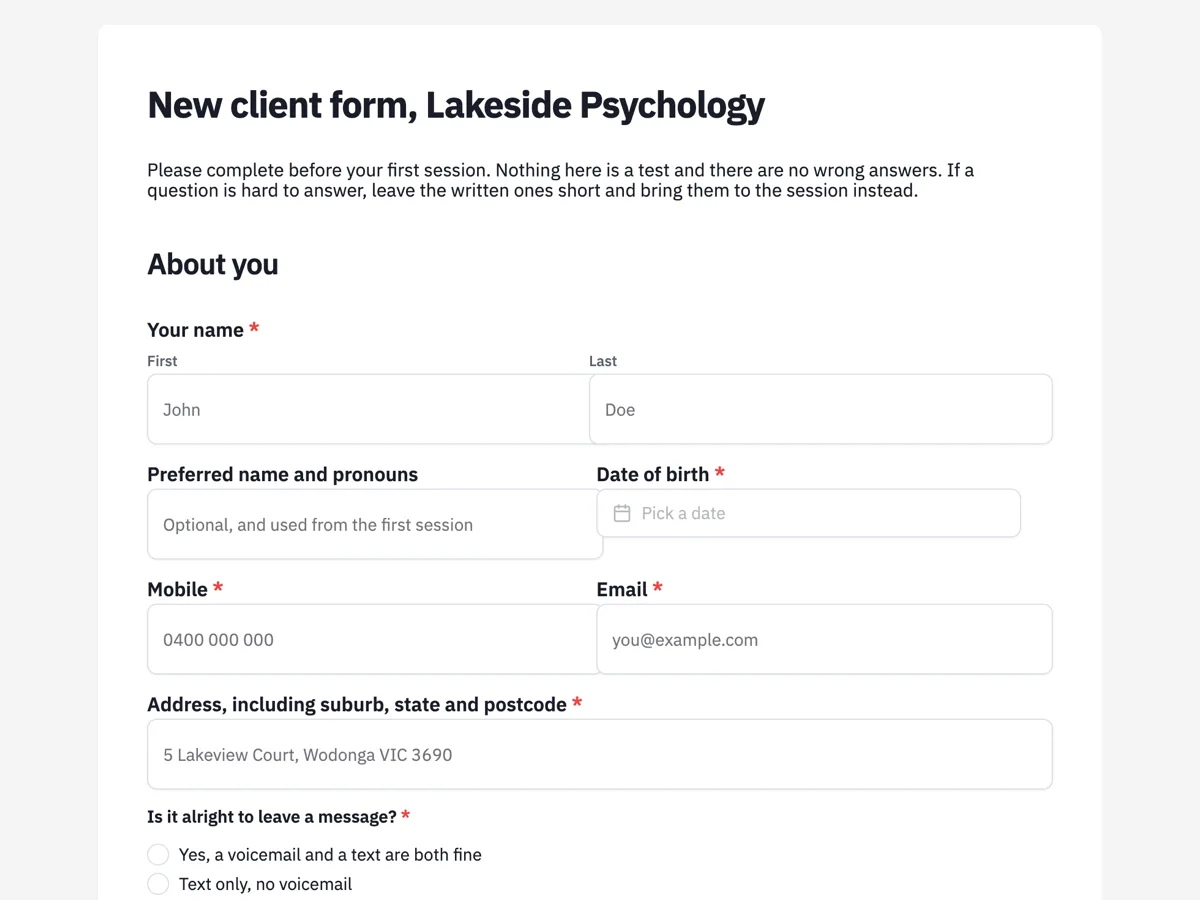
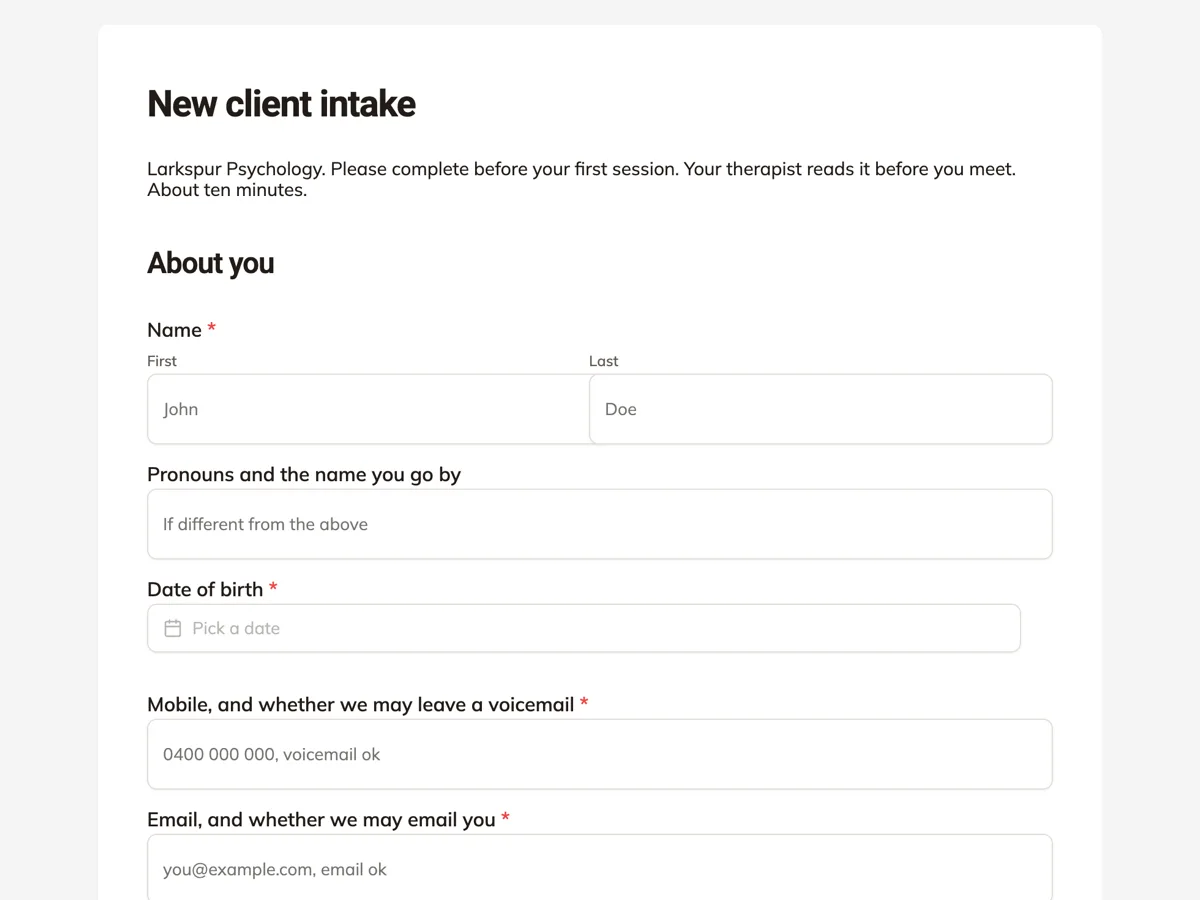
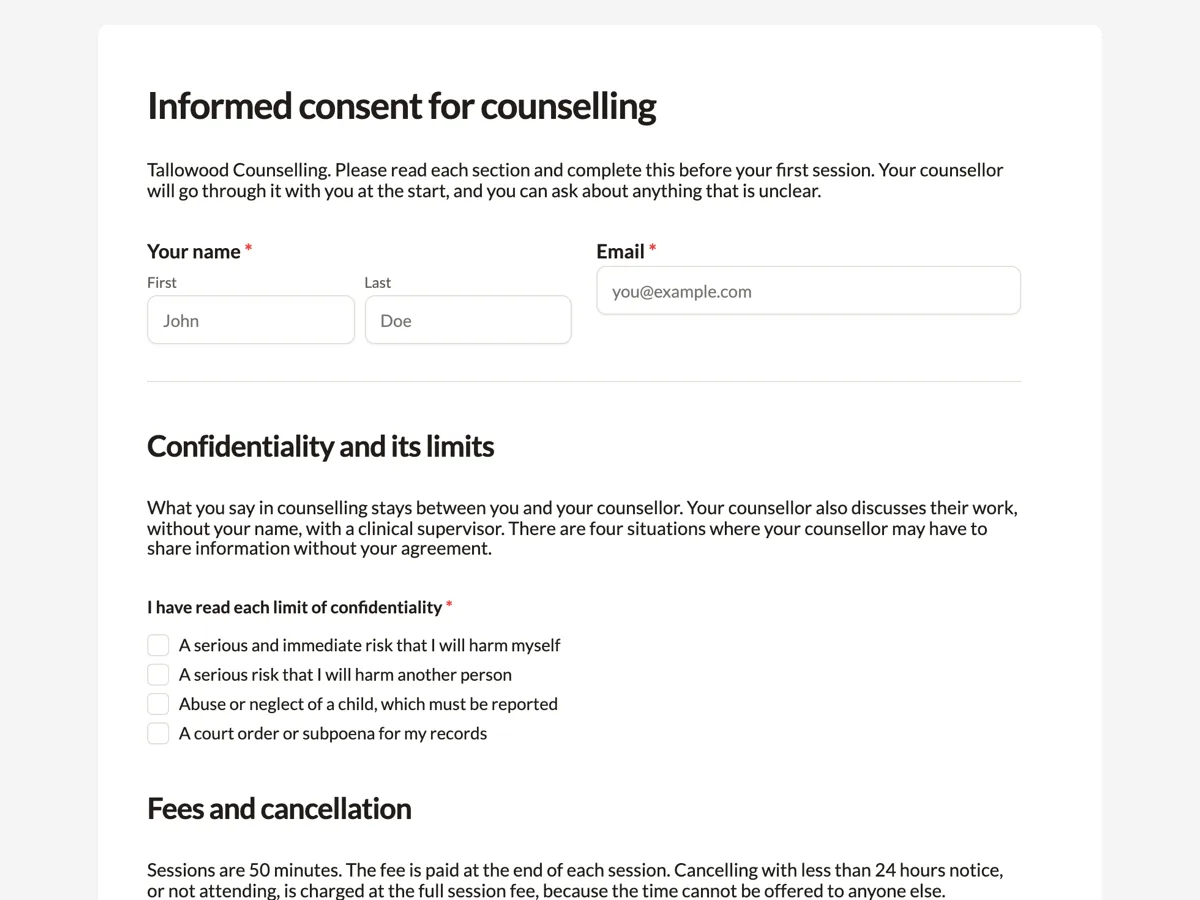
Psychology intake form with the limits of confidentiality on itReferral, presenting concerns, supports, history and a direct safety question, for an adult first appointment.
Therapy intake form
Therapy intake form that asks the safety question properlyA therapy intake that asks the safety question properly, with crisis contacts on the same screen.
Child intake form
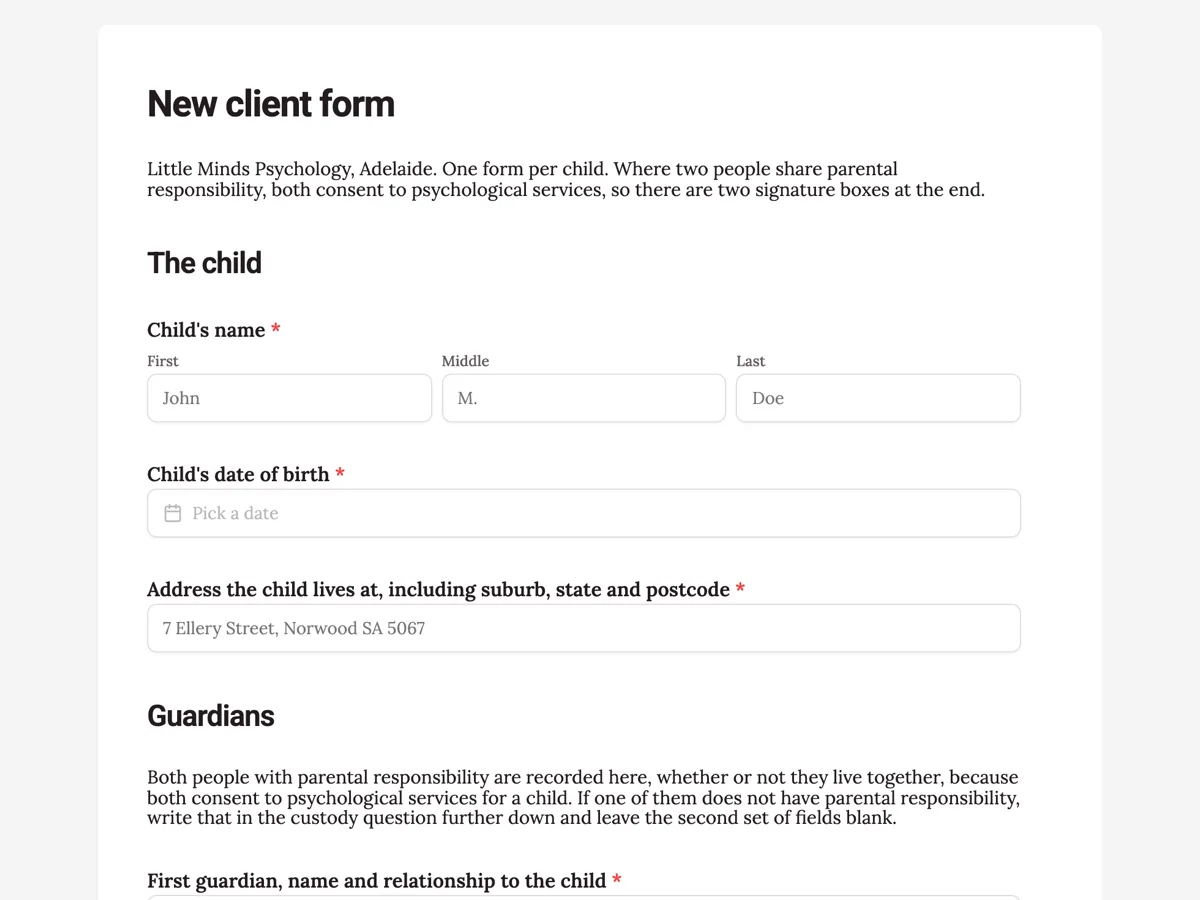
Child psychology intake form with two guardian signaturesCompleted by a parent or carer: development, school, family and the concern that prompted the referral.
Couples intake form
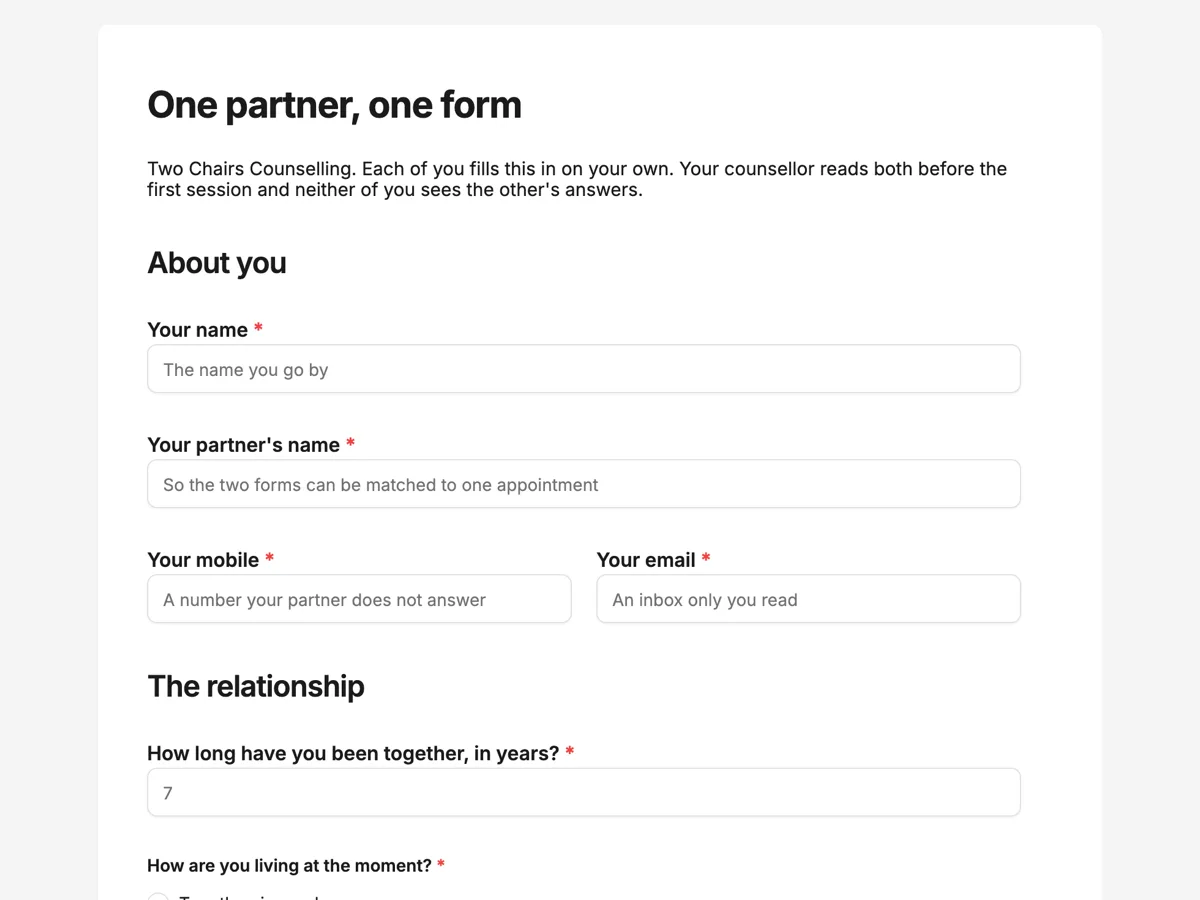
Couples counselling intake form, one form for each partnerEach partner answers separately, with questions on goals, conflict and safety in the relationship.
Informed consent form
Informed consent counselling form, confidentiality firstWhat counselling involves, records, confidentiality and its limits, and the client agreement.
Counselling agreement signing
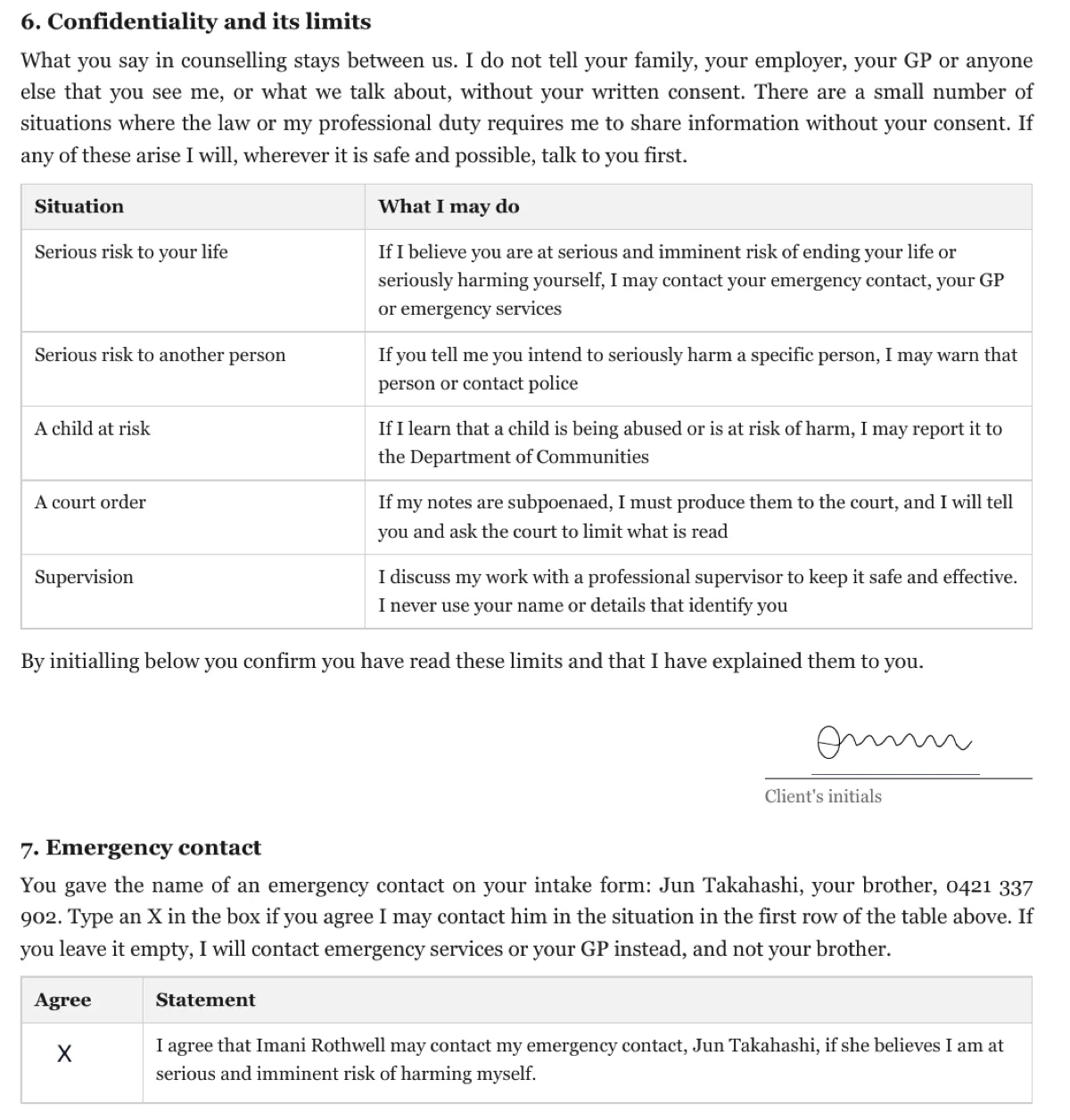
Sign a counselling agreement onlineFees, cancellations and consent signed online with an email code before the first session.
Psychologist flyer
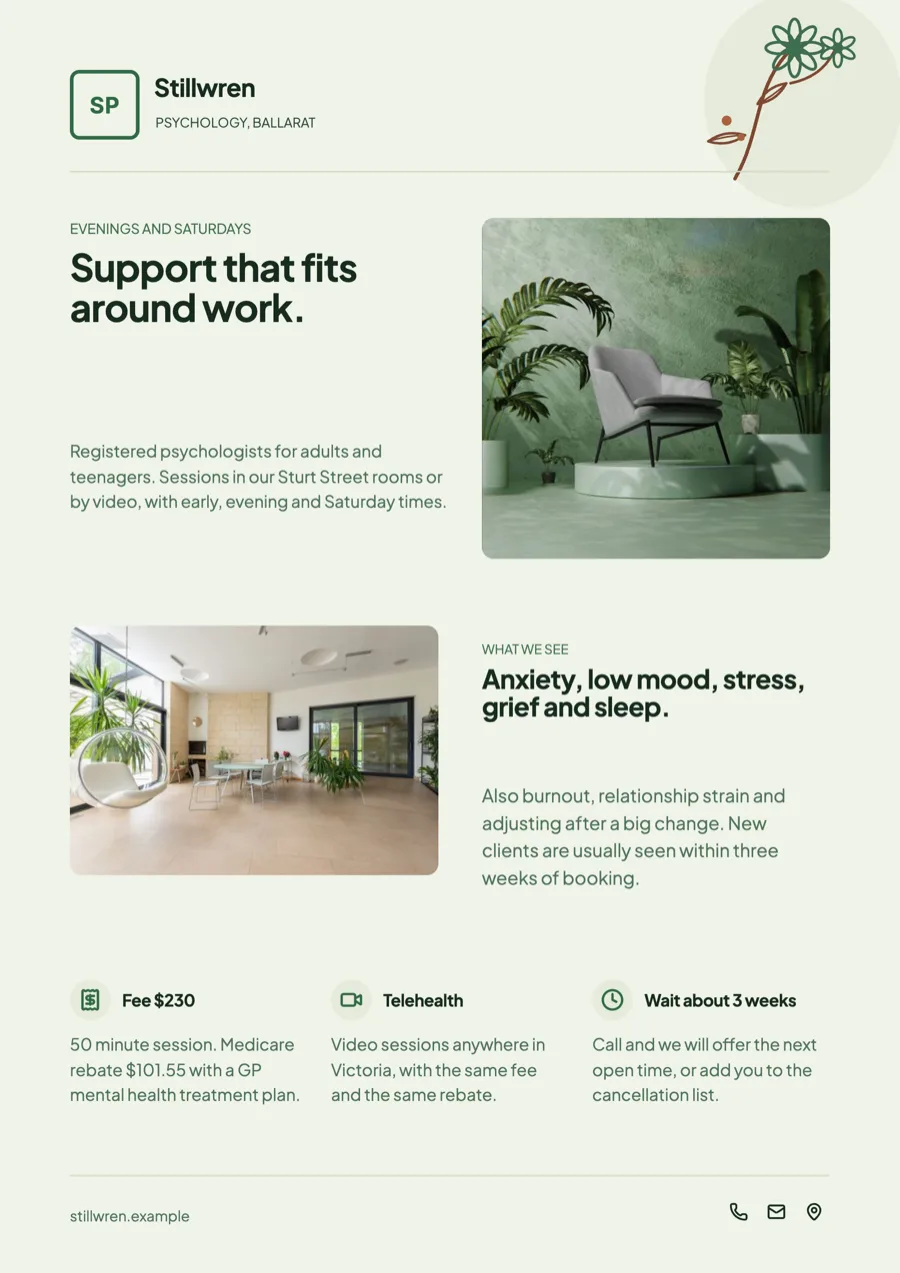
Psychologist flyer with Medicare rebates and telehealth sessionsA practice flyer for GP surgeries and community noticeboards: services, referral pathway and booking.
Mental health intake questions
Mental health intake questions before a first sessionA question bank for mental health intake, grouped by section with the field type for each.
Wellbeing survey questions
Employee wellbeing survey questions that are not a diagnosisQuestions for a wellbeing check in, for group programs or workplace work.
Therapy intake template
Therapy intake templateA therapy intake template to start from and adapt to a practice.
Asking about safety on a form
A form cannot replace a clinical conversation, but it can make sure the question is asked and that help is visible. Ask directly whether the client has had thoughts of harming themselves, give crisis numbers on the same screen, and say who will read the answer and when, so a client does not assume a reply is immediate. The therapy intake example in this kit is built this way. Practices should decide in advance how a concerning answer is followed up before the first session.
Separate forms for children and couples
Child work starts with the parent or carer, so the intake asks about development, school, family and who has parental responsibility to consent. Couples work needs each partner to answer separately, because questions about conflict and safety should not be answered in front of the other person. The child and couples examples here show both approaches, and each links to the matching consent wording.
Records, privacy and signing
Psychology notes and intake answers are health information. Collect only what the work needs, explain on each form why it is collected, and restrict who can open responses; a published form can require login or a secret key, and it does not email the client a copy of their answers. A service agreement can be signed online before the first session; the client confirms with a code sent to their email, and the practice keeps the certified PDF with its audit trail.
The tools behind the kit
Step by step in the builders: Create a conversational form with AI, then Control who can fill in your form.
Questions people ask
What should a psychology intake form include?
It should include contact and GP details, referral and care plan information, the reasons for seeking help, current supports, relevant history, medications, a direct safety question with crisis contacts shown, previous therapy, goals and consent to contact the referrer. Keep it short enough to finish in ten minutes.
What are the limits of confidentiality in counselling?
Confidentiality usually has limits where there is a serious risk of harm to the client or others, where a child may be at risk, where a court or law requires disclosure, or where the client consents to sharing. Explain these in plain words on the consent form and again in the first session.
Do psychologists need written consent?
Informed consent is required, and recording it in writing at the start of therapy is standard practice. The consent should cover what therapy involves, records, confidentiality and its limits, fees and cancellations. Revisit consent when the approach changes or when working with a new family member.
Should couples complete separate intake forms?
Yes. Separate forms let each partner answer questions about the relationship, conflict and safety privately. The counsellor can then raise any concern safely in an individual conversation. The couples intake example in this kit sends each partner their own form.
Can a counselling agreement be signed online?
Yes. A service agreement covering fees, cancellations, Medicare rebates and consent can be sent for e-signing before the first appointment. The client confirms with a code sent to their email, and both parties receive a certified PDF showing when it was signed.
Start the first piece of the kit
The button opens a generator with a starting description already filled in. Change the business details to your own before you run it.
Create a form with OneCraftMore industry kits
Written and checked by the OneCraft team. Last checked .