Classic form
Food safety inspection checklist for a cafe kitchen
A food safety inspection checklist records the fridge, freezer and hot holding temperatures, works through hand washing, storage, labelling, cleaning and sanitising, chemicals, allergens and pests, and notes what was done about each problem. This cafe version is completed daily by the food safety supervisor.
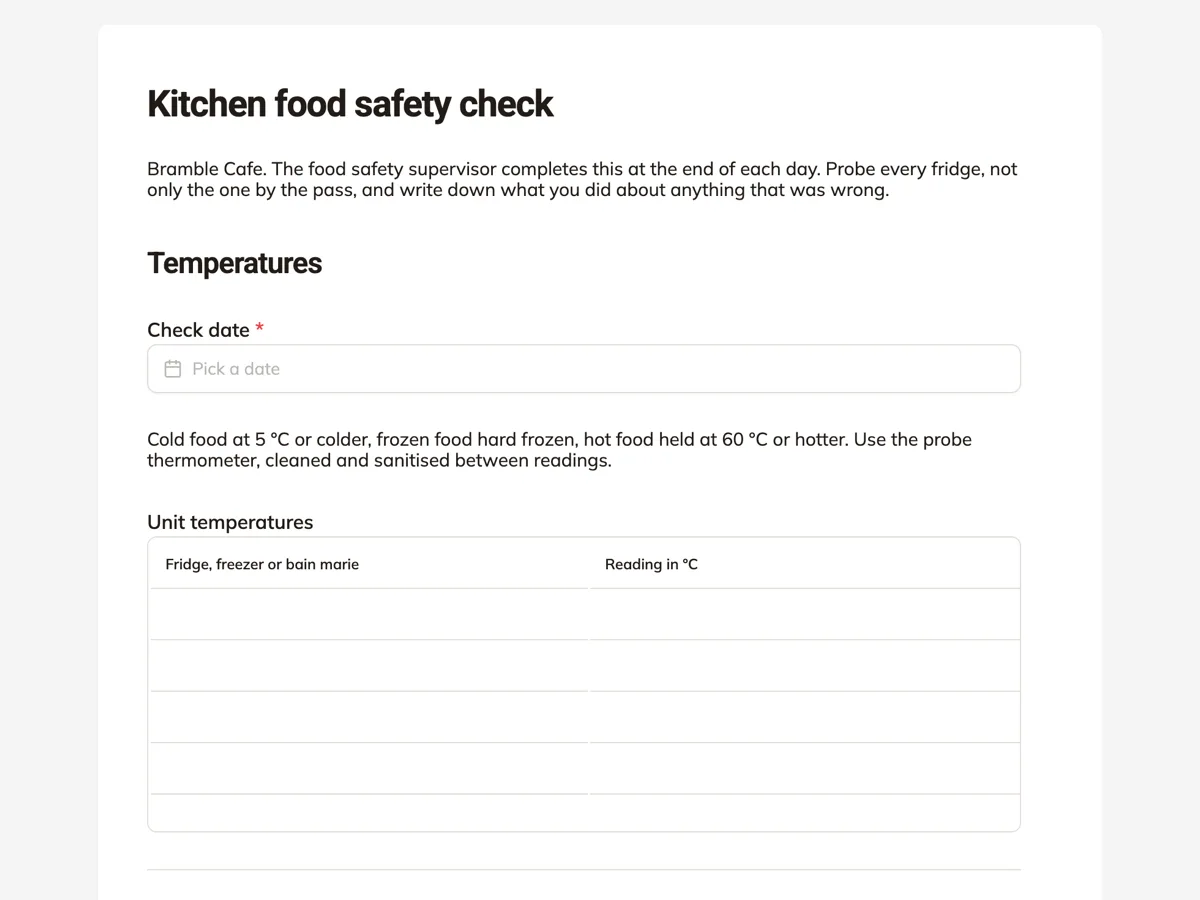
The form itself
A static copy of the finished form, exactly as it renders. Nothing here can be filled in or submitted, so read it as a reference and build your own from the button above.
Every field, and what it collects
The complete field list, in the order respondents meet it.
- Check dateDateRequired
- Unit temperaturesTable
- Columns: Fridge, freezer or bain marie · Reading in °C
- Sixteen point hygiene checkRating gridRequired
- Statements:
- Hand basin stocked with soap and paper towel
- Staff hands washed between tasks
- Hair tied back and clean aprons
- No staff working while unwell
- Raw and ready to eat food kept apart
- Food covered and labelled with dates
- Nothing past its use by date
- Thermometer calibrated this month
- Benches cleaned and sanitised
- Cutting boards colour coded and clean
- Dishwasher reaching sanitising temperature
- Floors and drains clean
- Bins lidded and emptied
- Chemicals stored away from food
- Allergen matrix up to date
- Deliveries checked on arrival
- Any sign of pests?Single choiceRequired
- Options: None seen · Yes, see actions
- Cleaning done todayMultiple choice
- Options: Ovens and grill · Fryer oil filtered · Rangehood filters · Cool room shelves · Coffee machine and grinder
- Corrective actionsLong textRequired
- Food safety supervisorSignatureRequired
Temperatures
Hygiene
What each field on this form collects
The check date comes first, then a paragraph with the temperature limits and a five row table for each fridge, freezer or bain marie and its reading. The hygiene grid has sixteen rows answered Yes, No or N/A, covering hands and staff, storage and dates, cleaning and sanitising, chemicals, allergens and deliveries. A single choice records pests, a checklist records the cleaning done, a required long text holds corrective actions and the food safety supervisor signs.
Temperatures, written down
Food Standards Australia New Zealand sets out that potentially hazardous food must be kept at 5 °C or colder or at 60 °C or hotter, and its guidance on keeping food at the right temperature and on thermometers explains how to check. A daily record of actual readings shows a fridge drifting before it fails. The table has five rows for the units in a small cafe kitchen, and its readings are numbers rather than ticks, because a fridge at 7 °C is a problem that a tick hides.
Corrective action is required
The corrective actions box is the only required free text on the form, because a record that shows a problem with no response is worse than no record. Under the food safety standards that apply to cafes and restaurants, food businesses must have a food safety supervisor, trained food handlers and, for many businesses, evidence of key controls such as temperatures and cleaning. The placeholder shows the pattern: what was wrong, what was done with the food and what was done about the cause.
How to adapt this form
A bakery adds proving cabinet temperatures and flour storage. A food truck adds water tank checks and generator temperatures for the fridge. A childcare kitchen adds a row confirming each child's allergy list was checked against the day's menu. A catering business adds the event, the time food left the kitchen and its temperature on arrival.
What makes this form work
Readings, not ticks
Each unit gets a number in degrees. A fridge creeping from 3 to 5 to 7 °C over a week is visible in the export long before it fails a council inspection.
Action is mandatory
Corrective actions is required, with an example that shows what was done with the food and the cause. Every No in the grid has an answer on the same record.
Allergens on the list
Allergen matrix up to date is one of the sixteen rows. Allergen information is part of food safety in a cafe, and a daily row keeps the matrix current when the menu changes.
Questions people ask
What temperature should a fridge be in a food business?
Potentially hazardous food must be kept at 5 °C or colder, and hot food at 60 °C or hotter, under the Food Standards Code. Freezers should keep food hard frozen. Check with a calibrated probe thermometer and record the readings, as this form does.
How often should a food safety checklist be done?
Daily is common for temperatures and cleaning, with some checks done at each delivery or each batch. Your council and the food safety standards for your business type set what records you need. Daily records make inspections easier and show a pattern when a fridge or a cleaning task starts slipping.
Does a cafe need a food safety supervisor?
Under the national food safety standards that apply to cafes, restaurants and caterers, most of these businesses must appoint a certified food safety supervisor and make sure food handlers are trained. Your state or council explains the details and certification.
What records will a council inspector want to see?
Often temperature records, cleaning schedules, pest control reports, staff training and supplier details, depending on the business category. Keeping them in one place helps. The responses table and its CSV export give a dated list of daily checks that can be printed for the visit.
What should happen when a fridge is too warm?
Move food to a working unit, check how long it may have been warm, and throw out potentially hazardous food that cannot be shown to be safe under the 2 hour and 4 hour rule. Then fix the unit. Record each step in the corrective actions box.
Can several staff complete the checklist?
Yes, but one person, usually the food safety supervisor, should sign off the day. Staff can take readings during the shift and the supervisor submits the form at close. The signature shows who took responsibility for the day's record.
Build your own in about a minute
The button below opens the generator with this use case already described. Change the wording to match your own, generate, then edit anything you like.
Make one like thisOther form examples
First aid record form for a school sick bay
A first aid record form notes who was treated, when, for what, the treatment and supplies used, and what happened next. This primary school version also records when a parent or carer was contacted, which is the question most often asked the next morning.
Site safety inspection checklist by area
A site safety inspection checklist walks the whole site by area, from the entry and fencing to traffic, excavations, plant zones, heights, electrics, chemicals, amenities, first aid and services, and turns every problem into an action with an owner. This civil contractor version rates each area and records an overall condition.
Daily site diary form for a construction site
A site diary form is the supervisor's daily record of weather, who was on site, what plant worked, what got done, what held work up and who visited. Written the same day, it becomes the evidence behind variations and delay claims, so this civil version asks for facts and times.
Want the steps in the builder? Read Tables and matrix fields, then Show the records to an inspector. For everything this generator can do, see the form maker.
Written and checked by the OneCraft team. Last checked .