Posters templates
Landscape research poster templates
Most conference boards are wider than they are tall, and a portrait poster pinned to one reads as a column of wasted space either side. Twenty of the 40 poster boards are drawn for A0 Landscape, 2340 by 1656 pixels on the canvas, and each one is a layout in its own right rather than a rotated portrait board.
20 designs
What these designs are for
Choose a landscape board when the conference gives you a wide panel, or when the study reads left to right: background, method, results, conclusion. Wide boards suit a horizontal timeline, a five step method band or a single large figure with the text beside it, all of which have to be stacked awkwardly on a portrait sheet. Each card is the board rendered by the gallery with its own sample study in it, so the titles, authors and results inside a card are placeholder text rather than a real trial.
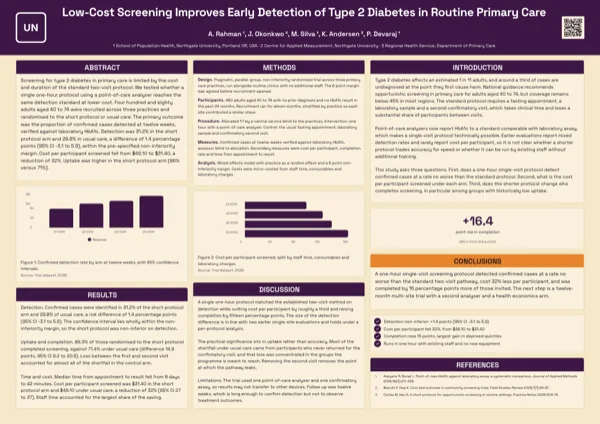
Wide Asymmetric Columns
Two unequal zones: a wide evidence area with the abstract, two figures and the results, and a narrow commentary column.
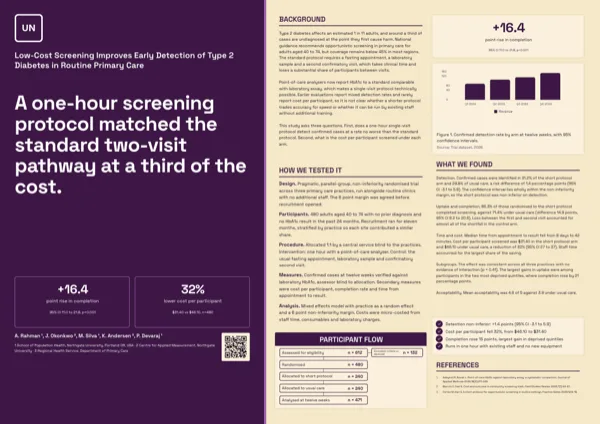
Wide Billboard
The headline finding fills a coloured panel on the left, with the supporting evidence in two ruled columns.
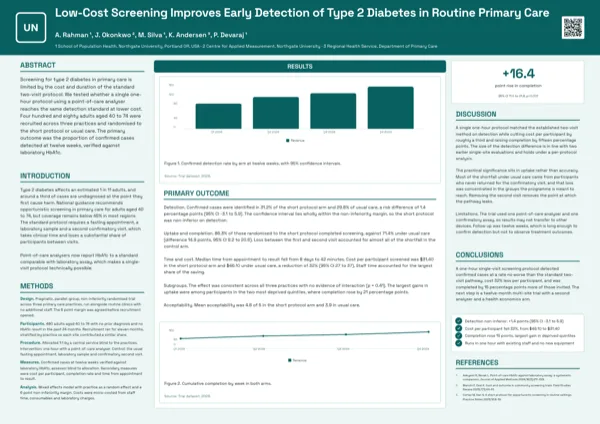
Wide Centre Stage
One large results panel sits in the middle with ruled columns either side.
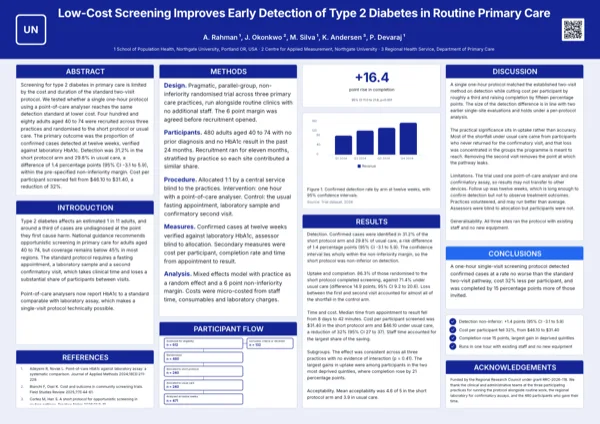
Wide Classic Four Column
The four column landscape board most large conferences expect, with a title band and a linked author block.
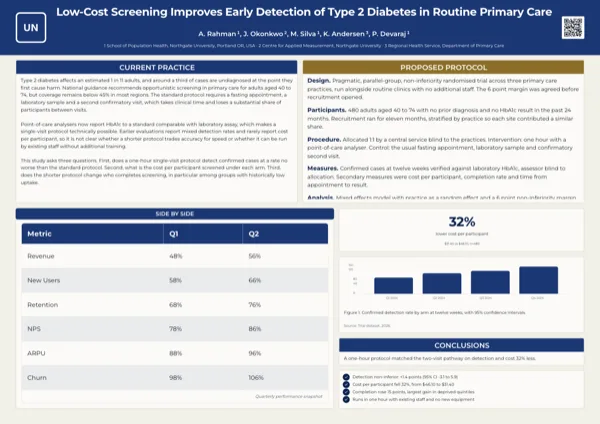
Wide Comparison Board
Current practice on the left, the proposed method on the right, then a side by side table and a results chart.
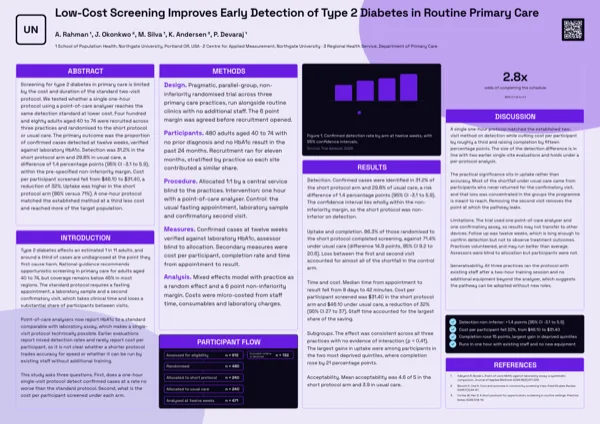
Wide Dark Showcase
Dark board with outlined panels and a bright accent, for industry showcases and demo days.
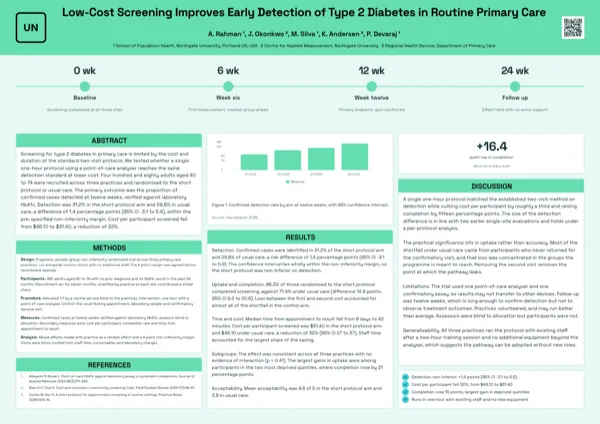
Wide Findings Timeline
A horizontal timeline of measurement points runs across the top, then three columns of detail.
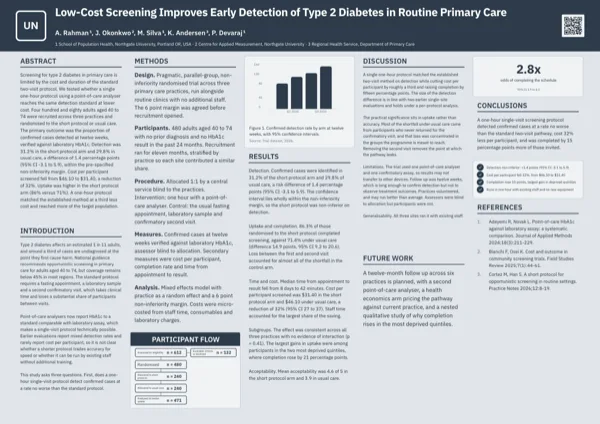
Wide Five Column Broadsheet
Newspaper style board with five narrow ruled columns and no cards, for reviews and long method sections.
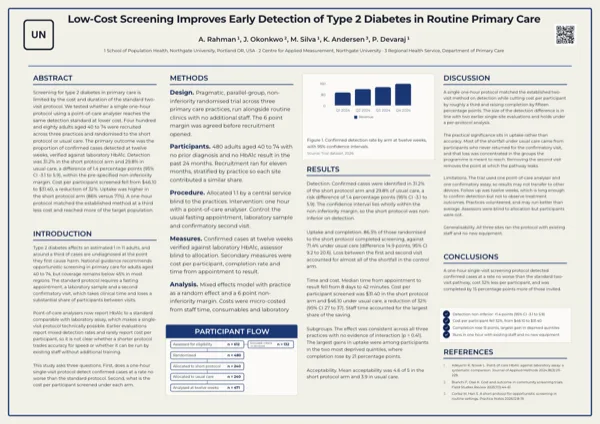
Wide Framed Classic
Formal board inside a thin printed frame with a centred crest and four ruled columns.
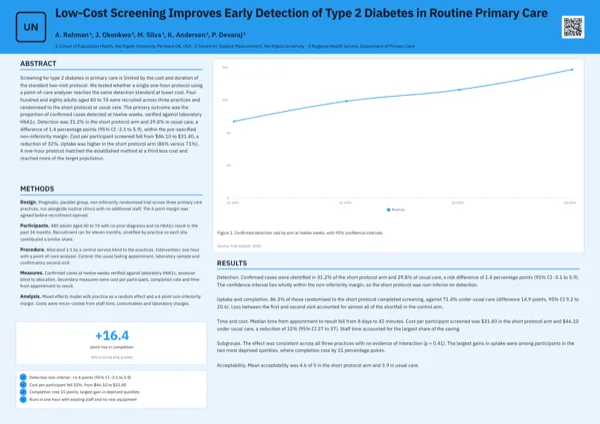
Wide Hero Figure
A narrow text column on the left and one large chart filling the right with its read out underneath.
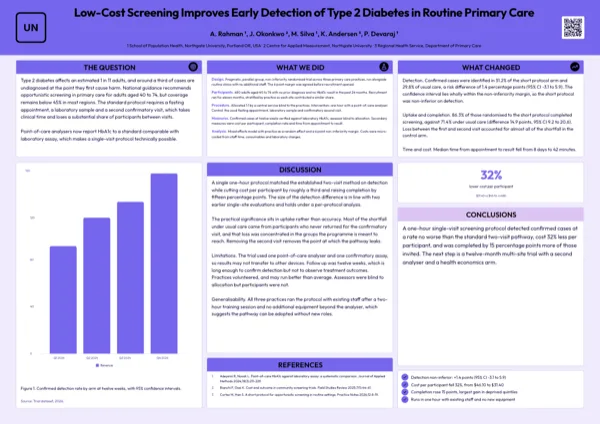
Wide Icon Key Points
Three icon marked cards answer the question, the method and the change, then the detailed results follow.
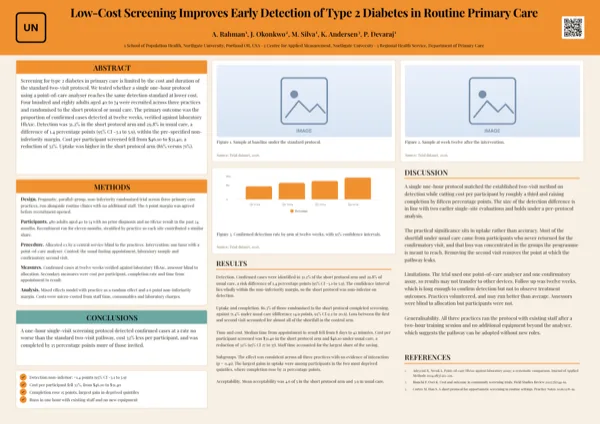
Wide Image Mosaic
A narrow text column on the left and numbered figures filling the right, with results underneath.
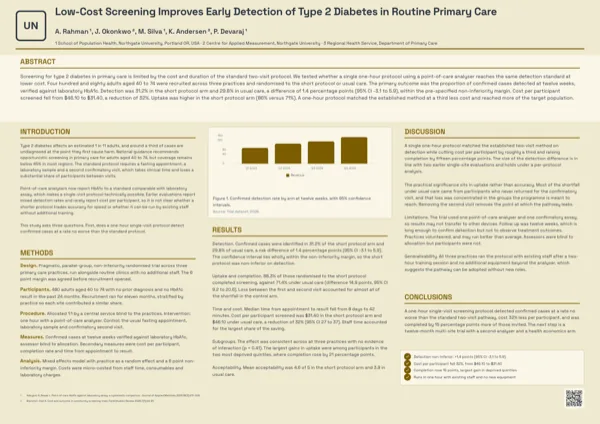
Wide Journal Style
Laid out as a journal spread: a masthead, a full width abstract band and three ruled columns with figures in place.
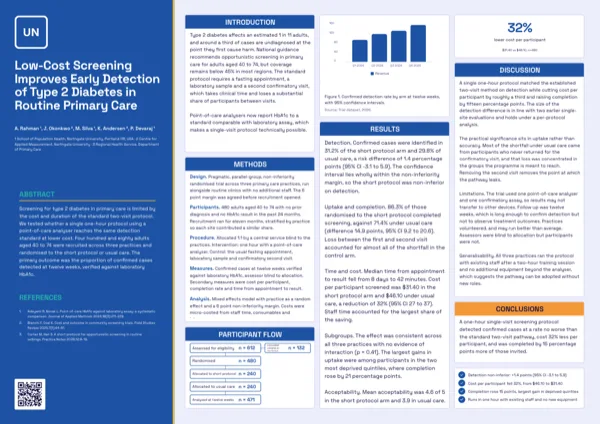
Wide Left Title Panel
A full height coloured panel on the left carries the title, authors, abstract, references and QR code.
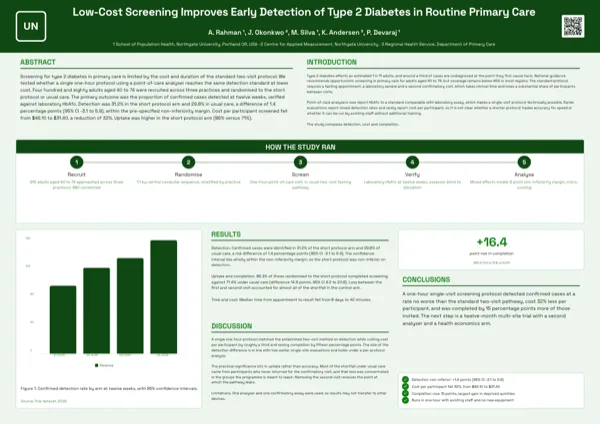
Wide Process Flow
A five step process band runs across the middle, background above it and results below.
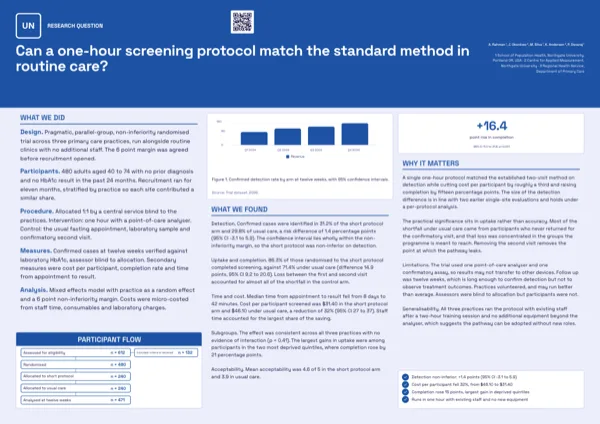
Wide Question Led
Opens with the research question as the headline and answers it in plain language across three columns.
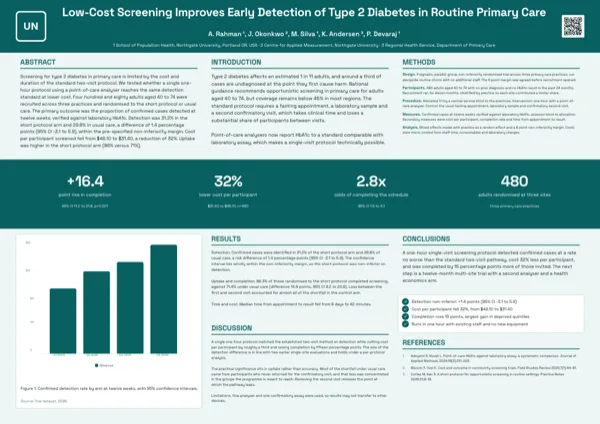
Wide Stat Ribbon
A full width ribbon of headline numbers runs across the middle so the result reads from across the hall.
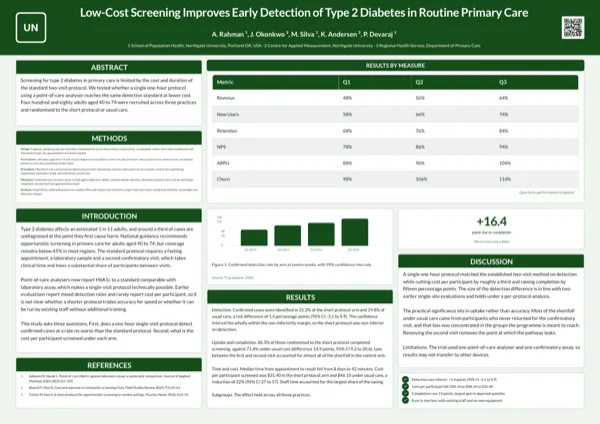
Wide Table Led
The numbers sit in a large results table with supporting text columns around it.
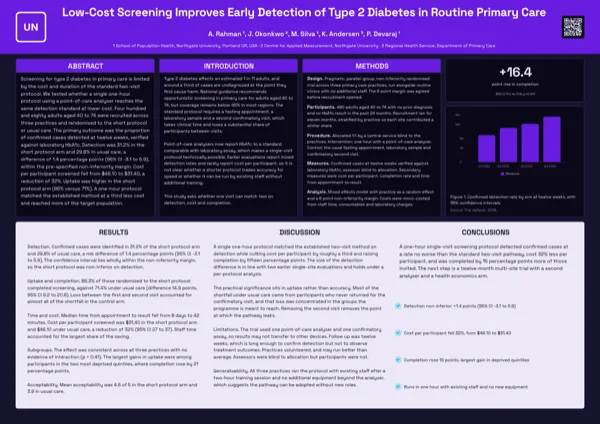
Wide Two Row Board
Four equal blocks across the top from abstract to first figure, then a dark band holding results and discussion.
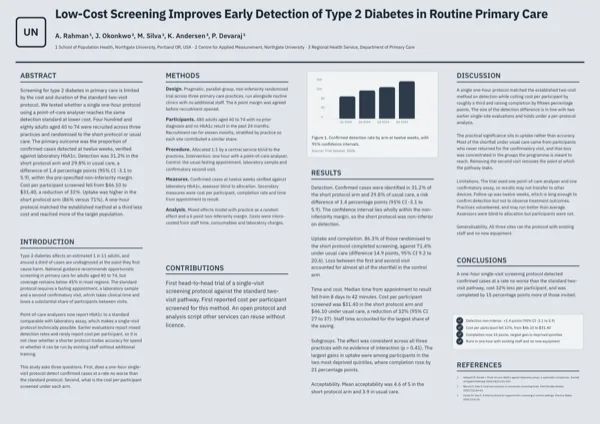
Wide Typographic Minimal
A quiet board with hairline rules and wide gutters, four columns of long form text and one chart.
What these layouts have in common
All twenty carry the same spine: a logo slot, a title, an author block, section slots for the written parts and at least one figure block. Nineteen carry a QR slot and nineteen a protocol block, sixteen carry a stat block and fifteen a reference block, so the practical furniture of a conference poster is present on nearly every board. Seven carry a CONSORT flow for participant accounting, two carry a table and one a process chain. Section slots run from two to six per board, which is the real difference between them: a broadsheet holds six written sections, a billboard holds two.
Which one to pick
Start with the shape of the evidence. One decisive chart takes the hero figure or centre stage board, where the figure occupies the middle and the text is trimmed to fit around it. A series of measurements over time takes the findings timeline, which runs the points across the top. A protocol with steps takes the process flow board, whose step band crosses the middle. A comparison of two approaches takes the comparison board with its side by side table. If the study is long and textual, the broadsheet or the typographic board give you five or four ruled columns without cards, which holds far more words than a card grid.
What conferences usually require
Published poster size lists are consistent: printers offer A0 and A1 alongside the American 36 by 48 inch and 42 by 60 inch boards and metric sizes such as 70 by 100 and 100 by 140 centimetres. A0 is 841 by 1189 millimetres, so a landscape A0 board is 1189 wide by 841 tall. University poster guides add the rule that matters more than the size: important information should be readable from about three metres away, and the whole board should sit at roughly 300 to 800 words. Both are worth checking against your own conference instructions, which usually name the panel size and whether it is portrait or landscape.
Printing at A0
The working canvas is 2340 by 1656 pixels at 50 DPI, which keeps a board that size editable in a browser, and the export captures at twice that, so a landscape A0 poster downloads at 4680 by 3312 pixels. Printed at full A0 that is about 100 pixels per inch, which is normal for a poster read at arm's length or further, and it is not what you would send for a magazine page. PDF exports every page as a bitmap, so the text is not selectable, and there is no bleed, no crop marks and no CMYK anywhere in the poster code.
Finished examples
Questions people ask
How many landscape poster templates are there?
Twenty, which is every board drawn for A0 Landscape. The other twenty boards in the library are drawn for A0 Portrait, and the two sets are separate layouts rather than the same design rotated.
What size does a landscape poster export at?
A0 Landscape is 2340 by 1656 pixels on the canvas at 50 DPI, and the export captures at twice the canvas, so the file is 4680 by 3312 pixels. At full A0 that is roughly 100 pixels per inch, which suits a board read from a metre away.
Can I put a photograph on a landscape board?
Two of the twenty carry an image figure rather than a chart figure, and the wide image mosaic in particular is built for photographs. Be aware that the image figures on the wide image mosaic have no upload control and are skipped by image generation, so they cannot be filled.
Is the poster text selectable in the PDF?
No. The export renders the board in a headless browser and places the page into the PDF as a bitmap, so a reviewer cannot select or search the text. Keep your abstract in a document if it has to be copied.
How much does a poster cost to generate?
A poster generation bills at twice the credit cost of a flyer, because the board carries far more slots to fill. Editing, restyling and exporting afterwards do not cost more, and re-exporting the same saved version returns the file already rendered.
Can I start a blank landscape poster?
A blank page is always A4 portrait, so there is no blank board at poster size. Start from one of the twenty layouts and empty the slots you do not need instead.
Start a poster from a description
The button opens the generator with a starting description already filled in. Change it to match your own before you run it.
Create a poster with OneCraftFor everything the generator can do, see the poster maker.
Other poster examples sets
Written and checked by the OneCraft team. Last checked .