Contract clause
Fair wear and tear clause in a UK tenancy
A fair wear and tear clause stops a landlord charging a tenant for the normal deterioration of a property and its contents from ordinary, reasonable use over time. The tenant must return the property in the condition it was let in, except for that fair wear and tear, and pays only for damage beyond it.
Every flat looks a little more lived in after a year. The fair wear and tear exception separates that ordinary ageing, which the landlord absorbs, from damage, which the tenant pays for, and it is the source of most deposit disputes in the UK.
Indunil Asanka · Co-founder
4 min read · Published
Sample clause
Written for a residential tenancy of Ancoats Loft, a fictional furnished one bedroom flat in Manchester, let to a professional couple.
Condition at the End of the Tenancy. (a) At the end of the tenancy the Tenant must return the Property and its contents in the same condition and state of cleanliness as recorded in the Check In Inventory, except for fair wear and tear. (b) Fair wear and tear means deterioration caused by the ordinary and reasonable use of the Property and contents over the period of the tenancy, taking into account their age and condition at the start, the length of the tenancy and the number of occupants. (c) Examples of fair wear and tear include light scuffs to paintwork, slight fading of curtains from sunlight, and flattening of carpet pile in walkways. Examples of damage include burns, large stains, broken fittings and holes in walls beyond those for picture hooks the Landlord allowed. (d) Any deduction from the deposit for damage must reflect the age and remaining useful life of the item, and the Landlord must provide evidence.
Sample wording, not legal advice.
Variants
Residential tenancy in England
Lets of houses and flats, where the deposit is protected in a government approved scheme.
The Tenant will keep the Property in good and clean condition and will return it at the end of the tenancy in the condition shown in the Inventory, fair wear and tear excepted. The Landlord may claim from the deposit only for damage, cleaning and missing items beyond fair wear and tear.
Commercial repair covenant with the exception
Commercial leases where the tenant takes on repair but not the effects of age.
The Tenant must keep the Premises in good and substantial repair and condition, fair wear and tear excepted, and must yield them up at the end of the Term in that condition.
Furnished lets
Furnished properties, where furniture and appliances wear out over a known life.
The Tenant is responsible for damage to furniture and appliances listed in the Inventory beyond fair wear and tear. In assessing any charge, the parties will take into account the age of the item at the start of the tenancy and a reasonable expected life for an item of that type.
What to negotiate
Inventory quality
A fair wear and tear dispute is decided almost entirely on evidence of the condition at the start. A detailed check in inventory with dated photographs, signed by both sides, is the landlord's best protection and the tenant's too. Tenants should check the inventory carefully when they move in and report anything missing or already damaged in writing within the time allowed.
Age of items
A carpet that was five years old at the start of a tenancy and had an expected life of ten is half worn already. If it is damaged, the tenant should pay at most a proportion of the replacement cost reflecting the remaining life, not the full price of a new carpet. Deposit schemes apply this kind of apportionment in their decisions, so the clause should expect it.
Deduction evidence
The landlord must show both that the damage happened and what it reasonably costs to put right: check in and check out reports, photographs, quotes or invoices. Tenants disputing a deduction should ask for that evidence and can use the free dispute resolution service of the deposit protection scheme.
The risk of leaving it out
Fair wear and tear is generally excepted even where a tenancy does not mention it, but a clause that leaves it out, or that demands the property be returned in perfect condition, invites disputes and is likely to be applied by deposit schemes as if the exception were there. A clear clause with examples saves both sides an argument at the end.
Wear and tear against damage
Wear and tear: light scuffs on walls, minor marks from furniture, slightly worn carpet in busy areas, faded curtains, loose door handles from normal use, small nail holes where pictures were allowed. Damage: burns or large stains on carpet, holes in walls, broken windows or tiles, pet damage, scratched work surfaces from cutting without a board, missing items. Cleaning is separate: a tenant is usually expected to leave the property as clean as at the start, and cleaning charges are among the most common deductions. Law checked on 21 October 2026. This page explains how the clause works and is not legal advice.
How the deposit schemes approach it
In England and Wales, a landlord must protect a tenancy deposit in a government approved scheme within 30 days of receiving it, and must return it within 10 days of agreeing the amount with the tenant. The schemes, such as the Deposit Protection Service, mydeposits and the Tenancy Deposit Scheme, offer free dispute resolution. Their adjudicators look at the inventory evidence, the length of the tenancy, the number of occupants, and the age and expected life of items, and award only a fair proportion of the cost of putting right damage beyond wear and tear.
Redecoration
Painting is a common dispute. Walls in a rented home are expected to need repainting every few years anyway, so a landlord usually cannot charge a tenant for redecorating at the end of an ordinary tenancy. Where the tenant caused specific damage, such as marks needing repainting of one wall after a short tenancy, a proportion of the cost may be fair. Tenants who want to repaint during the tenancy should get written permission first.
Writing the clause
Refer to the inventory, define fair wear and tear in plain terms, give a few examples on each side, and say how the age of items is taken into account. Keep any list of examples as guidance rather than an exhaustive definition. A tenancy agreement generated with the AI document generator can attach the inventory as a schedule, so the condition at the start sits next to the clause that relies on it.
Documents that carry this clause
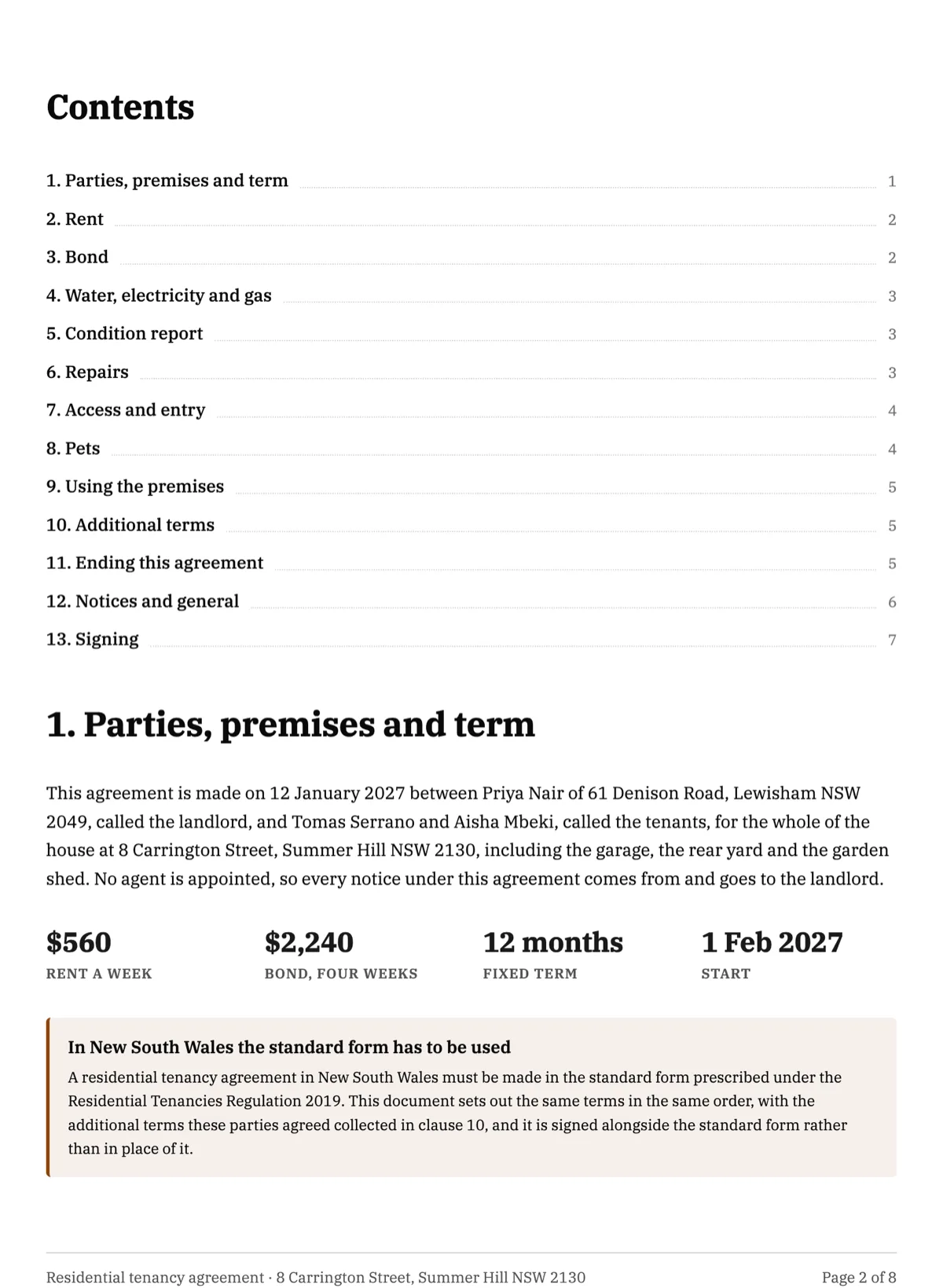 Residential lease agreement template for a New South Wales fixed termA residential tenancy is the one agreement where most of the terms are set by statute rather than by the parties, so the useful part of a template is the additional terms and the numbers. This one is a 12 month New South Wales fixed term at $560 a week, with the bond, the entry notice periods and the break fee written out exactly as the Act sets them.
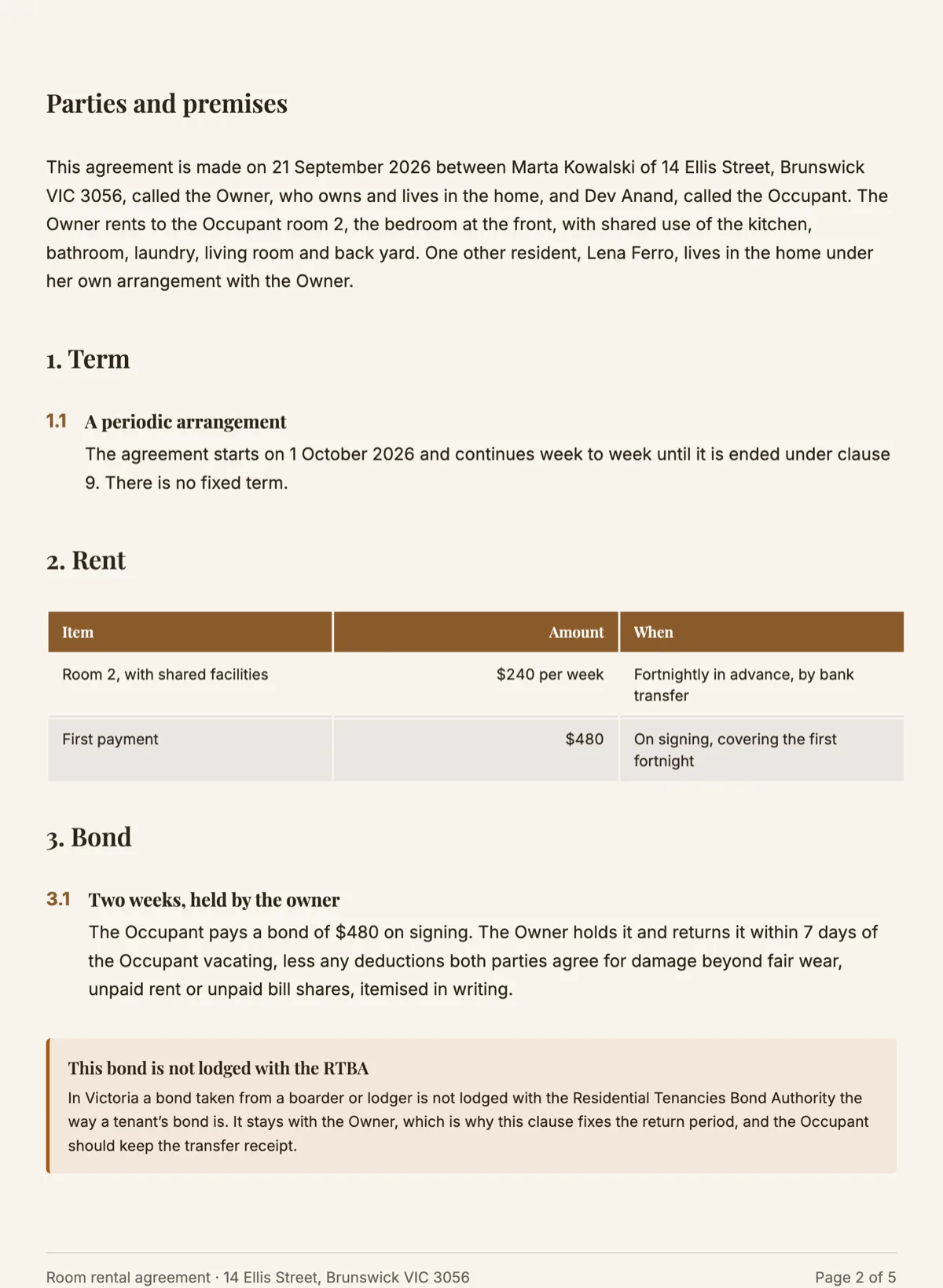 Room rental agreement template for one room in a shared homeRenting a room is not the same as renting a house, and most templates copy a residential lease and hope. This one is written for one room with shared kitchen and bathroom, prices the bills split, lists the rules that matter, and says plainly that the occupant is a boarder or lodger and what that changes.
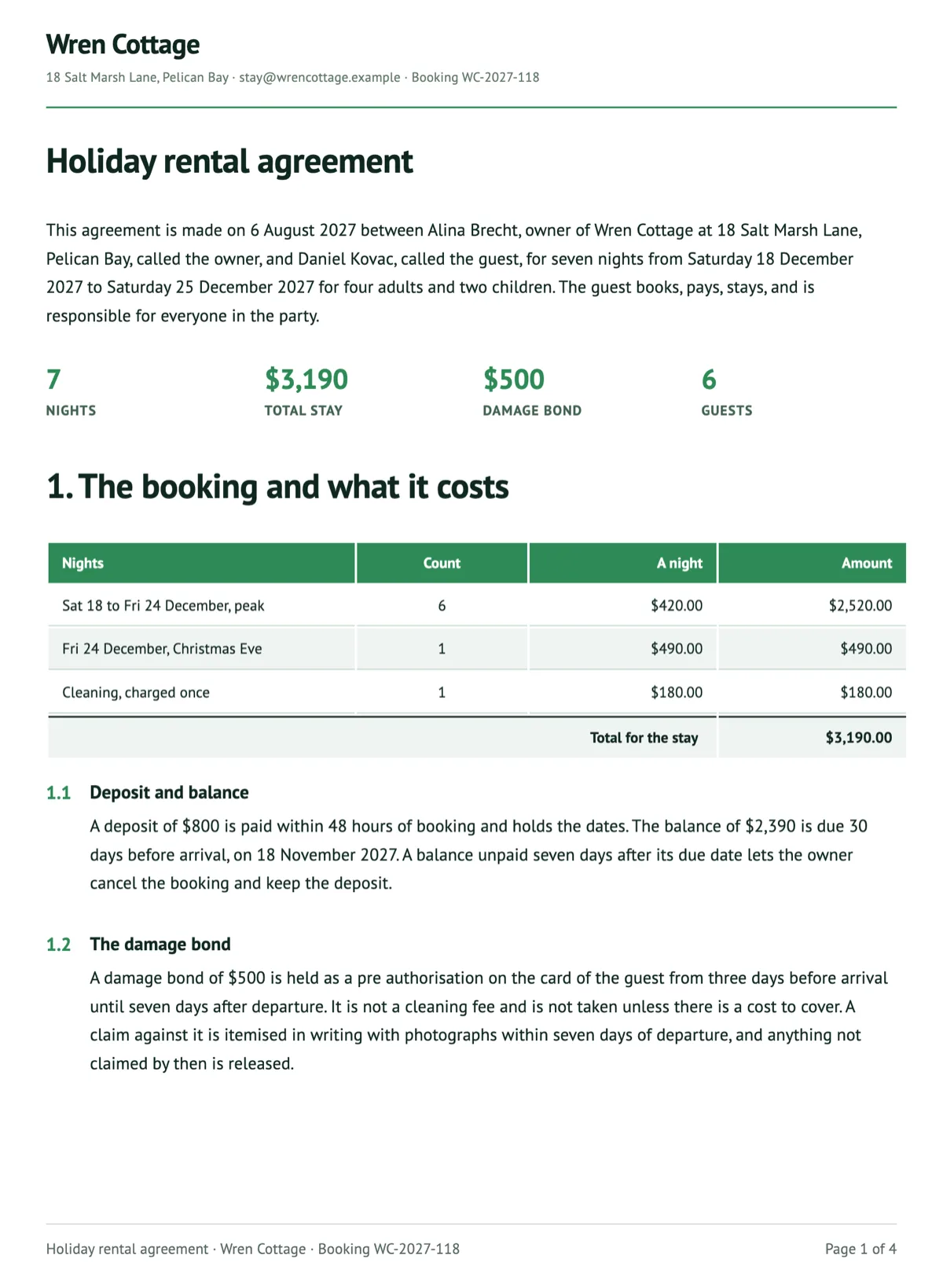 Holiday rental agreement template with house rules and a damage bondA short stay booking is a contract that lasts a week and is argued about for a month afterwards. This agreement prices the seven nights line by line, sets the damage bond as a pre authorisation with a seven day claim window, and puts the house rules where the guest signs rather than on a laminated card in the kitchen.
Questions people ask
What counts as fair wear and tear?
The deterioration that comes from ordinary, reasonable use over time: light scuffs, slight carpet wear in walkways, faded curtains, small marks from furniture. It takes account of how long the tenancy lasted, how many people lived there and how old things were at the start. Damage from accidents or misuse is not wear and tear.
Can a landlord charge for repainting?
Usually not for routine redecoration at the end of a normal tenancy, because paint wears out over time anyway. A landlord may charge a fair proportion for specific damage, such as large marks or unauthorised colours, taking into account how old the paintwork was. Deposit schemes rarely award the full cost of repainting.
How is the age of carpet taken into account?
By estimating its expected life and how much was left. If a carpet expected to last ten years was six years old at the start and is damaged, the tenant might pay around four tenths of a reasonable replacement cost, not the full price. Deposit scheme adjudicators apply this kind of apportionment.
What if there was no check in inventory?
Then the landlord will find it hard to prove the property was in better condition at the start, and deposit schemes often decide disputes against a landlord without evidence. Tenants should still take their own dated photographs when moving in and moving out, in case the landlord's records are incomplete.
How do I dispute a deposit deduction?
Ask the landlord for the evidence, such as check in and check out reports, photographs and quotes. If you cannot agree, use the free dispute resolution service of the scheme protecting your deposit. The disputed amount stays protected until the adjudicator decides.
Put the clause in a finished document
The button opens the document generator with a starting description already filled in. Change it to match your own agreement before you run it.
Create a document with OneCraftRelated clauses
- Repairs and maintenance clause: who fixes what in a leaseA repairs and maintenance clause splits who fixes what in a lease. Victorian retail sample wording, residential urgent repairs rules and a tenant heavy variant.
- Make good clause: what a tenant leaves behindA make good clause sets the condition a tenant leaves the premises in at the end of a lease. Victorian retail sample wording, scope checklist and variants.
- Bond clause in a lease: amount, lodgement and returnA bond clause in a lease sets the security amount, where it is held and when it comes back. Victorian sample wording, NSW and retail lease variants.
For everything the document generator can do, see the document maker.
Step by step in the builder: Create a document with AI, then Document builder components.
Written and checked by the OneCraft team. Last checked .