Contract clause
Postponement clause: moving an event date
A postponement clause lets a client or supplier move a booked date, such as an event, shoot or speaking engagement, instead of cancelling it. It sets how much notice is needed, how many times the date can move and within what period, how payments already made carry across, and what happens if no new date suits.
A postponement clause keeps a booking alive when the date has to change. It usually lets the client move once to a new date within a year, carries the deposit across, and says what happens if the supplier is not free on the new date. It sits beside the cancellation clause and should be read with it.
Indunil Asanka · Co-founder
3 min read · Published
Sample clause
Written for videography contract between Larkspur Films, a fictional wedding videographer, and a couple marrying in the Hunter Valley.
Postponement. (a) The Clients may postpone the Event once, by written notice, to a new date within 12 months of the original date. (b) If notice is given more than 60 days before the original date, all payments carry across to the new date at no extra cost. (c) If notice is given within 60 days, payments carry across and a rebooking fee of $300 is payable. (d) If the Videographer is not available on the new date, it will offer up to three alternative dates. If none suits, the postponement is treated as a cancellation by the Clients on the date notice was given. (e) The fee for the new date is the fee in this contract, unless the new date is more than 12 months away, when the Videographer's current rates apply to any balance. (f) If an event beyond either party's control prevents the Event, either party may postpone it under this clause without any fee.
Sample wording, not legal advice.
Variants
Postponement by the organiser
A speaker or performer booked for an event, where the organiser may need to move the date.
If the Organiser postpones the event within 60 days of the date, the full fee is payable and non refundable travel is reimbursed. A postponement within six months moves this agreement to the new date if the Speaker is available.
Sponsorship deliverables
A sponsor whose benefits depend on an event happening on a date, where the organiser must deliver them later or refund part.
If the Event is postponed, the Organiser will deliver the benefits at the rescheduled Event. If the Sponsor cannot attend the new date, the Organiser refunds the fee pro rata against the benefits it cannot deliver.
Weather postponement
Outdoor events, shoots and installations where severe weather may force a short delay.
If the Bureau of Meteorology issues a severe weather warning for the location on the day, either party may postpone the shoot to the next available date within 14 days, with no fee.
What to negotiate
How many moves and how far
Suppliers usually allow one postponement within a set window, often 12 months, because each move blocks another date. Clients should ask for a reasonable window and for payments to carry across in full. A cap on the number of moves stops a booking drifting indefinitely.
Price on the new date
Prices often rise over a year. The clause should say whether the original price holds for the new date, as the sample does within 12 months, or whether current rates apply. Clients should seek a price freeze for postponements within the window.
When no date works
If the supplier is not free on any date that suits the client, the postponement fails. The clause should say what happens then: usually it is treated as a cancellation on the date notice was given, with the cancellation bands applied, which can matter a great deal for how much is refunded.
The risk of leaving it out
Without a postponement clause, a client who needs to change the date may have to cancel and lose money under the cancellation terms, even though both sides would prefer to keep the booking. A supplier asked to move a date has no clear basis for a rebooking fee or a price change, and disputes over carried payments follow.
Postponement against cancellation
A postponement keeps the contract alive with a new date; a cancellation ends it. Because a postponement still gives the supplier the work, it is usually cheaper for the client, which is why contracts allow it on easier terms. The photography example puts both in one table: more than 90 days' notice moves the booking fee once to a new date within 12 months, with stricter outcomes closer to the date.
Postponement and consumer law
When a supplier, rather than the client, postpones a service, the client's rights under the Australian Consumer Law still apply: services must be supplied within a reasonable time, and a client may be entitled to a refund if they cannot use the service at the new date. Terms in standard form consumer contracts that let only the supplier change dates without remedy can be unfair. Law checked on 21 October 2026. This page explains how the law works and is not legal advice.
Events beyond control
Many contracts now separate postponements caused by events beyond either party's control, such as severe weather or a government order, from postponements the client chooses. The sample waives the fee in that case. The videography example carries everything paid across to a date the videographer is free, and treats equipment failure and force majeure in its own clause.
Where the clause sits in a generated document
Photography, videography, event planning, speaker and sponsorship contracts carry this clause beside cancellation. When asking the AI document generator for one, give the number of moves, the window, the notice bands and fees, the price for the new date and what happens if no new date works.
Documents that carry this clause
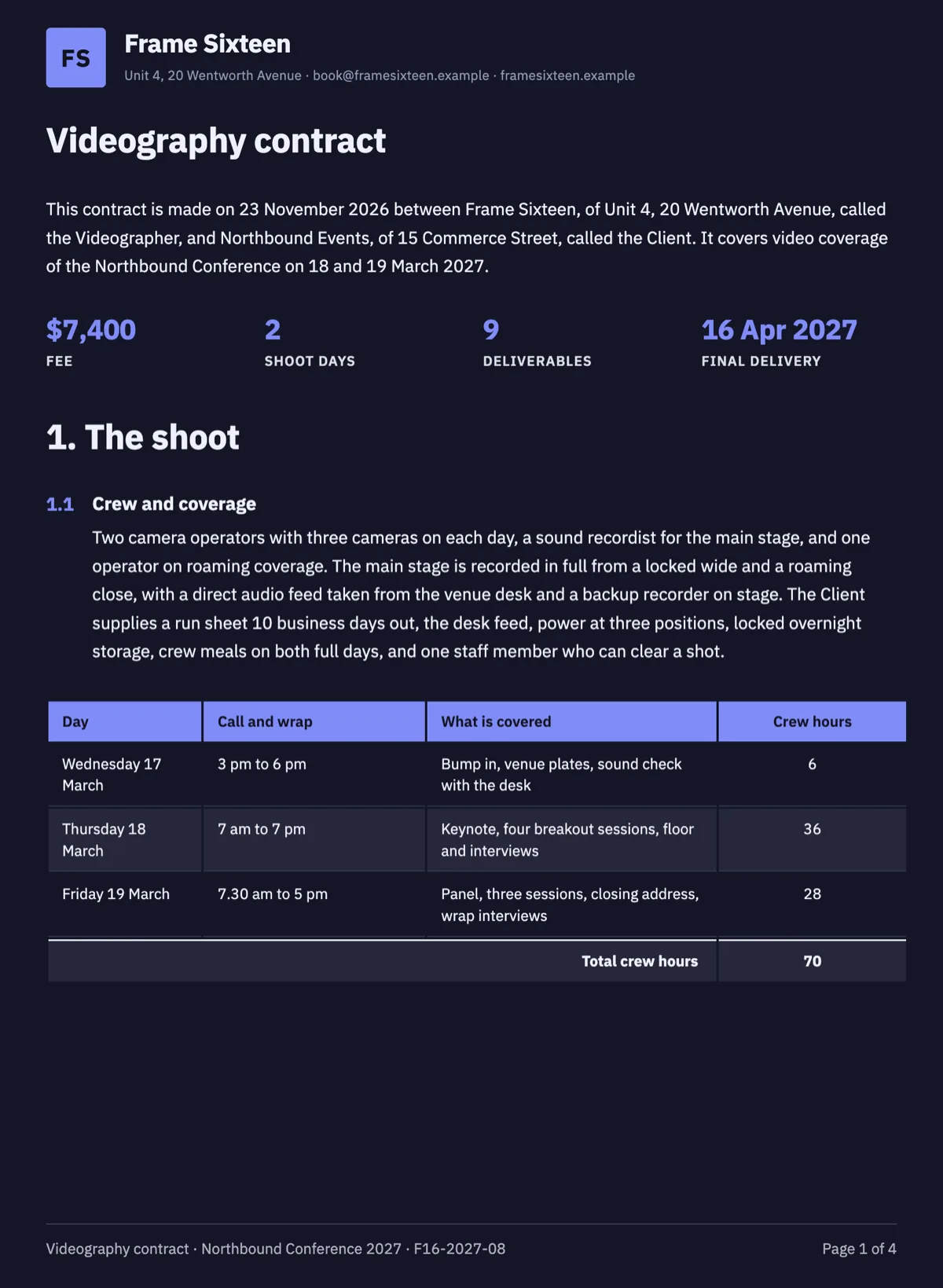 Videography contract template with shoot days and a delivery tableVideo work is quoted in days and judged in files, and the two rarely match up in writing. This contract sets out the crew hours for each shoot day, lists nine deliverables with a length, a format and a date, and answers the two questions clients ask last: who gets the raw footage, and can the music be used in an ad.
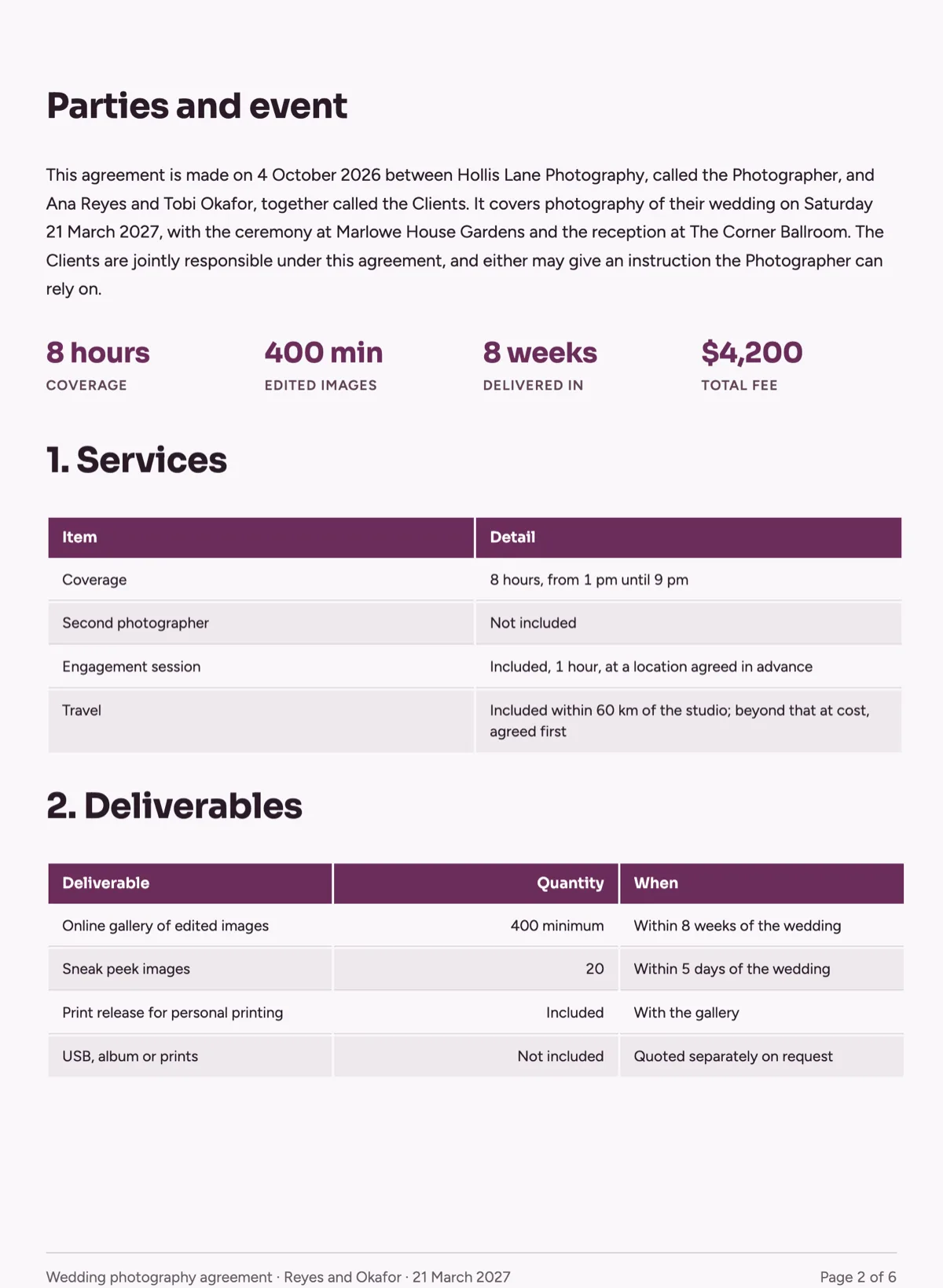 Photography contract template with deliverables you can countA photography contract is mostly a list of numbers: hours, images, weeks, dollars and the date after which the deposit is gone. This one writes every number down, then handles the three things that go wrong with weddings, a postponement, a sick photographer and an argument over who owns the photos.
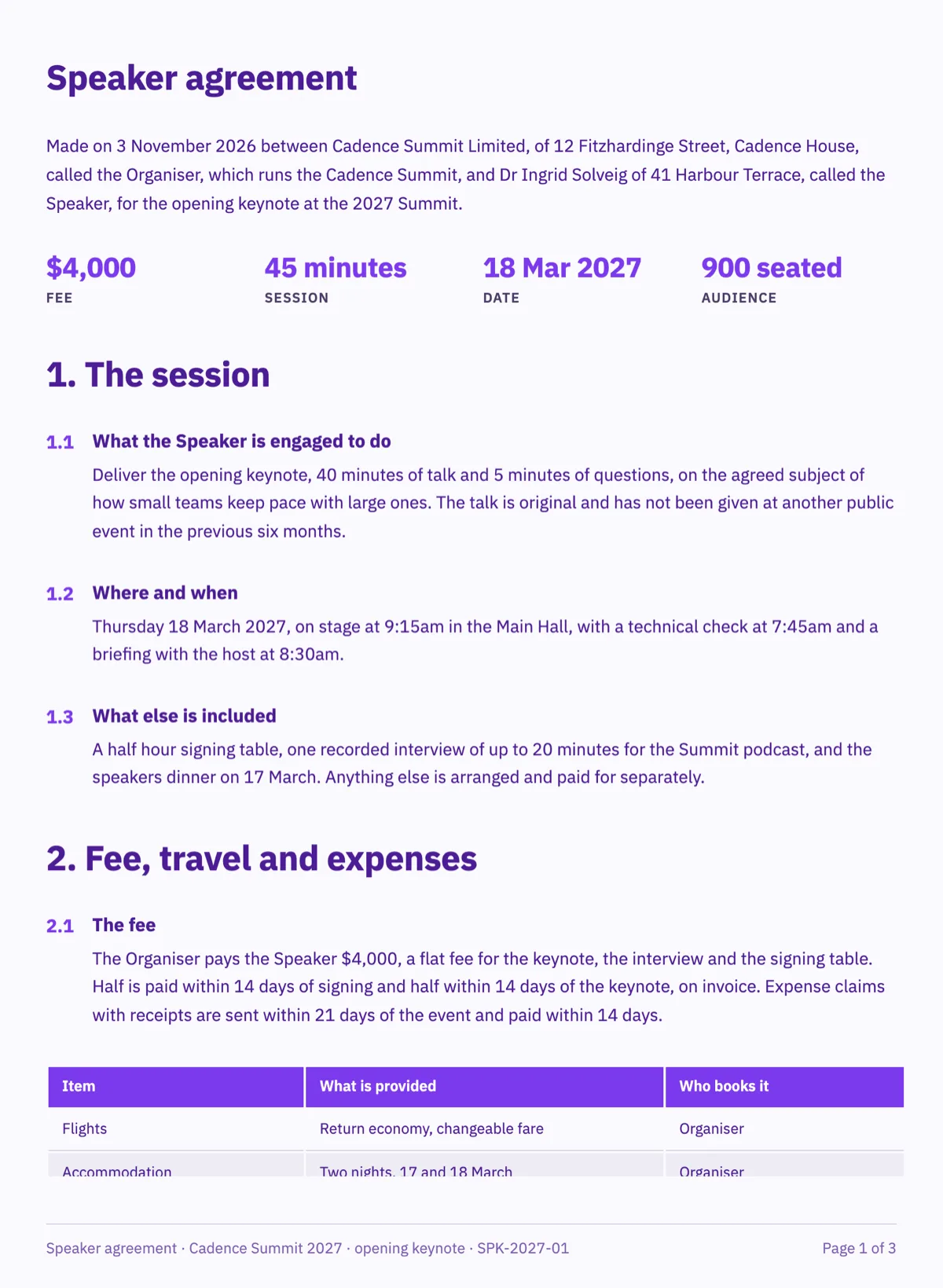 Speaker agreement template covering the fee, travel and the recordingMost speaker agreements fall over on two things nobody wrote down: who books the flight, and what happens to the video afterwards. This three page example answers both, with a table that names the payer for every travel line and a clause that lets the organiser keep clips of up to 90 seconds while copyright in the talk stays with the speaker.
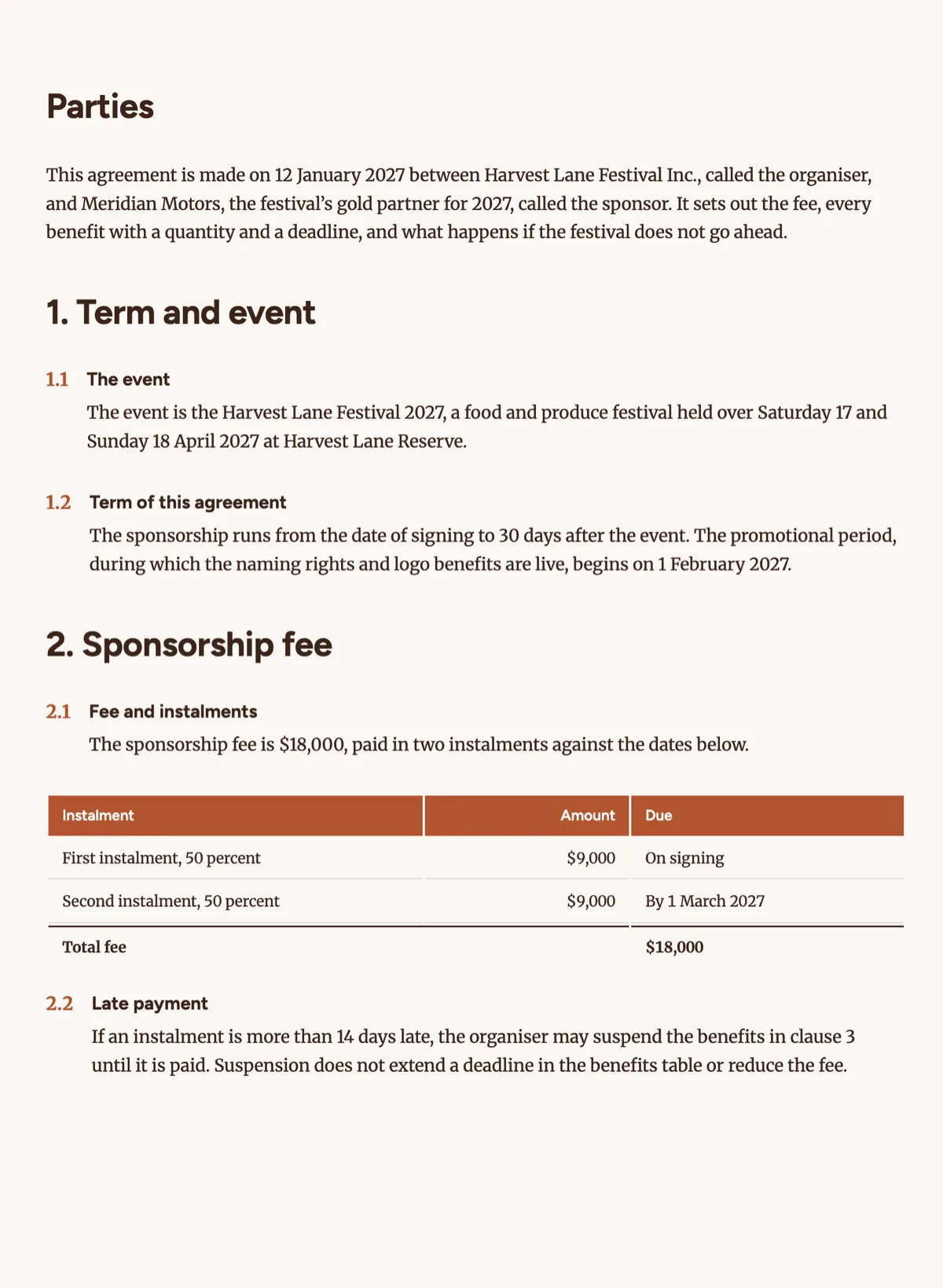 Sponsorship agreement template that lists every benefit with a numberSponsorship falls apart in the delivery, when nobody can find the email that said how many banners and which stage. This agreement is the benefits list as a table with quantities and dates, the $18,000 fee in instalments tied to those dates, and the two clauses sponsors care about most: exclusivity, and what happens if the event does not go ahead.
Questions people ask
What is a postponement clause?
It is a term that lets a booking move to a new date instead of being cancelled. It sets the notice, how many times and how far the date can move, how payments carry across and any fee, and what happens if no new date suits both sides.
Can I postpone instead of cancelling?
If the contract has a postponement clause, yes, within its limits. Without one, moving the date needs the supplier's agreement, and the supplier may treat a request it cannot accommodate as a cancellation under the cancellation terms. Ask early. Put the request in writing.
Do I lose my deposit if I postpone?
Usually not. Most postponement clauses carry payments across to the new date, sometimes with a rebooking fee for late notice. The deposit is lost only if the postponement fails and is treated as a cancellation in a band where the deposit is kept.
Can the supplier postpone my booking?
Only if the contract allows it, or the delay is caused by an event beyond the supplier's control covered by a force majeure clause. If the supplier cannot deliver on the agreed date, the client may have remedies, including a refund, under the contract and consumer law.
Does the price change if the date moves?
It depends on the clause. Many keep the original price for a new date within a set window, often 12 months, and apply current rates beyond it. Without a clause, the supplier may ask for its current rates as a condition of agreeing to the move.
Put the clause in a finished document
The button opens the document generator with a starting description already filled in. Change it to match your own agreement before you run it.
Create a document with OneCraftRelated clauses
- Minimum term clause for services and retainersMinimum term clause sample for services, retainers and subscriptions: the minimum period, ending early, what happens after, and the unfair terms limits.
- Cancellation clause: a booking sample with fee bandsCancellation clause sample for bookings and event services: notice bands, what is refunded or kept, cancellation by the supplier, and the unfair terms limits.
- Force majeure clause: excusing performance when events interveneA force majeure clause excuses performance during events outside either party's control. Sample wording with a sixty day exit, variants and notice duties.
- Deposit clause: what happens to money paid up frontA deposit clause takes money up front and says what happens to it. Australian sample wording, refundable and non refundable variants, and the unfair terms risk.
For everything the document generator can do, see the document maker.
Step by step in the builder: Create a document with AI, then Document builder components.
Written and checked by the OneCraft team. Last checked .