Contract clause
Reserved matters clause: sample for shareholder and joint venture agreements
A reserved matters clause lists decisions that the board or the majority cannot make alone and that need the approval of all shareholders, a special majority or a named investor. It gives minority owners a veto over the decisions that most affect their investment, such as new shares, large borrowings or selling the business.
A reserved matters clause takes certain decisions away from the board or the simple majority and requires everyone, or a set majority, to agree. It is how a minority investor protects itself in a company or joint venture, and the list, the thresholds and what happens on a deadlock decide whether it protects or paralyses.
Indunil Asanka · Co-founder
3 min read · Published
Sample clause
Written for shareholders agreement of Grove Diagnostics Pty Ltd, a fictional imaging clinic owned by two doctors and an investor.
Decisions Reserved to Shareholders. The Company must not do any of the following without the prior written approval of Shareholders holding at least 75 per cent of the Shares, which must include the Investor while it holds 15 per cent or more: (a) issue Shares or options, other than under the employee option plan approved on the Commencement Date; (b) borrow, or give security, above $250,000 in total at any time; (c) buy or sell any asset or business worth more than $150,000, outside the approved budget; (d) approve or materially depart from the annual budget; (e) change the Constitution, the nature of the business or the auditors; (f) enter into any transaction with a Shareholder or its associate; (g) begin any winding up, or sell all or substantially all of the business.
Sample wording, not legal advice.
Variants
Unanimous joint venture matters
A two party joint venture where each participant must agree on every major decision, whatever their percentage.
The following decisions require the written agreement of both Participants, whatever their interests: approving the budget and any change over 10 per cent, entering a contract over $500,000, admitting a new participant, and ending the Venture.
Board and shareholder tiers
A company that wants some decisions approved by a board majority including the investor's director, and others by the shareholders.
The matters in Part A of Schedule 4 require board approval including the Investor Director. The matters in Part B require approval of Shareholders holding at least 75 per cent of the Shares.
Sunset on the veto
An investor whose veto should fall away if its holding is diluted below a set level.
The Investor's consent rights in this clause end on the date the Investor and its affiliates cease to hold at least 10 per cent of the issued Shares.
What to negotiate
Thresholds keep it workable
A reserved matters list without dollar thresholds catches everyday decisions and slows the business. Setting levels, such as borrowing over $250,000 or contracts over $500,000, and excluding items in an approved budget, leaves management to run the business while the shareholders control the big calls.
Who holds the veto
A 75 per cent threshold gives any holder of more than 25 per cent a veto. Naming an investor as a required approver, as the sample does, gives that investor a veto at a lower holding. Founders should check how the threshold interacts with future share issues and dilution.
Deadlock needs a path
A veto on the budget or on further funding can leave the business stuck if the parties disagree. The reserved matters clause should be read with a deadlock clause that escalates the dispute, sends it to mediation and, if needed, triggers a buy out, so a veto does not become a standstill.
The risk of leaving it out
Without a reserved matters clause, a company's major decisions are made by the board, and the shareholders' powers are those in the constitution and the Corporations Act. A minority investor without a board seat could see new shares issued, large debts taken on or the business sold without its agreement, with only the limited protection of oppression remedies.
How reserved matters fit company law
Under the Corporations Act 2001 the business of a company is managed by or under the direction of its directors, subject to the Act and the constitution, and certain decisions, such as changing the constitution, already need a special resolution of 75 per cent of votes cast. A shareholders agreement adds a contractual layer: the shareholders promise to vote, and to procure the company to act, only with the agreed approvals. Many agreements also make the company a party so it is bound directly. Law checked on 21 October 2026. This page explains how the law works and is not legal advice.
What usually goes on the list
Common reserved matters are issuing shares, changing the constitution, borrowing or giving security above a threshold, large acquisitions and disposals, the annual budget and business plan, related party transactions, appointing or removing the chief executive, dividends, starting litigation above a threshold, and winding up or selling the business. The Grove Diagnostics example sets out decisions reserved to shareholders after its board clause.
Joint ventures
In a two party joint venture, reserved matters often need both participants, whatever their percentages, because each has committed people and money to one project. The joint venture example gives its management committee a simple majority for ordinary decisions, with no casting vote, and lists the matters needing both participants' written agreement, so a 55 per cent participant cannot run the venture alone on the big questions.
Where the clause sits in a generated document
Shareholders agreements, joint venture agreements and partnership agreements carry this clause after the board or committee clause. When asking the AI document generator for one, list the matters, the approval threshold, any investor consent, the dollar levels and the link to the deadlock clause.
Documents that carry this clause
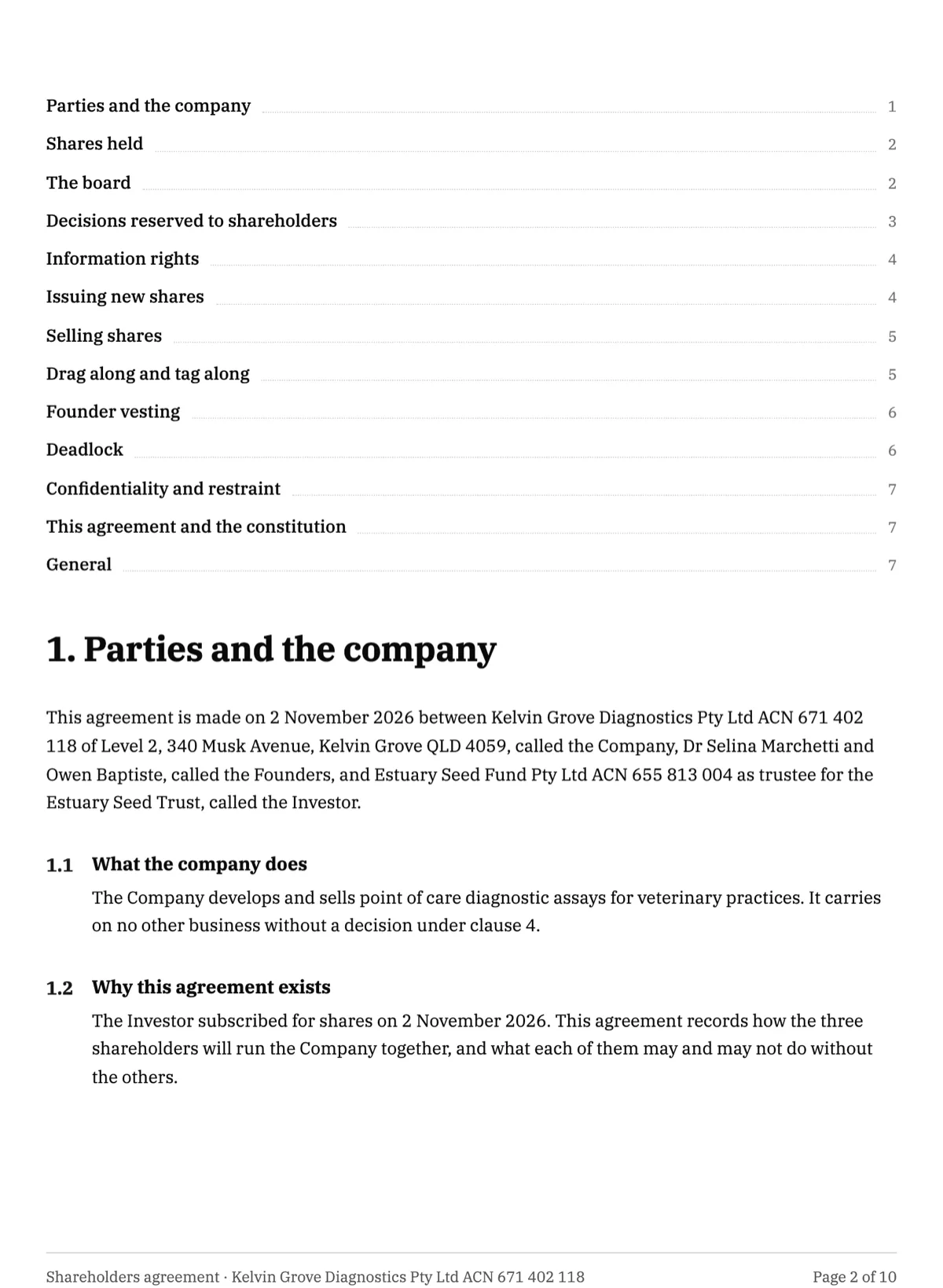 Shareholders agreement template for a company after a seed roundA shareholders agreement template sets out who owns what, who sits on the board, which decisions need shareholder consent, how shares are sold, and how a deadlock ends. This one is filled in for a Queensland veterinary diagnostics company that has just taken $1.5 million from one seed fund, leaving the two founders with 80 per cent between them. Its central number is an 85 per cent consent threshold for eight reserved matters, and the page below shows what that number does and does not protect.
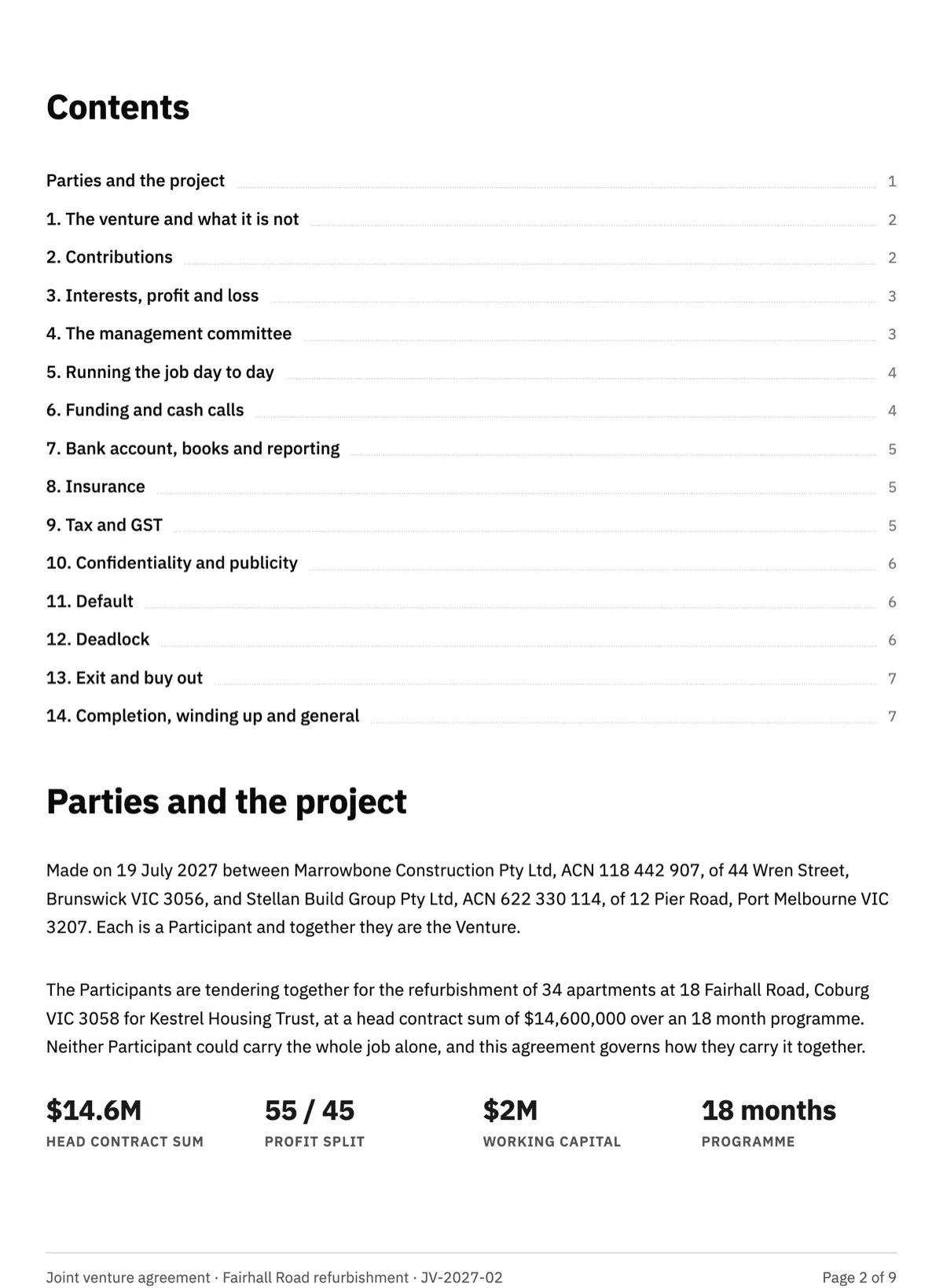 Joint venture agreement template with contributions and splitAn unincorporated joint venture has no company to fall back on, so everything a company structure would supply has to be written down. This one puts two builders together for a single $14.6 million refurbishment, splits it 55/45, and sets out who funds it, who decides, how a deadlock breaks and how either of them gets out.
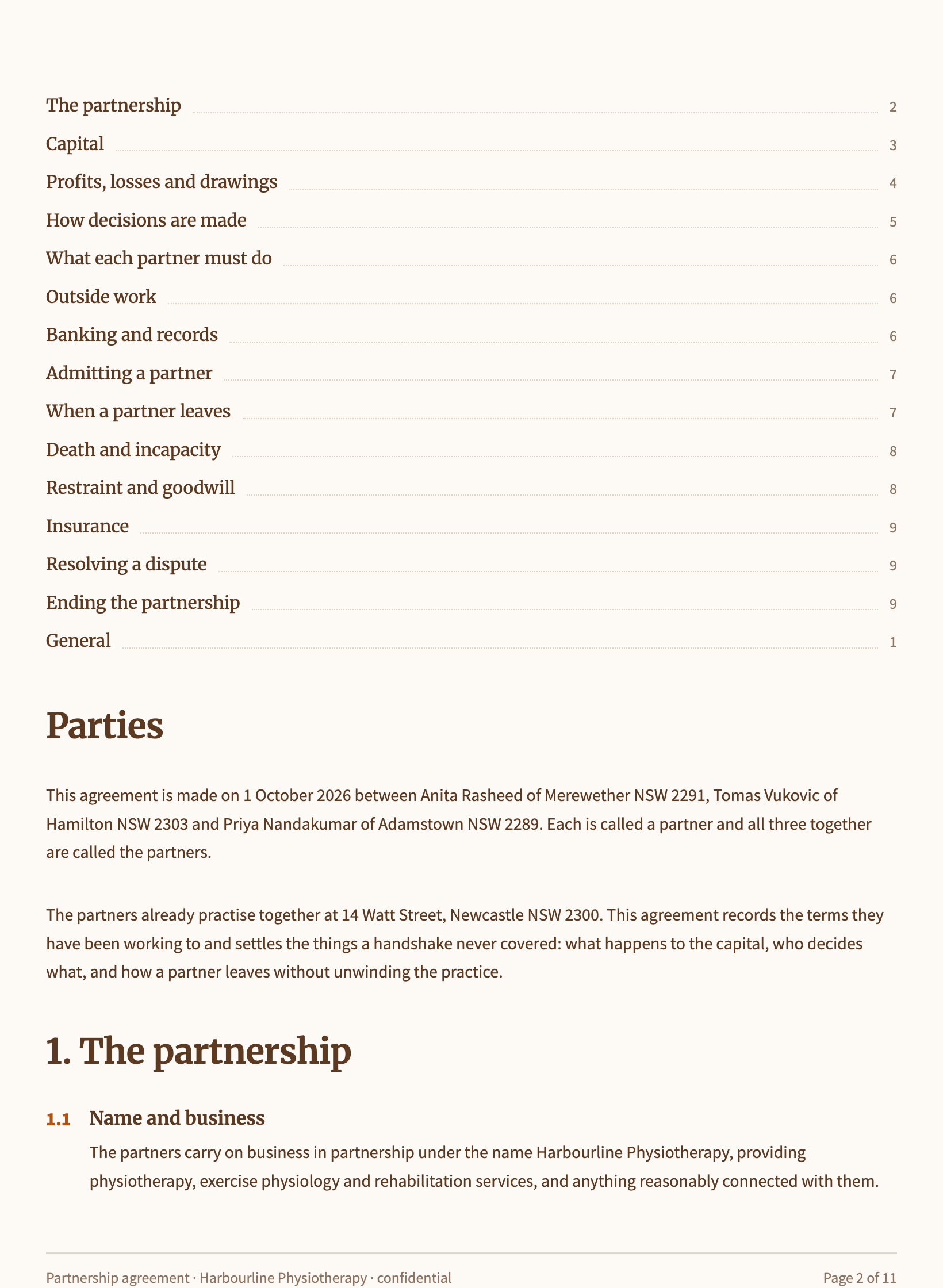 Partnership agreement templateThree physiotherapists have run one Newcastle practice together since 2024 without anything in writing. This agreement records what the handshake never covered: uneven capital sitting beside uneven hours, the six decisions no partner can make alone, and what a leaving partner is owed.
Questions people ask
What does a reserved matters list usually include?
Decisions the board or majority cannot make alone, listed in the agreement, which need the approval of all shareholders, a special majority or a named investor. They protect minority owners on the decisions that most affect the value of their shares.
Do reserved matters override the board?
They restrict it by contract. The shareholders, and usually the company, promise not to take the listed actions without the required approval. Directors still owe their duties to the company, so agreements are drafted as shareholder approvals rather than instructions that would fetter the board.
What approval threshold is usual?
Seventy five per cent is common, matching the special resolution threshold, sometimes with a named investor's consent added. Two party joint ventures often require both parties. The right level depends on who should hold a veto now and after future share issues.
Can a reserved matters list be too long?
Yes. A long list without dollar thresholds catches routine decisions and gives a minority a veto over running the business. Investors and founders usually agree a focused list, exclusions for approved budgets, and levels below which management decides. Review it at each funding round.
What happens if shareholders cannot agree?
The decision cannot be made, which can stall the business. That is why reserved matters clauses are paired with deadlock clauses providing for escalation, mediation and, as a last step, a mechanism for one party to buy the other out.
Put the clause in a finished document
The button opens the document generator with a starting description already filled in. Change it to match your own agreement before you run it.
Create a document with OneCraftRelated clauses
- Personal guarantee clause: a director's guarantee samplePersonal guarantee clause sample for a director guaranteeing a company's debts: the guarantee and indemnity, limits, independent advice and how to get released.
- Events of default clause: sample for a business loanEvents of default clause sample for an Australian business loan: missed payments, insolvency, false statements, cure periods, and the ipso facto stay.
- Deadlock clause: breaking a tie in a 50 50 companyA deadlock clause sets how a 50 50 company breaks a tie between its owners. Sample wording with escalation, mediation, a shotgun buy sell and variants.
- Pre emptive rights clause: first right to buy new sharesA pre emptive rights clause gives existing shareholders first right to new shares in proportion. Sample wording, a 10 business day offer and over allocation.
For everything the document generator can do, see the document maker.
Step by step in the builder: Create a document with AI, then Document builder components.
Written and checked by the OneCraft team. Last checked .