Contract clause
Stamp duty clause: who pays duty in an Australian contract
A stamp duty clause says which party pays any state duty on a transaction or the documents for it, such as transfer duty on a property purchase or vehicle registration duty, by when, and who bears interest or penalties if it is paid late. State law usually decides who is liable to the revenue office; the clause decides who bears the cost.
Stamp duty, now usually called transfer duty, is a state tax on transfers of land and some other property. The law makes a particular party liable, usually the buyer, but contracts often say who actually bears it, and how it is shared when two people buy together. A stamp duty clause settles that before the duty notice arrives.
Indunil Asanka · Co-founder
3 min read · Published
Sample clause
Written for co ownership agreement between two fictional friends buying a Brisbane townhouse together in shares of 60 and 40 per cent.
Duty and Purchase Costs. (a) The Co-owners pay the transfer duty and registration fees on the purchase of the Property in their ownership shares: 60 per cent by Priyanka and 40 per cent by Thomas. (b) Each Co-owner pays their share into the conveyancer's trust account at least 5 business days before settlement, so the duty can be paid on time. (c) Any concession or exemption claimed is applied to the duty before it is shared. If a concession is later reversed because of one Co-owner's act, that Co-owner bears the duty, interest and penalty that result. (d) Each Co-owner indemnifies the other against any duty, interest or penalty arising from their failure to pay their share on time. (e) The amounts paid are recorded in Schedule 2 and count towards each Co-owner's contribution for the purposes of a later sale.
Sample wording, not legal advice.
Variants
Lease duty
Commercial leases in states where lease duty or registration fees still apply, or where the parties want to state who pays.
Each party pays its own legal costs of this Lease. The Tenant pays any duty and registration fees payable on this Lease.
Vehicle sale
Private vehicle sales, where the buyer pays duty when transferring the registration.
The Buyer must transfer the registration within 14 days and pays the transfer fee and any duty, which is calculated on the purchase price or the market value, whichever is higher.
Business sale
A sale of business assets where duty may apply to some assets, such as goodwill or land, depending on the state.
The Buyer pays any duty assessed on this agreement or the transfer of the Assets, and the Seller will provide any information the Buyer reasonably needs for the assessment.
What to negotiate
Liability and bearing the cost
State duty laws make a particular party liable to pay the revenue office, usually the purchaser or transferee. A contract can shift the cost between the parties, but not the legal liability to the state. If the paying party defaults, the revenue office can still pursue the liable party, which then relies on the contract's indemnity.
Concessions and clawbacks
First home buyer concessions and other exemptions often have conditions, such as living in the property for a period. If one buyer breaks a condition, the concession can be reversed with interest and penalties. A shared purchase should make the person who caused the reversal bear it, as the sample does.
Timing
Duty must be paid within a set time after the transaction, often at or soon after settlement, and late payment attracts interest and penalty tax. Clauses should require funds before settlement and say who bears interest if a party's money arrives late.
The risk of leaving it out
A contract silent on duty leaves the cost where the law puts it, which may not be the deal the parties thought they had, especially in shared purchases and business sales. Late payment caused by an argument over who pays attracts interest and penalty tax from the revenue office, adding cost to both sides.
Transfer duty in the states
Each state and territory imposes duty on transfers of land and some other property, under names such as transfer duty or land transfer duty. Revenue NSW, the State Revenue Office in Victoria and the Queensland Revenue Office each publish rates, concessions and payment deadlines. Rates are progressive and change, so a contract should allocate the duty rather than state an amount, and buyers should check the current calculator before signing. Law checked on 21 October 2026. This page explains how the law works and is not legal advice.
Shared purchases
When two or more people buy together, the revenue office assesses duty on the whole transaction, and the buyers sort out who bears what. The co ownership example records the deposit, duty and registration, conveyancing and inspection costs, each split 60 and 40, in a single table, so each owner's contribution is clear if they later sell or one buys the other out.
Leases and vehicles
Several states have abolished duty on leases, but registration fees and other charges can still apply, and some leases still allocate any duty that the law imposes, as the commercial lease example does by making the tenant pay the stamp duty and registration fees the law puts on it. Vehicle transfers attract motor vehicle duty paid by the buyer on registration, calculated on the price or market value, whichever is higher, as the vehicle sale example explains.
Where the clause sits in a generated document
Co ownership, sale, lease and business sale agreements carry this clause among the costs clauses. When asking the AI document generator for one, say who pays duty and fees, any split, the payment deadline, how concessions are treated and who bears interest or penalties for late payment.
Documents that carry this clause
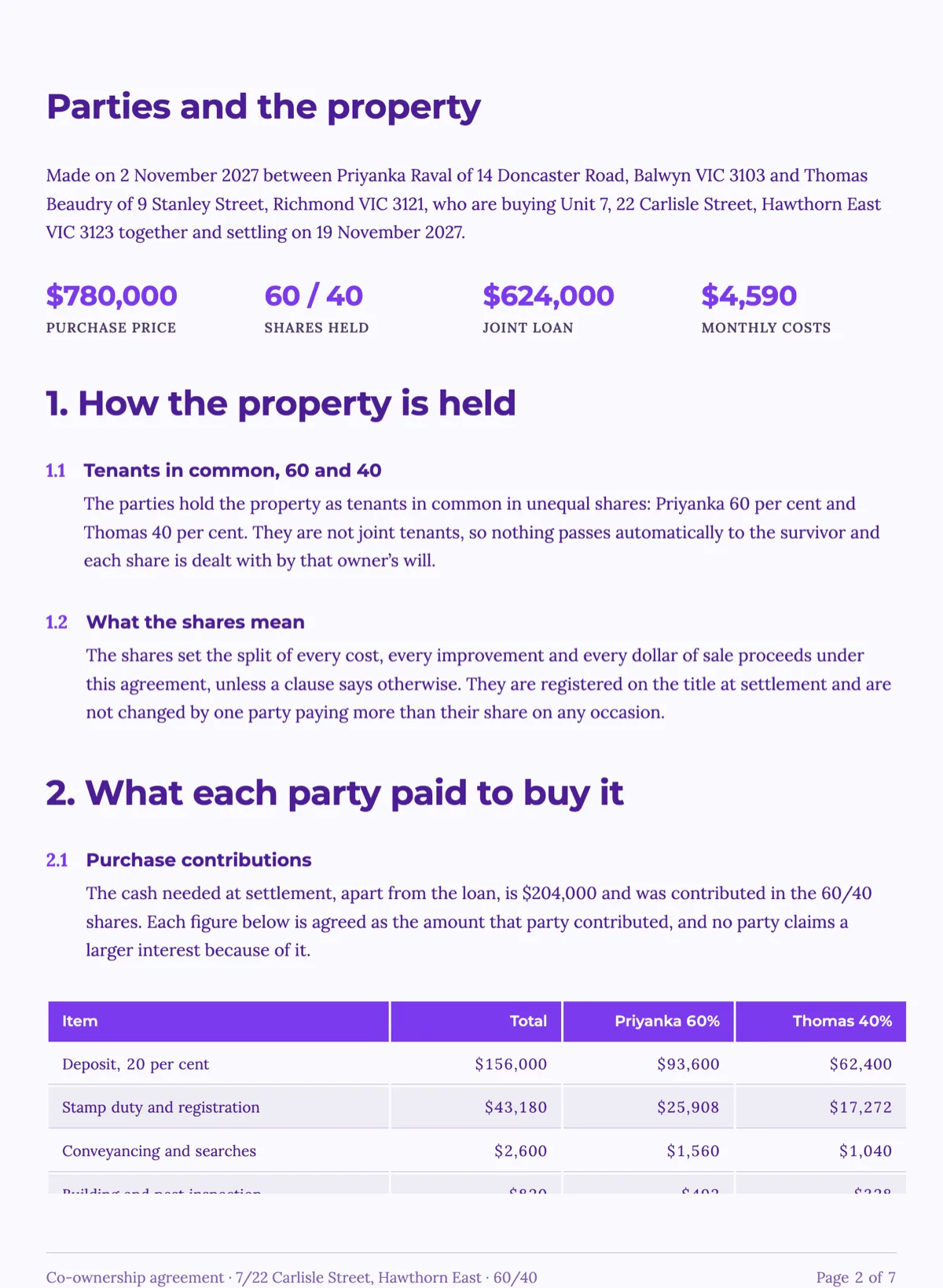 Co-ownership agreement template for shares, costs and exitA co-ownership agreement is what two people write before they buy together, not after something goes wrong. This one covers a $780,000 unit held 60/40 as tenants in common, with tables for who paid what at settlement, who pays what each month, and how either of them gets out.
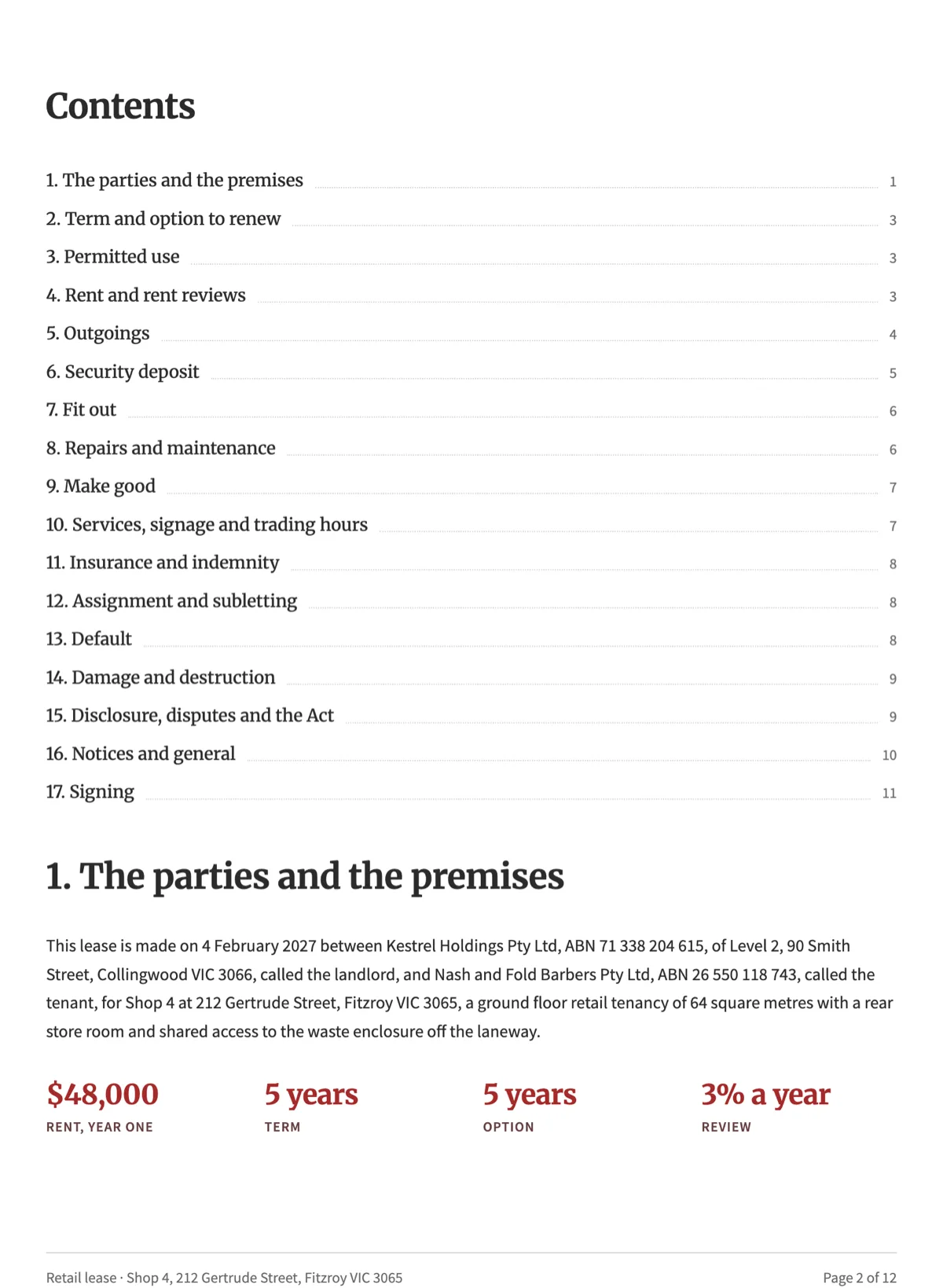 Commercial lease agreement template with outgoings and fit out termsA retail lease is decided by three numbers and two clauses: the rent, the review, the outgoings, the fit out contribution and the make good. This 12 page Victorian lease sets all five out in the open, including the outgoings the landlord is not allowed to recover at all.
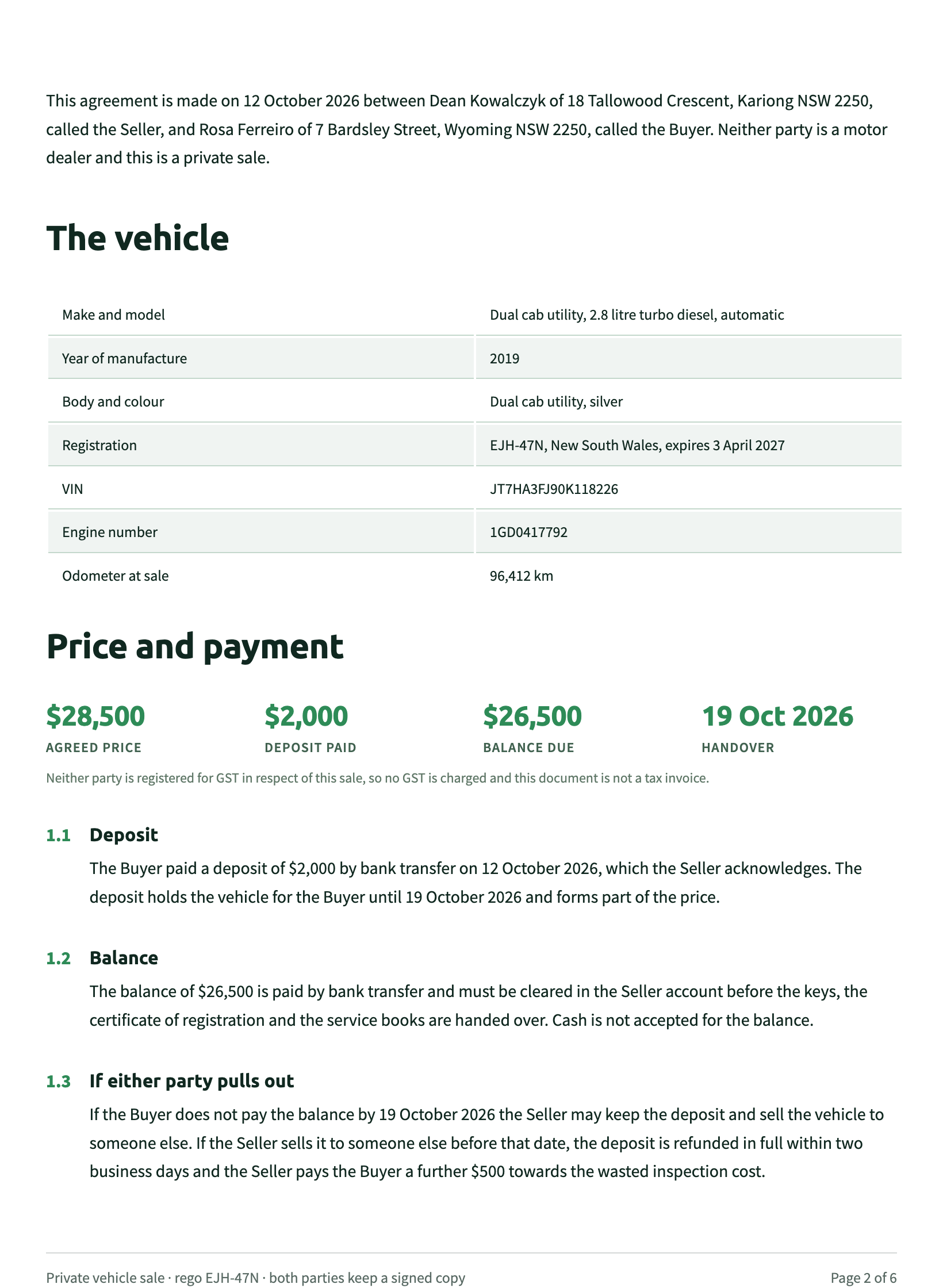 Vehicle sale agreement templateA dual cab ute is changing hands between two people on the Central Coast for $28,500. No dealer, so no statutory warranty and no guarantee of clear title. What the buyer gets instead is five written warranties, a register certificate number, and a mechanic's report obtained before the balance moves.
Questions people ask
Who pays stamp duty on a property purchase in Australia?
Usually the buyer, because state duty laws make the purchaser or transferee liable for transfer duty. A contract can agree that someone else bears the cost, but the revenue office can still pursue the person the law makes liable if it is not paid.
Is stamp duty payable on a lease?
In many states lease duty has been abolished, but registration fees and other charges may still apply, and the rules differ between states. A lease commonly says the tenant pays any duty and registration fees the law imposes, so the cost is settled whatever the state's position.
How is stamp duty shared between co-owners?
The duty is assessed on the whole purchase and the co owners agree the split, usually in their ownership shares. Recording each person's payment in the co ownership agreement makes it count towards their contribution when the property is sold.
What happens if stamp duty is paid late?
The revenue office charges interest and may impose penalty tax for late payment, and the transfer may not be registered until duty is paid. A clause should require funds before settlement and make a party whose late payment caused the problem bear the extra cost.
Do I pay stamp duty when buying a used car?
Yes, in most states the buyer pays motor vehicle duty when transferring the registration, usually calculated on the price paid or the market value, whichever is higher. The transfer must be lodged within the state's deadline to avoid late fees.
Put the clause in a finished document
The button opens the document generator with a starting description already filled in. Change it to match your own agreement before you run it.
Create a document with OneCraftRelated clauses
- Relocation clause in a lease: a retail sampleRelocation clause sample for a retail lease: moving a tenant to comparable premises, written notice, fit out costs, and the right to end the lease instead.
- Continuous operation clause: sample and the go dark rightContinuous operation clause sample for a retail lease: trading in centre hours, a go dark right after five years, landlord recapture and how courts treat it.
- GST clause: saying whether the price includes GSTA GST clause says whether amounts include GST and who pays it. Australian sample wording, a gross up variant, adjustment events and reimbursed expenses.
- Outgoings clause: the building costs on top of rentAn outgoings clause sets which building costs a tenant pays on top of rent. Victorian retail sample wording, what is recoverable and gross lease variants.
For everything the document generator can do, see the document maker.
Step by step in the builder: Create a document with AI, then Document builder components.
Written and checked by the OneCraft team. Last checked .