Classic form
Design request form for an in house studio
A design request form gives a designer the deliverable, the size, the final copy, the brand to use, reference files, how many rounds of changes are expected, the deadline and the priority. This in house studio version requires final copy before work starts, because designing around placeholder text wastes a round.
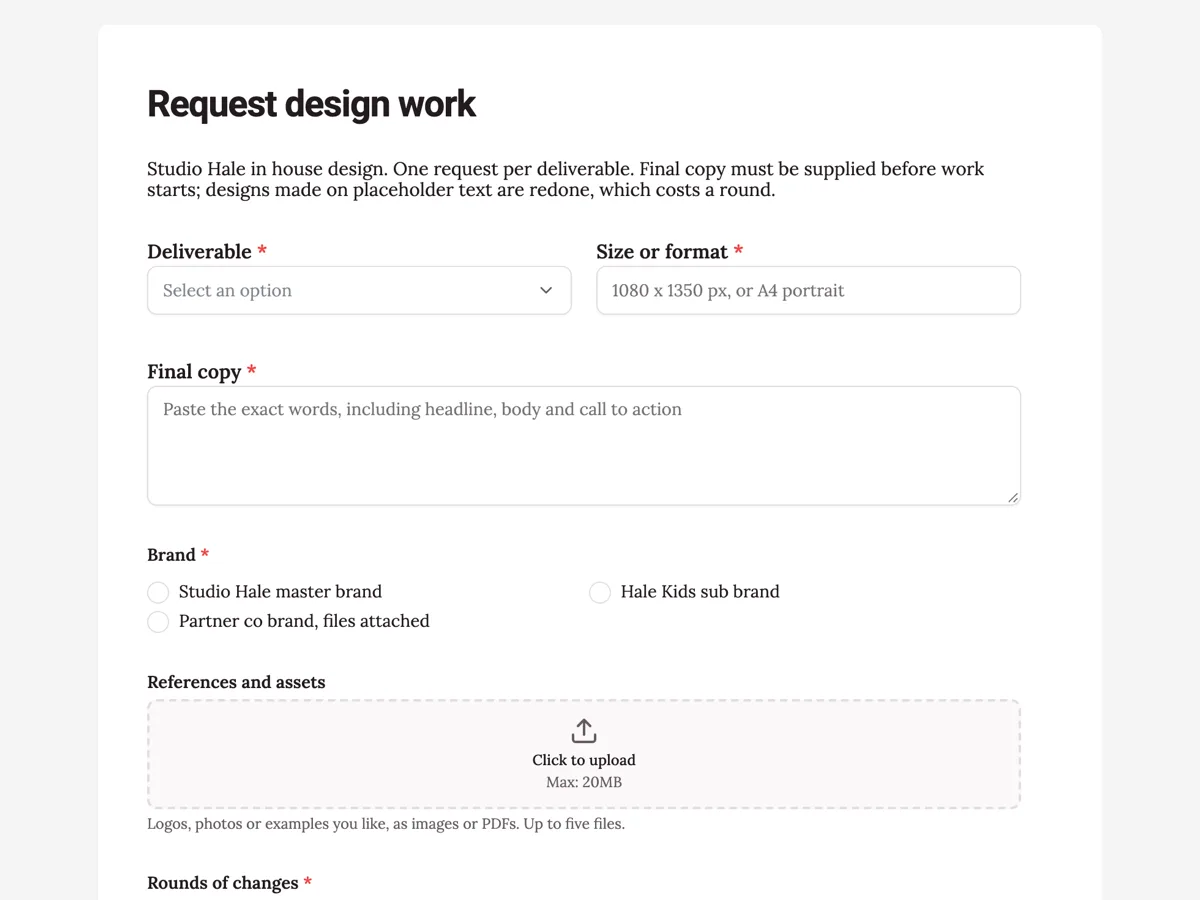
The form itself
A static copy of the finished form, exactly as it renders. Nothing here can be filled in or submitted, so read it as a reference and build your own from the button above.
Every field, and what it collects
The complete field list, in the order respondents meet it.
- DeliverableDropdownRequired
- Options: Social post · Flyer or poster · Presentation template · Email header · Web banner · Packaging label
- Size or formatShort textRequired
- Final copyLong textRequired
- BrandSingle choiceRequired
- Options: Studio Hale master brand · Hale Kids sub brand · Partner co brand, files attached
- References and assetsFile upload
- Logos, photos or examples you like, as images or PDFs. Up to five files.
- Rounds of changesSingle choiceRequired
- Options: One round · Two rounds
- DeadlineDateRequired
- PrioritySingle choiceRequired
- Options: Launch critical · Normal · Whenever there is space
What each field on this form collects
The deliverable comes from a list of six, beside the size or format. A required long text takes the final copy. A single choice records the brand, including a co brand option that expects files. An upload takes up to five references or assets as images or PDFs. Rounds of changes, the deadline and the priority complete the request.
Final copy before design
Design is built around words. A headline that grows from four words to twelve changes the layout, and a call to action added late has nowhere to go. The intro says that work done on placeholder text is redone and costs a round, and the final copy field is required. This one rule removes most of the back and forth between marketers and designers. The size field asks for pixels or a paper size, so the designer starts on the right canvas.
Rounds and priority
A request that says one round of changes sets a different expectation from one that says two, and both are honest about time. Priority uses words that mean something to a studio juggling launches: launch critical, normal, or whenever there is space. Accessibility is worth adding to the studio's own checklist too: W3C's introduction to web accessibility and its WCAG guidelines explain contrast and text size, which matter as much in a banner as on a website.
How to adapt this form
An agency adds the client, the job number and the budget. A retailer adds the store or campaign and the date the item goes live. A school adds the event and who approves the final design. A team that prints a lot adds the print supplier, the quantity and whether bleed and crop marks are needed, which saves a round with the printer.
What makes this form work
Copy is required
The final copy box cannot be skipped, and the intro explains the cost of placeholder text. The designer starts with the real words.
Size up front
Size or format sits beside the deliverable, with pixels and a paper size as examples. The design starts on the right canvas, not resized later.
Priority in plain words
Launch critical, normal, or whenever there is space. The studio can sort a week of requests without asking each requester how urgent they really are.
Questions people ask
What should a design request form include?
The deliverable, size, final copy, brand, references and assets, the number of revision rounds, the deadline and the priority. Some teams add the audience and where the design will be used. Requiring final copy is the single biggest time saver.
How many rounds of changes are normal?
One or two rounds is common for in house work. More rounds usually mean the brief or the copy was not settled. Setting the number in the request makes the expectation clear to both sides, and a third round becomes a conversation rather than an assumption.
Can large design files be uploaded?
A file upload field allows up to 10 files and up to 100 MB each, with only image and PDF types. This form allows five files of up to 20 MB. Working files such as layered design documents are better shared through a drive link in the copy box.
How should designers handle urgent requests?
Agree what counts as launch critical and limit how often it is used, otherwise everything becomes urgent. This form offers three priority levels, and the studio confirms timing within a working day, so a requester knows quickly whether a launch date is realistic.
Can requesters track their request?
The form collects the request. Track progress in the studio's project tool, and use a webhook to post each request to it automatically. The requester hears back from a designer, as the thank you screen says, and changes to copy come in as a new request so nothing is lost in an email thread.
Should accessibility be part of the request?
It helps to make it part of every brief. Contrast between text and background, text size and clear wording affect whether people can read a design at all. W3C's accessibility guidance explains the basics, and a studio can turn them into a short checklist that every design is held to.
Who should own the copy in a design request?
The person making the request, or the copywriter they work with. Designers can suggest edits to fit a layout, but the words and claims belong to the requester, who also checks prices, dates and legal lines. Supplying final copy with the request keeps that responsibility clear and stops the design becoming the place where copy gets written.
Build your own in about a minute
The button below opens the generator with this use case already described. Change the wording to match your own, generate, then edit anything you like.
Make one like thisOther form examples
Content request form for an editorial desk
A content request form gives an editorial team what it needs to decide on a piece and brief a writer: the format, the topic, the search phrase it should answer, who it is for, the sources, who asked and when it is needed. This newsletter publisher version schedules requests with clear sources first.
Marketing request form that starts with the objective
A marketing request form tells the marketing team what kind of work is needed, what it should achieve, who it is for, the one message that matters, when, with what budget and who approves it. This agency version asks what should change because of the work before anything about format.
Cancellation request form with the notice period stated
A cancellation request form gives a customer a written way to end a membership or subscription: who they are, why they are leaving, that they understand the notice period, their last day and whether anything is owed. This gym version states the 30 day notice in plain words and makes the form itself the written notice.
Want the steps in the builder? Read Upload and choice fields, then Notify the studio of each request. For everything this generator can do, see the form maker.
Sources
Written and checked by the OneCraft team. Last checked .