Classic form
Art exhibition proposal form with a works list and install needs
A gallery programming committee is deciding whether a show fits a specific room, which is a question about dimensions as much as about ideas. This eleven field proposal form publishes the wall length, the ceiling height and the doorway width, then asks for a works list with sizes so the answer is checkable before the meeting.
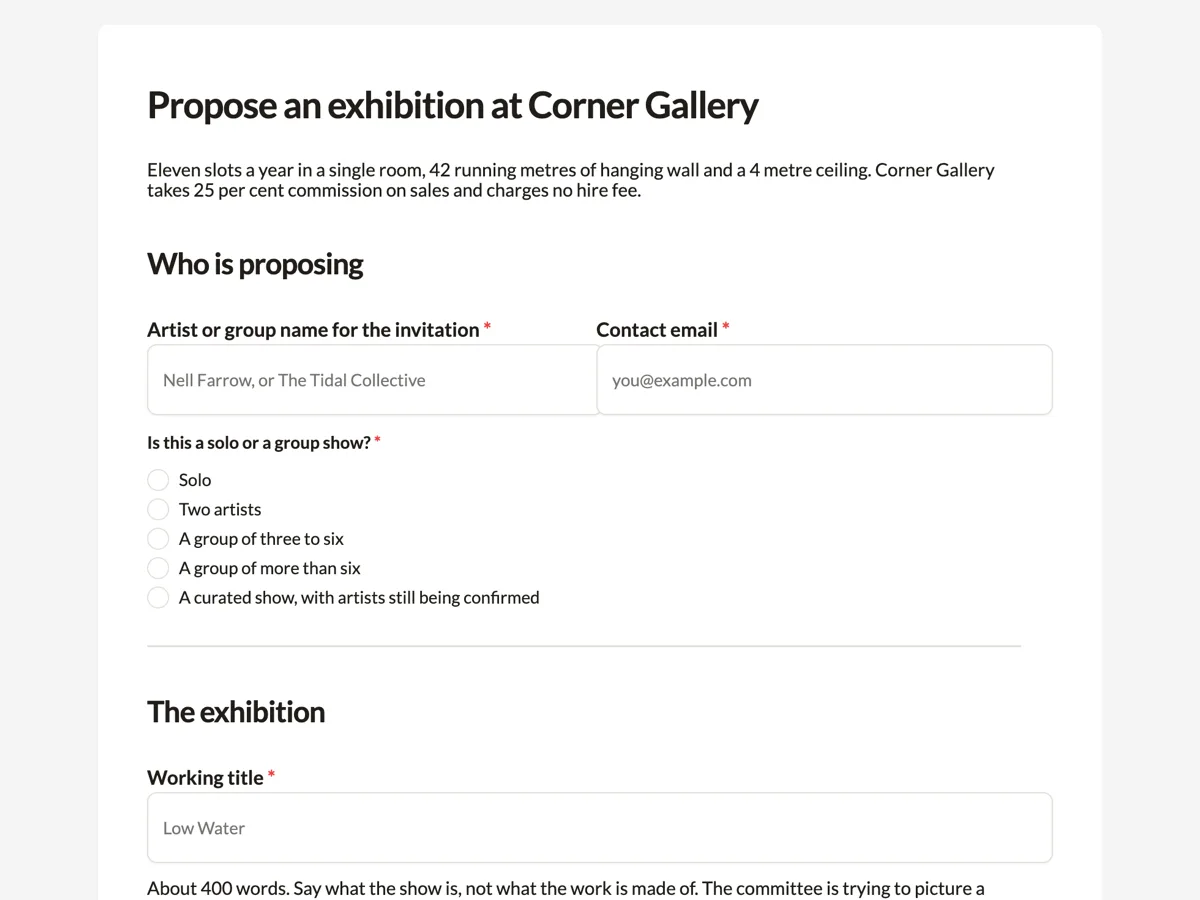
The form itself
A static copy of the finished form, exactly as it renders. Nothing here can be filled in or submitted, so read it as a reference and build your own from the button above.
Every field, and what it collects
The complete field list, in the order respondents meet it.
- Artist or group name for the invitationShort textRequired
- Contact emailShort textRequired
- Is this a solo or a group show?Single choiceRequired
- Options: Solo · Two artists · A group of three to six · A group of more than six · A curated show, with artists still being confirmed
- Working titleShort textRequired
- ConceptLong textRequired
- How many works would be in the show?NumberRequired
- Works listTableRequired
- Columns: Title · Medium · Size in cm, height by width by depth · Price
- Which months would suit?Multiple choiceRequired
- Options: February · March · April · May · June · July · August · September · October · November · Any month
- What would the install need?Multiple choiceRequired
- Options: Standard hanging on the picture rail · Works fixed directly to the wall, patched afterwards · Plinths, and the gallery has six · Power at floor level for a screen or a work that runs · Low light or a blacked out corner · Audio, with the gallery speaker or your own · More than one day to install · Help from a technician, which is charged at cost
- Images of the workFile uploadRequired
- Images only, up to eight files, 5 MB each. Photographs of actual works, not renders or mock ups of the room. If the works are not made yet, send recent work in the same direction and say so in the concept.
- Where has this work been shown before, if anywhere?Long text
Who is proposing
The exhibition
Timing and install
Publishing the room turns a proposal into a fit test
The single most useful thing this form does is state the dimensions before asking for the works list: 42 running metres of hangable wall, a 4 metre ceiling, and a 2.1 metre doorway that everything has to pass through. Those three numbers let an artist answer the committee question themselves. The paragraph adds that a work wider than 2 metres needs discussing before the proposal goes to the meeting, which converts a rejection into a conversation and is the difference between a committee reading proposals and a committee measuring them.
A works list with prices, and what NFS means on it
Eight rows of title, medium, size in centimetres and price do four jobs at once. The sizes test the fit, the media tell the install what it is handling, the titles show whether the show hangs together, and the prices set expectations about the 25 per cent commission named in the intro. The note under the table handles the two awkward cases: a larger show lists the eight works that carry it, and anything not for sale is written as NFS rather than left blank, so an empty cell always means unanswered.
How to adapt this form
A commercial gallery adds an exclusivity question and a representation status field, because who else can sell the work is the first commercial question. A festival or open studio programme swaps the single room dimensions for a venue preference list and adds a public liability question, since the artist is the occupier. A museum call for proposals keeps the structure and adds conservation requirements, loan sources and a condition reporting question, which is the layer that turns an exhibition into a registrar problem.
What makes this form work
The wall length and doorway width are on the form
Forty two running metres, a 4 metre ceiling and a 2.1 metre doorway, stated above the works list so an artist can check the fit themselves instead of finding out at the committee meeting.
Sizes are asked as height by width by depth in centimetres
The column heading names the order, which removes the usual ambiguity and makes eight proposals comparable at a glance. A description like large canvases would not.
Install needs are eight real gallery decisions
Picture rail or direct fixing with patching, plinths the gallery already owns, floor power, low light, audio, a longer install, and technician help charged at cost. Each one is a cost the committee can price.
Questions people ask
How many works should a proposal list?
Eight rows here, with a note saying that a larger show should list the eight that carry it and explain the rest in the concept. The count is fixed because a table renders exactly the rows it is configured with. Eight is enough for a committee to see the shape of a show without asking anybody to enter forty lines on a phone.
Why ask for sizes in centimetres rather than a description?
Because the room has fixed dimensions and a proposal either fits or it does not. Height by width by depth in centimetres can be compared across every proposal at once, where a description like large canvases cannot. The column heading spells out the order, which removes the usual ambiguity about which number comes first.
Should an exhibition proposal ask for prices?
Yes, if the gallery takes commission, and this one says 25 per cent in the intro. Asking at the proposal stage sets expectations early and shows the committee whether the pricing is realistic for the room. Works that are not for sale are entered as NFS, which keeps a blank cell meaning unanswered rather than ambiguous.
What if the work does not exist yet?
The upload instruction covers it: send recent work in the same direction and say so in the concept. Requiring photographs of finished works would exclude every proposal for new work, which is most of what a community gallery programmes. What the instruction does rule out is renders and mock ups of the room, which tell a committee nothing about the work.
Why ask about install requirements on the proposal?
Because install is the cost that decides whether a show is viable. Eight options covering rail hanging, direct fixing with patching, plinths, floor power, low light, audio, a longer install and technician help charged at cost. Each one is a real thing the gallery either has or has to arrange, so the answer is a budget rather than a wish list.
How does the committee review these?
From the responses table, one proposal per row. The works list exports as a JSON array of its filled rows, and the images stay attached to the response. The export gives one column per field, so the months, install needs and number of works can be scanned across every proposal before anyone opens a concept statement.
Build your own in about a minute
The button below opens the generator with this use case already described. Change the wording to match your own, generate, then edit anything you like.
Make my art exhibition proposal form with a works list and install needsOther form examples
Artist residency application form with a portfolio and work list
A residency panel looks at the images first and reads afterwards, so the portfolio instructions matter more than anything else on the form. This twelve field application caps the upload at ten images with a minimum resolution, pairs it with a numbered work list, and asks for a proposal that could only happen at this studio.
Market stall application form with insurance and power on it
A market coordinator is allocating fifty sites and balancing a row, which means the useful answers are the boring ones: what you sell, how big your marquee is, whether you need power and whether your insurance outlasts the season. This fourteen field form collects all four and gets the certificate expiry as a sortable date.
Food truck event application form with menu, amps and permits
A night market curator draws a site plan from three measurements and an amp figure, then builds a menu mix from the prices. This fifteen field application asks for the truck as it stands with the servery open, a six line menu with a price column, the total power draw and the gas compliance certificate, all before the dates are ticked.
Want the steps in the builder? Read Every form field and when to use it, then View, export and manage responses. For everything this generator can do, see the form maker.
Written and checked by the OneCraft team. Last checked .