Classic form
Generator pre start checklist with the RCD test
A generator pre start checklist confirms the RCD trips, the earthing decision is followed, leads are tagged and the exhaust points away from people before anything is plugged in. This event hire version records the time of the RCD test and a photo of where the unit sits.
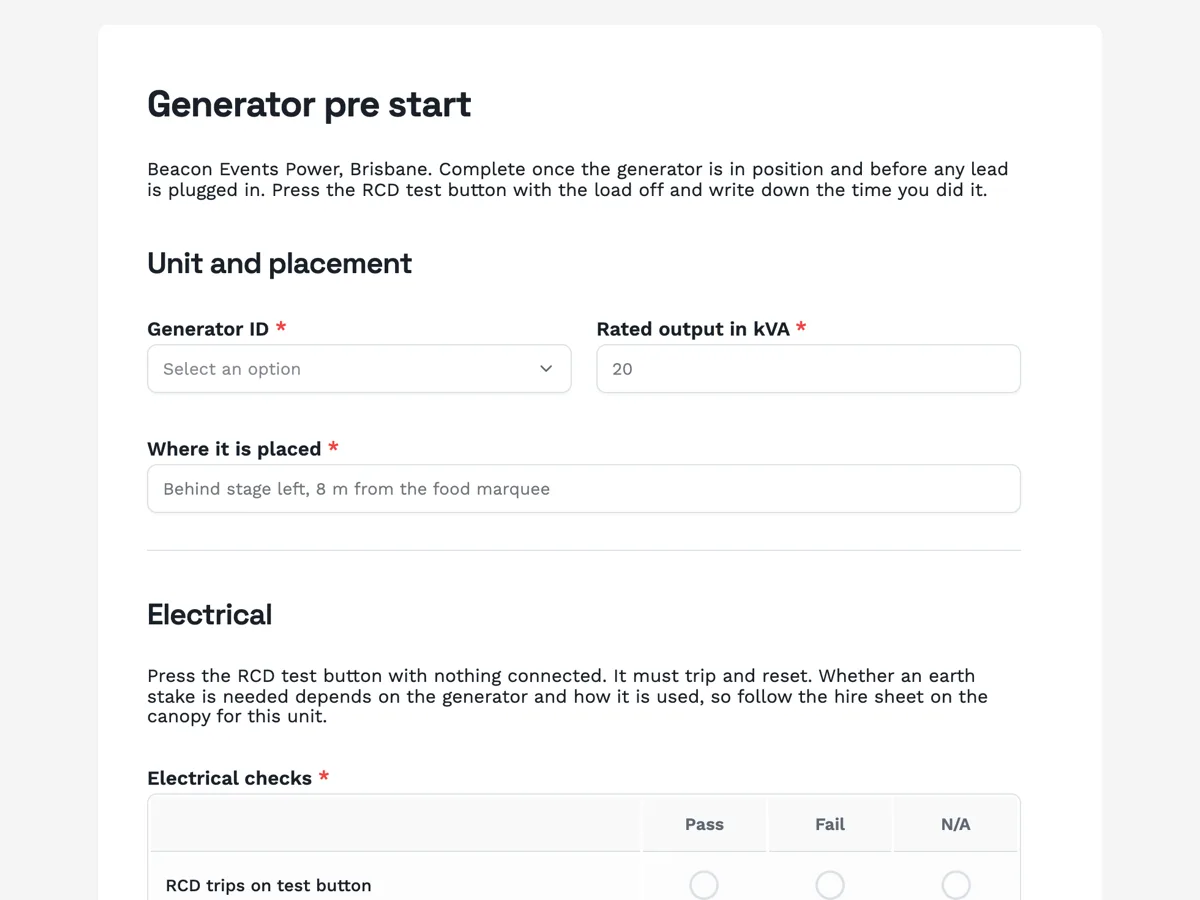
The form itself
A static copy of the finished form, exactly as it renders. Nothing here can be filled in or submitted, so read it as a reference and build your own from the button above.
Every field, and what it collects
The complete field list, in the order respondents meet it.
- Generator IDDropdownRequired
- Options: G-08, 8 kVA petrol inverter · G-20, 20 kVA diesel · G-45, 45 kVA diesel, trailer
- Rated output in kVANumberRequired
- Where it is placedShort textRequired
- Electrical checksRating gridRequired
- Statements:
- RCD trips on test button
- Earth stake fitted where the hire sheet says
- Leads tested and tagged
- Outlets and covers undamaged
- Main isolator works
- Cover from rain
- Time the RCD was testedTimeRequired
- Engine and surroundingsRating gridRequired
- Statements:
- Fuel level and cap
- Oil level
- Coolant, diesel units
- Exhaust pointed away from tents and people
- Spill tray under the unit
- Photo of the generator in placePhoto upload
- One photo showing the unit, its exhaust direction and the nearest marquee or tent.
- Technician signatureSignatureRequired
Unit and placement
Electrical
Engine and placement
What each field on this form collects
The unit comes from a list of three hire generators, from an 8 kVA petrol inverter to a 45 kVA diesel on a trailer, with the rated output typed beside it and a short text for where it has been placed. The electrical grid has six rows: RCD trips on test, earth stake fitted where the hire sheet says, leads tested and tagged, outlets and covers, main isolator and rain cover. A time field records when the RCD was tested. The engine grid has five rows: fuel, oil, coolant on diesels, exhaust direction and the spill tray. A placement photo and the technician signature finish the check.
Why a portable generator needs its own RCD and earthing decision
Away from mains power, the protection a building gives for free has to come with the generator. An RCD on the generator is what cuts the supply when current leaks to earth through a damaged lead or a wet stall. Whether the generator also needs an earth electrode depends on how it is built and how it is used, and the answer differs between a small inverter running one tool and a large set feeding a distribution board. The form does not decide this. It sends the technician to the hire sheet for that unit and asks whether the stake is fitted where the sheet requires it.
Exhaust and fuel near marquees
Carbon monoxide gathers in tents and enclosed stalls, and a generator tucked behind a marquee to hide the noise can fill it. The placement field and the exhaust row exist so the technician states where the unit is and which way it breathes, and the photo shows the nearest tent. Refuelling has its own risk: WorkSafe Victoria has published an alert about workers burned when petrol vapour ignited while refuelling portable generators. The fuel row is a reminder to refuel with the engine off and cool, using approved containers.
How to adapt this form
A builder running a site generator replaces the marquee language with the site hut and adds the distribution board number. A film crew adds the cable route and whether ramps cover it. A council running generators for a festival adds the event name and permit number so each check can be filed with the event paperwork.
What makes this form work
The RCD test has a time
A required time field sits under the electrical grid. When a fault happens at 4 pm, the record shows whether the RCD was tested at 7 am that day or not at all, which is a fact a Pass tick cannot give.
Earthing points at the hire sheet
The earth stake row reads fitted where the hire sheet says. The form avoids pretending one earthing rule fits every generator, and makes the technician check the rule for this unit.
A photo of placement, not of the engine
The photo field asks for the unit, its exhaust direction and the nearest marquee in one frame. That picture answers the carbon monoxide question better than any tick box.
Questions people ask
Does a portable generator need to be earthed?
It depends on the generator design and how it is used, and the manufacturer instructions and AS/NZS 3010 set out the cases. Some small units supplying equipment directly do not need an electrode; larger sets feeding a distribution board usually do. Follow the hire company or manufacturer sheet for that unit, and ask a licensed electrician when unsure.
How often should a generator RCD be tested?
Press the test button each time the generator is set up, before loads are connected, as this form asks. Periodic testing with an instrument is separate and is done by a qualified person at the interval your electrical safety plan sets. Record both, because the push button test only shows the device trips.
Where can a generator be placed at an event?
Outdoors, on firm level ground, away from tent openings and air intakes, with the exhaust pointing away from people, and protected from rain without being enclosed. Keep it clear of exits and cable it so leads are not a trip hazard. Event permits and venue rules often add distances; check them for each site.
Who should complete the generator pre start?
The technician who set up the unit and will connect the loads. They know where the leads go and whether the RCD was tested before stallholders plugged in. If a different person connects later in the day, they can submit a second check so the record shows who saw the generator last.
Can stallholders see these checks?
Only if you share them. Submissions sit in the owner's responses table, and a single check can be saved as a PDF and sent to an event organiser who asks for evidence. The form itself can be limited to logged in staff or a secret key, so only technicians submit checks.
Build your own in about a minute
The button below opens the generator with this use case already described. Change the wording to match your own, generate, then edit anything you like.
Make one like thisOther form examples
Telehandler pre start checklist by attachment
A telehandler pre start checklist starts with the attachment fitted, because forks, a bucket, a jib with a hook and a work platform each need their own load chart and sometimes their own licence. Then it tests the load moment indicator and checks the boom, stabilisers, steering mode, brakes and cab.
Ride on mower pre start checklist for a council crew
A ride on mower pre start checklist covers the rollover bar, seatbelt, seat switch, blade guards, brakes and tyres at the depot, then the slopes and hazards on the day's run. This council version puts both halves on one form so the mower check and the site walk are signed together.
Excavator pre start checklist with quick hitch checks
An excavator pre start checklist is the operator's walkaround before the first bucket: tracks, hoses, fluids, the rollover cab, the alarm and the quick hitch, each marked Pass, Fail or N/A. This one adds the three hitch checks that stop a bucket falling off and a tag out question that keeps a faulty machine parked.
Want the steps in the builder? Read Time, matrix and photo fields, then Send each check to the duty technician. For everything this generator can do, see the form maker.
Written and checked by the OneCraft team. Last checked .