Classic form
Safety harness inspection checklist
A harness inspection checklist works along the webbing and stitching, then the D rings, buckles, adjusters, fall indicator and labels, and records whether the harness stays in service. This version for an access hire company also records the serial, manufacture date and the last six monthly inspection.
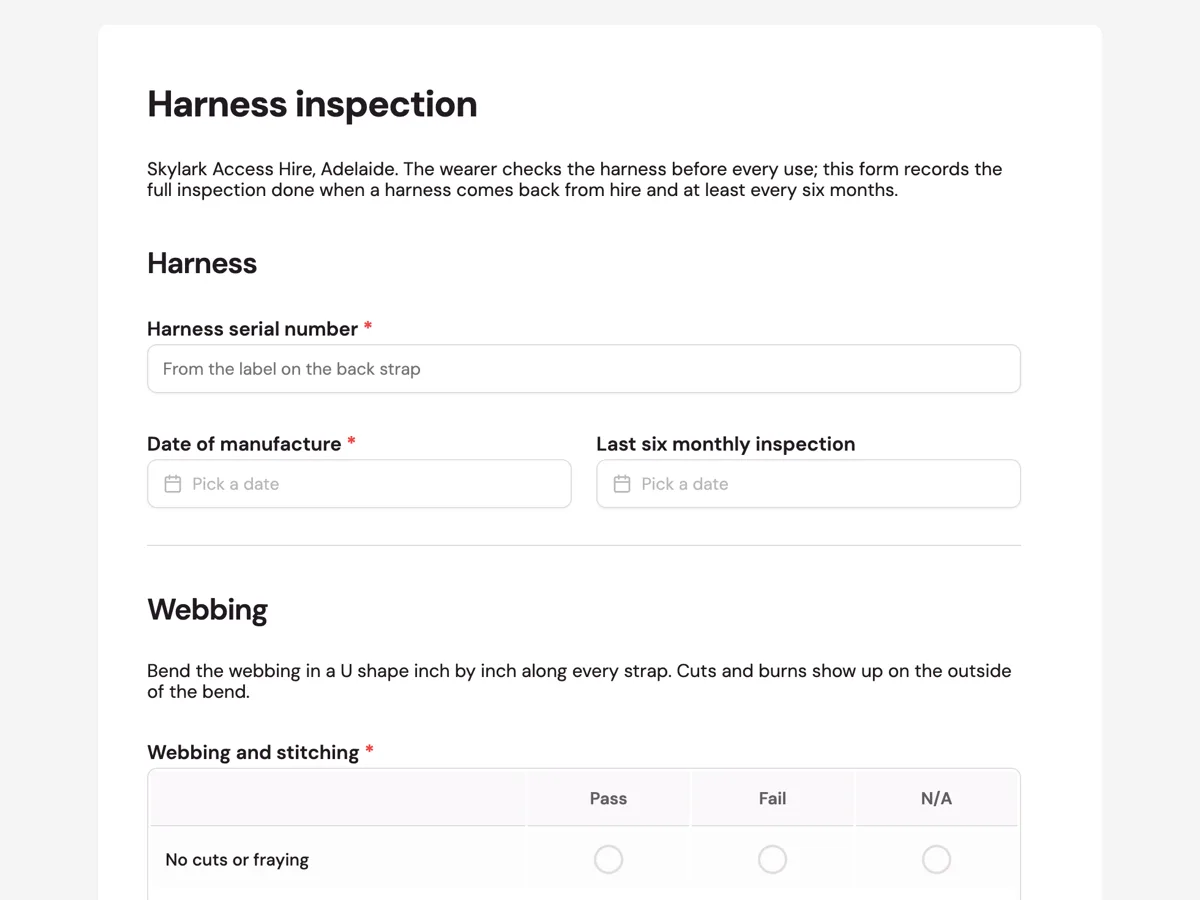
The form itself
A static copy of the finished form, exactly as it renders. Nothing here can be filled in or submitted, so read it as a reference and build your own from the button above.
Every field, and what it collects
The complete field list, in the order respondents meet it.
- Harness serial numberShort textRequired
- Date of manufactureDateRequired
- Last six monthly inspectionDate
- Webbing and stitchingRating gridRequired
- Statements:
- No cuts or fraying
- No burns or melted spots
- No chemical stains
- Stitching intact
- No UV fading or stiffness
- Metal partsRating gridRequired
- Statements:
- D rings free of cracks and sharp edges
- Buckles close and hold
- Adjusters slide and lock
- Fall indicator not deployed
- Labels legible
- Lanyard and shock absorberSingle choiceRequired
- Options: Pass · Fail, pack opened or stretched · Not issued with this harness
- Photo of any damagePhoto upload
- Lay the strap flat and photograph the damage with a coin or ruler beside it for scale.
- Removed from service?Single choiceRequired
- Options: No, back on the shelf · Yes, cut and binned
- Inspector or wearerSignatureRequired
Harness
Webbing
Hardware and labels
What each field on this form collects
The serial number comes from the harness label, and two dates sit beside each other: the date of manufacture, and the last six monthly inspection. The webbing grid has five rows for cuts, burns, chemical stains, stitching and UV damage. The hardware grid has five for D rings, buckles, adjusters, the fall indicator and labels. A single choice records the lanyard and shock absorber, with an answer for a harness issued without one. A photo, the removal question and the signature finish the record.
The wearer's check and the six monthly inspection
Australian guidance on height safety equipment, built on the AS/NZS 1891 series, expects two levels of checking. The person about to wear the harness looks it over every time. A competent person inspects it in detail at an interval of no more than six months, and records the result against the serial. This form serves the second purpose but works for the first. It asks for the last inspection date so a harness that has slipped past six months is noticed. Harnesses also have a service life set by the manufacturer, which is why the manufacture date is required.
Fall arrest indicators
Most harnesses and energy absorbing lanyards carry an indicator, often a fold of webbing stitched shut or a tag that shows when the harness has arrested a fall. Once it has deployed, the harness has done its job and is retired, whatever it looks like. The indicator row is in the hardware grid, and the lanyard question has a specific Fail answer for an opened or stretched shock absorber pack. The thank you screen tells the inspector to cut a failed harness through the webbing so nobody pulls it out of the bin and reissues it.
How to adapt this form
A roofing company adds rows for the rope grab and the static line it uses with each harness. A rescue team adds the device used and the date of its last service. A business that issues each harness to a named worker adds the worker's name, so the responses table becomes a personal equipment register.
What makes this form work
Two dates side by side
Date of manufacture and last six monthly inspection sit on one row. An inspector sees in a glance whether the harness is near the end of its service life or overdue for its periodic check.
The bend test is explained
The paragraph tells the inspector to bend the webbing in a U shape along every strap. Small cuts and heat damage hide when webbing lies flat and open up on the outside of the bend.
Removal is a recorded decision
Removed from service offers back on the shelf, or cut and binned. The record shows the harness was destroyed, not just set aside where it could be picked up again.
Questions people ask
How often should a safety harness be inspected in Australia?
Before every use by the wearer, and by a competent person at intervals of no more than six months under the guidance built on AS/NZS 1891.4, or more often in harsh conditions. Follow the manufacturer's instructions as well. Record the periodic inspection against the harness serial so the next due date can be checked.
When must a harness be thrown out?
When it has arrested a fall, when a fall indicator has deployed, when webbing is cut, burnt, melted or chemically damaged, when stitching has failed, when hardware is cracked or distorted, or when it reaches the end of the service life the manufacturer sets. Destroy it so it cannot be reused.
What is a fall arrest indicator?
A visible marker on a harness or lanyard, often a fold of stitched webbing or a coloured tag, that shows the equipment has taken the shock of a fall. Once deployed it does not reset. Equipment with a deployed indicator is retired even if every other part looks perfect.
Does the lanyard need its own inspection record?
Lanyards and shock absorbers have their own labels, dates and service lives, so many companies record them separately. This form records the lanyard issued with the harness in one question. A business that swaps lanyards between harnesses should give each lanyard an ID and record it on its own form.
Can a harness be washed?
Only as the manufacturer allows, usually with mild soap and water and air drying away from heat and sunlight. Solvents, bleach and hot driers damage the webbing. A harness with paint or chemicals on it should be inspected for stains and stiffness and, if in doubt, retired.
Build your own in about a minute
The button below opens the generator with this use case already described. Change the wording to match your own, generate, then edit anything you like.
Make one like thisOther form examples
Power tool inspection checklist for building sites
A power tool inspection checklist looks at the guard, lead and plug, switch, body, blade or disc rating, handle and battery before a tool is used, and records the dates from its test tag. This builder version also asks whether the tool runs through an RCD.
PPE inspection checklist for a construction crew
A PPE inspection checklist goes item by item through a worker's hard hat, glasses, hearing protection, hi vis, gloves, boots, respirator and sun protection, and records what was replaced. This formwork crew version also tracks the respirator fit test and the hard hat date, with both the worker and the leading hand signing.
Ladder inspection checklist with load rating and tag out
A ladder inspection checklist records the ladder's ID, type and rated load, then checks the stiles, rungs, feet, spreaders, labels and, on extension ladders, the guides, rope and locks. This shopfitter version ends with a red tag question so a failed ladder leaves the van the same day.
Want the steps in the builder? Read Date, grid and photo fields, then Track each harness by serial. For everything this generator can do, see the form maker.
Written and checked by the OneCraft team. Last checked .