Classic form
Whistleblower report form, anonymous by default
A whistleblower report form lets someone report misconduct without giving their name: what kind of conduct, what happened, when and where, any evidence and who else knows. This Australian version opens with the legal protections in plain words and keeps contact details optional.
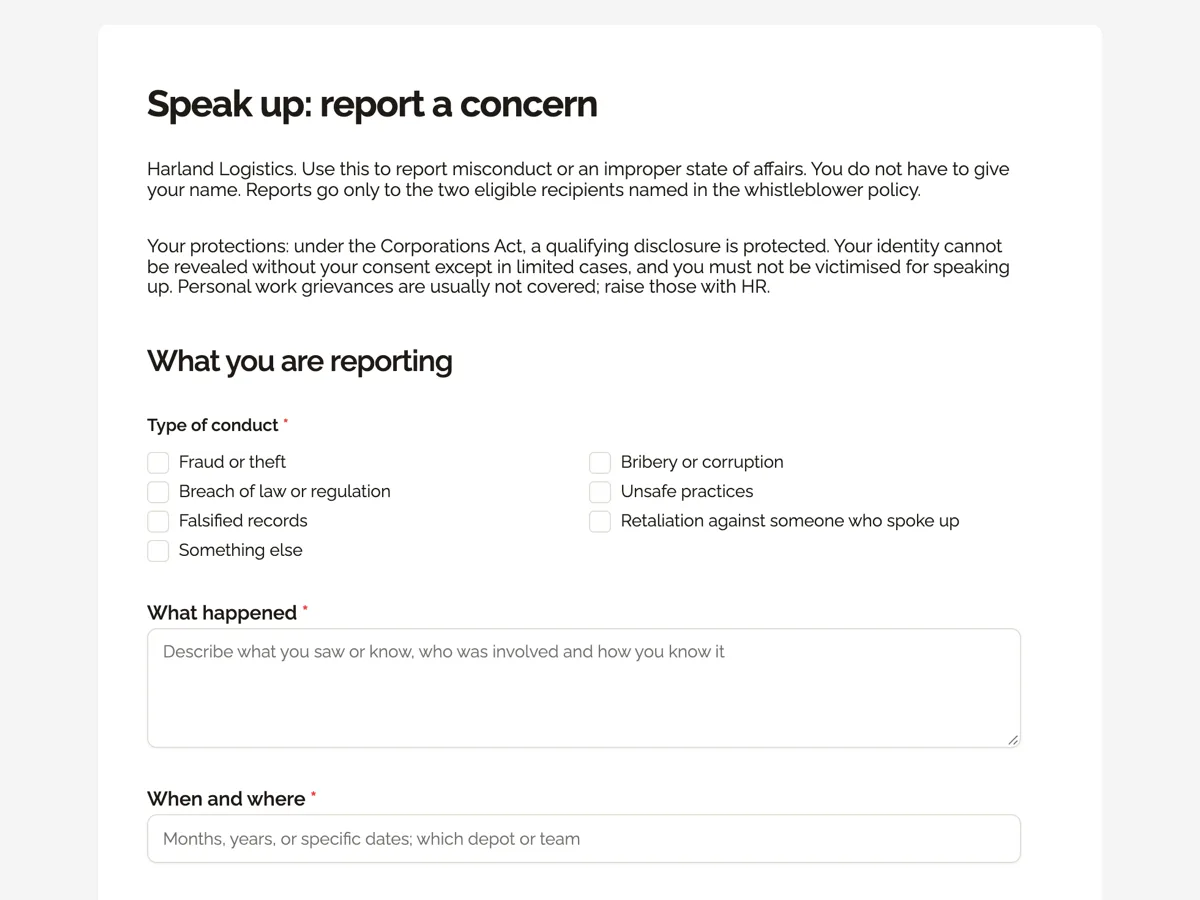
The form itself
A static copy of the finished form, exactly as it renders. Nothing here can be filled in or submitted, so read it as a reference and build your own from the button above.
Every field, and what it collects
The complete field list, in the order respondents meet it.
- Type of conductMultiple choiceRequired
- Options: Fraud or theft · Bribery or corruption · Breach of law or regulation · Unsafe practices · Falsified records · Retaliation against someone who spoke up · Something else
- What happenedLong textRequired
- When and whereShort textRequired
- Evidence, if you have itFile upload
- Photos or PDFs only. Remove anything that identifies you if you want to stay anonymous.
- Does anyone else know about this?Single choice
- Options: Yes, I raised it internally before · Yes, others have seen it · No, or I am not sure
- A way to reach you, optionalShort text
What you are reporting
Contact, optional
What each field on this form collects
A paragraph sets out the protections before any question. A required checklist of seven conduct types follows, including retaliation against someone who spoke up. A long text records what happened, who was involved and how the reporter knows. A short text takes when and where. An optional upload accepts photos or PDFs. An optional single choice asks whether anyone else knows. The last field, also optional, is a private way to make contact. There is no name field.
Anonymous by default
People who see wrongdoing often stay silent because they fear being identified. A whistleblower form that asks for a name first will get fewer reports. This one has no name field at all, and the only contact field is optional and asks for a private email or phone. A public form records no account details, and the evidence field reminds reporters to strip anything identifying from documents. ASIC's whistleblowing pages explain that anonymous disclosures can still qualify for protection, which is why anonymity is the default rather than the exception.
The protections, in the form itself
The Corporations Act protects qualifying disclosures about misconduct or an improper state of affairs, made to eligible recipients. The protections include keeping the discloser's identity confidential and making it an offence to victimise them. Personal work grievances, such as a dispute about a promotion, are generally excluded and belong with HR. Putting a short version of this at the top of the form helps people decide whether this is the right channel before they write anything. The company's whistleblower policy, which large companies must have, holds the detail.
How to adapt this form
A charity adds conduct types for misuse of donations and safeguarding concerns. A public sector agency replaces the Corporations Act note with the public interest disclosure law that applies to it. A company with an external hotline adds its number to the paragraph for people who would rather speak to someone than type.
What makes this form work
No name field at all
The form never asks who the reporter is. The only contact field is optional and invites a private address, so anonymity takes no effort.
Protections come first
The paragraph at the top states the protection, the confidentiality and the exclusion for personal grievances. Reporters decide on the right channel before they type a word.
Retaliation is a conduct type
One of the seven options is retaliation against someone who spoke up. A system that protects whistleblowers needs a way to report that it failed.
Questions people ask
Can a whistleblower report be anonymous in Australia?
Yes. Under the Corporations Act, a discloser does not have to identify themselves to qualify for protection, and they can stay anonymous throughout any investigation. Anonymous reports can be harder to investigate, which is why this form offers an optional private contact.
What does whistleblower protection cover?
For qualifying disclosures, it protects the discloser's identity, protects them from detriment such as dismissal or harassment, and can give them immunity from some liability for making the disclosure. The rules have conditions about what is disclosed and to whom. ASIC's pages explain them.
What is not covered by whistleblower protection?
Personal work grievances that only affect the person, such as a disagreement about pay or a transfer, are generally not covered unless they also involve victimisation or wider misconduct. Those go to HR or a grievance process. The paragraph on this form says so.
Who reads whistleblower reports?
Only the eligible recipients named in the company's whistleblower policy should see them. Restrict access to the form's responses to those people, and do not set an email alert to a shared inbox. The responses table is visible only to the form owner and anyone they share it with.
Does the form record the reporter's IP address or email?
The form does not ask for an email and a public form needs no sign in. The responses table shows the answers and the time of submission. Anyone very concerned about being traced can submit from a personal device on a personal network.
Does a company need a whistleblower policy?
Public companies and large proprietary companies in Australia must have a whistleblower policy, and many smaller organisations adopt one anyway. The policy names the eligible recipients, explains protections and describes how reports are handled. This form is one channel the policy can point to.
Build your own in about a minute
The button below opens the generator with this use case already described. Change the wording to match your own, generate, then edit anything you like.
Make one like thisOther form examples
Near miss report form that asks for no blame
A near miss report form records something that could have hurt someone but did not: when and where it happened, what nearly happened, how bad it could have been and what was done straight away. This civil contractor version makes the reporter's name optional, because the report matters more than who sent it.
Data breach report form for the NDB scheme
A data breach report form lets staff report a suspected breach quickly: when it was found, what information and how many people, how it happened, whether it is contained and whether it could cause serious harm. This Australian version explains the Notifiable Data Breaches test in plain words and leaves the assessment to the privacy officer.
Daily site diary form for a construction site
A site diary form is the supervisor's daily record of weather, who was on site, what plant worked, what got done, what held work up and who visited. Written the same day, it becomes the evidence behind variations and delay claims, so this civil version asks for facts and times.
Want the steps in the builder? Read Keep the form public so no login is needed, then Paragraph and upload fields. For everything this generator can do, see the form maker.
Sources
Written and checked by the OneCraft team. Last checked .