Contract clause
Revisions clause: rounds of changes for creative work
A revisions clause sets how many rounds of changes a client can ask for on creative or professional work, what counts as a revision rather than new work, how feedback must be given, how long each side has, and what extra rounds cost. It keeps a fixed fee project from growing without limit.
A revisions clause caps the back and forth on creative work. It says how many rounds of changes the fee includes, usually two, what a round is, that feedback comes consolidated from one person, and what further rounds or changes of direction cost. Without it, a fixed fee becomes an open ended commitment.
Indunil Asanka · Co-founder
3 min read · Published
Sample clause
Written for brand design contract between a fictional designer and Brewcastle, a fictional craft brewery, for a logo, colour and type system and three can labels.
Revisions. (a) The Fee includes three initial logo concepts and two rounds of revisions on the chosen concept, and two rounds on each can label. (b) A round of revisions is one set of consolidated written feedback from the Client's nominated contact, given within 5 business days after the Designer presents the work. The Designer delivers the revised work within 5 business days after receiving it. (c) A revision is a change to the presented work, such as colour, wording, size or arrangement. A change of direction, a new concept or a new item is not a revision and will be quoted separately. (d) Further rounds are charged at $120 an hour, estimated in writing and approved by the Client before work starts. (e) If the Client does not give feedback within 10 business days, the work is treated as approved for the purpose of moving to the next stage.
Sample wording, not legal advice.
Variants
Website rounds by stage
Web projects delivered in stages, such as design, build and content, with rounds allowed at each stage.
Two rounds of revisions are included at each of the design, build and content stages. Feedback from a stage cannot reopen an earlier approved stage without a change request.
Revision window for translation
Translation and writing services, where revisions are tied to accuracy and a time window rather than rounds.
The Client may ask for corrections within 10 days after delivery. Corrections of errors in the translation are free; changes to the source text or style preferences are charged at the standard rate.
Unlimited minor revisions within a period
Small jobs where the provider prefers a time box to counting rounds.
Minor revisions are included for 14 days after the first draft is delivered. After that, any change is charged at $90 an hour.
What to negotiate
Define a round and a revision
Most disputes come from feedback arriving in pieces from several people, and from new ideas presented as revisions. A clause that defines a round as one consolidated set of feedback from one contact, and separates changes from new direction, prevents both. Clients should make sure the definition still lets them fix genuine mistakes free.
Deadlines on both sides
Projects stall when feedback takes weeks. Turnaround times for both the client's feedback and the provider's revisions keep the schedule moving. A deemed approval after a longer silence, as in the sample, lets the provider move on and invoice, which clients should accept only with a reasonable period.
Errors are not revisions
Fixing the provider's own mistakes, such as a misspelled name or a translation error, should not use up a round or cost extra. Under the Australian Consumer Law, services must be provided with due care and skill, so a clause cannot make a consumer pay to correct the provider's errors.
The risk of leaving it out
A creative project without a revisions clause can turn a fixed fee into unlimited unpaid work, as rounds multiply and new ideas arrive late. It also leaves clients unsure whether a change will cost more, which leads to awkward invoices and disputes at the end, often just when the work is needed.
Revisions and consumer guarantees
When a service is supplied to a consumer in Australia, the Australian Consumer Law guarantees that it will be provided with due care and skill, be fit for any particular purpose the consumer made known, and be supplied within a reasonable time. Those guarantees cannot be excluded. A revisions clause can limit changes the client chooses to make, but not the provider's duty to fix work that falls short of the guarantees. Law checked on 21 October 2026. This page explains how the law works and is not legal advice.
Rounds in the examples
The graphic design example's summary panel shows three initial concepts and two revision rounds alongside a 50 per cent kill fee. The web design contract allows two rounds a stage. The freelance agreement lists two rounds of revisions in its short version, and the translation agreement uses a 10 day revision window. Each puts the limit where the client sees it before signing.
Revisions and the kill fee
A revisions clause often sits beside a kill fee clause. If the client ends the project after the concepts or a round of revisions, the kill fee sets what the designer is paid for the work done. Read together, they cover the two ways a creative project goes wrong: endless changes, and cancellation part way through.
Where the clause sits in a generated document
Graphic design, web design, freelance, translation and copywriting contracts carry this clause after the deliverables. When asking the AI document generator for one, give the number of concepts and rounds, the definition of a round, turnaround times, the hourly rate for extra rounds and any deemed approval period.
Documents that carry this clause
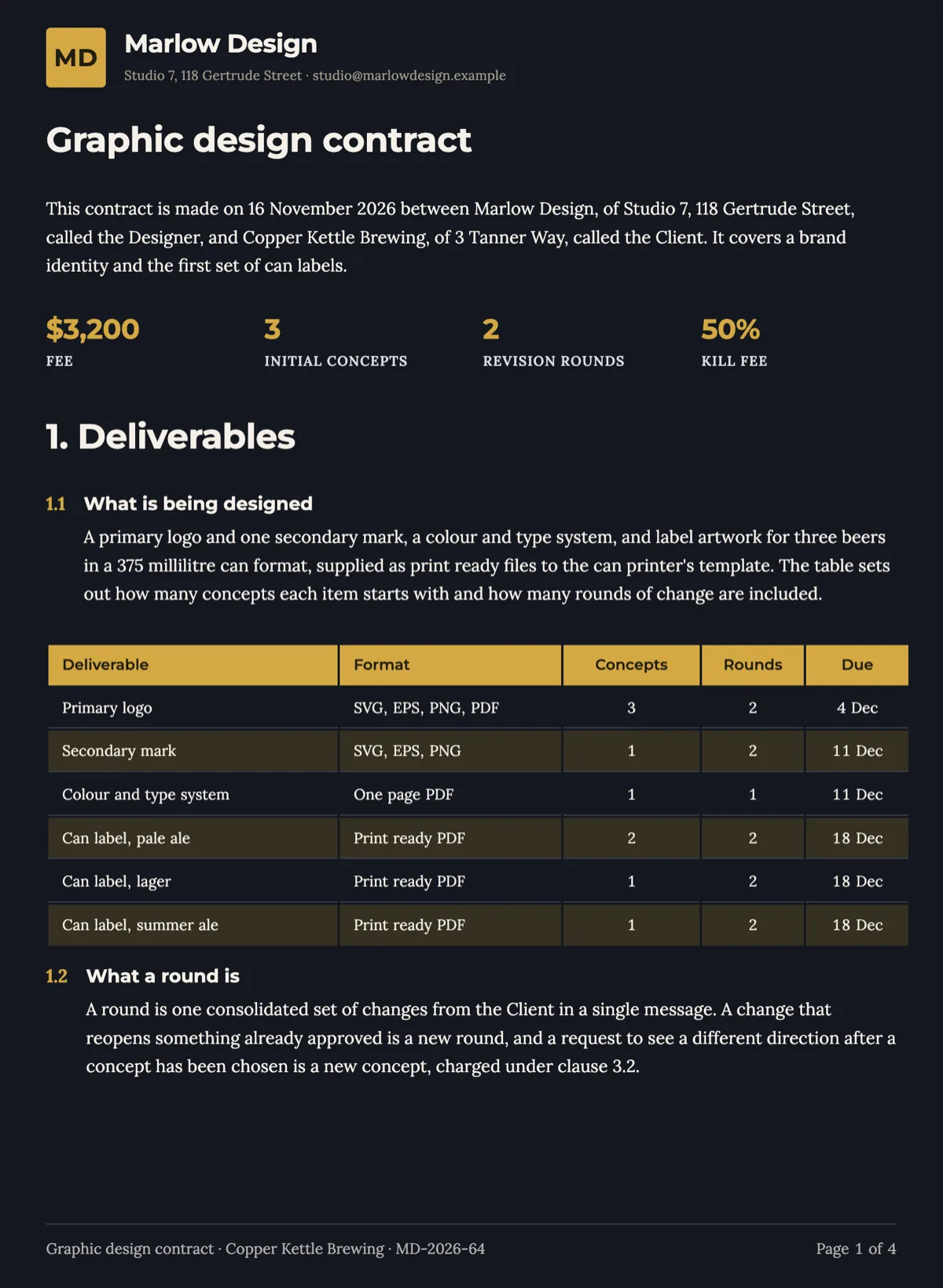 Graphic design contract template with concepts, rounds and usage rightsTwo things end design relationships: an endless run of revisions nobody priced, and a client who does not know whether they can put the logo on a shirt they sell. This contract counts the concepts and rounds for every deliverable and sets out the usage rights medium by medium.
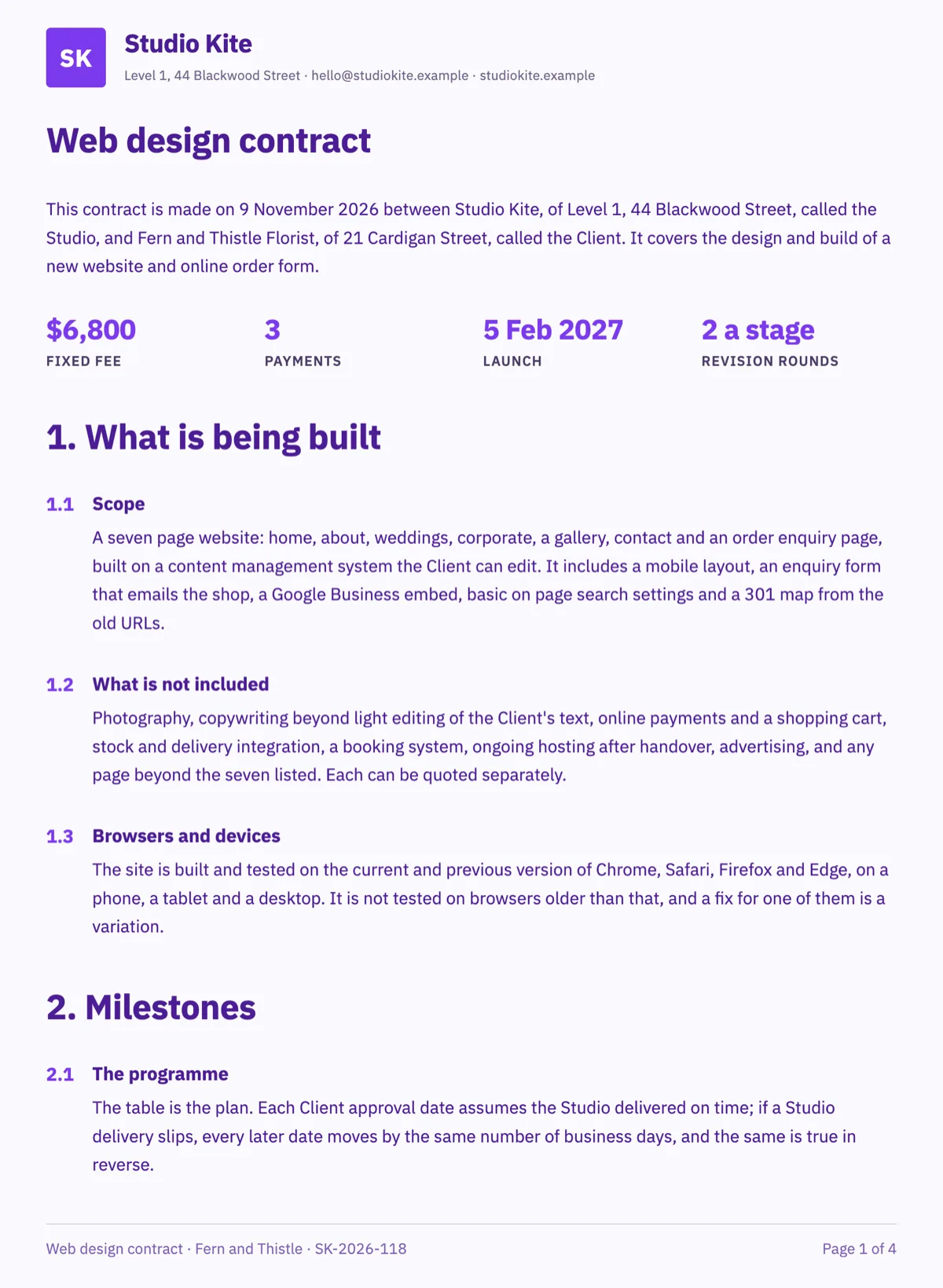 Web design contract template with milestones and revision roundsWebsite projects rarely fail on design. They stall because the content never arrives and nobody wrote down what happens next. This contract dates every milestone on both sides, deems a stage approved if the client goes quiet, and moves the launch by a day for every day the copy is late.
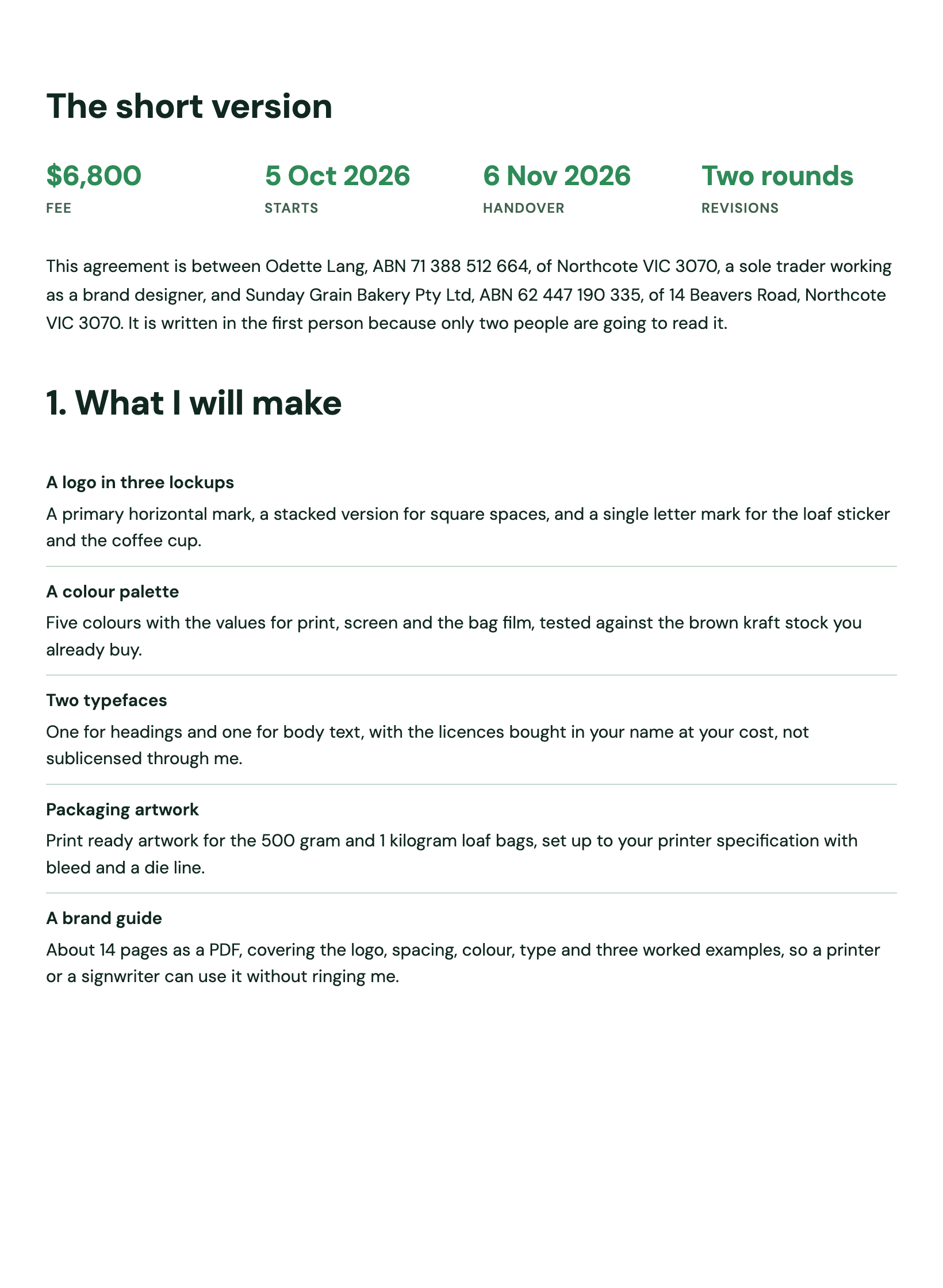 Freelance contractA brand designer and a bakery owner agree five weeks of work in language they can both read. It covers everything a longer contract would, and it never once says party of the first part.
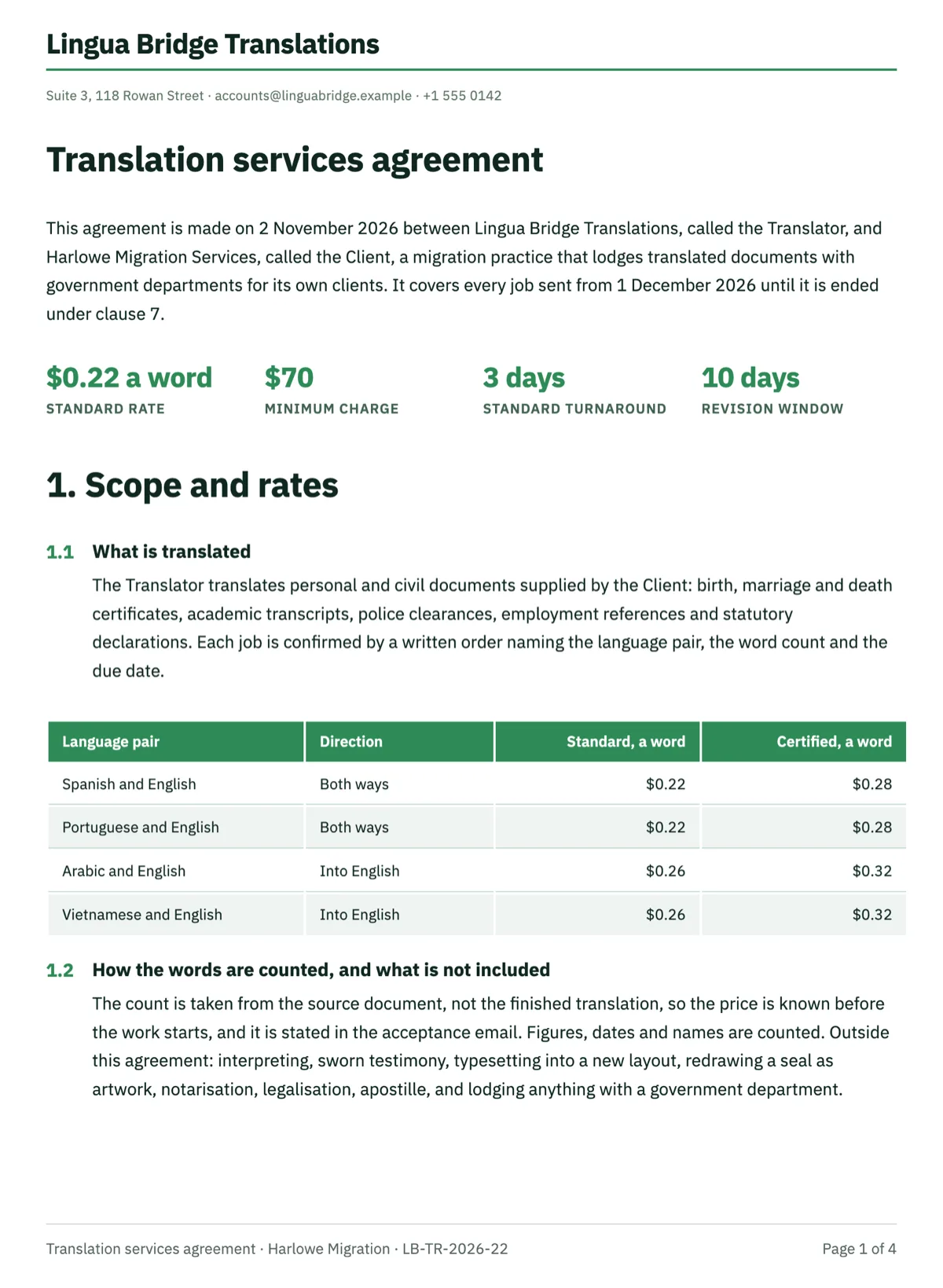 Translation services agreement with word rates and turnaround bandsTranslation is priced by the word and judged by the deadline, so an agreement that names neither is just a handshake. This one puts five language pairs and two rates in a table, bands the turnaround by word count, and says exactly what a certified translation is before anyone argues about whether the authority will accept it.
Questions people ask
What is a revisions clause?
It is the term in a creative or professional services contract that limits how many rounds of changes are included in the fee, defines what a round is, sets turnaround times and prices extra rounds, so the project has a clear end.
How many revisions are normal in a design contract?
Two or three rounds are common for logos and brand work, often after a set number of initial concepts. Websites often allow two rounds at each stage. The right number depends on the fee; more rounds should mean a higher price.
What counts as a revision?
Usually a change to the work already presented, such as colours, wording, sizes or layout. A new concept, a change of direction or an extra deliverable is generally new work, not a revision, and the clause should say it will be quoted separately.
Do I pay to fix the designer's mistakes?
No. Correcting the provider's own errors, such as a misspelled name, should be free and should not use up a revision round. For consumers, the Australian Consumer Law requires services to be provided with due care and skill. Report them promptly.
What is deemed approval?
A term treating work as approved if the client gives no feedback within a set period. It stops projects stalling. Clients should check the period is reasonable and that deemed approval only moves the project to the next stage, not waive their rights about defects.
Put the clause in a finished document
The button opens the document generator with a starting description already filled in. Change it to match your own agreement before you run it.
Create a document with OneCraftRelated clauses
- Approval clause: draft approval and deemed approvalApproval clause sample for content and project contracts: what needs approval, time to respond, grounds to refuse, deemed approval and what it does not waive.
- Kill fee clause: what a freelancer is paid when work is cancelledA kill fee clause for a freelance travel writer: 50% if cancelled after the outline, 100% after delivery, rights reverting, and a stage by stage table.
- Acceptance testing clause: deciding when the work is doneAn acceptance testing clause sets how a deliverable is tested and when it counts as accepted. Sample 10 day test wording, deemed acceptance and staged variants.
- Scope of work clause: what the price includes and excludesA scope of work clause sets what is and is not included in the contract price. Sample bathroom renovation wording, inclusions and exclusions, and variants.
For everything the document generator can do, see the document maker.
Step by step in the builder: Create a document with AI, then Document builder components.
Written and checked by the OneCraft team. Last checked .