Classic form
Compressor pre start checklist for stored pressure
A compressor pre start checklist looks at the relief valve, the gauge, the receiver drain, hoses, couplings and whip checks before air goes into the line, then the guards, fuel and oil. This blasting workshop version also records when the air receiver is next due for its periodic inspection.
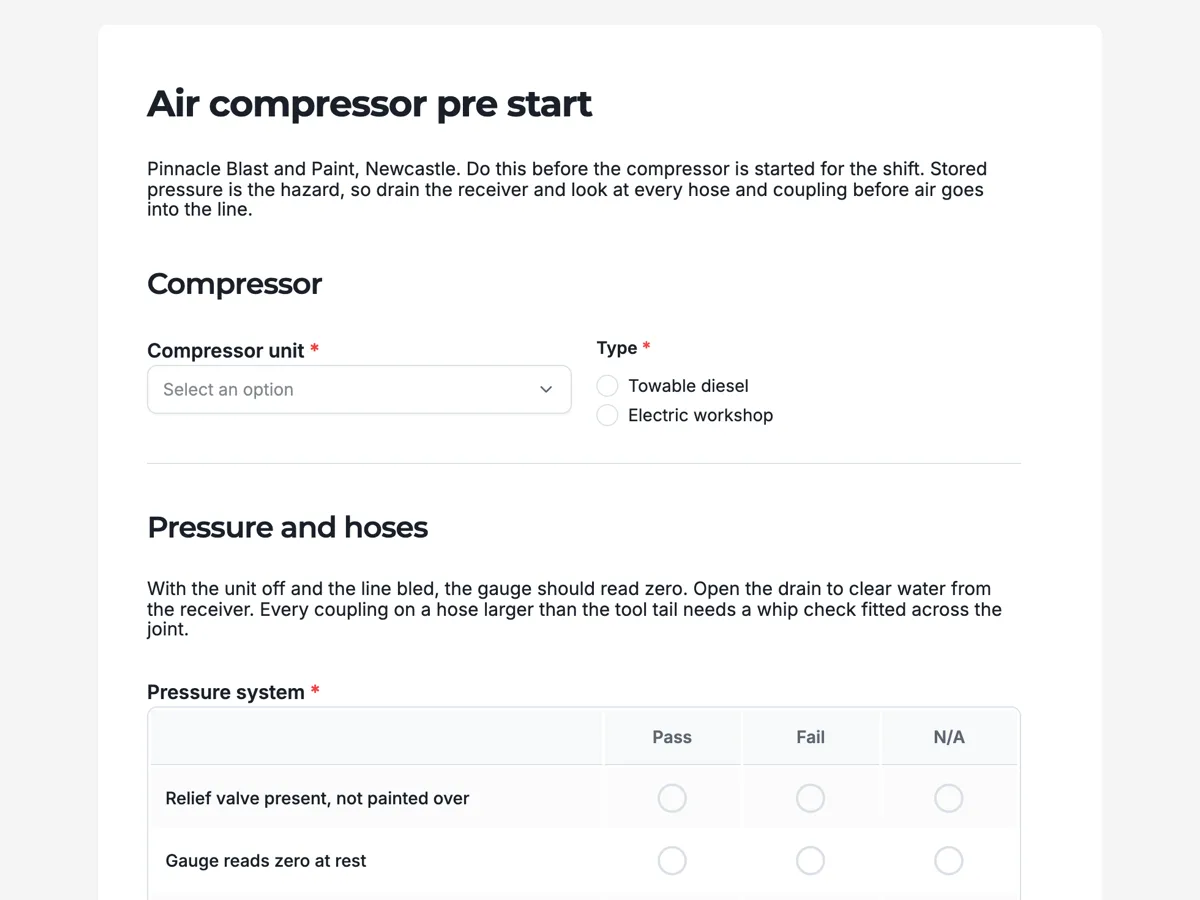
The form itself
A static copy of the finished form, exactly as it renders. Nothing here can be filled in or submitted, so read it as a reference and build your own from the button above.
Every field, and what it collects
The complete field list, in the order respondents meet it.
- Compressor unitDropdownRequired
- Options: AC-1 towable diesel, 185 cfm · AC-2 towable diesel, 375 cfm · AC-3 electric workshop, 50 L receiver
- TypeSingle choiceRequired
- Options: Towable diesel · Electric workshop
- Pressure systemRating gridRequired
- Statements:
- Relief valve present, not painted over
- Gauge reads zero at rest
- Receiver drained of water
- Hoses free of cuts and bulges
- Couplings seated and pinned
- Whip checks fitted across joints
- Machine conditionRating gridRequired
- Statements:
- Belt guard in place
- Fuel, or power lead tested and tagged
- Oil level
- Air filter clean
- Tow hitch, chains and lights
- Next receiver inspection dueDateRequired
- Photo of the faultPhoto upload
- Photograph the hose, coupling or valve that failed with the line bled to zero.
- Checked bySignatureRequired
Compressor
Pressure and hoses
Machine
What each field on this form collects
The compressor comes from a list of three units, two towable diesels and an electric workshop compressor, with the type confirmed as a single choice. The pressure grid has six rows: relief valve present and not painted over, gauge at zero at rest, receiver drained, hoses free of cuts and bulges, couplings seated and pinned, and whip checks fitted. The machine grid has five rows for the belt guard, fuel or the power lead, oil, air filter and the tow hitch. A date field records the next receiver inspection, then a photo and the signature.
Stored pressure is the hazard
A compressor stores energy in its receiver and every metre of hose, and the injuries come from that energy being released in the wrong place. The relief valve is the last protection if the pressure switch fails, and a valve painted over or seized will not lift. The gauge at zero row confirms the line has been bled before anyone works on it. Draining the receiver removes water that corrodes the vessel from inside, which is why WorkSafe Victoria's guidance on air receivers ties draining to the inspection regime.
Hose whip and couplings
WorkSafe Victoria has published an alert on deaths and injuries from high pressure hose whip, naming compressor air hoses among the risks. An unsecured hose that parts flails until the system is depressurised, and the coupling on its end becomes a weapon. Whip checks fitted across each joint hold the hose if a coupling lets go, and pinned couplings stop the claw type from twisting apart. The form gives couplings and whip checks separate rows so that one good answer cannot cover the other.
How to adapt this form
A hire company sending towable compressors out adds the hire docket and a row for the operator instructions on the canopy. A dental or medical practice with a small compressor drops the tow and fuel rows and adds a row for the air dryer. A plant room technician checking a fixed compressor bank adds the receiver registration or plate number, so each record ties to one vessel.
What makes this form work
The inspection date is required
Next receiver inspection due is a required date field. The operator's daily check cannot replace the periodic inspection of the vessel, and writing the date down every day means an overdue inspection is noticed by the person standing next to it.
Couplings and whip checks are two rows
Couplings seated and pinned, and whip checks fitted across joints, are separate. A hose can have perfect couplings and no whip checks, and that is the configuration that kills people when a coupling fails.
Gauge at zero before anything else
The paragraph and the second row both ask for the gauge to read zero with the unit off and the line bled. Any work on the line starts from a known state.
Questions people ask
How do you check an air compressor relief valve?
Look at it first: it should be the right rating for the receiver, free of paint and corrosion, with its test lever intact. Some manufacturers allow a brief manual lift under pressure to show it moves; follow the manual for your unit. A seized or painted valve fails, and the compressor stays off until it is replaced.
Does an air receiver need registration?
Some pressure vessels must be registered with the regulator depending on their size and hazard level under the WHS or OHS regulations in your state, while many small receivers need only design compliance and periodic inspection. Check your state regulator. In every case the employer must keep the vessel inspected and keep records of that inspection.
What are whip checks for?
A whip check is a short steel cable or strap fitted across a hose joint so that, if the coupling separates, the hose cannot flail. It does not stop the leak, but it stops the hose and coupling hitting someone while the line depressurises. Fit them at every joint on air lines larger than a tool tail.
How often should the compressor pre start be done?
Before the first use of each shift and again after the unit is moved to a new location or a hose run is changed. The daily check is the operator's; the receiver inspection on the date in this form is done by a competent person at the interval the manufacturer and standards set.
Can the form remind someone when the receiver inspection is due?
The form records the date but does not send reminders. Exporting the responses to CSV gives a list of compressors with their due dates, which can be sorted or loaded into a calendar. A webhook can also pass each submission to a maintenance system that handles reminders.
Build your own in about a minute
The button below opens the generator with this use case already described. Change the wording to match your own, generate, then edit anything you like.
Make one like thisOther form examples
Skid steer pre start checklist built around the seat bar
A skid steer pre start checklist covers the operator station, the coupler, tyres or tracks, fluids and lights before the machine moves off the trailer. The check that decides everything on a skid steer is the seat bar interlock, so this form puts it first and explains how to test it.
Telehandler pre start checklist by attachment
A telehandler pre start checklist starts with the attachment fitted, because forks, a bucket, a jib with a hook and a work platform each need their own load chart and sometimes their own licence. Then it tests the load moment indicator and checks the boom, stabilisers, steering mode, brakes and cab.
Chainsaw pre start checklist with a chain brake test
A chainsaw pre start checklist tests the chain brake, chain catcher and throttle lockout, then the chain, bar oil and spark arrestor, before anyone cuts. This arborist version adds a protective gear grid, because the saw check alone says nothing about the leg the chain would hit.
Want the steps in the builder? Read Describe a pre start and get a draft, then Review checks in the responses table. For everything this generator can do, see the form maker.
Written and checked by the OneCraft team. Last checked .