Classic form
One on one meeting form with rolling actions
A one on one meeting form records what a manager and a team member covered: recent wins, blockers, how the person is going, their development, actions with owners and dates, and when they meet next. This agency version is written by the team member, and its actions table rolls forward from meeting to meeting.
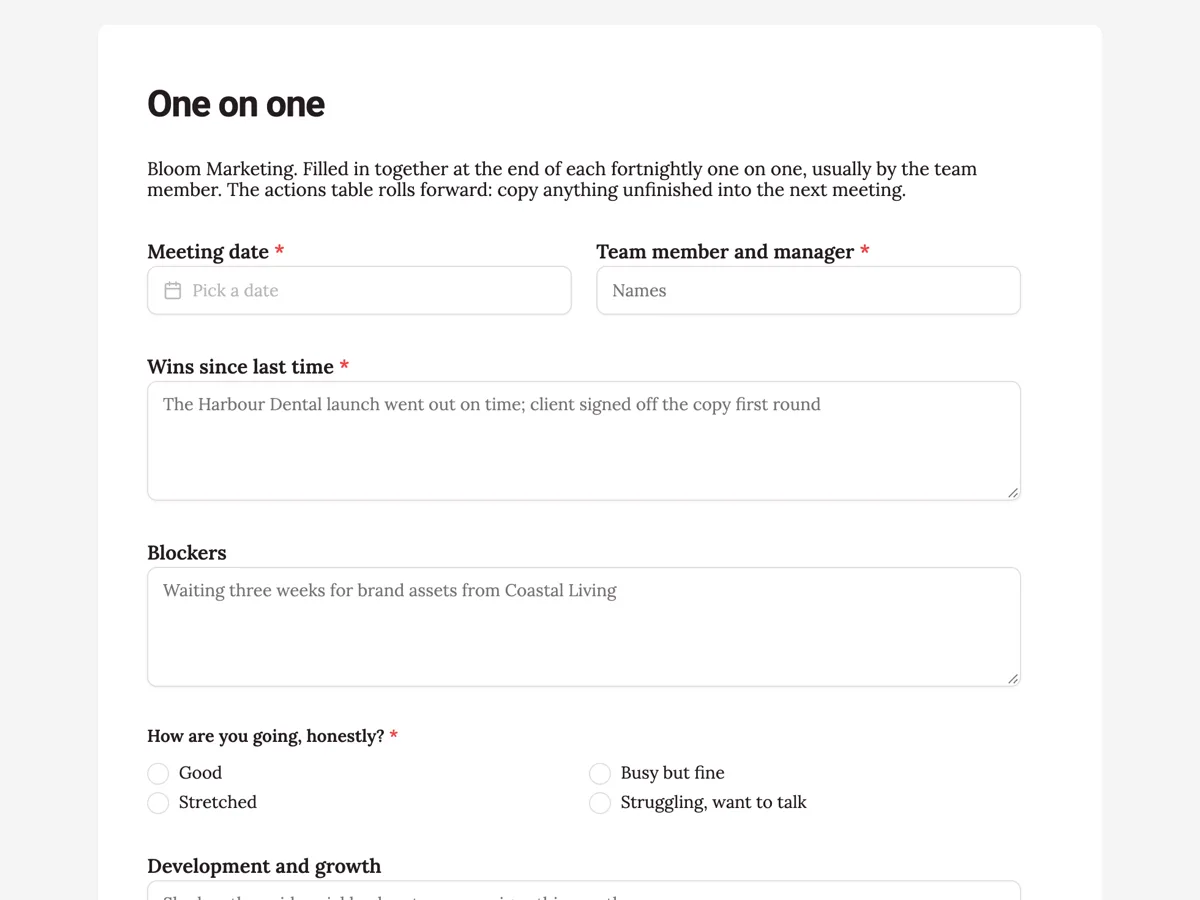
The form itself
A static copy of the finished form, exactly as it renders. Nothing here can be filled in or submitted, so read it as a reference and build your own from the button above.
Every field, and what it collects
The complete field list, in the order respondents meet it.
- Meeting dateDateRequired
- Team member and managerShort textRequired
- Wins since last timeLong textRequired
- BlockersLong text
- How are you going, honestly?Single choiceRequired
- Options: Good · Busy but fine · Stretched · Struggling, want to talk
- Development and growthLong text
- ActionsTable
- Columns: Action · Owner · Due
- Next one on oneDateRequired
Question banks built on this form
What each field on this form collects
The date and the two names share a row. Long text boxes take wins since last time and blockers. A single choice asks how the person is going, honestly, from good to struggling. Another long text records development and growth. A four row numbered table lists actions with owners and due dates, and a required date sets the next meeting.
The team member writes it
A one on one belongs to the team member more than the manager. When the team member fills in the form, the record reflects what they think mattered, and blockers come out in their words. Research and practice guides on management, including Google's re:Work material on managers, put regular one on ones and genuine interest in the person among the habits of good managers. A form that asks for wins first, then blockers, starts the conversation on progress and leaves room for problems without opening with them.
A wellbeing check with a real answer
How are you going is easy to brush off. Four answers including stretched and struggling, want to talk, give the person a way to say it without having to start the conversation. A manager seeing struggling knows to slow down and listen, and may point to support such as an employee assistance program. WorkSafe Victoria's pages on psychosocial hazards describe high job demands and low support as risks employers must manage, and a fortnightly check is an early signal.
How to adapt this form
A remote team adds a question about tools and how well collaboration is working. A sales team adds pipeline numbers. A manager with many direct reports keeps the form short by dropping development to monthly and using a separate goal setting form. A new starter's first eight weeks can add a question about onboarding: what is still unclear, who they have not met yet and which system they cannot use. Once those answers are consistently none, the question comes off.
What makes this form work
Wins come first
The first required box is wins since last time. Starting with progress sets a constructive tone before blockers and problems are discussed.
Struggling is an answer
The wellbeing question offers four honest options, including struggling, want to talk. It makes the hard answer easy to give.
Actions roll forward
The intro asks for unfinished actions to be copied into the next meeting. Nothing agreed in a one on one quietly disappears.
Questions people ask
How often should one on one meetings happen?
Weekly or fortnightly is common, for 20 to 45 minutes. The rhythm matters more than the length: a regular slot that rarely moves tells the team member the meeting matters. This agency meets fortnightly, which the intro states, and moves a meeting rather than cancelling it when something clashes.
What should be discussed in a one on one?
What is going well, what is in the way, how the person is going, their development and any actions. The agenda belongs mostly to the team member. Status updates are better handled elsewhere so the meeting has time for the person.
Who should take notes in a one on one?
Often the team member, so the record reflects what they took from it. Some pairs share a running document. This form is filled in together at the end of the meeting, so both people agree on the wording of the actions before they leave the room.
Are one on one notes confidential?
They should be private to the manager and the team member, and shared further only with consent or when something must be escalated, such as a safety or conduct issue. Limit access to the form's responses accordingly, and tell team members at the start who can read them, so they know what they are sharing.
What if someone says they are struggling?
Listen, ask what would help, and point to support such as an employee assistance program or a change in workload. If there is a risk to the person's safety, act straight away. The answer on the form is a prompt to talk, not a diagnosis.
Can past one on ones be reviewed together?
Yes. Every submission sits in the responses table with its date, and the table exports to CSV. Looking back over a few months shows patterns in blockers and wellbeing that a single meeting can miss, which helps at performance reviews.
Build your own in about a minute
The button below opens the generator with this use case already described. Change the wording to match your own, generate, then edit anything you like.
Make one like thisOther form examples
Employee goal setting form with three measured goals
An employee goal setting form records a small number of goals for a set period, how each will be measured, when it is due, how the goals connect to team priorities, what support is needed and when progress will be checked. This version limits each employee to three goals and asks both employee and manager to sign.
Probation review form with evidence for every rating
A probation review form records how a new employee is going against a small set of areas, the evidence behind each rating, the support they have been given and the decision: continue, confirm, extend or escalate. This version is used twice, at three months and before probation ends, so the end has no surprises.
Employee referral form with candidate consent
An employee referral form lets staff put forward someone they know for an open role: which role, the candidate's details, how they know each other, a CV, why the candidate fits and whether they have agreed. This version will not contact a candidate who has not agreed, which protects both the candidate and the referrer.
Want the steps in the builder? Read Text, choice and table fields, then Look back over past one on ones. For everything this generator can do, see the form maker.
Written and checked by the OneCraft team. Last checked .