Industry kit
Content creator templates for media kits, brand deals and collaborations
A content creator sells attention, so the business runs on a media kit, a collaboration enquiry, a brand deal agreement that lists every deliverable, and a page that sends followers where they should go. This kit links finished examples of each, written for invented creators.
The creator business on paper
A creator who earns from brands needs a small set of documents that work hard. The media kit shows the audience, the engagement, past partners and the rates. The collaboration enquiry form, linked from a profile, asks brands for the product, the deliverables, the dates and the budget before the creator replies. The brand deal agreement lists each post, the dates, the approval steps, the usage rights and the fee, so nothing is argued after the post goes live. Creators who collaborate with each other add a collaboration agreement that splits ownership and income.
Disclosure, rights and the link in bio
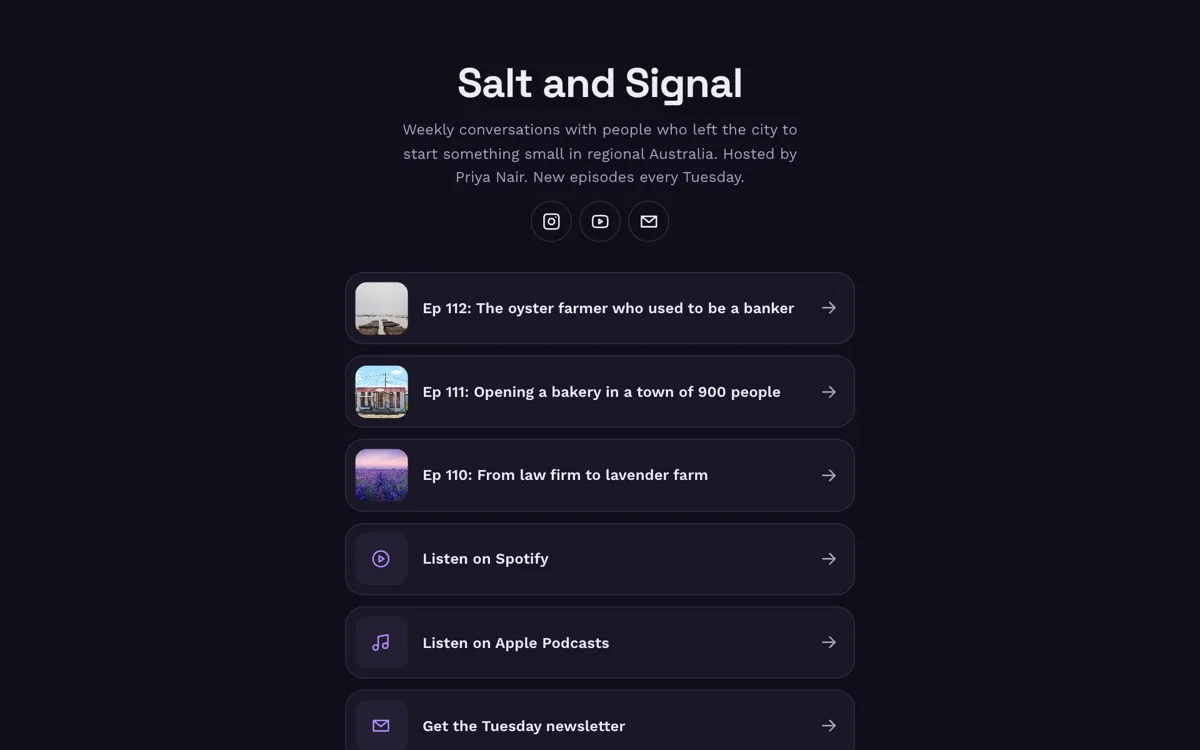
Two things catch creators out. Paid content must be clearly labelled as advertising, and advertising regulators publish guidance on how. And usage rights decide how long a brand may reuse a creator content in its own ads, which is worth more than the post itself. The agreements below price usage separately. A link in bio page that points to the newsletter, the latest work and the media kit turns a profile into a small website. Every card opens the finished example, written for an invented creator with realistic numbers.
Who the kit is for
The kit is written for independent creators on Instagram, TikTok, YouTube, podcasts and newsletters, and for the small agencies that manage them. Disclosure rules differ by country; the UK Advertising Standards Authority guide for influencers is one of the clearest published, and Australian creators should follow the local advertising code as well. Income from brand deals is taxable, and the ATO publishes guides by occupation. The creators and brands in the examples are invented.
The kit, piece by piece
Media kit
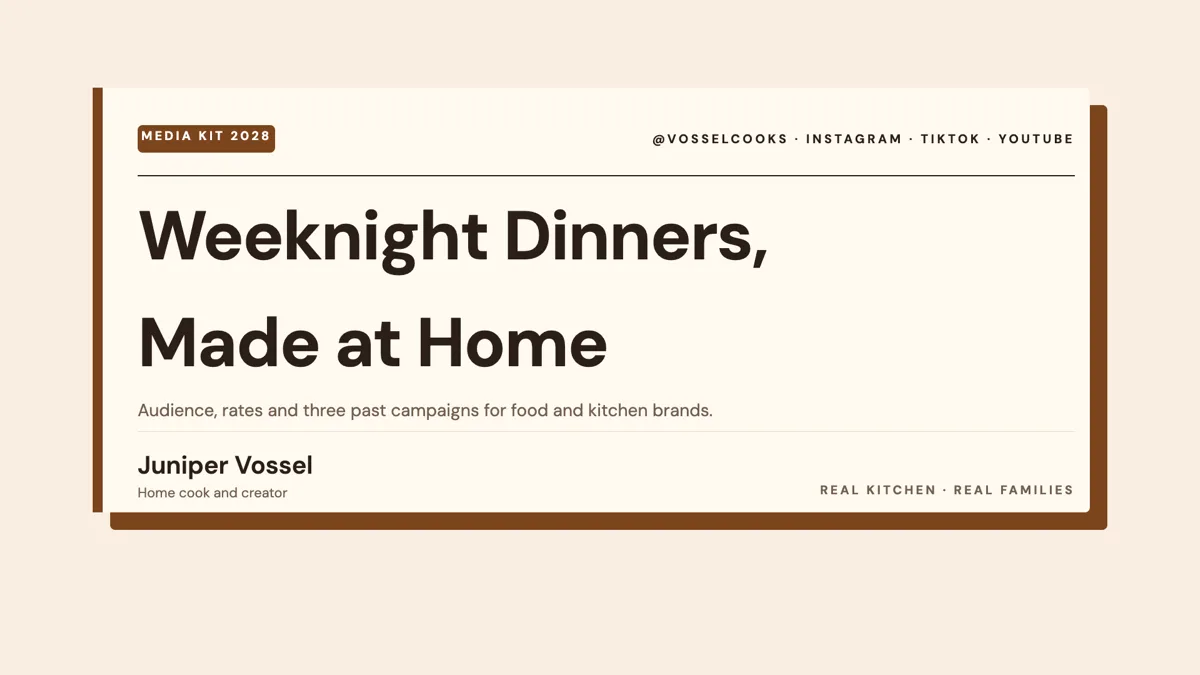
Influencer media kit: audience, rates and past workAudience, engagement, past work and package rates on slides, to send to brands.
Influencer agreement
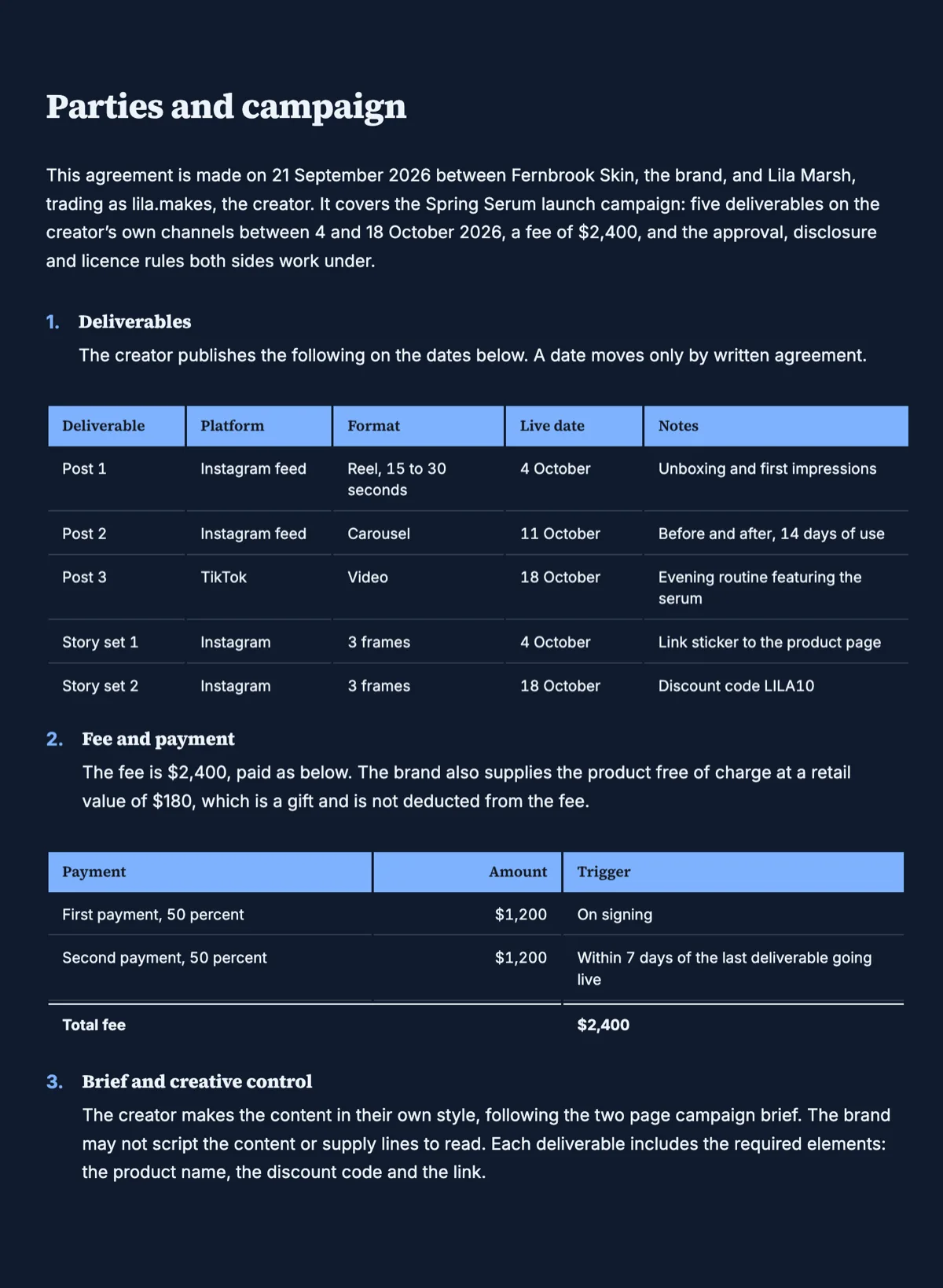
Influencer agreement template with the posts, dates and rights in one tableThe posts, dates, approvals, usage rights and fee in one table, so the deal is clear.
Collaboration enquiry form
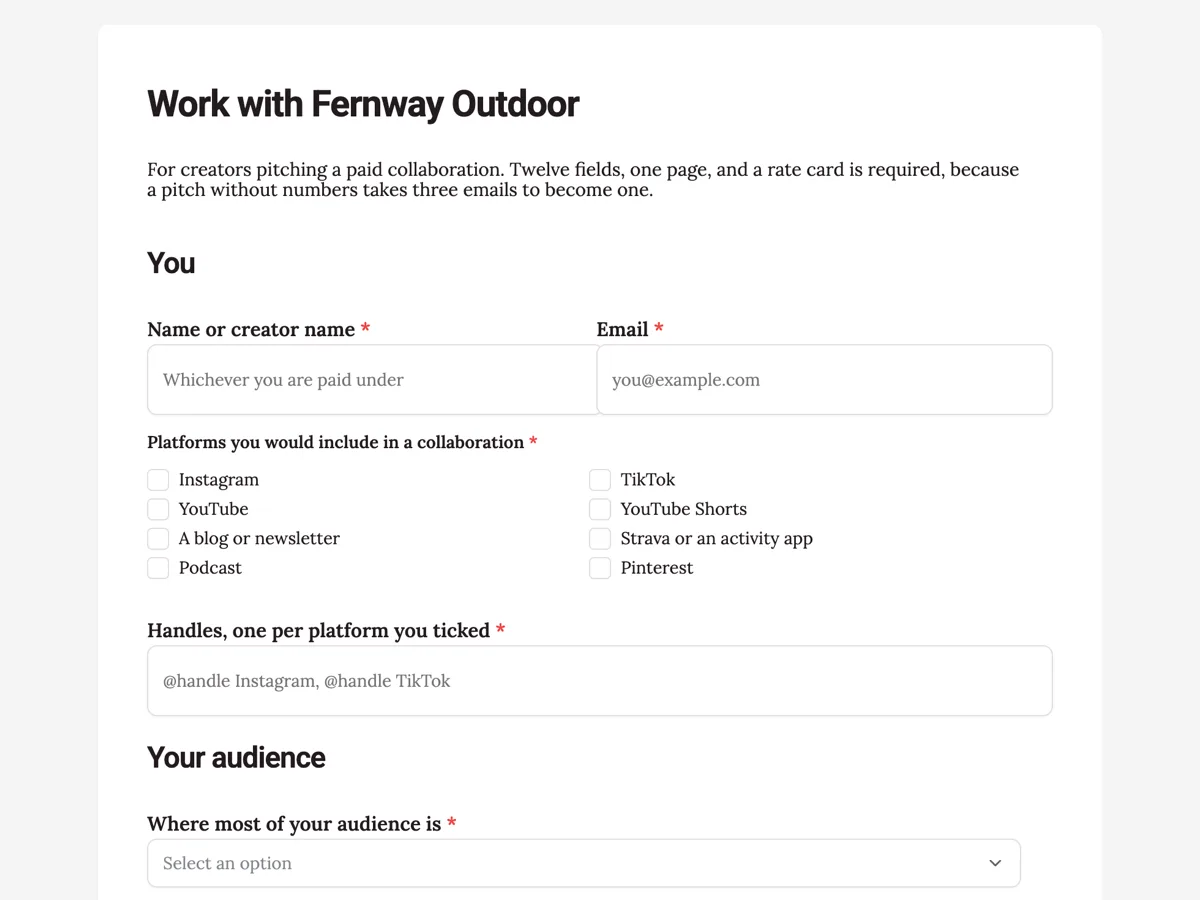
Influencer collaboration form that asks for the rate card up frontAsks brands for the product, deliverables, dates and budget up front.
Creator collaboration agreement
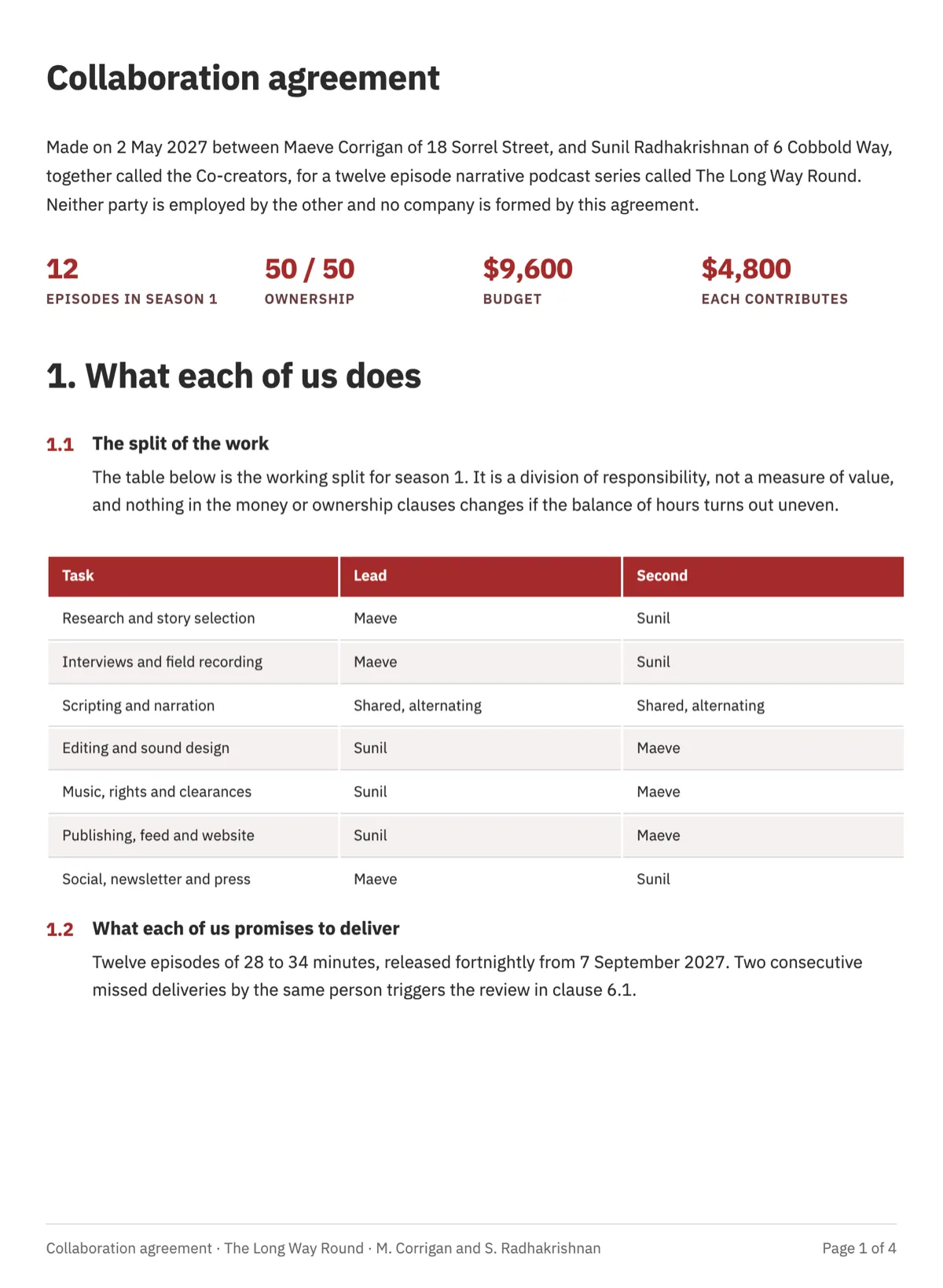
Collaboration agreement template with an even ownership splitTwo creators split ownership and income from a joint project evenly.
Sponsorship agreement
Sponsorship agreement template that lists every benefit with a numberEvery sponsor benefit listed with a number, for channel or podcast sponsorships.
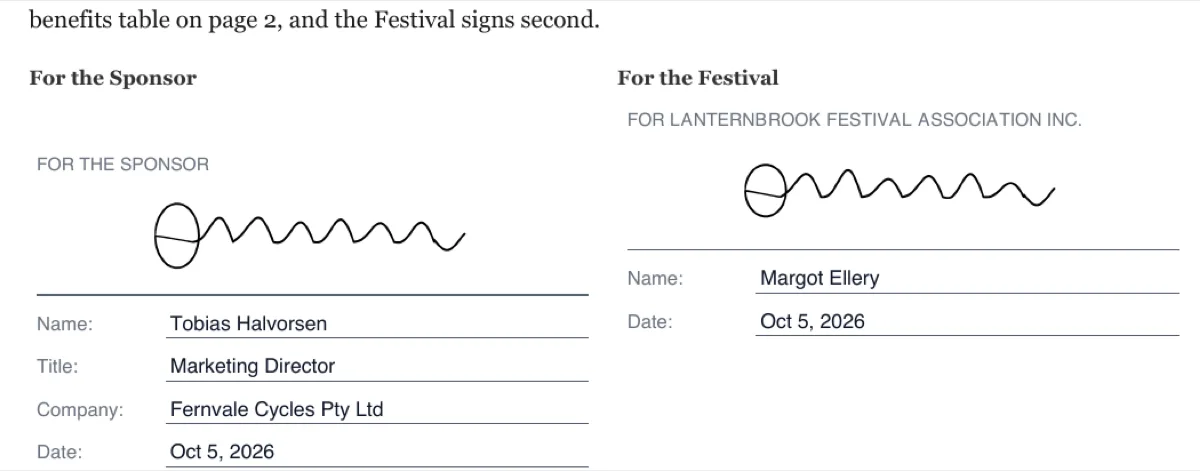
Sponsorship signing
Sign a sponsorship agreement onlineThe sponsorship agreement signed online by both parties.
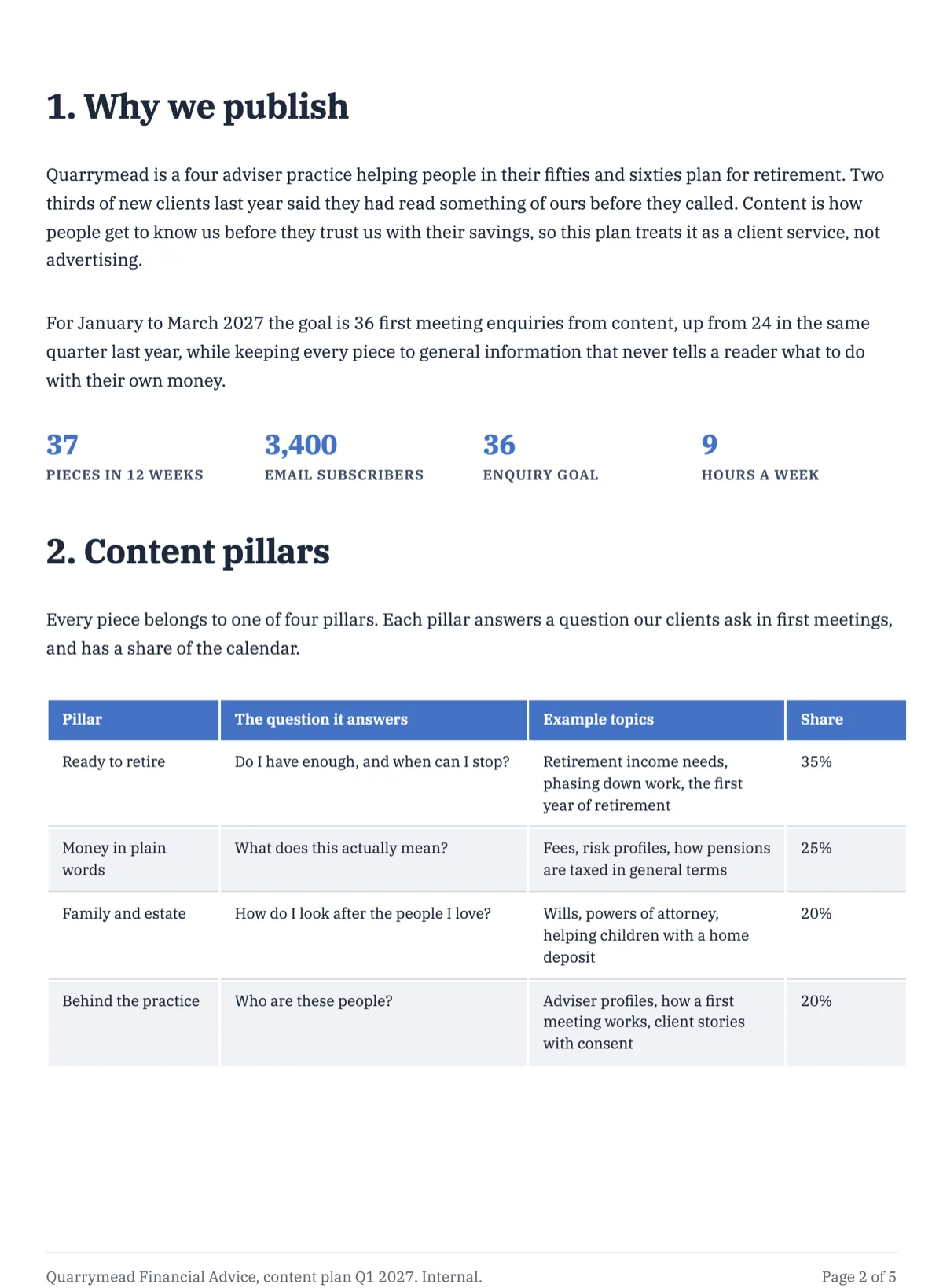
Content plan
Content plan template with pillars, cadence and calendarPillars, cadence and a calendar, the plan a creator or a brand works from.
Podcast link in bio
Link in bio for podcasters, latest episodes firstA link in bio page for podcasters, with the latest episodes first.
UGC video
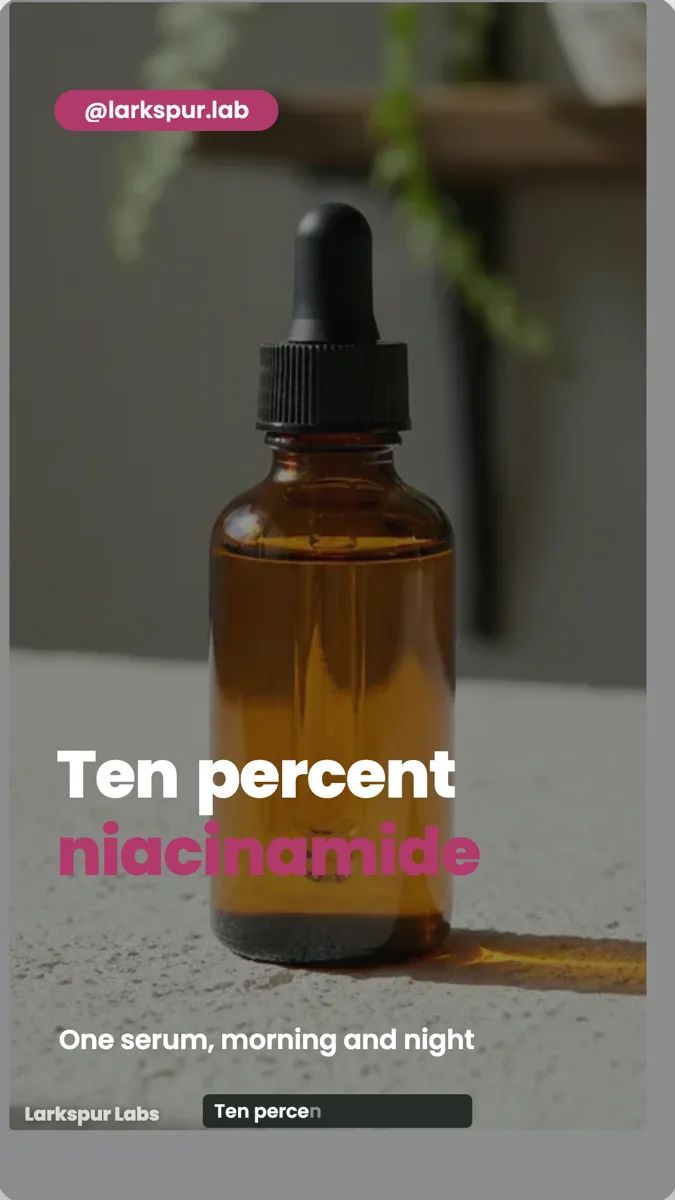
Skincare serum UGC ad exampleA UGC style ad for a skincare brand, the format brands commission from creators.
Collaboration enquiry template
Creator collaboration enquiry templateA creator collaboration enquiry template to adapt.
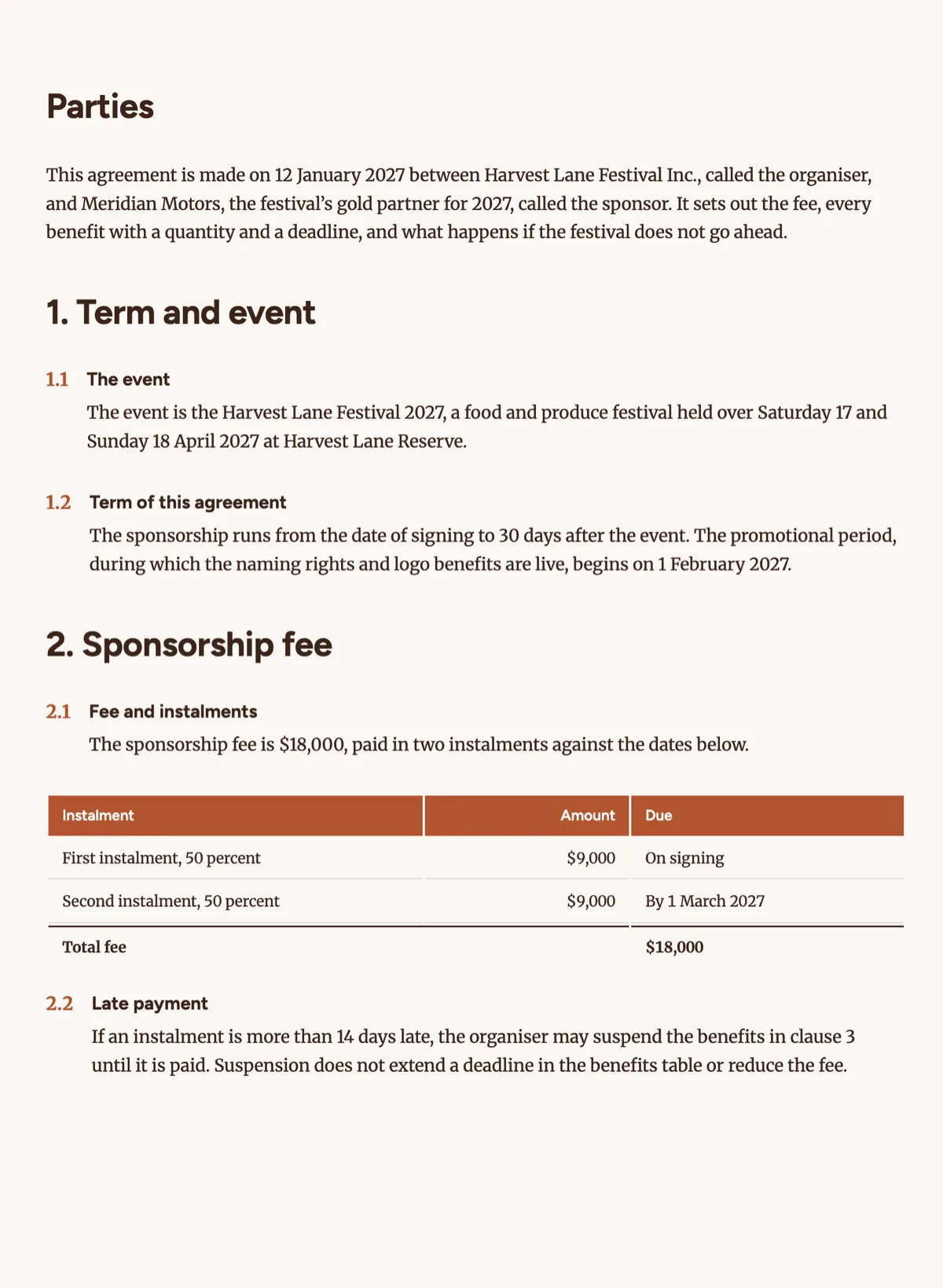
A media kit brands can decide from
A brand reads a media kit to decide whether to spend, so show the audience first: size per platform, age, location and interests, then engagement rates, examples of past brand work with results, and the packages with prices. Keep it to a few slides. The media kit example in this kit does this and can be exported to PDF or shared as a link; a brand partnership manager often forwards it internally, so the rates should be easy to find.
A deal agreement with numbers in it
List every deliverable with the platform, format, number and date, the approval process and how many rounds of changes, the disclosure the creator will use, the usage rights with platform and period, exclusivity if any, the fee and when it is paid. The influencer agreement in this kit puts these in one table. It can be sent for e-signing, where the brand signs with an email code and both sides receive a certified PDF.
Getting paid by brands
Invoice brands with the deliverables and dates listed and the usage fee shown separately. From the proposals module, an invoice can carry a pay link that opens Stripe Checkout on a paid plan with a connected Stripe account, and reminders can follow up on a set schedule. Creators registered for GST must issue tax invoices, and income from brand deals, gifted products included, is generally taxable.
The tools behind the kit
- AI presentation maker
- AI document generator
- AI form builder
- E-signature software
- AI website builder
- AI video maker
Step by step in the builders: Make a UGC creator video, then Make a pitch presentation with AI.
Questions people ask
What should a creator media kit include?
It should include a short bio, audience size per platform, audience demographics, engagement rates, examples of past brand work with results, packages and rates, usage terms and how to book. Update it every few months so the numbers stay current.
What should an influencer agreement include?
It should list the deliverables with platforms, formats and dates, approvals, disclosure, usage rights and period, exclusivity, the fee and payment terms, what happens if a post is late or removed, and how the agreement ends. Put the deliverables in a table so both sides can check them.
How should creators disclose paid posts?
Label paid content clearly and up front, using words such as ad or advertisement where the audience will see them before engaging. Platform tags alone may not be enough. Advertising regulators publish guidance, and the UK ASA influencer guide is a widely used reference.
Should usage rights cost extra?
Yes. Usage rights let a brand reuse a creator content in its own ads or channels for a period, and that is worth more than the original post. Price usage separately by platform and duration, and state the end date in the agreement.
Do creators need a website?
A link in bio page is enough for many creators, pointing to the latest work, a newsletter, a shop or the media kit. Creators who sell products or courses benefit from a fuller site. Sites can build either and publish it on a paid plan.
Start the first piece of the kit
The button opens a generator with a starting description already filled in. Change the business details to your own before you run it.
Create a presentation with OneCraftMore industry kits
Written and checked by the OneCraft team. Last checked .