Industry kit
Templates for accountants and bookkeepers, from engagement to invoice
An accounting or bookkeeping practice takes on a client with an intake form, sets the scope in an engagement letter, prices recurring work, and bills it. This kit links finished examples of each, written for invented Australian practices.
Engagement is where the practice is protected
An accounting practice lives on recurring work: tax returns, BAS, bookkeeping, payroll and advice. Every engagement starts with an intake that collects the client entities, ABNs, prior returns and the people involved, and continues with an engagement letter that sets the scope, the fees, what the client must provide and by when, and what is outside the job. Scope creep is the most common reason a practice is underpaid, and a clear engagement letter is the tool that stops it without an argument.
Marketing and billing for a small practice
Small practices win clients locally and through referrals, so a flyer for local businesses and a clear statement of services still matter. Bookkeepers often price monthly packages; accountants price fixed fees per job or per year. The examples below show both, with an intake form, an engagement letter written as a priced proposal that the client accepts online, a bookkeeping services agreement and the invoices that follow. Each card opens a finished example rather than a list of headings, so the scope wording and the prices can be read and compared.
Who the kit is for
The kit is written for small accounting firms, tax agents, BAS agents and bookkeepers in Australia. Anyone providing tax agent or BAS agent services for a fee must be registered with the Tax Practitioners Board, and professional bodies such as CPA Australia and the Institute of Certified Bookkeepers publish standards for engagement letters. The practices in the examples are invented, fees are in dollars with GST at 10%, and none of the examples is offered as tax advice. Each card opens the complete document, so the scope wording can be compared with your own.
The kit, piece by piece
Client intake form
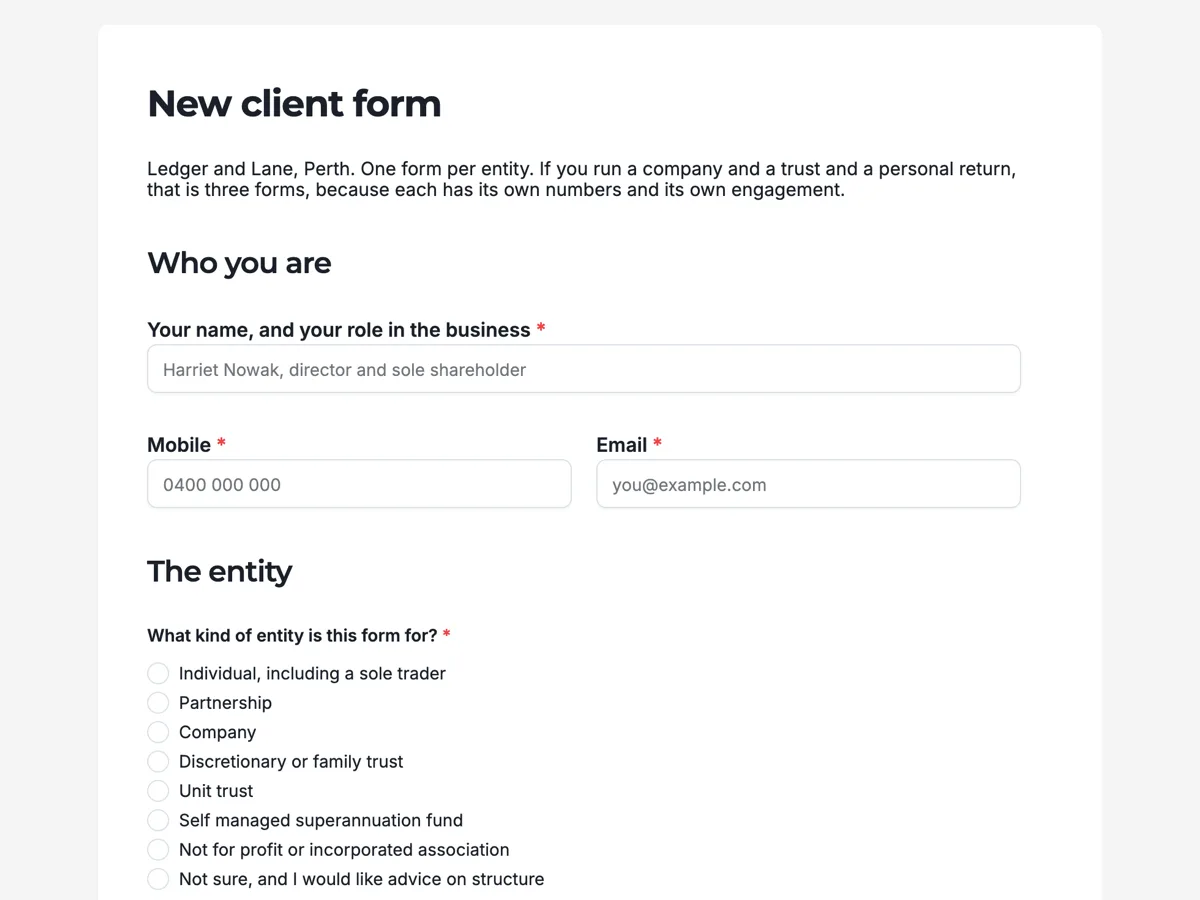
Accountant new client form that never asks for a TFNEntities, ABNs, prior returns, software and contacts, collected before the first meeting.
Engagement letter proposal
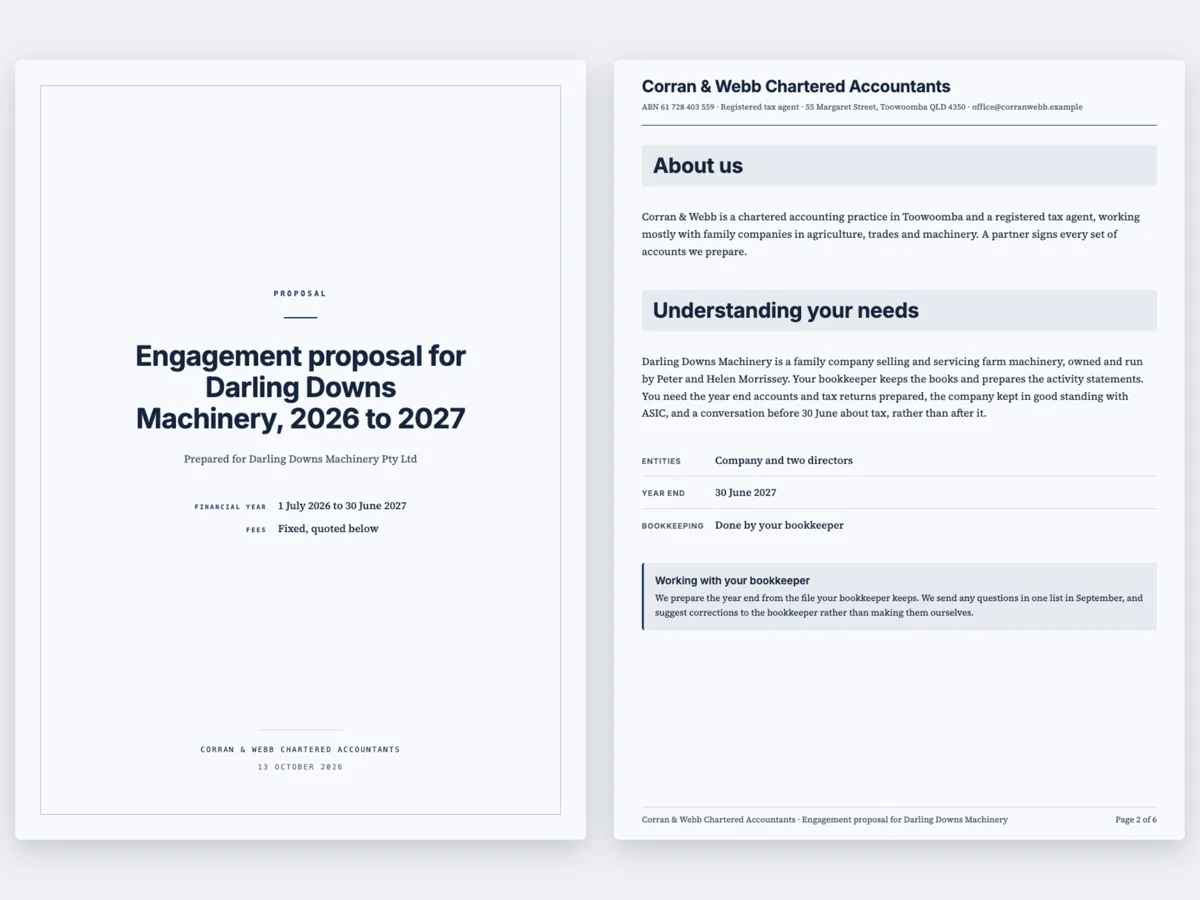
Accounting engagement letter, written as a priced proposalThe engagement letter written as a priced proposal: scope, fixed fees, client duties and terms.
Bookkeeping proposal
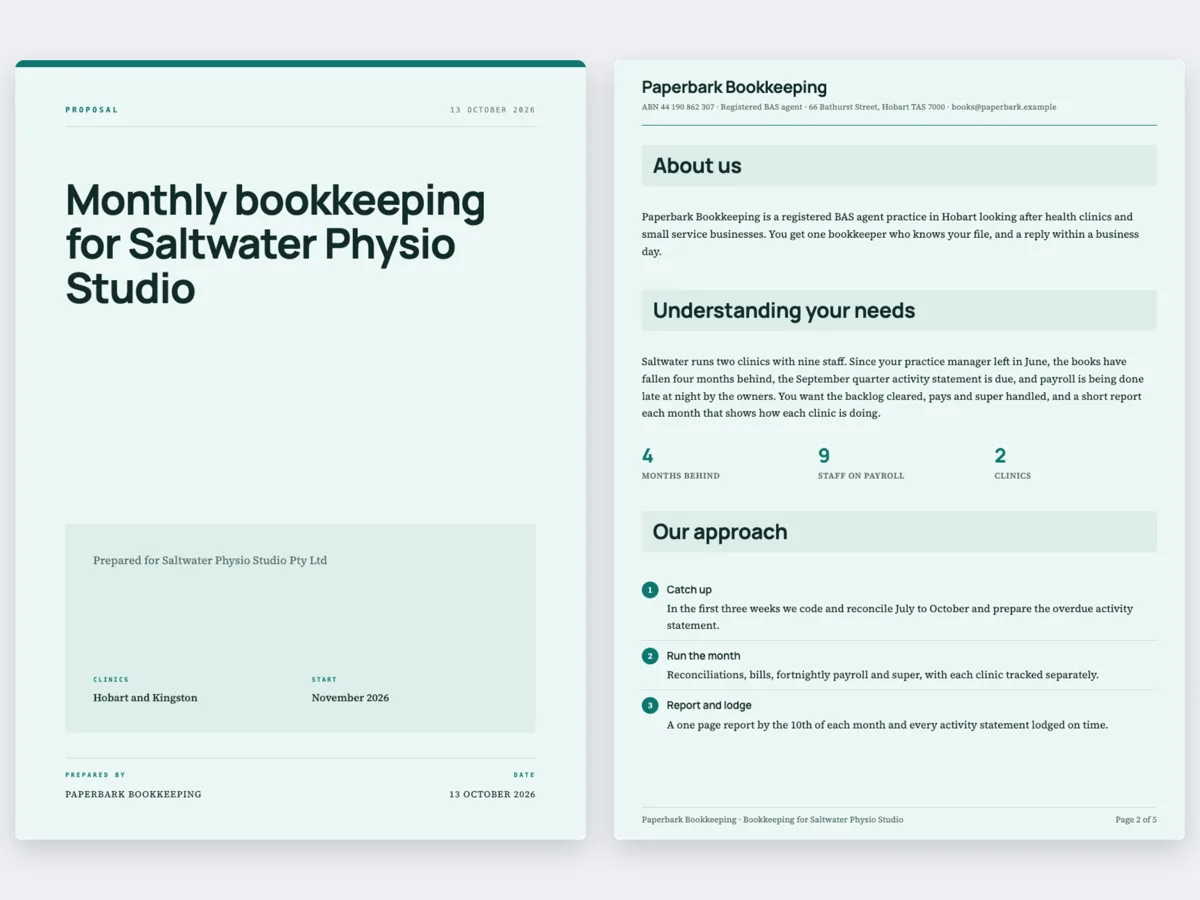
Bookkeeping services proposal with a catch up, payroll and BASA catch up, payroll and BAS priced as a package the client accepts online.
Bookkeeping services agreement
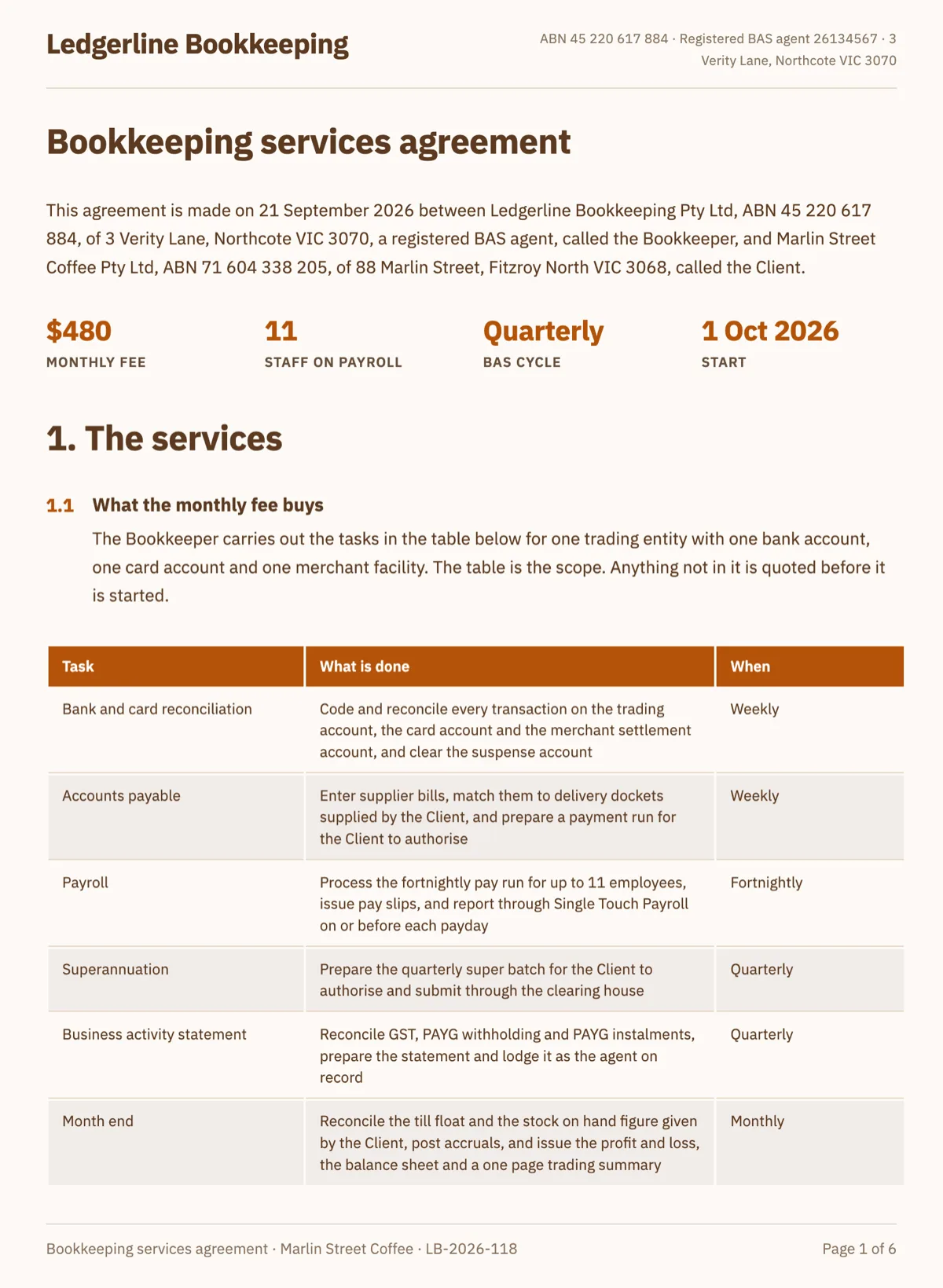
Bookkeeping services agreement with a monthly scope tableScope, access to the accounting file, deadlines, fees and the BAS agent role.
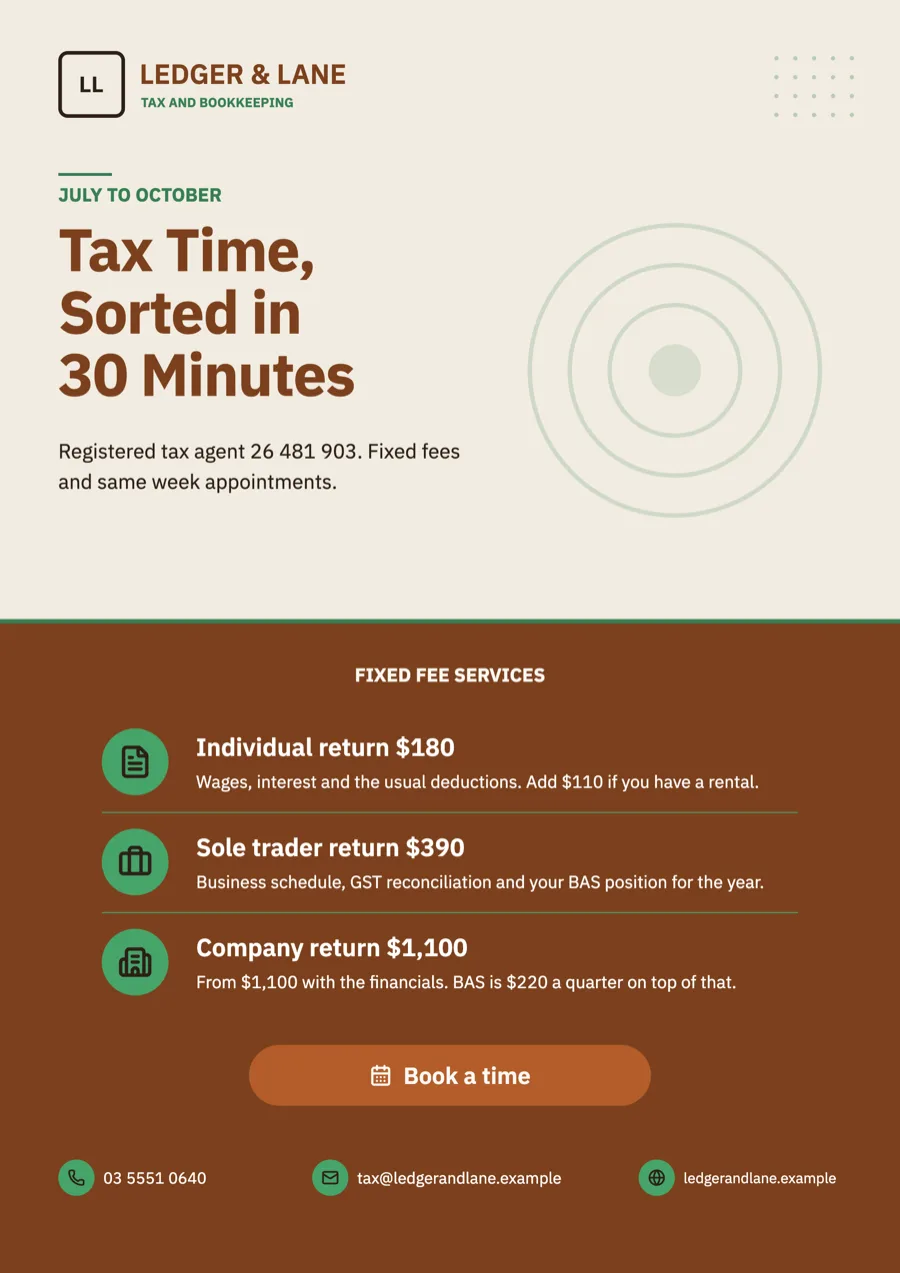
Accountant flyer
Accounting services flyer for a suburban tax and bookkeeping practiceAn accounting services flyer for local businesses, with the services and a first meeting offer.
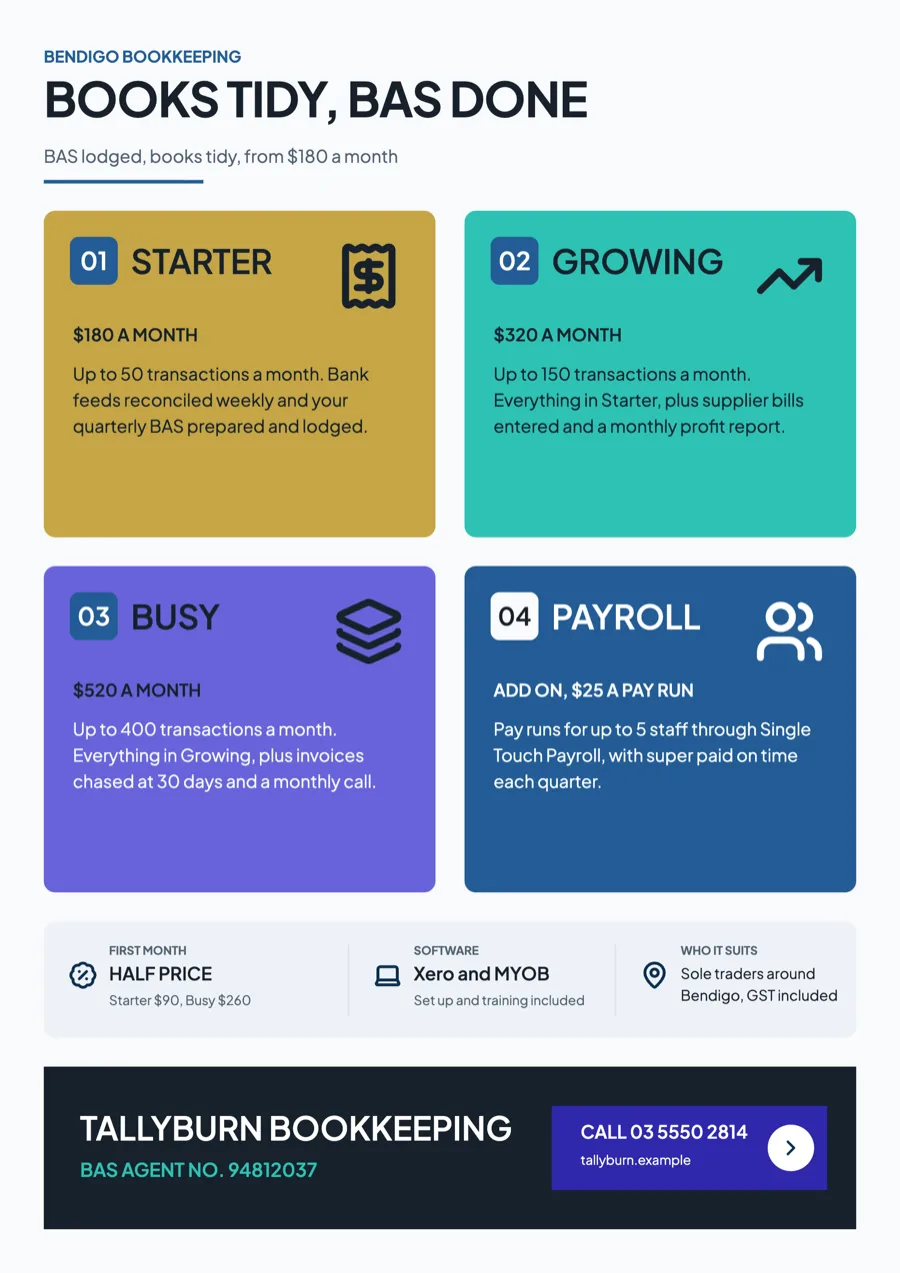
Bookkeeping flyer
Bookkeeping flyer with monthly packages for sole tradersA bookkeeping flyer with monthly packages and the software supported.
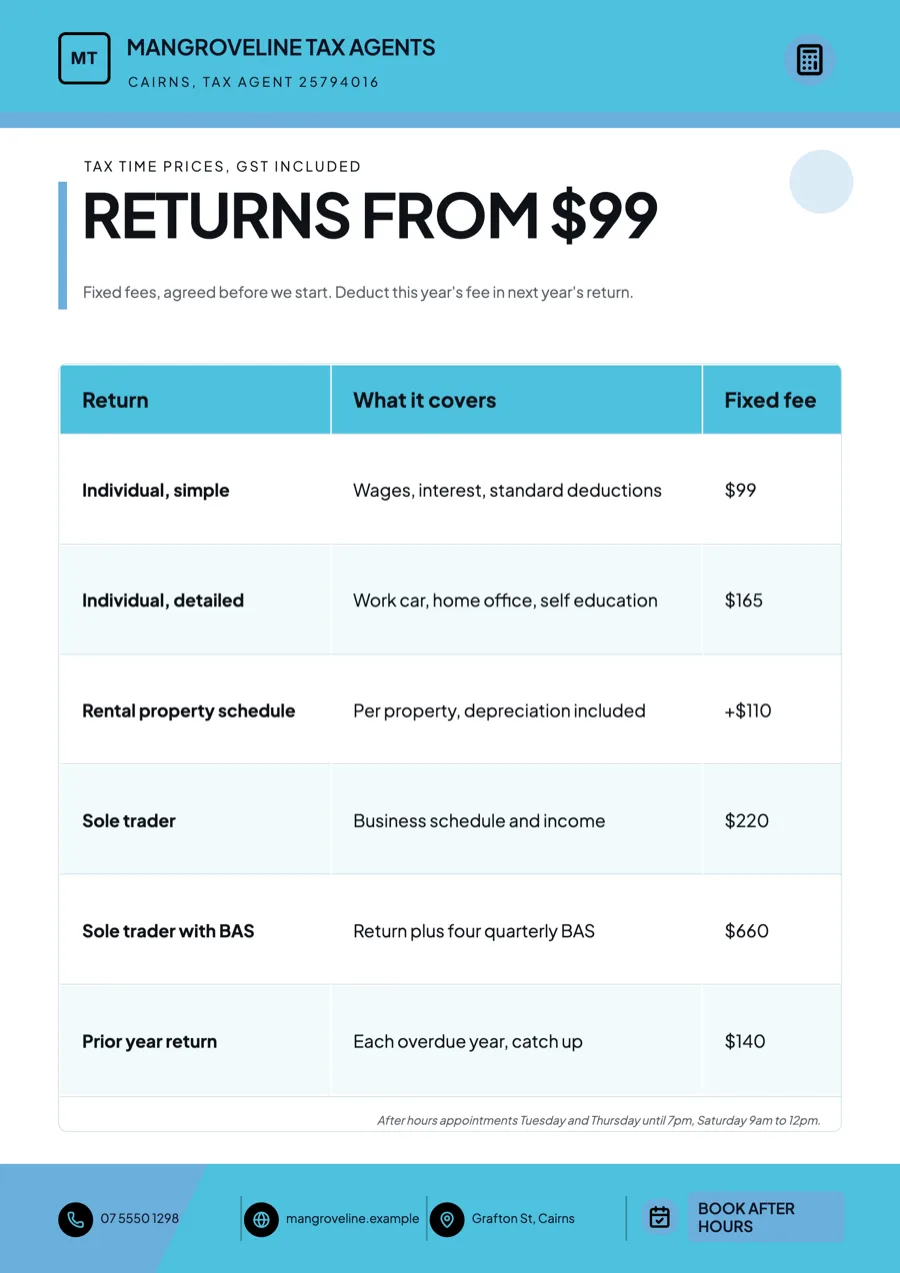
Tax agent flyer
Tax agent flyer for tax time, with return pricesA tax season flyer for individual returns with the documents to bring.
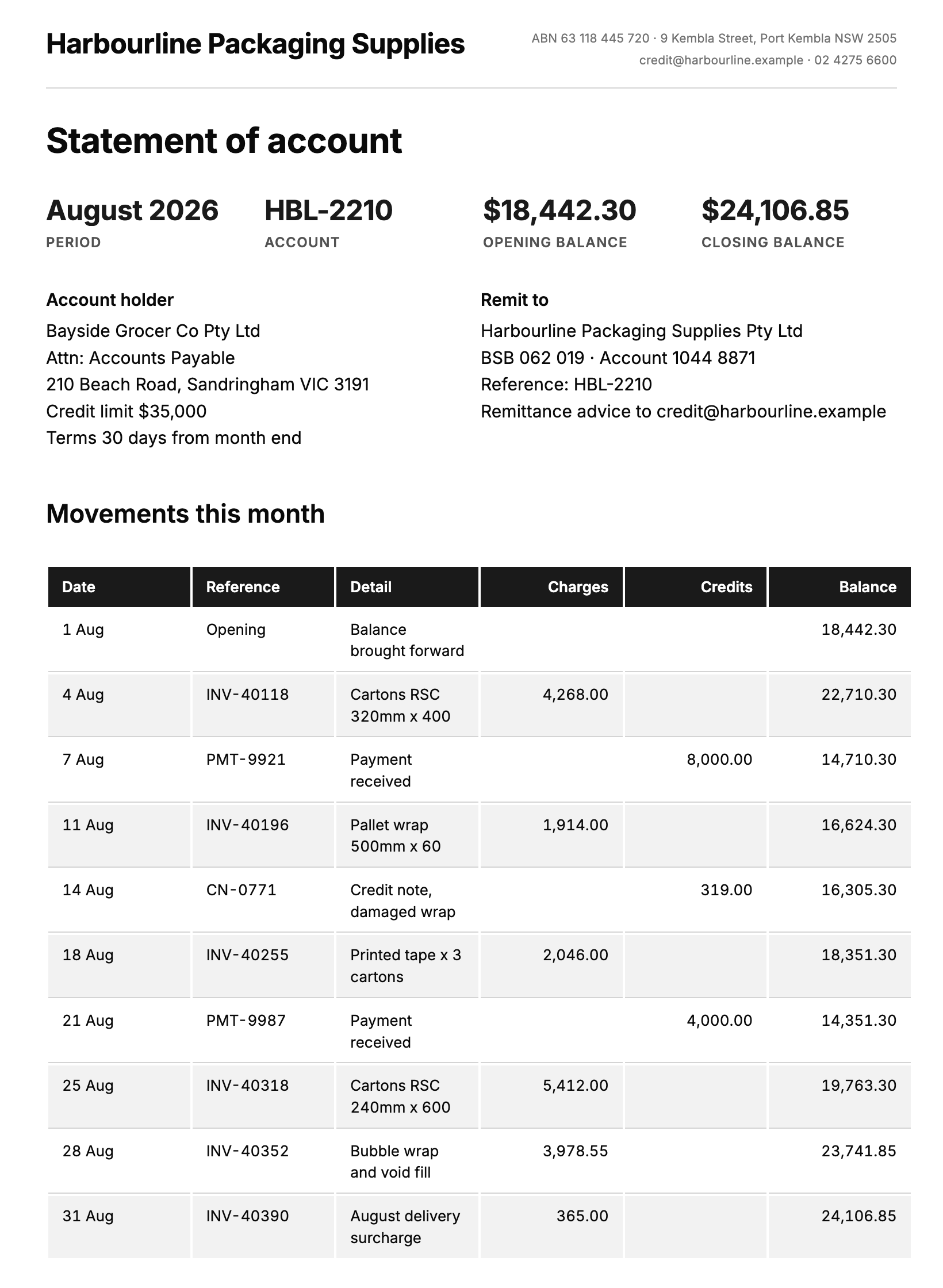
Statement of account
Statement of accountA statement listing invoices, payments and the balance owed.
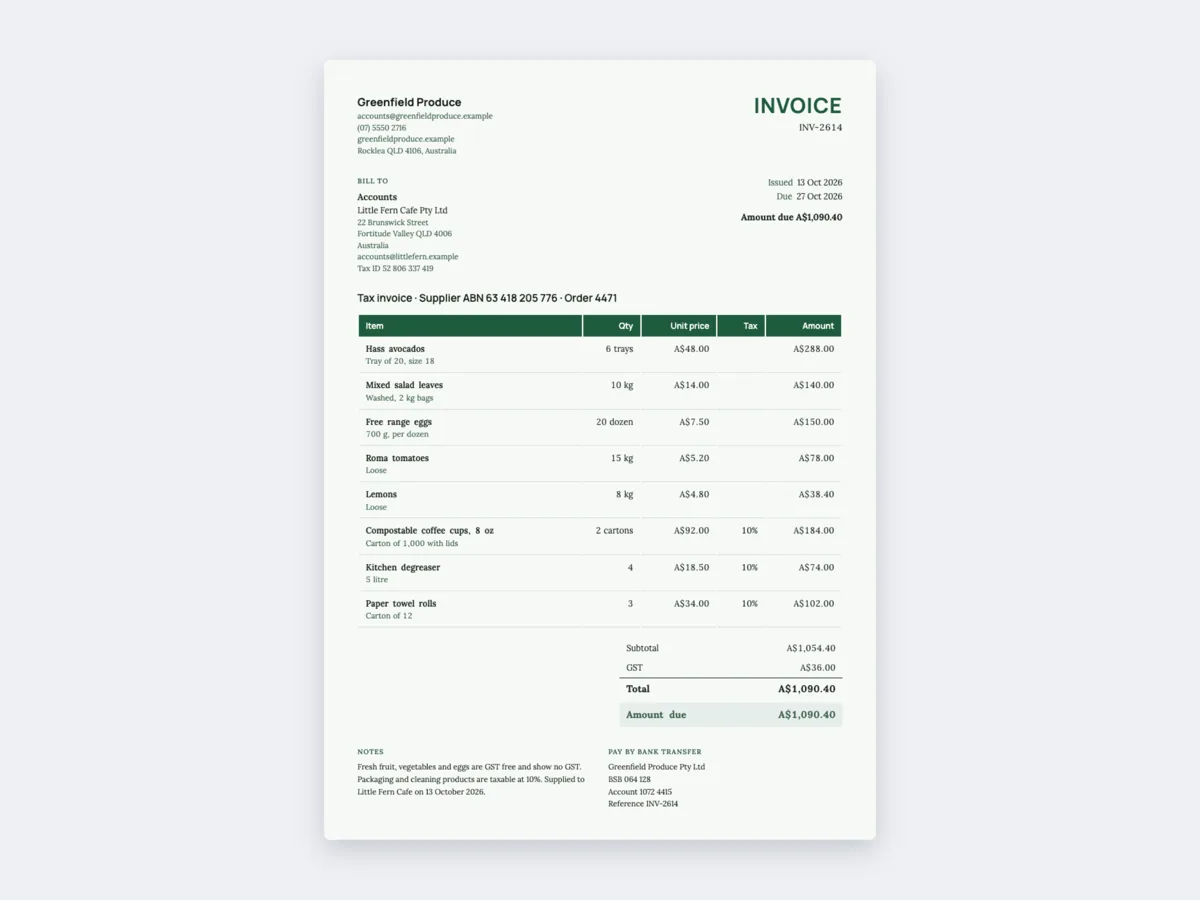
Tax invoice
Tax invoice example for Australia with GST free and taxable itemsAn Australian tax invoice with GST free and taxable items set out correctly.
Bookkeeping proposal template
Bookkeeping and accounting proposal templateA bookkeeping and accounting proposal template to price a new client.
An engagement letter that holds the scope
The engagement letter should name the entities and periods covered, list each service, set the fee for each, state what the client must provide and by when, explain what happens if records arrive late or incomplete, and list what is excluded, such as audits or advice outside the agreed scope. Writing it as a priced proposal means the client sees and accepts the fees at the same time. In the proposal builder they accept online with a drawn signature or through e-signing with an email code.
Packages for bookkeeping
Bookkeepers often sell monthly packages by transaction volume or hours, plus one off catch ups. Show the package, the transactions or hours included and the rate for extra work. There are no recurring invoices in the proposals module, so each month is issued as its own invoice; invoice numbers run in order, reminders can follow late payments on a set schedule, and a pay link opens Stripe Checkout on a paid plan with a connected Stripe account.
Registration, records and privacy
Tax and BAS agent services for a fee require registration with the Tax Practitioners Board, and the registration number belongs on engagement letters and invoices. Practices hold sensitive financial and identity information, so collect only what the engagement needs and control who can open intake responses. A published form can require login or a secret key, and it does not email the client a copy of their answers.
The tools behind the kit
Step by step in the builders: Create a quote with AI, then Set invoice reminders.
Questions people ask
What should an accounting engagement letter include?
It should include the client and entities, the periods covered, each service in scope, the fee for each, what the client must provide and when, exclusions, how extra work is billed, payment terms, confidentiality and how the engagement ends. Many professional bodies require one for each engagement.
Do bookkeepers need to be registered?
Bookkeepers who provide BAS services for a fee, such as preparing or lodging BAS, must be registered as BAS agents with the Tax Practitioners Board or work under a registered agent. Bookkeeping that involves no BAS services does not need registration.
How should an accounting practice onboard a new client?
Send an intake form before the first meeting to collect entities, ABNs, prior returns, software and contacts. Meet, agree the scope, send the engagement letter for acceptance, then request access to the accounting file and the documents for the first job.
How do bookkeepers price monthly work?
Most price by a package based on transaction volume or hours, with a set rate for extra work and a separate price for catch ups. State what the package includes and how changes are agreed, so a busy month does not turn into a dispute.
What makes an Australian tax invoice valid?
A tax invoice needs the words tax invoice, the seller identity and ABN, the issue date, a description of what was sold, the GST amount or a statement that the total includes GST, and for sales of 1,000 dollars or more the buyer identity. The ATO lists the full requirements.
Start the first piece of the kit
The button opens a generator with a starting description already filled in. Change the business details to your own before you run it.
Create a proposal with OneCraftMore industry kits
Written and checked by the OneCraft team. Last checked .