Industry kit
Construction business templates for builders and renovators
A building business lives on its estimate, its contract, its safety paperwork and its progress claims. This kit links a finished example of each, written for invented Australian builders, with the clauses that decide who pays when the job changes.
What a building job runs on
A residential or small commercial builder works through a predictable chain of documents. The estimate wins the job and fixes the price; the contract turns that price into obligations, stages and a variations process; the safe work method statement and the site induction cover the high risk work before anyone climbs a ladder; and progress claims turn each finished stage into money. Around the main contract sit subcontractor agreements that flow the head contract terms down to the trades, and site inspection reports that record defects before handover. Each of those documents is shown below as a finished example.
Where builders lose money
Most money in building is lost in the gaps between those documents: a variation done on a phone call and never priced, a progress claim that does not match the stage in the contract, or a subcontractor working without the terms the client signed. Clauses fix most of that, which is why this kit links clause pages beside the examples. Each one explains the clause, gives sample wording written for an invented builder and shows what happens when it is missing.
Who the kit is for
The kit is written for residential builders, renovators and small commercial fit out contractors in Australia, priced in dollars with GST at 10%. A volume builder will run industry association contracts for the head contract and still use the estimate, the SWMS, the subcontractor agreement and the progress invoice shown here. Each card opens the complete example, not a summary of it, and the clause cards explain the terms a builder most often argues about after the job has started.
The kit, piece by piece
Estimate
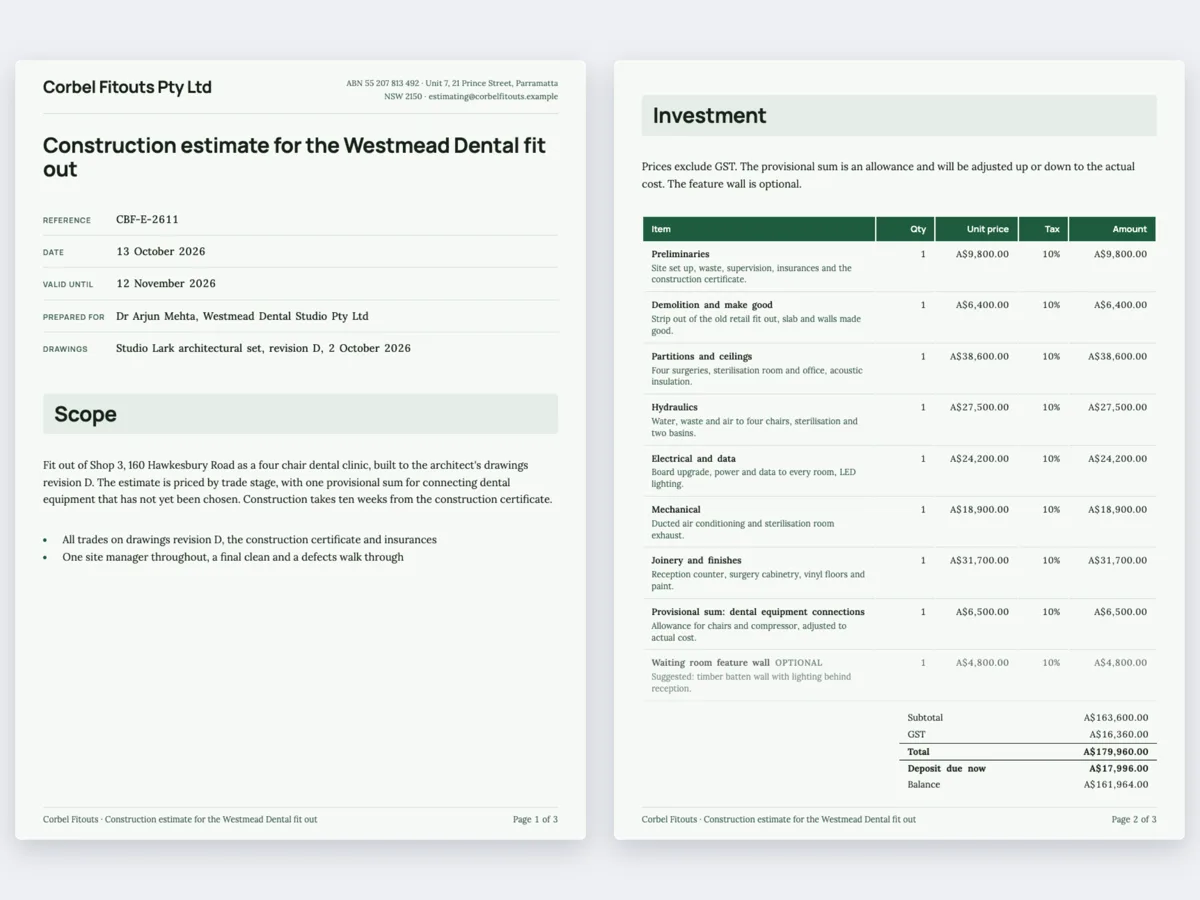
Construction estimate template for a commercial fit outA commercial fit out estimate with trades as groups, provisional sums and a deposit, the format a client compares side by side.
Renovation quote
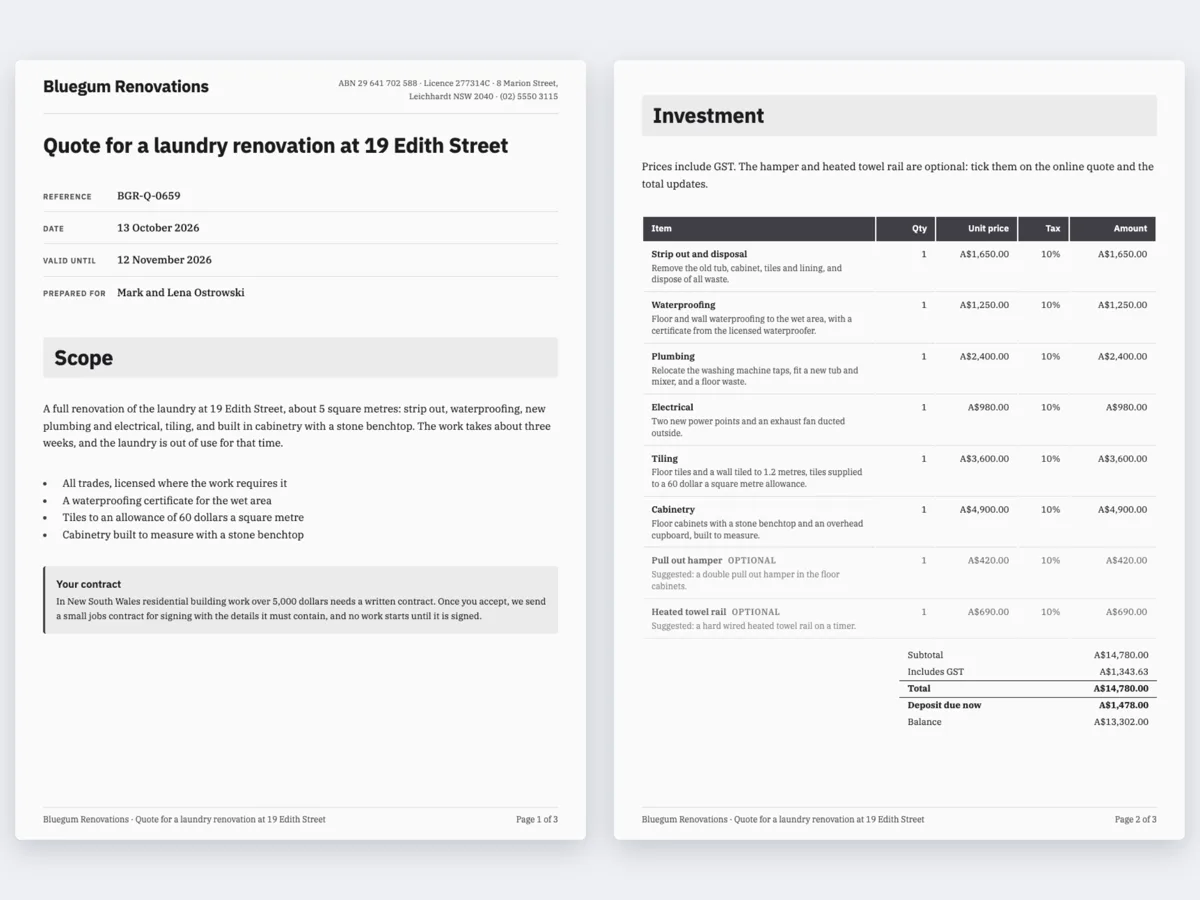
Renovation quote example for a laundryA laundry renovation quoted by item, with optional upgrades the client can tick before accepting.
Progress invoice
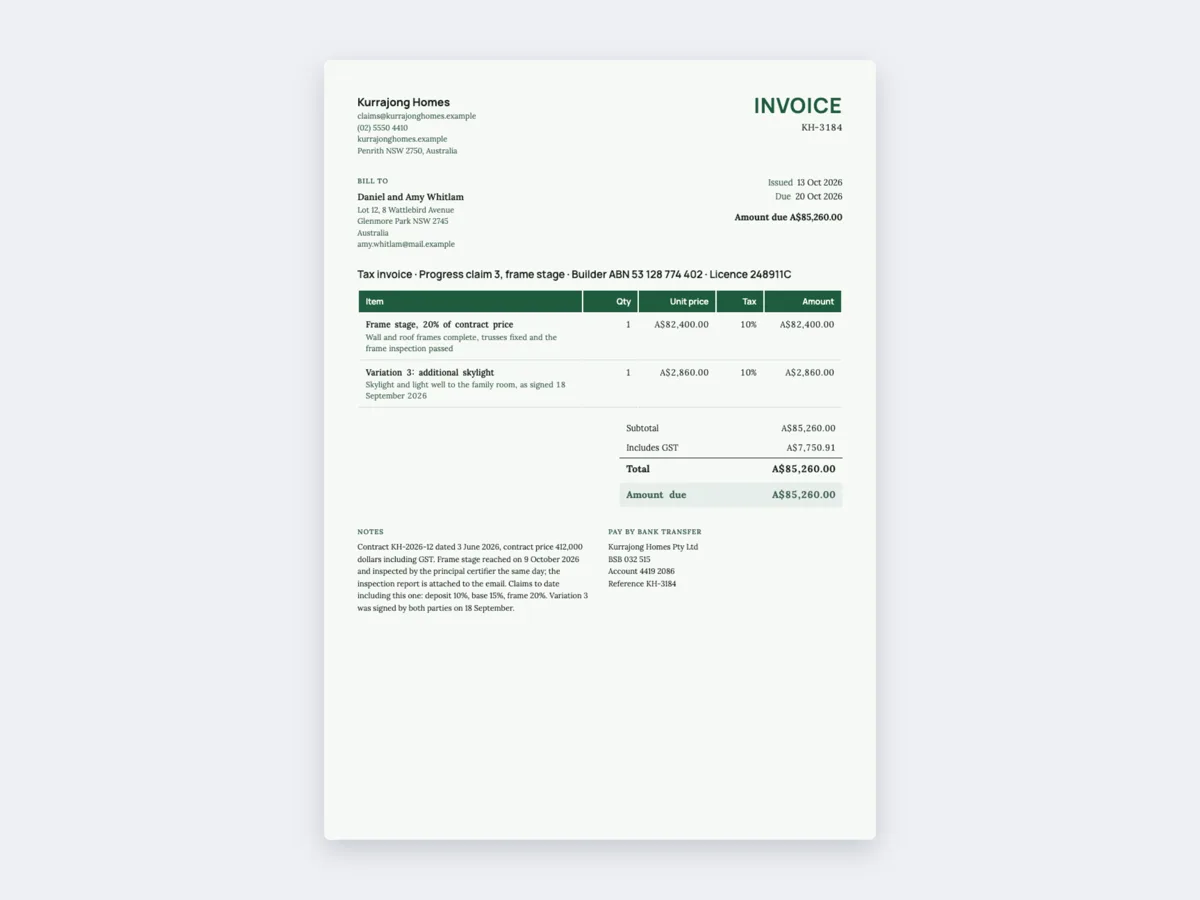
Progress invoice example for a frame stage claimA frame stage claim that names the stage, the contract price, what has been paid and what is due now.
Subcontractor agreement
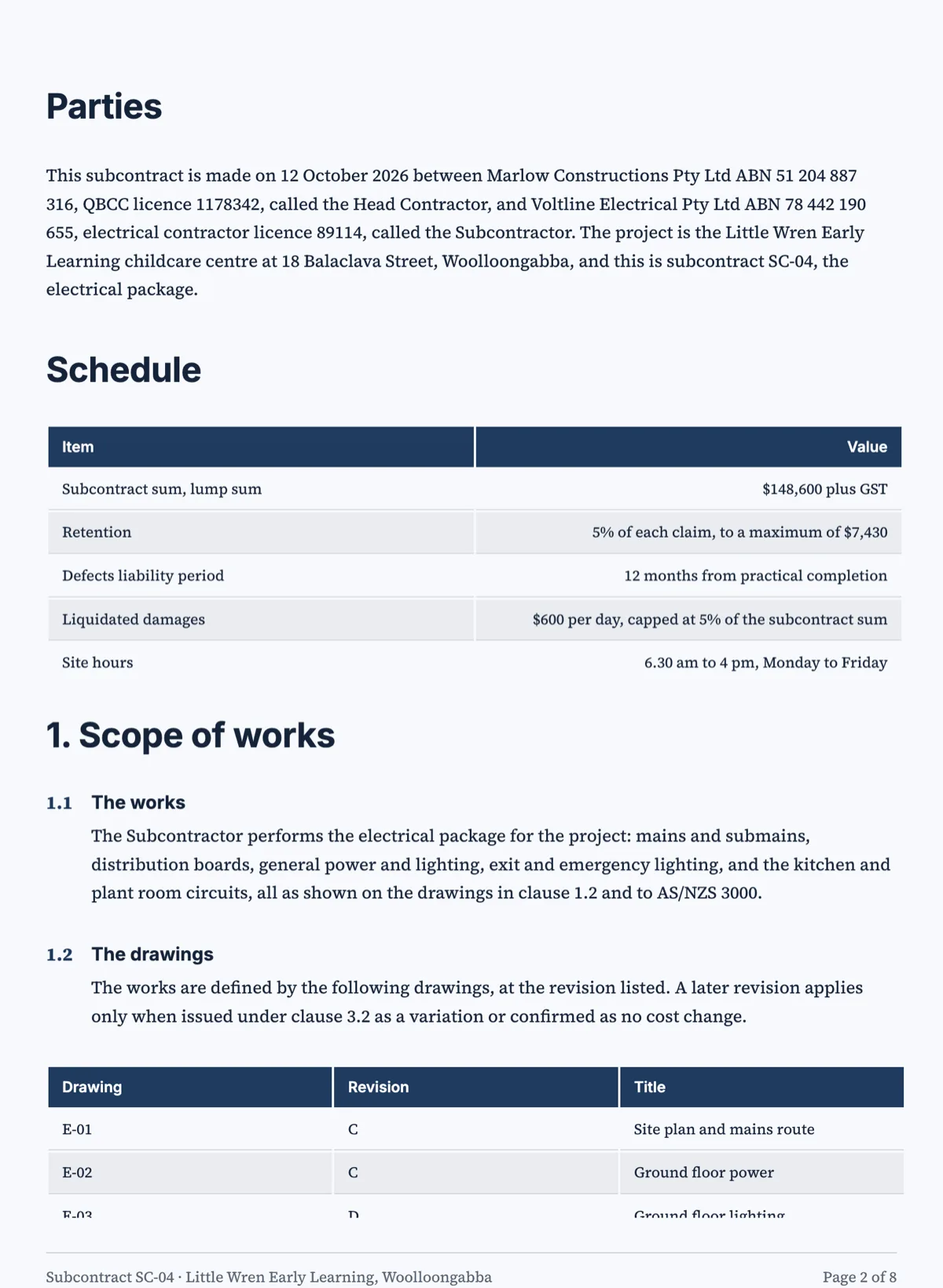
Subcontractor agreement template that flows the head contract downFlows the head contract down to a trade: scope, insurance, payment terms and the right to deduct for defects.
Safe work method statement
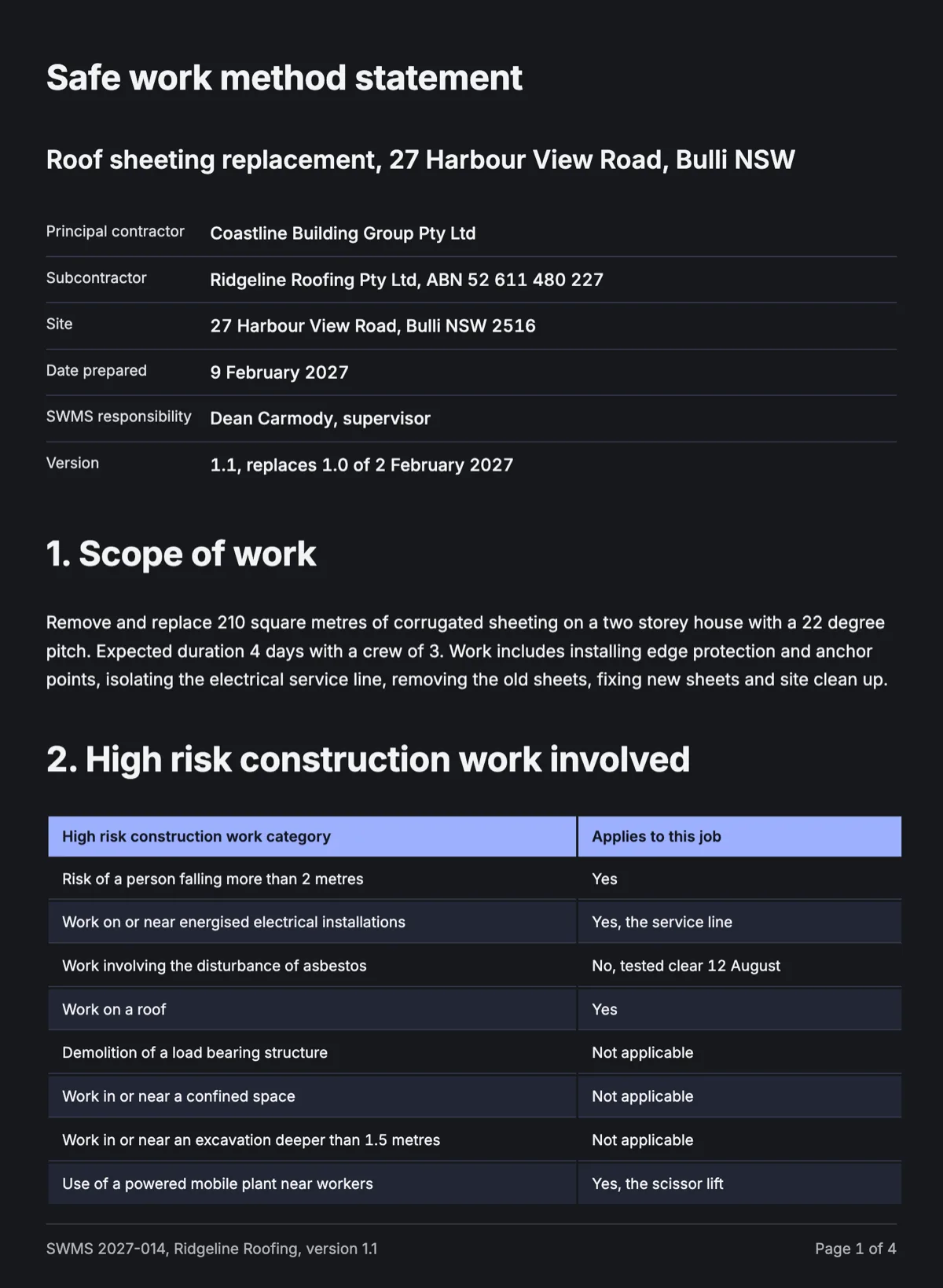
Safe work method statement template a site supervisor will acceptA SWMS for high risk construction work laid out the way a site supervisor checks it: steps, hazards, controls and sign off.
Site inspection report
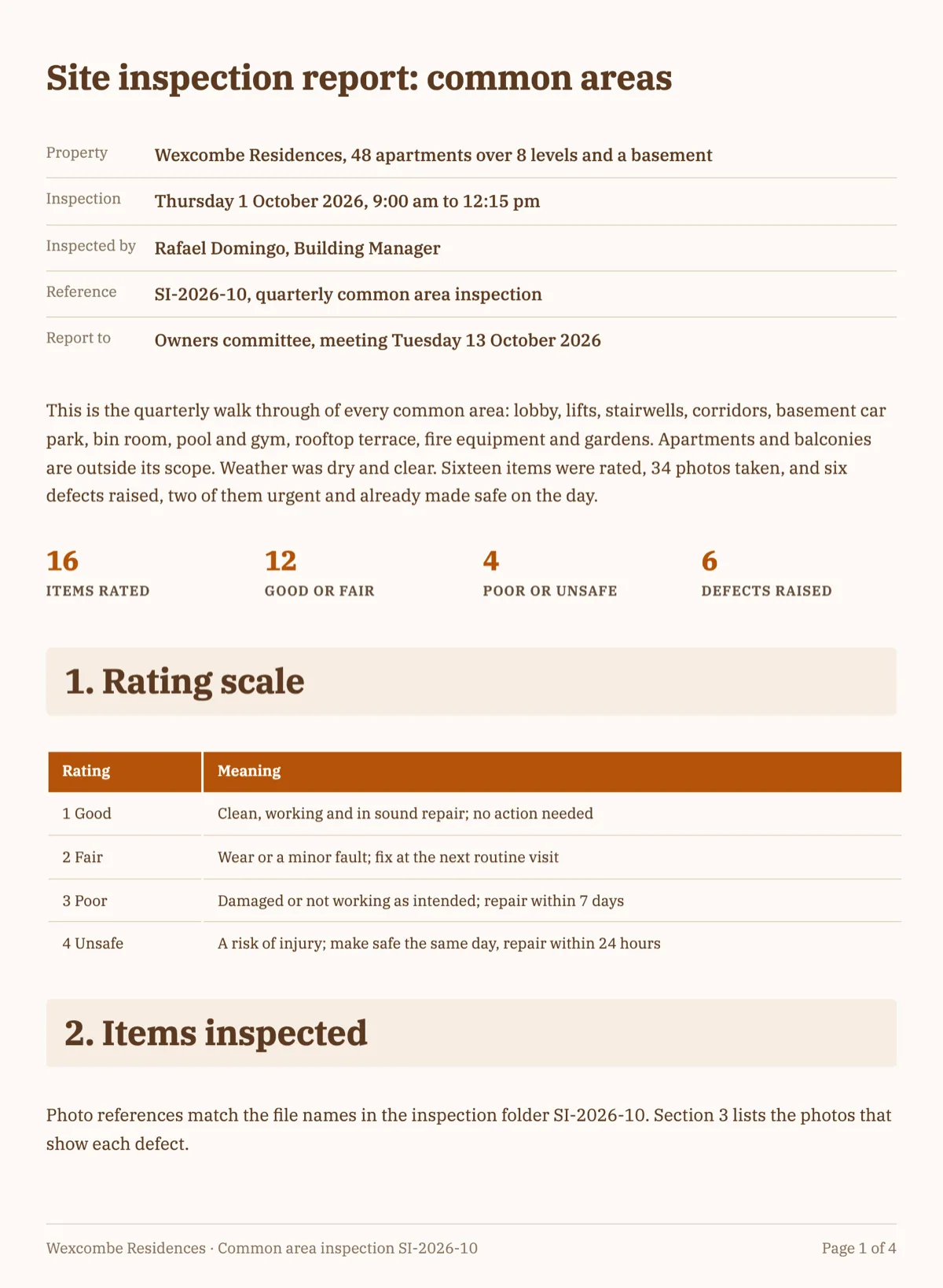
Site inspection report template with condition ratings and a photo logCondition ratings and a photo log for pre handover and defect inspections.
Bid presentation
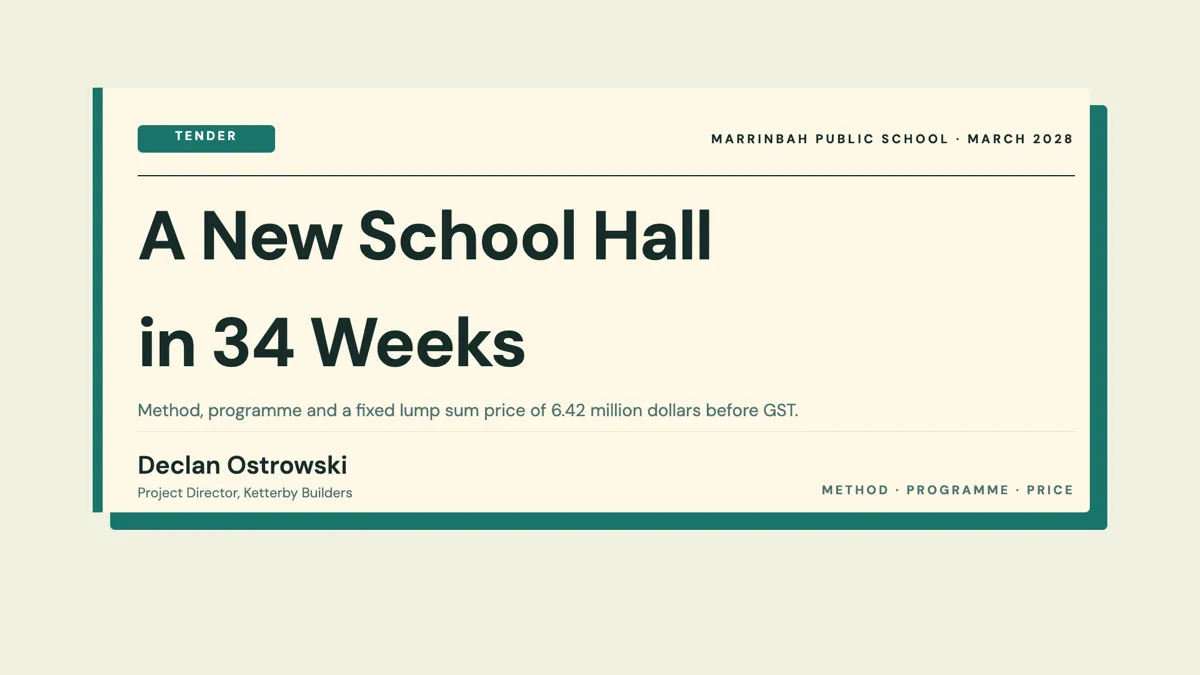
Construction bid presentation: method, programme and priceFor tendered work: method, programme and price on slides, for the interview after the written bid.
Variations clause
Construction variations clause: directing and pricing changed workHow changed work is directed, priced and agreed before it is done, with sample wording.
Progress claims clause
Progress claims clause: getting paid as the work advancesWhen a builder can claim, what the claim must show and how long the owner has to pay.
Defects liability clause
Defects liability clause: fixing defects after practical completionThe period after practical completion when the builder must return and fix defects.
Estimate template
Construction and renovation estimate templateA starting template for construction and renovation estimates, ready to price.
Estimate, contract, then claims
The estimate should be built in the same groups the contract will use for progress claims, so the money lines up later. Group by stage or by trade, show provisional sums and prime cost items separately, and state the exclusions in plain words, such as rock excavation or council fees. When the estimate is accepted, the contract carries those groups into the payment schedule. Each progress invoice then names the stage, the contract price for that stage and the running total paid, which is what an owner or their lender checks before releasing money.
Safety paperwork before the first day
High risk construction work, such as work at heights above two metres, trenching and work near live services, needs a safe work method statement before it starts, and the people doing it must be inducted. Safe Work Australia publishes the model rules and each state regulator enforces them. The SWMS example in this kit is laid out as steps, hazards, controls and who is responsible, with a sign off section, because that is the form inspectors and principal contractors ask for.
State rules on contracts and deposits
Residential building contracts are regulated by each state. Most require a written contract above a set price, cap the deposit, and require particular notices such as a cooling off period or a consumer guide. In Queensland the QBCC sets the rules; in New South Wales the home building contract rules are published by the state government; Victoria has its own regime. Use the clause pages to understand the terms, then check the current thresholds and required wording with your state before you send a contract.
The tools behind the kit
Step by step in the builders: Create a quote with AI, then Add e-signatures with multiple signers.
Questions people ask
What documents does a small building business need?
A small building business needs an estimate or quote, a written contract for residential work above the state threshold, safe work method statements for high risk work, a site induction record, subcontractor agreements, variation records, progress invoices and a handover or defects report. Insurance certificates and licence details should appear on the contract and invoices.
How should a builder price variations?
Price every variation before the work is done and get it agreed in writing. State the change, the extra cost or credit, the effect on time, and who asked for it. A variations clause in the contract sets this process, and the sample wording on the clause page shows a version written for a residential builder.
What is a progress claim?
A progress claim is an invoice for a completed stage of a building contract, such as the slab, frame or lock up stage. It should name the stage, the contract amount for it, the amount claimed and the amounts already paid. Many owners and lenders will only release funds when the claim matches the payment schedule in the contract.
Do builders need a SWMS for every job?
A SWMS is required for high risk construction work as defined in the work health and safety rules, such as work at heights over two metres, demolition of load bearing parts or work near energised services. It is not required for every task, but most builders prepare one for each site because some high risk work almost always occurs.
Can subcontractors sign agreements online?
Yes. A subcontractor agreement can be sent for e-signing with each party as a signer in order, the subcontractor confirming with a code sent to their email. When everyone has signed, each party receives a certified PDF and the envelope keeps an audit trail of who signed, when and from which IP address.
Start the first piece of the kit
The button opens a generator with a starting description already filled in. Change the business details to your own before you run it.
Create a proposal with OneCraftMore industry kits
Written and checked by the OneCraft team. Last checked .