Industry kit
Marketing agency templates for pitching, scoping and retaining clients
A marketing or web agency wins work with a pitch, scopes it with a brief, prices it as a retainer or a project, and signs a contract that covers IP and approvals. This kit links finished examples of each, written for invented Australian agencies.
From pitch to retainer
An agency relationship usually starts with a pitch: a deck that shows the agency understands the client market, its past work and how it would approach the brief. If the client is interested, a brief form or discovery call collects the goals, audience, budget and timeline. The proposal then prices the work, as a monthly retainer for ongoing marketing or a fixed project for a website or campaign. The agency agreement or web design contract sets the scope, approvals, IP, payment and termination.
The documents that keep a retainer healthy
Retainers end when clients stop seeing value or when scope creeps past what the fee covers. A proposal that lists the monthly deliverables, a report that shows results against them, and a contract with a clear change process keep a retainer healthy. Web projects need approval stages and a rule for rounds of changes. The examples below show retainer, SEO, social media and website proposals side by side, so an agency can see how each one is scoped and priced before writing its own, and which one suits the client in front of it.
Who the kit is for
The kit is written for marketing, digital, social media and web design agencies in Australia, from freelancers to small teams. Agencies that send marketing email or SMS for clients need consent and an unsubscribe under the Spam Act, and the ACMA publishes the rules; agencies handling customer data also have privacy obligations. Fees are in dollars with GST at 10%, the agencies and clients are invented, and each card opens a complete example rather than a summary of one.
The kit, piece by piece
Agency pitch deck
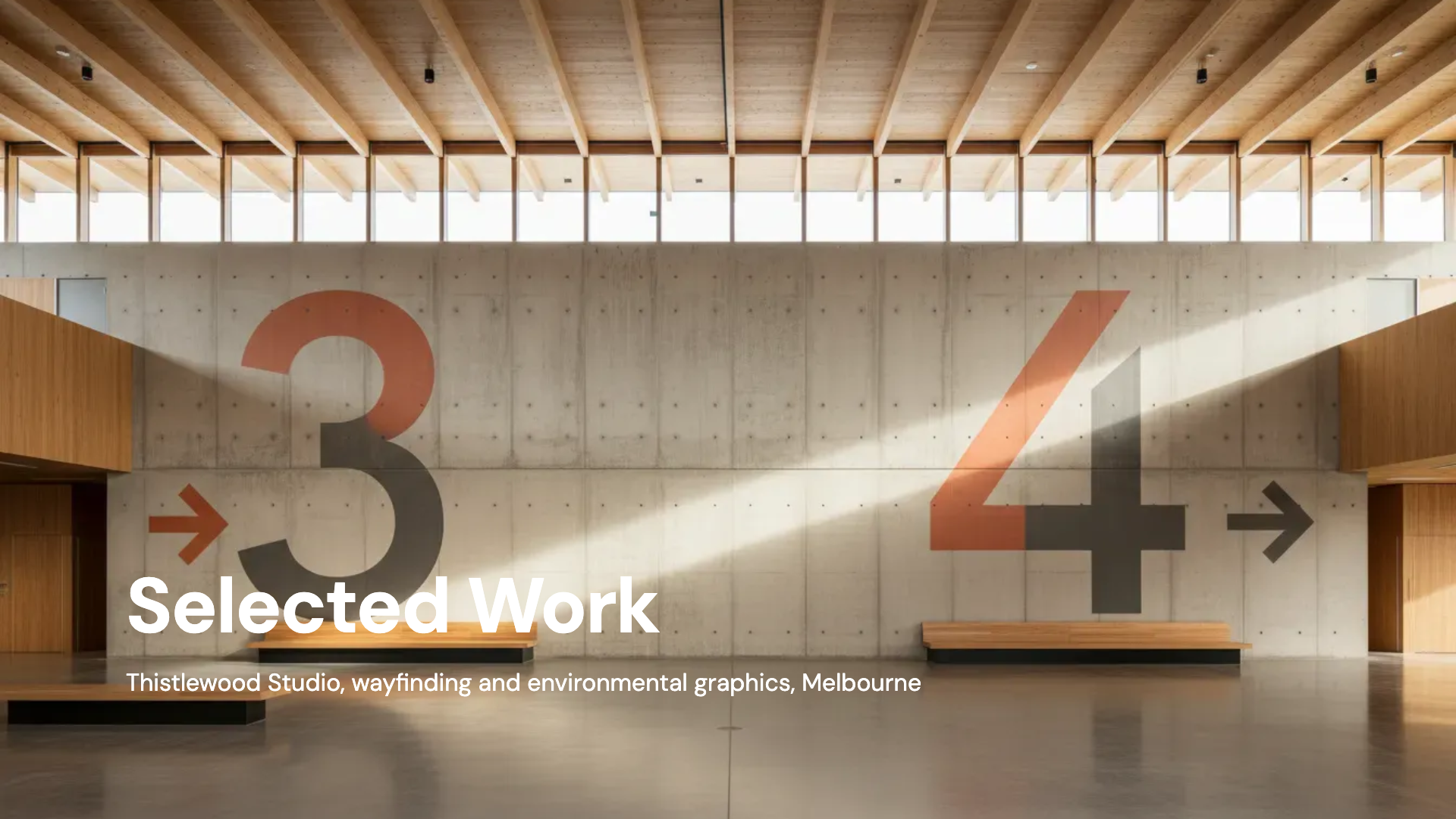
Marketing agency pitch deck for a new clientA pitch deck that leads with the client market, then the approach, the work and the team.
Retainer proposal
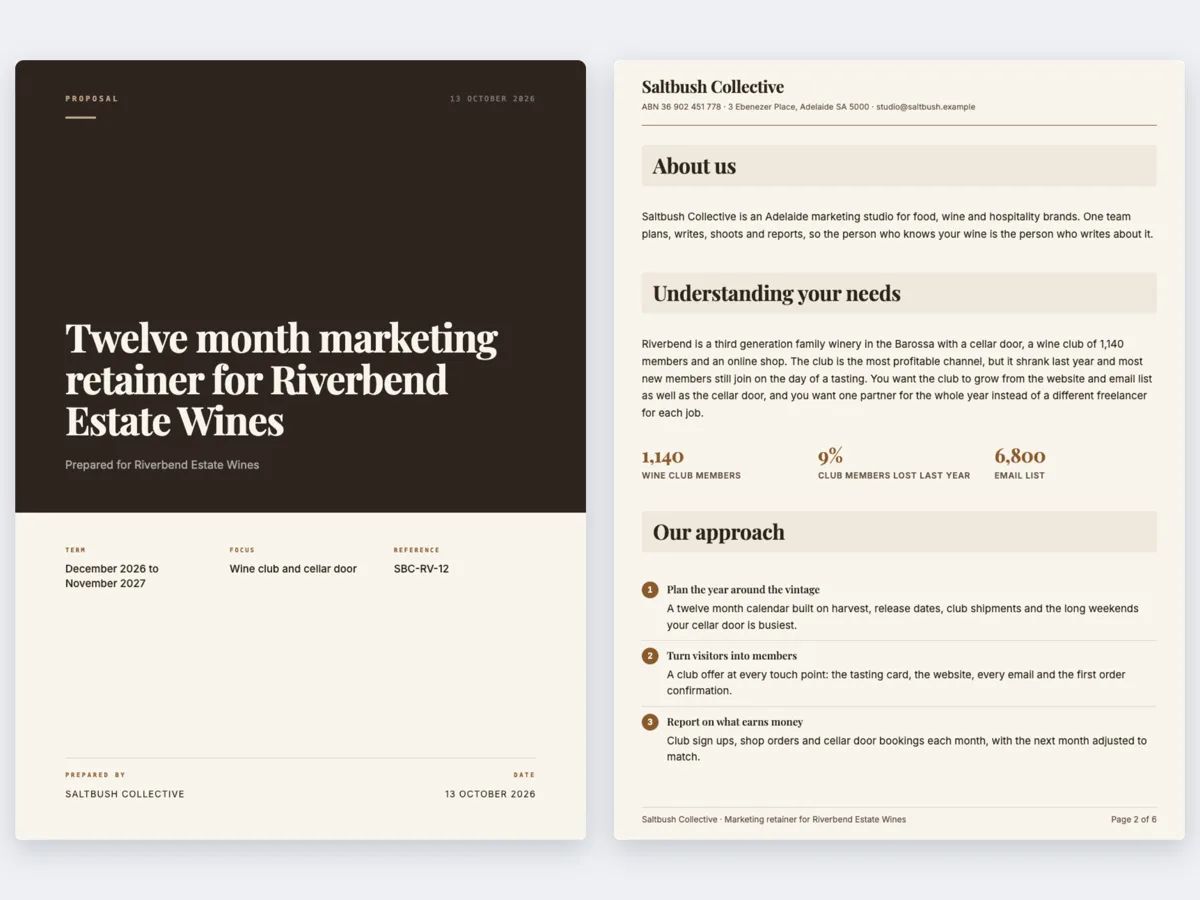
Marketing retainer proposal example for a twelve month programA twelve month marketing program priced monthly with deliverables listed.
SEO proposal
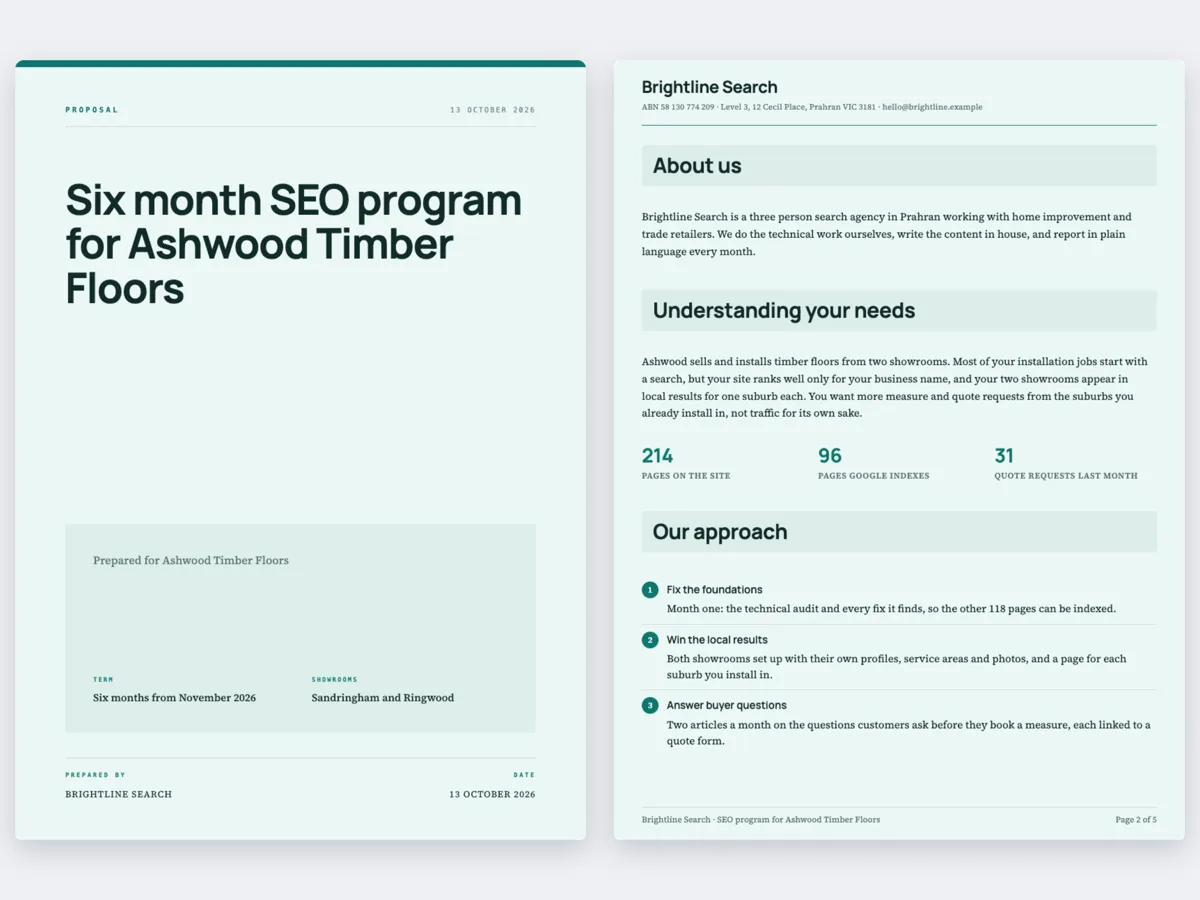
SEO proposal template, filled in for a six month programA six month SEO program with the audit, content and reporting priced by stage.
Social media proposal
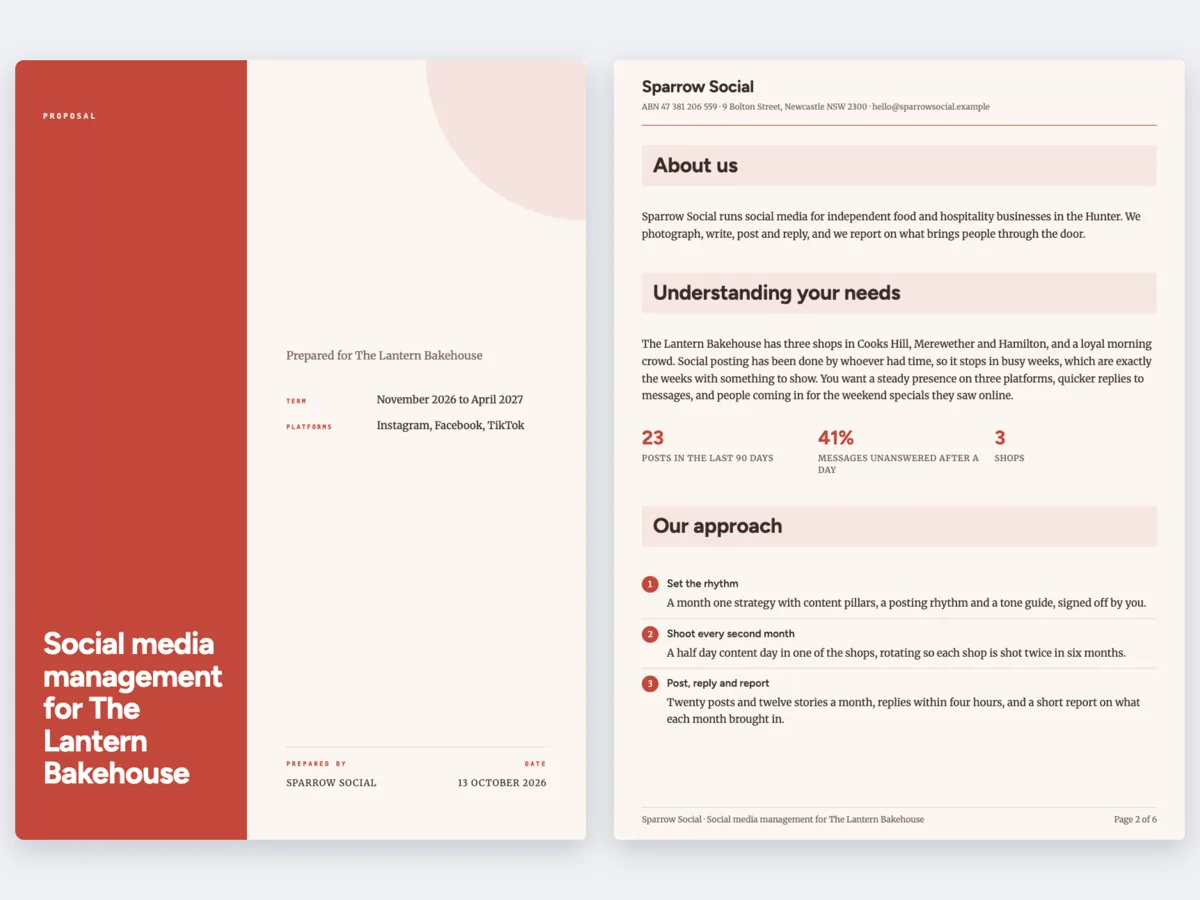
Social media management proposal for a local bakery groupSocial media management for a local business group, with posts per week and ad management.
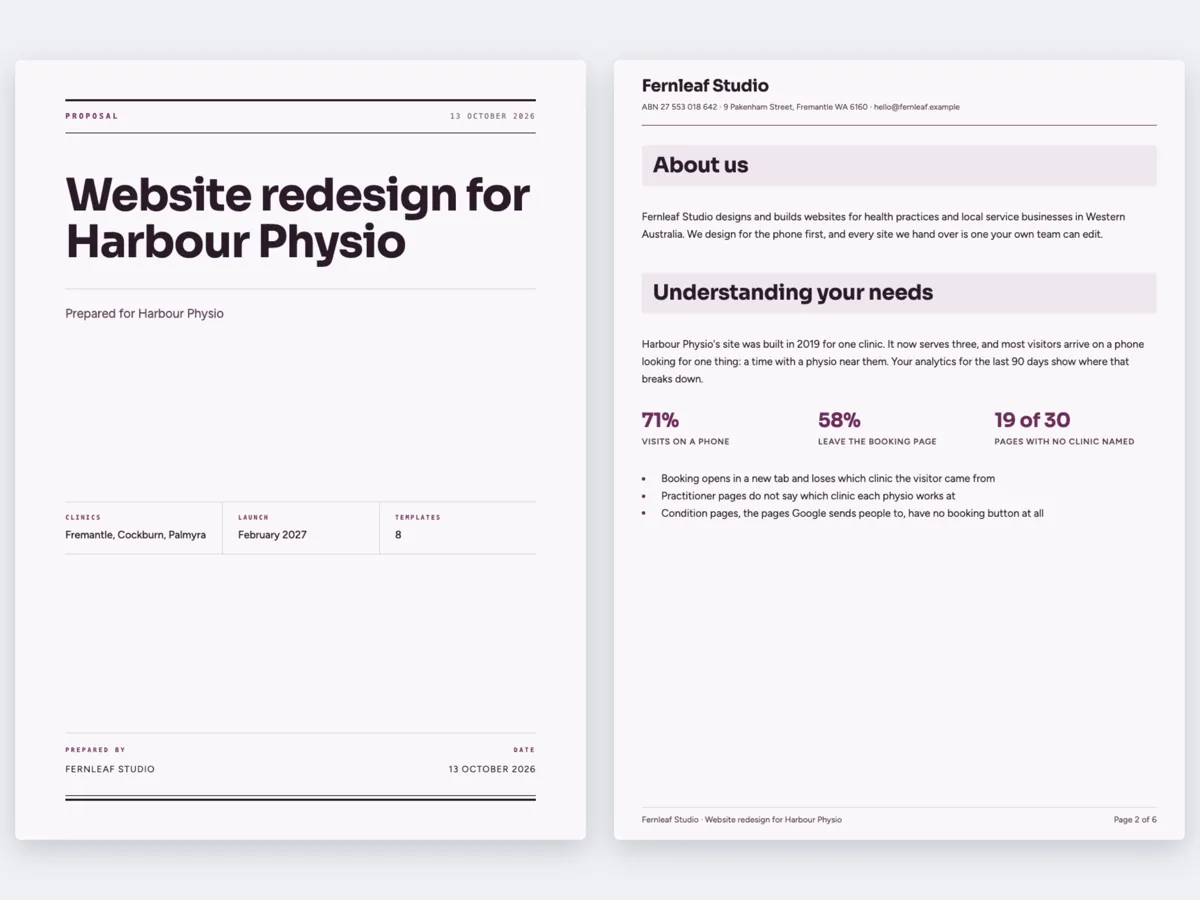
Website design proposal
Website design proposal example with an optional SEO add onA website project with an optional SEO add on the client can tick when accepting.
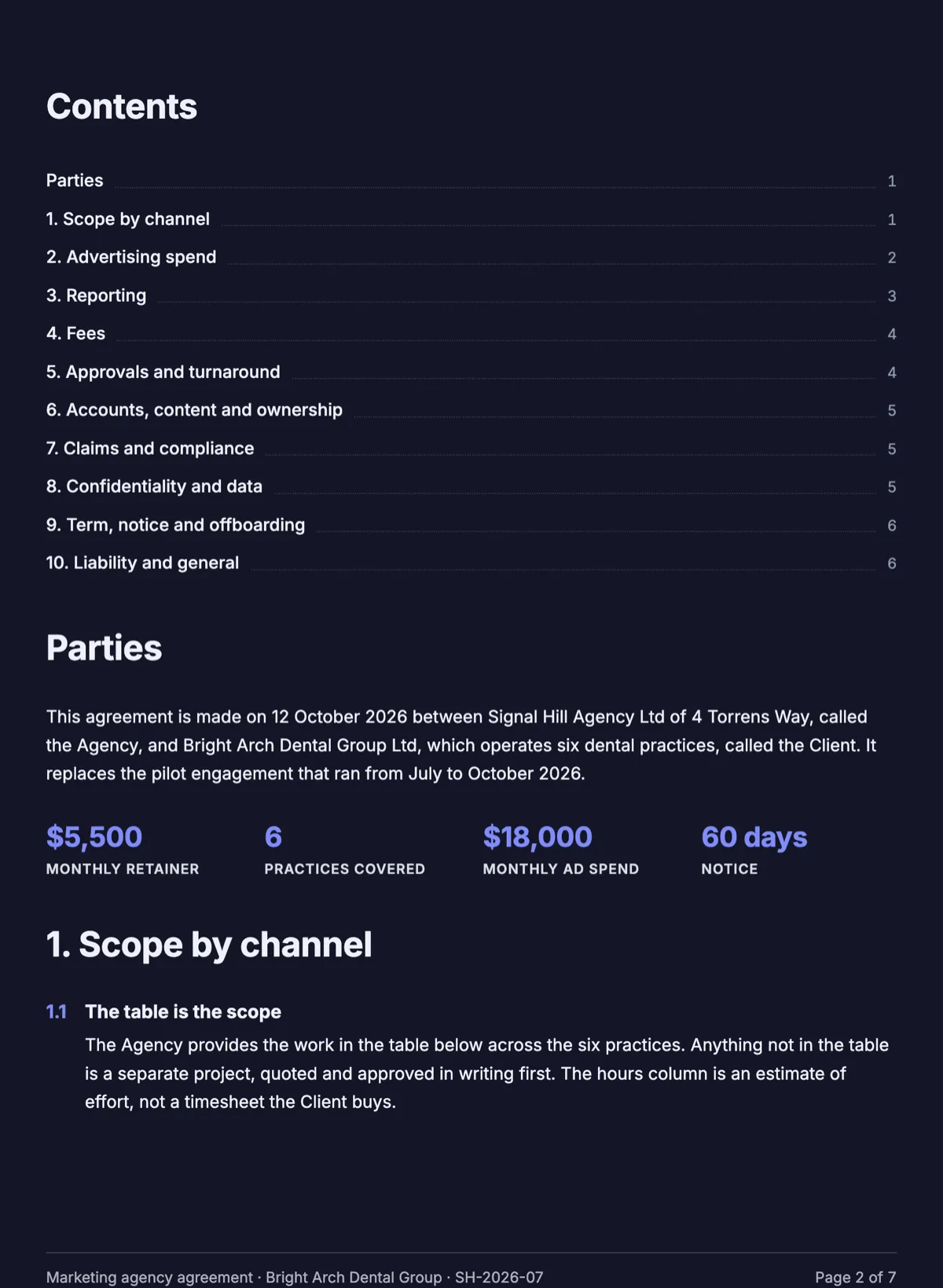
Agency agreement
Marketing agency agreement with a channel scope and ad spend held apartScope, approvals, IP, media spend, reporting and termination for an agency client.
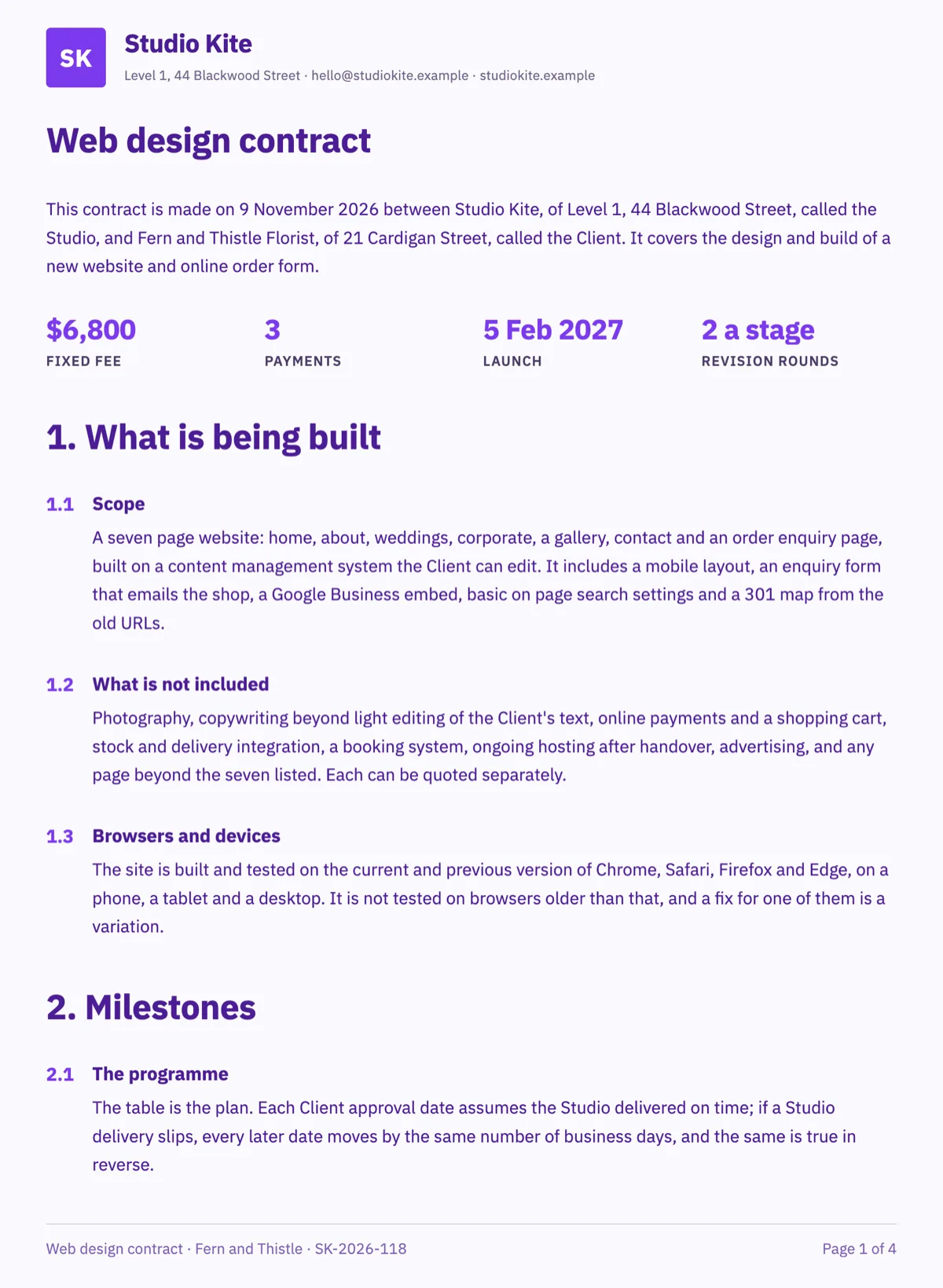
Web design contract
Web design contract template with milestones and revision roundsStages, rounds of changes, hosting, IP transfer on payment and the handover.
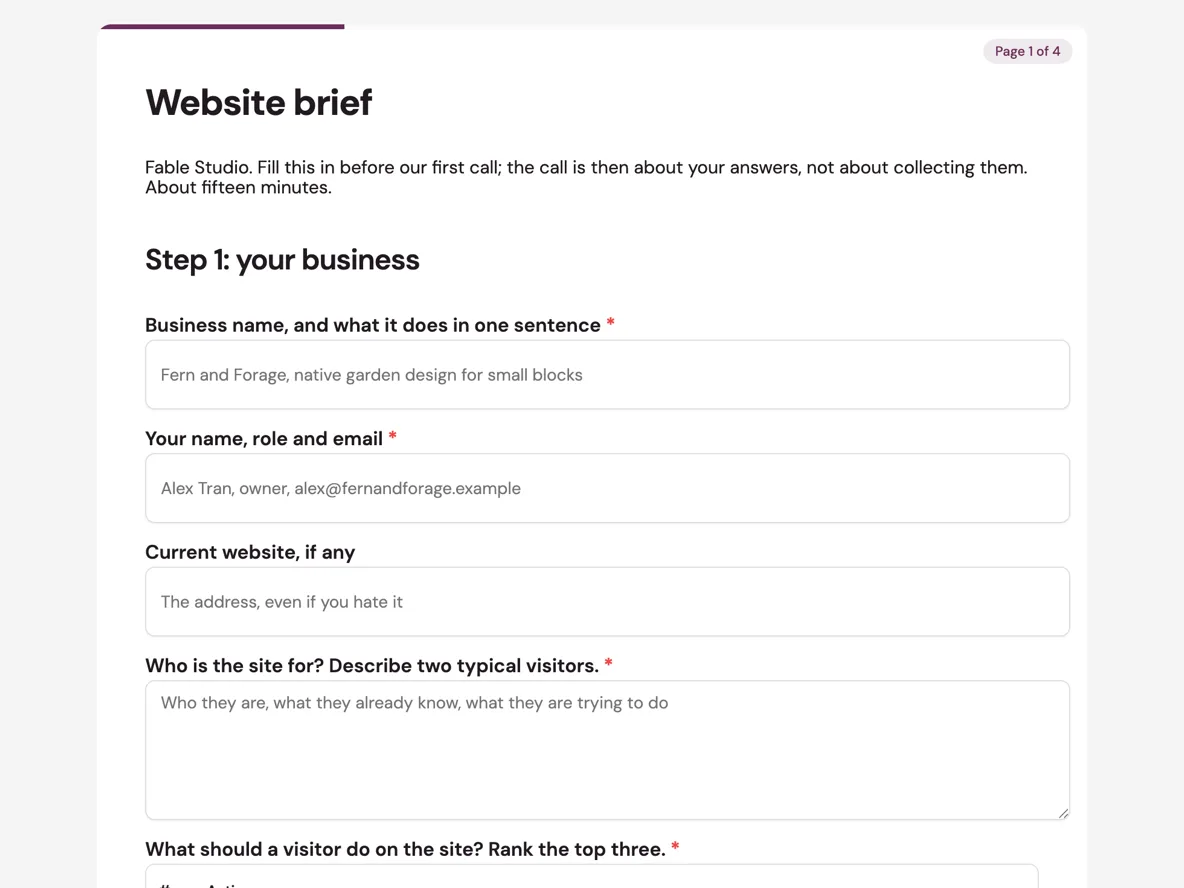
Website brief form
Website brief form the discovery call can start fromThe brief form a discovery call can start from: goals, audience, pages and examples.
Retainer invoice
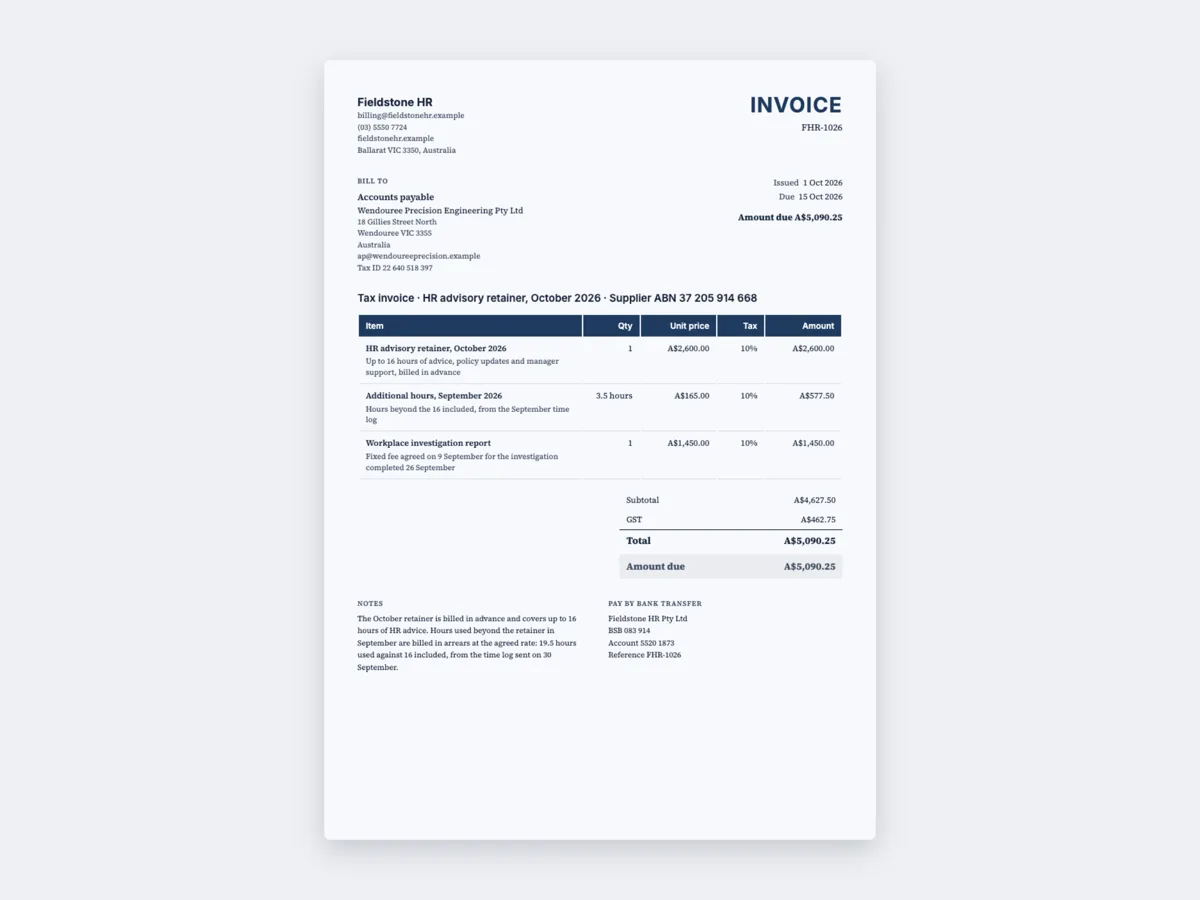
Retainer invoice example with extra hours billed in arrearsA monthly retainer invoice with extra hours billed in arrears.
Web design proposal template
Website design proposal templateA website design proposal template to price a new project.

Scope the retainer by deliverable
Clients judge a retainer on what they get each month, so list the deliverables: posts, articles, campaigns, reports and meetings, with the hours behind them. Separate media spend from the fee. Set a minimum term and a notice period. The retainer proposal example shows a monthly program laid out this way, and the client can accept it online. Because there are no recurring invoices in the proposals module, each month is invoiced as its own retainer invoice with any extra hours added.
Approvals and IP for web projects
A web design contract should set the stages, such as design, build, content and launch, the approvals at each, the number of revision rounds, hosting and domain responsibilities, and when IP passes to the client, usually on final payment. The web design contract in this kit follows that order. Websites built in Sites can also be handed over as a downloadable code zip, which some clients ask for at the end of a project.
Briefs that save the first meeting
A brief form sent before the discovery call collects the goals, audience, competitors, examples the client likes, pages or channels needed, budget and timeline. The call then focuses on the decisions rather than the facts. The website brief form in this kit is built for web projects, and the same structure works for campaigns with different questions.
The tools behind the kit
Step by step in the builders: Make a pitch presentation with AI, then Add a pricing table with optional extras.
Questions people ask
What should a marketing agency proposal include?
It should include the client goals, the strategy, monthly or project deliverables, the team, reporting, the fee separate from media spend, the term and notice period, assumptions and how to accept. Show results from similar work where you can, and keep the whole proposal short enough to read in one sitting.
How should agencies price retainers?
Price from the hours the deliverables take at a blended rate, add a margin, and separate media spend. Set a minimum term, commonly three to six months, and review the scope each quarter so the fee keeps matching the work.
Who owns a website an agency builds?
The contract decides. Most web design contracts transfer ownership of the custom work to the client on final payment, while the agency keeps its own tools and third party licences. Write it down in the contract so neither side relies on assumptions when the relationship ends or the client moves to another agency.
What should a web design brief ask?
It should ask for the business goals, audience, current site, competitors, sites the client likes, pages needed, features such as booking or ecommerce, content readiness, budget and deadline. Asking for content readiness early prevents the most common delay in web projects, which is waiting for words and photos from the client.
Do agencies need consent to send marketing emails for clients?
Yes. Under the Spam Act, commercial electronic messages need consent, must identify the sender and must include a working unsubscribe. The agency and the client both carry responsibility, so check where the list came from and how consent was recorded before sending a single campaign.
Start the first piece of the kit
The button opens a generator with a starting description already filled in. Change the business details to your own before you run it.
Create a proposal with OneCraftMore industry kits
Written and checked by the OneCraft team. Last checked .