Industry kit
Wedding planner templates and the forms wedding vendors use
Weddings are planned by a team of small businesses: the planner, the venue, the celebrant, the DJ, the photo booth and the stationer. This kit links finished examples of the forms and documents each of them uses, from the couple questionnaire to the RSVP, written for invented Australian businesses.
The planner and the couple
A wedding planner starts with a long conversation, and the couple questionnaire captures it: the date and venue, guest count, budget, style, the moments that matter, the vendors already booked and the family dynamics a planner needs to know about. A proposal follows, often as a short presentation with the planning package, the timeline and the fee, because couples choose a planner partly on how the proposal looks. Once booked, the planner manages the RSVPs, guest questions and a stream of vendor bookings.
The vendors around the day
Every vendor at a wedding has its own form. The DJ needs set times, a must play list and the power at the venue. The photo booth needs the print layout and props. The stationer needs wording, quantities and proof approvals. The venue sells the day on its website with packages and a timeline. Celebrants have legal paperwork with fixed lodgement times. The cards below link a finished example of each, so a wedding business can see the questions and wording that work on a busy Saturday.
Who the kit is for
The kit is written for wedding planners, venues and wedding vendors in Australia. A marriage needs a Notice of Intended Marriage lodged with an authorised celebrant at least one month before the wedding, and the Attorney General's Department publishes the rules for couples and celebrants. The examples use invented businesses and couples, prices in dollars, and every card opens a complete example rather than a description, so the copy can be judged as a couple would read it on the night they compare quotes.
The kit, piece by piece
Couple questionnaire
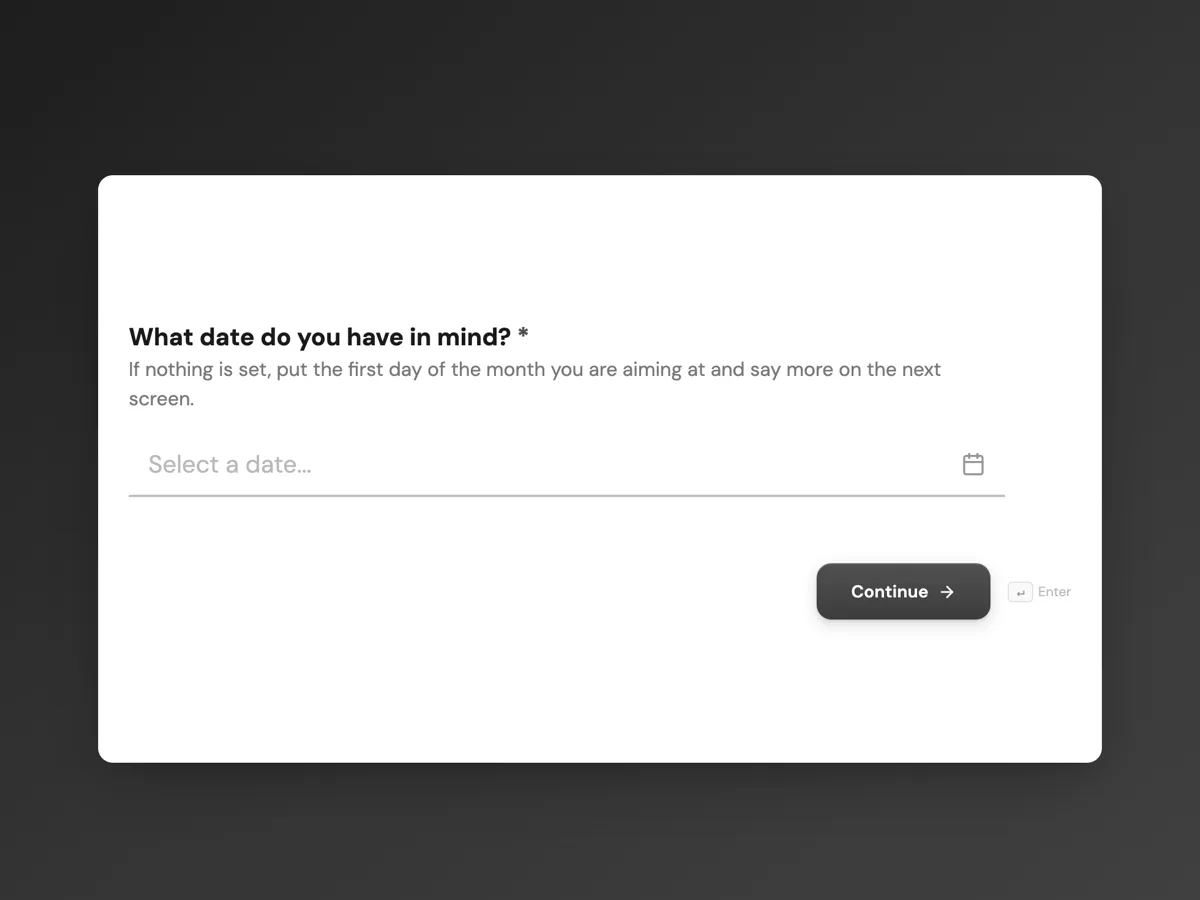
Wedding planner questionnaire that asks about the budget out loudDate, venue, guest count, budget, style and family notes, the brief a planner works from.
Planner proposal deck
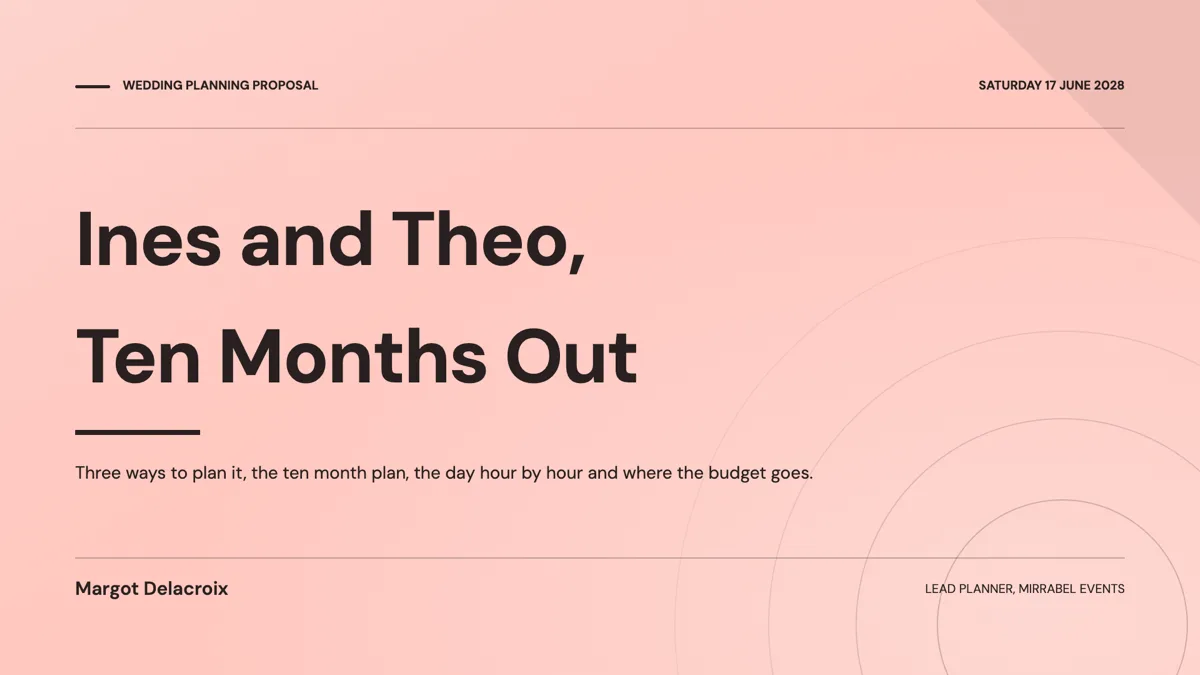
Wedding planner proposal with packages and a run sheetThe planning package, timeline and fee on slides, for the meeting where a couple chooses a planner.
Wedding RSVP form
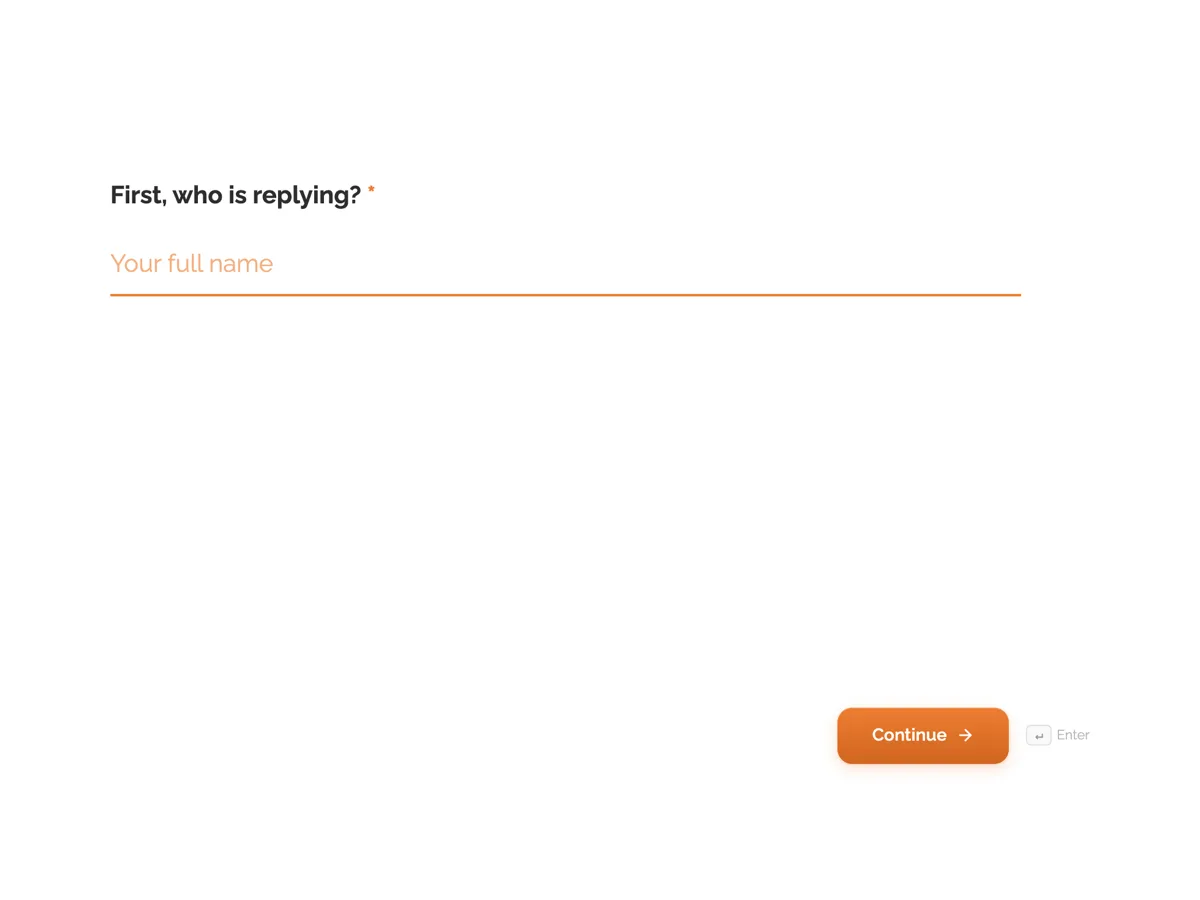
Wedding RSVP formAttendance, meal choices, dietary needs and plus ones, the form guests answer from the invitation.
Wedding guest questions
Wedding RSVP questions that settle the final numbersA question bank for wedding RSVPs, grouped with the field type for each.
Venue website
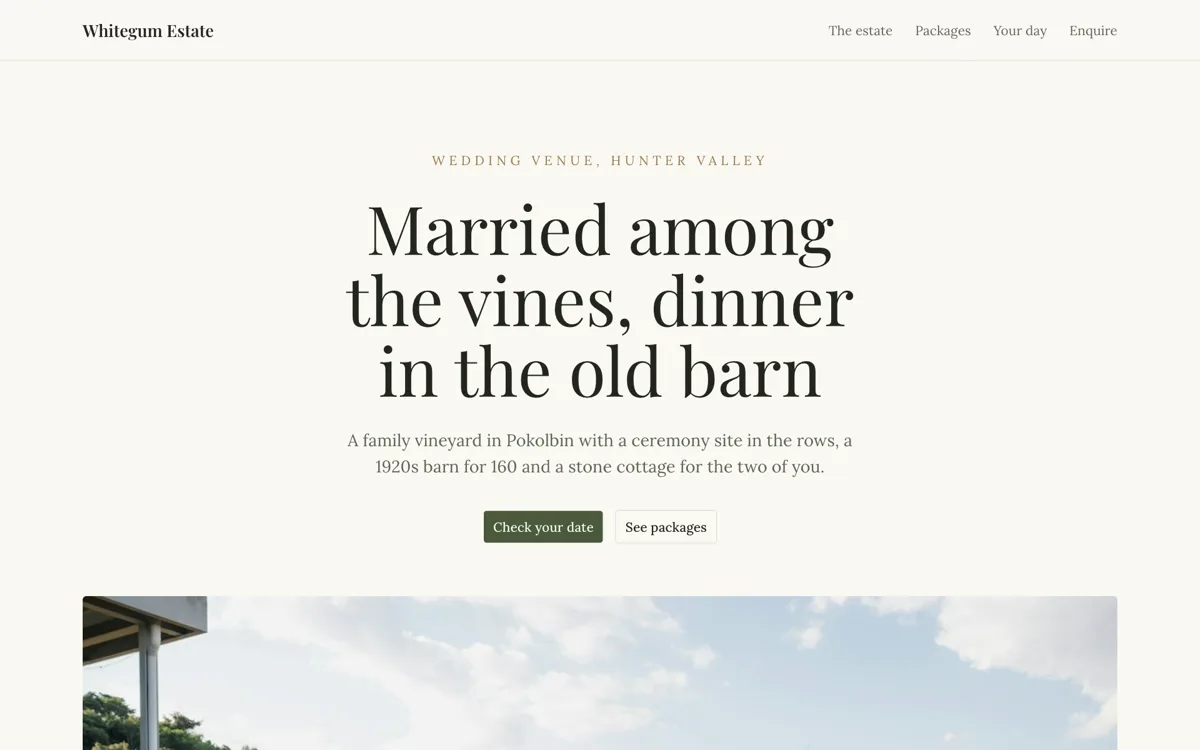
Wedding venue website example with packages and a day timelineA wedding venue website with packages and a day timeline, written as code.
Invitation order form
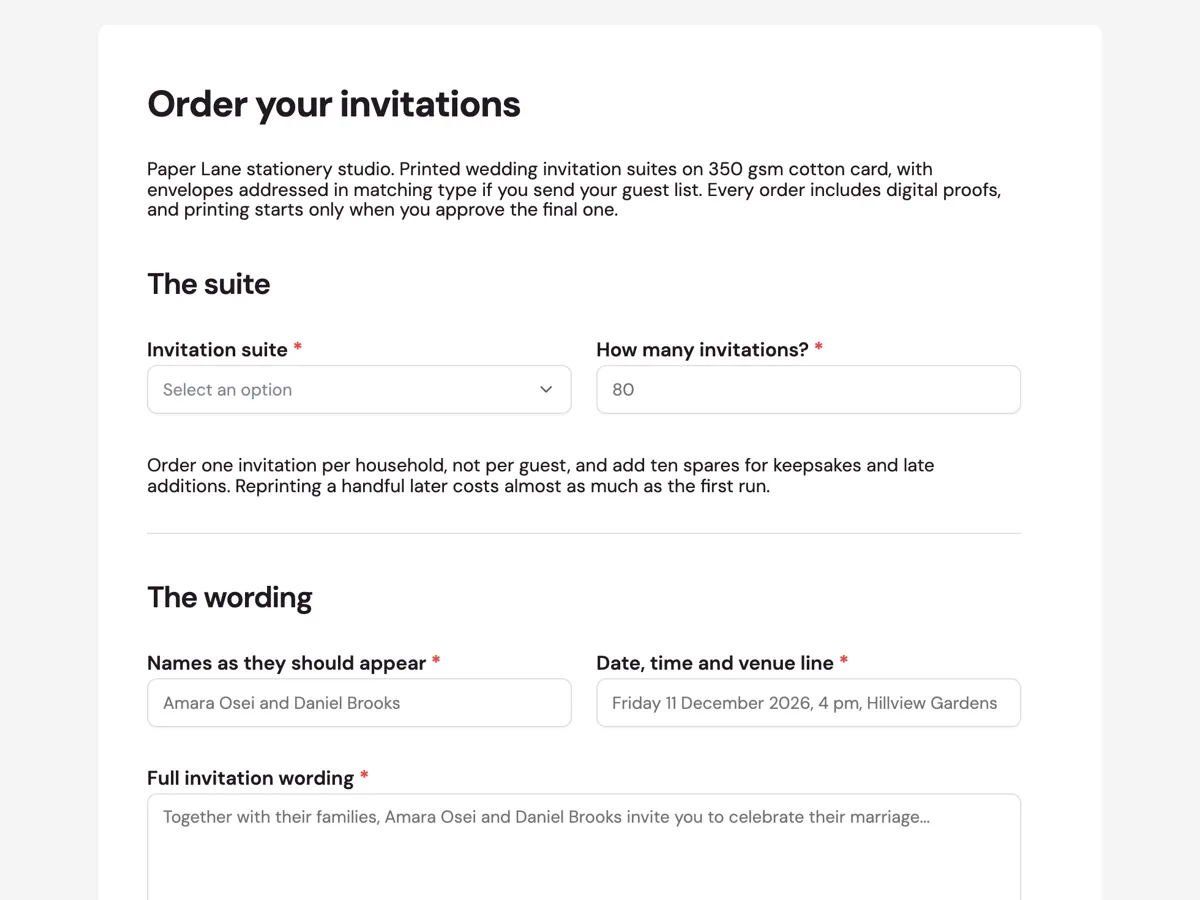
Invitation order form with wording, quantity and proofsWording, quantity and proof approvals for a stationer.
DJ booking form
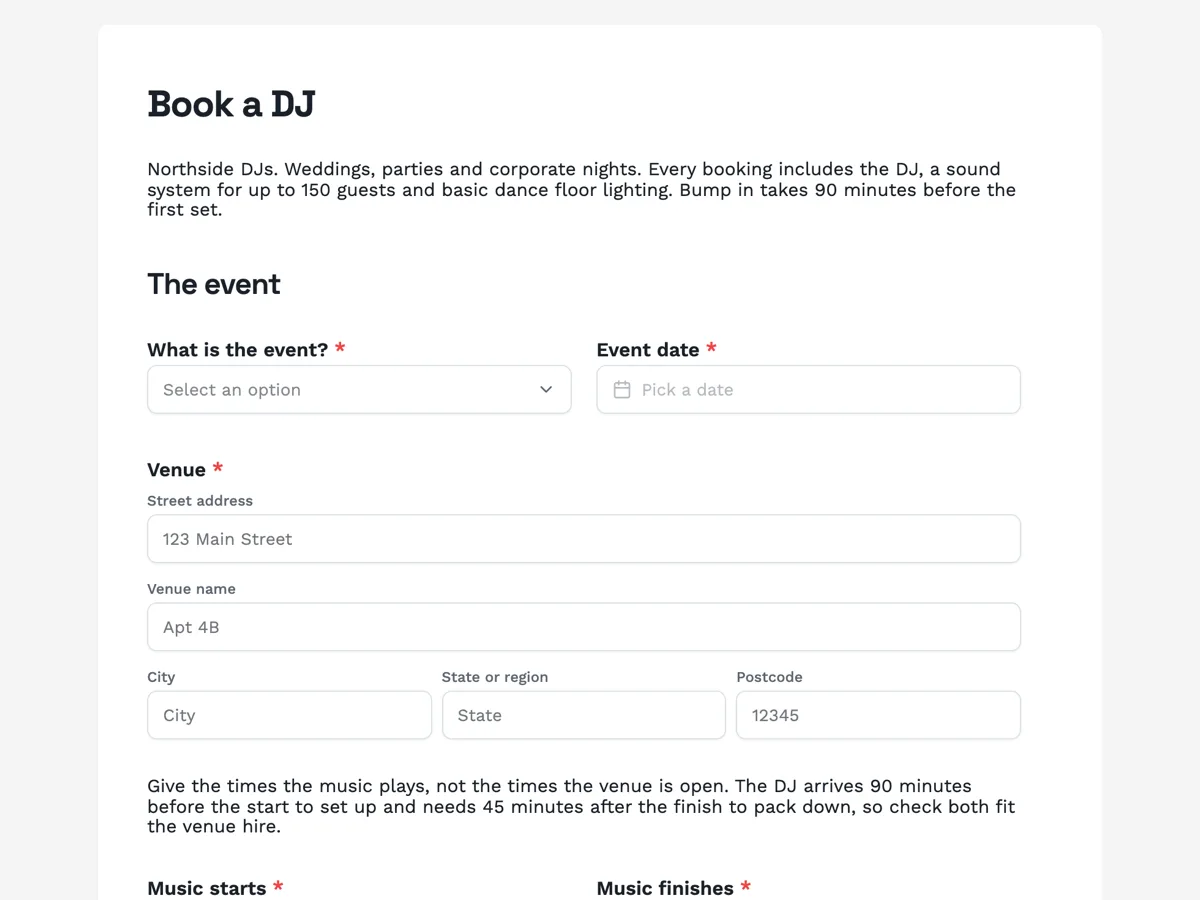
DJ booking form with set times and a must play listSet times, a must play list and a do not play list.
DJ contract
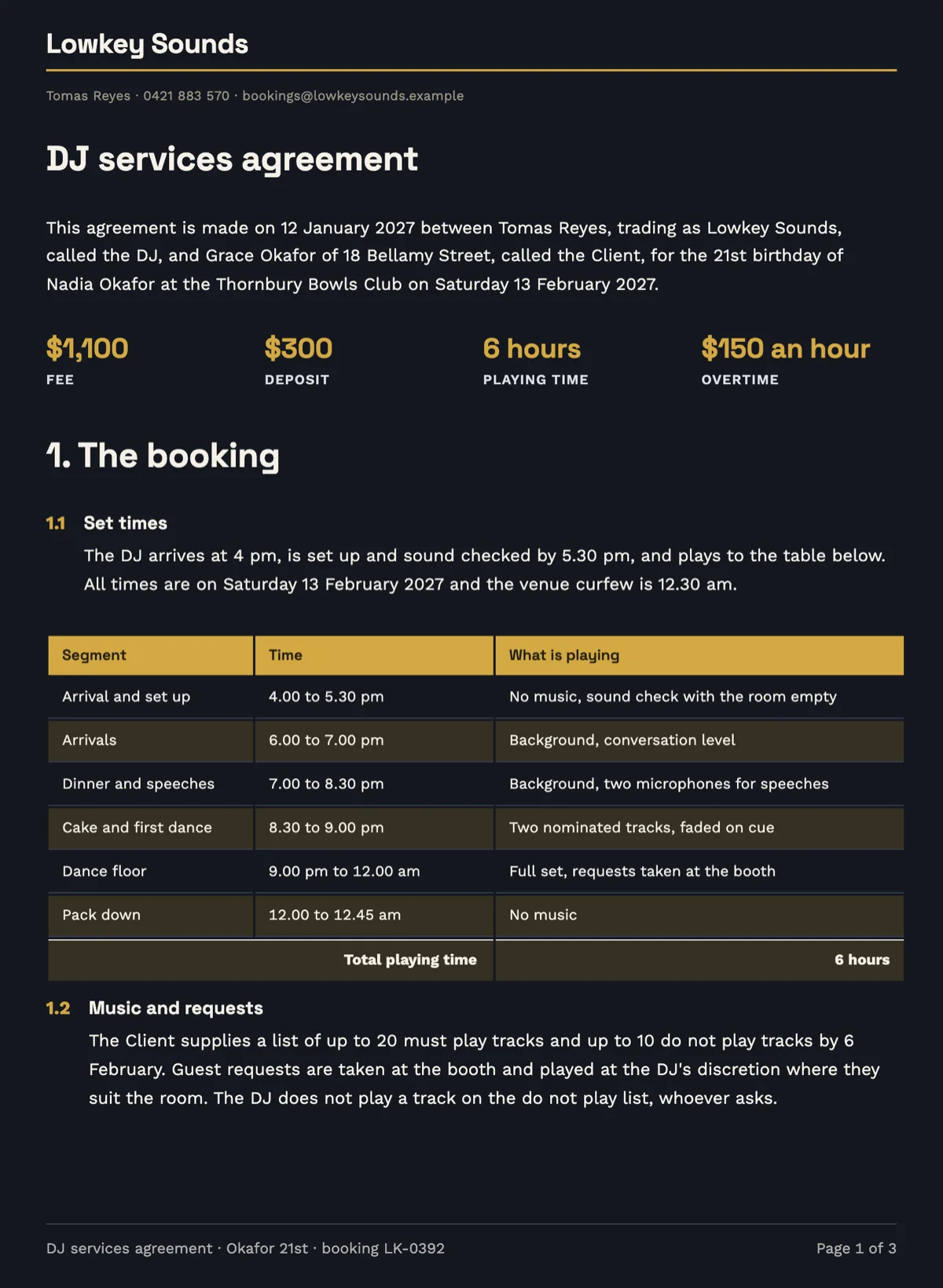
DJ contract template with set times, power and an overtime rateSet times, power, setup and an overtime rate, signed before the date is held.
Photo booth booking form
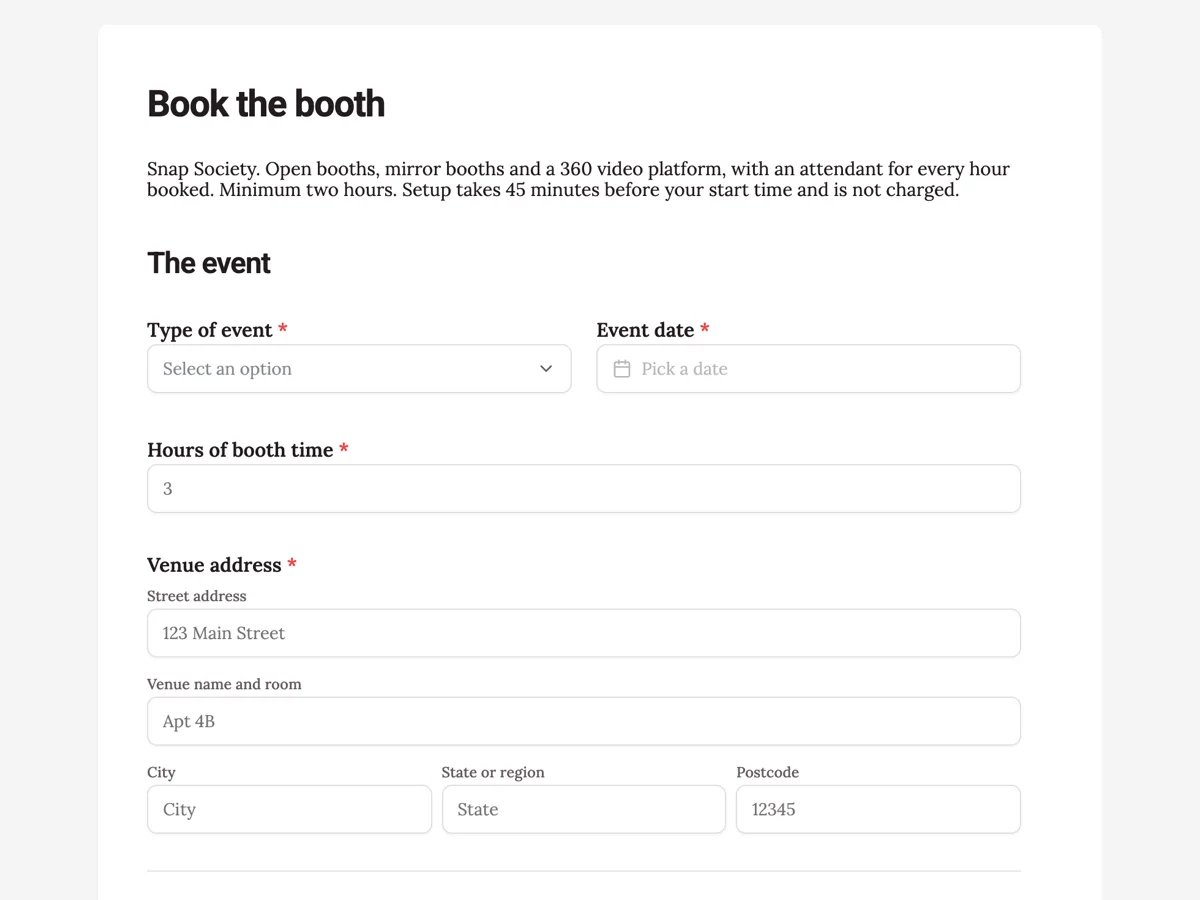
Photo booth booking form with the print layout and propsThe print layout, props and setup time for a photo booth hire.
Celebrant proposal template
Wedding and celebrant services proposal templateA wedding and celebrant services proposal template.
The questionnaire is the brief
The couple questionnaire is the brief for everything that follows, so ask it early and keep it. Ask for the facts, such as date, venue, guest count and budget, then the feelings: three words for the style, the moments they care about, and anything a planner should handle carefully, such as divorced parents or a guest with access needs. The couple questionnaire in this kit is conversational, asking one question at a time, which suits couples answering together on a phone.
RSVPs that feed the caterer
An RSVP form should collect attendance, the names of everyone attending, meal choices, dietary requirements as clear options and song requests if the couple wants them. The answers feed the caterer final numbers, the seating plan and the DJ list, so make the dietary question specific. Responses can be exported as a CSV with one column per question, which is how most planners hand them to the venue.
Vendor contracts protect the date
A wedding date cannot move, so vendor contracts focus on holding it: a booking fee to secure the date, what happens if the vendor cannot attend, set times, setup needs and overtime. The DJ contract in this kit sets an overtime rate per half hour, the most common surprise on a wedding invoice. Proposals for planning or celebrant services can be accepted online and the deposit invoice issued at once.
The tools behind the kit
Step by step in the builders: Create a conversational form with AI, then Make a pitch presentation with AI.
Questions people ask
What should a wedding planner questionnaire ask?
It should ask for the couple names and contacts, date, venue, guest count, budget, style, priorities, vendors already booked, family considerations, accessibility needs and how involved the couple wants the planner to be. Keep it to the questions a planner actually uses in the first meeting.
What should a wedding RSVP form include?
Include the guest names, attendance, the number attending, meal choices, dietary requirements, accessibility needs and a reply by date. Song requests and a message to the couple are optional. Keep dietary options specific, such as vegetarian, vegan, gluten free and nut allergy, so the caterer can count them.
How far ahead must a marriage notice be lodged?
In Australia a Notice of Intended Marriage must be given to the authorised celebrant at least one month before the wedding and no more than 18 months before. A shortening of time can be granted only in limited circumstances. Couples should check the current rules with their celebrant.
Do wedding vendors need contracts?
Yes. A contract protects the date and sets the services, times, setup, payment and cancellation terms. It matters most for vendors whose absence would ruin the day, such as the venue, caterer, celebrant, photographer and DJ, and it should say what happens if illness stops them attending.
Can couples accept a planning proposal online?
Yes. A proposal from the proposals module goes out as a tracked link, the couple can tick optional extras and accept with a drawn signature, and acceptance with a deposit issues the deposit invoice straight away, so the date is held the moment they agree.
Start the first piece of the kit
The button opens a generator with a starting description already filled in. Change the business details to your own before you run it.
Create a form with OneCraftMore industry kits
Written and checked by the OneCraft team. Last checked .